Musk's Optimus deadline
PLUS: Union slams Atlas takeover

Jennifer Mossalgue
January 26, 2026
Read Online | Sign Up | Advertise

Good morning, robotics enthusiasts. Elon Musk finally showed up at Davos to pitch a near-future where humanoids outnumber humans and “saturate all human needs” before the decade’s out.
It’s classic Musk futurism: utopia-by-deadline while quietly dodging the biggest question of all: what’s left for humans when the robots run the show?
In today’s robotics rundown:
Musk: Optimus to go on sale in 2027
Union slams Hyundai’s Atlas push
Tesla’s Austin driverless robotaxis are live
These swarm robots bloom like flowers
Quick hits on other robotics news
LATEST DEVELOPMENTS
ELON MUSK
🤖 Musk: Optimus to go on sale in 2027

Image source: Ideogram / The Rundown
The Rundown: Elon Musk used his first appearance at the World Economic Forum in Davos to sketch a future where humanoids outnumber humans in factories and “saturate all human needs” by the end of the decade.
The details:
Musk forecasts AI could outsmart any individual human by late 2026, and outstrip humanity collectively by 2030–2031.
He said he expects Tesla to begin selling Optimus humanoids to the public by the end of 2027.
Optimus is already handling basic factory tasks; Musk says they’ll tackle complex industrial work within a year and expand to consumer uses soon.
He framed robot abundance as utopia, not dystopia — tossing in that aging is “a very solvable problem” too.
Why it matters: The pitch was classic Musk — aggressive timelines, grand ambition, plus jokes about being an alien and Trump eyeing “a little piece of Greenland, a little piece of Venezuela.” What's missing: any serious answer to what ageless humans actually do in a world where robots handle everything.
HYUNDAI & BOSTON DYNAMICS
🪧 Union slams Hyundai’s Atlas push
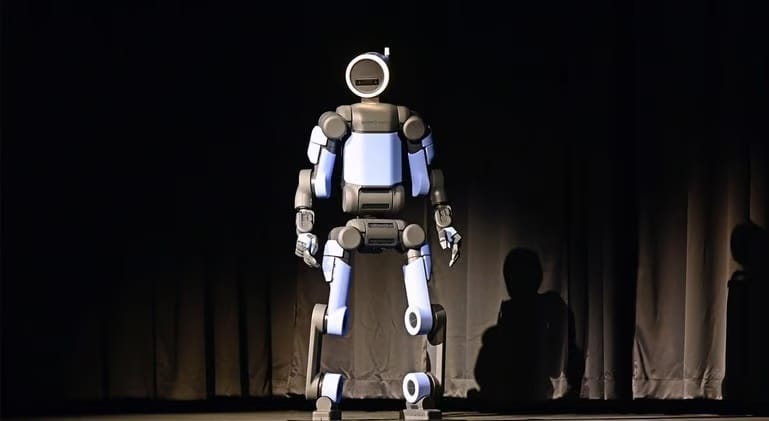
Image source: Hyundai (Atlas demo at CES)
The Rundown: Hyundai’s South Korean union is vowing to block the automaker’s plan to roll out Boston Dynamics’ Atlas humanoids on production lines — starting with a new U.S. plant in Georgia — unless a formal deal is struck to protect jobs.
The details:
The union argues that Atlas and other AI robots are explicitly aimed at cutting labor costs, warning that they will trigger “significant employment disruption.”
Hyundai is building a new facility capable of producing up to 30K Atlas robots a year by 2028, positioning them as a core tool to boost manufacturing.
The first units are slated to roll out at Hyundai’s Georgia plant in 2028, initially handling basic tasks before moving into more complex work by 2030.
Maintaining an Atlas robot is projected to cost about $9,500 per year, far below the typical annual cost of human labor.
Why it matters: Hyundai — the world’s third largest automaker — claims Atlas will shoulder dangerous tasks and spare workers’ backs. The union sees a different calculation: swap humans for hardware, bank the savings. They’re also pushing back on the automaker’s overseas expansion plans, including new U.S. production.
TESLA
🚖 Tesla’s Austin driverless robotaxis are live

Image source: Tesla
The Rundown: Tesla just started offering “no front-seat safety driver” robotaxi rides in Austin, sending a small fleet of unsupervised vehicles onto public streets as Musk pitches the launch as a breakthrough moment for Tesla’s AI ambitions.
The details:
The safety net reportedly hasn’t vanished entirely: videos show Tesla’s Austin robotaxis being shadowed by human-driven Teslas as backup support.
Only a fraction of the local fleet is running in this unsupervised mode for now, with the rest of Tesla’s robotaxis still operating with human safety monitors.
Elon Musk is using the launch to recruit engineers, framing Tesla’s autonomy stack as “real-world AI” work that he claims could “likely lead to AGI.”
Early riders report that Tesla is charging for these trips from day one, unlike rivals Waymo and Zoox, which initially offered fully driverless rides for free.
Why it matters: Tesla is racing to own the robotaxi narrative just as Waymo is pushing toward broader, regulator-approved driverless service in more cities. A rollout signals confidence in the tech, but chase cars trailing behind suggest the “unsupervised” label comes with an asterisk, for now at least.
ROBOTICS RESEARCH
🌼 These swarm robots bloom like flowers

Image source: Princeton University
The Rundown: Princeton engineers published a new paper on a swarm of robots that “bloom” like flowers in response to changing light, prototyping building facades that can collectively sense light, move, and adapt in real time.
The details:
The installation, first built in 2024, uses about 40 small modular “SGbots” whose flexible petals open and close in coordinated patterns.
Each robot packs its own light sensor, actuator, processor, and wireless link, letting the swarm decide how to move without a central controller.
In real-world tests, subsets of the swarm adjusted to shifting sunlight over hours and kept functioning even when some units went dark.
A gallery version linked the swarm to a dancer’s wearable interface, with the facade blooming in response to human movement.
Why it matters: The project slots into a broader push toward “living” architecture — robot gardens using swarms of simple machines to build adaptive facades and kinetic urban art. By turning facades into self-organizing robot swarms, it suggests a future architecture that’s part climate system, part public art, and always in motion.
QUICK HITS
📰 Everything else in robotics today
Waymo opened its driverless robotaxi service to the public in Miami, starting with about 10K waitlisted residents who can hail rides across a 60-square-mile service area.
Gecko Robotics, MIT, and Mech-Mind experts told Business Insider that humanoids remain far from scalable real-world deployment, held back by limited sensing and AI.
Carnegie Mellon is developing a quadruped robot that can sniff out hazards, locate casualties, and assess victims’ conditions in search-and-rescue operations.
A Chinese university unveiled Fuxiaozhi F1-D, a humanoid treatment robot that uses a non-invasive brain-computer interface to support autism intervention in children.
A Financial Times report on Shenzhen-based UBTech says its Walker S2 humanoids are only about half as productive as human workers.
Roomba maker iRobot emerged from Chapter 11 as a private Picea Robotics subsidiary, launching a U.S. “iRobot Safe” unit to handle consumer data protection.
Beijing startup InterstellOr plans to fly its first suborbital space tourists in 2028 and has booked EngineAI’s PM01 humanoid as an experimental “passenger.”
Chinese heavy equipment giant Zoomlion is deploying humanoids in its “Smart City” factories to help assemble excavators at a rate of one every six minutes.
Chinese researchers unveiled GrowHR, a lightweight, bone-inspired humanoid that can move by floating, swimming, walking on water, and even briefly flying.
China’s new five-year tech plan puts humanoids at the center of its industrial strategy, setting targets for major robotics revenue growth by 2030.
COMMUNITY
🎓 Highlights: News, Guides & Events
Read our last AI newsletter: Claude for Excel opens the gates
Read our last Tech newsletter: Amazon’s second axe is falling
Read our last Robotics newsletter: A crawling, detachable robotic hand
Today’s AI tool guide: Create ads and marketing videos with Remotion
RSVP to next workshop on Feb. 11: Agentic Workflows Bootcamp pt. 1
See you soon,
Rowan, Joey, Zach, Shubham, and Jennifer — The Rundown’s editorial team

Stay Ahead on AI.
Join 2,000,000+ readers getting bite-size AI news updates straight to their inbox every morning with The Rundown AI newsletter. It's 100% free.