Google's Nobel winner jumps to Anthropic
PLUS: Mine Reddit complaints into business ideas

Zach Mink
June 22, 2026
Read Online | Sign Up | Advertise

Good morning, AI enthusiasts. Gemini co-lead Noam Shazeer leaving for OpenAI already looked like a rough headline for Google DeepMind. Now, John Jumper is heading to Anthropic, and the talent leak is starting to look deeper.
The Nobel Prize-winning AlphaFold lead is the latest elite researcher to pick one of the two hottest AI startups over Google, with Anthropic and OpenAI’s gravitational pull starting to edge out even the lab that spent the last decade defining AI research.
In today’s AI rundown:
Google DeepMind’s Nobel laureate heads to Anthropic
The Rundown Roundtable: Our AI use cases
Mine Reddit complaints into business ideas
OpenAI’s o3 helps tackle childhood rare-disease cases
4 new AI tools, community workflows, and more
LATEST DEVELOPMENTS
GOOGLE DEEPMIND & ANTHROPIC
✌️Google DeepMind’s Nobel laureate heads to Anthropic

Image source: Wikimedia Creative Commons / Anthropic
The Rundown: Google DeepMind AlphaFold lead John Jumper just announced that he is leaving for Anthropic, making the Nobel laureate the second highly touted Google employee to defect to an AI rival in a single week.
The details:
Jumper spent nine years at GDM and co-created AlphaFold, the protein-structure AI that earned him and Demis Hassabis the Nobel Prize in chemistry.
His move lands just days after Gemini co-lead Noam Shazeer left for OpenAI, a major one-two punch of AI talent leaving the company.
Jumper had also reportedly been contributing to enterprise coding tools for Google, an area the company has lagged behind other frontier rivals.
Jumper said he is “taking some time to recharge” before joining Anthropic, though his hiring comes ahead of a June 30 event centered on science.
Why it matters: After 2024 and 2025 saw Google’s models at the frontier, 2026 has felt like a step back compared to its top rivals, OpenAI and Anthropic — the two companies it's currently bleeding high-level talent to. DeepMind’s edge has been in science, but given Jumper’s credentials, that’s a lead that might now be at risk as well.
TOGETHER WITH UNWRAP AI
🔥 Find the embers before they become fires
The Rundown: If your team still sorts through customer feedback manually (or with a patchy mix of manual work and AI), there’s a better way. Unwrap brings all your feedback across surveys, reviews, tickets, social comments, etc. into one view, then uses AI and NLP to surface what actually needs your attention.
With Unwrap, you can:
Automatically categorize all your feedback in one unified view
Ask questions in plain language with Unwrap’s AI Assistant or MCP
Get real-time alerts as trends emerge, plus custom reporting on your schedule
Walk into any meeting knowing exactly what your customers care about and what to prioritize
Exclusive for Rundown subscribers: Grab a free trial and get set up today!
THE RUNDOWN ROUNDTABLE
💡 The Rundown Roundtable: Our AI use cases
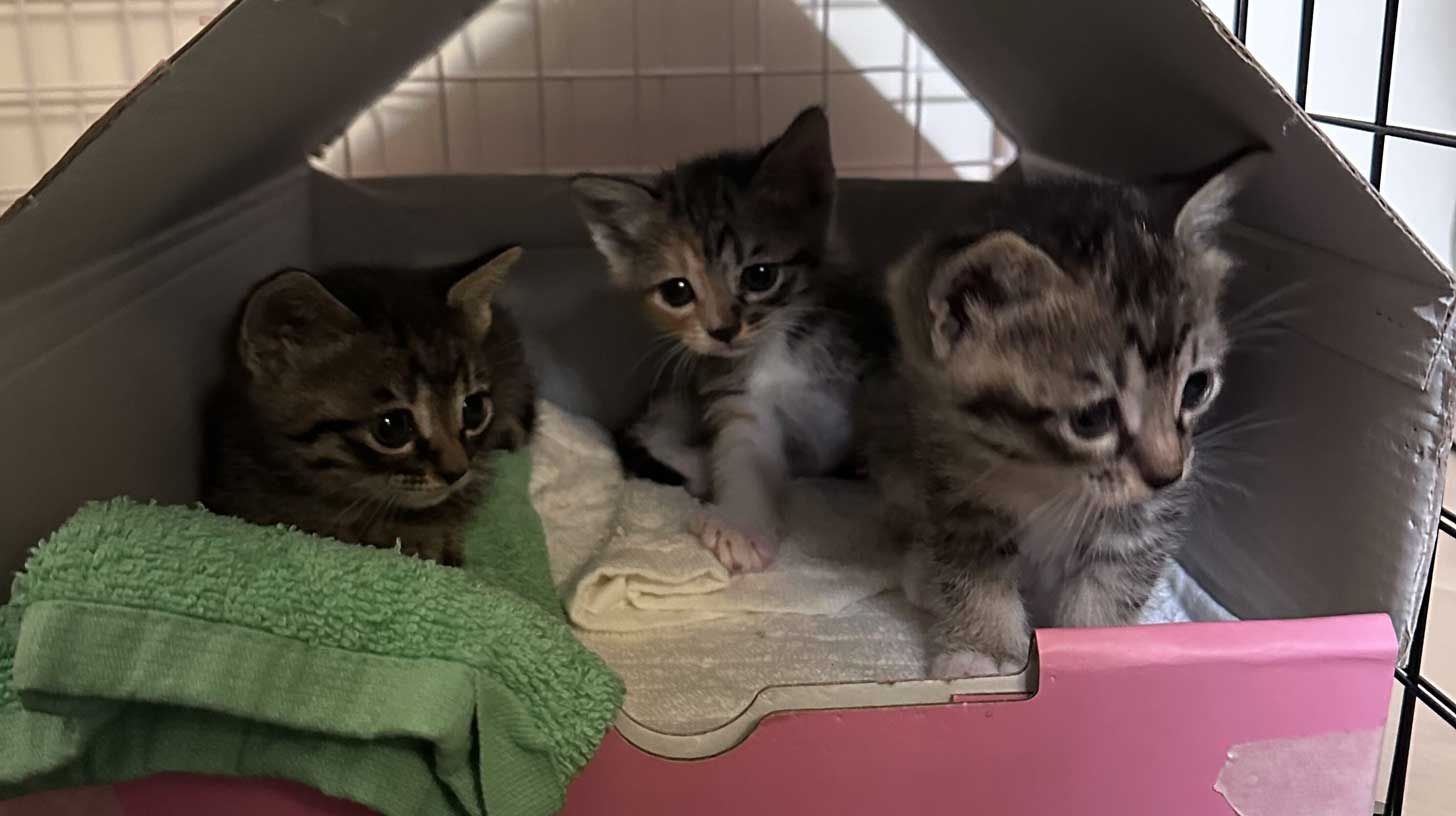
Image source: Adrian @ The Rundown
The Rundown: The Rundown Roundtable is a weekly feature where we poll members of The Rundown staff about how we use AI in our work and daily lives.
Adrian, Developer: I adopted three kittens last week when they were just four weeks old. At first, they were overwhelmed by the new environment and refused to eat, which really worried me.
I turned to ChatGPT for help and got clear, practical guidance on what to feed them, how to keep them hydrated, and how to set up a comfortable space so they could adjust more easily.
I followed a simple feeding plan and kept track of their behavior daily. Gradually, they started eating, became more active, and settled in. Now they’re happy, playful, and fully adapted to their new home.
Carl, Growth: I have a Daily Brief agent on Codex with access to my Slack, Gmail, Notion, and Google Drive that checks everything that happened in the last 24 hours on request. It sends me the brief through Slack, and I do maybe 10% of the final manual editing.
I also gave it several examples of before/after editing, so now it sends messages in my exact voice and style.
AI TRAINING
⛏️ Mine Reddit complaints into business ideas
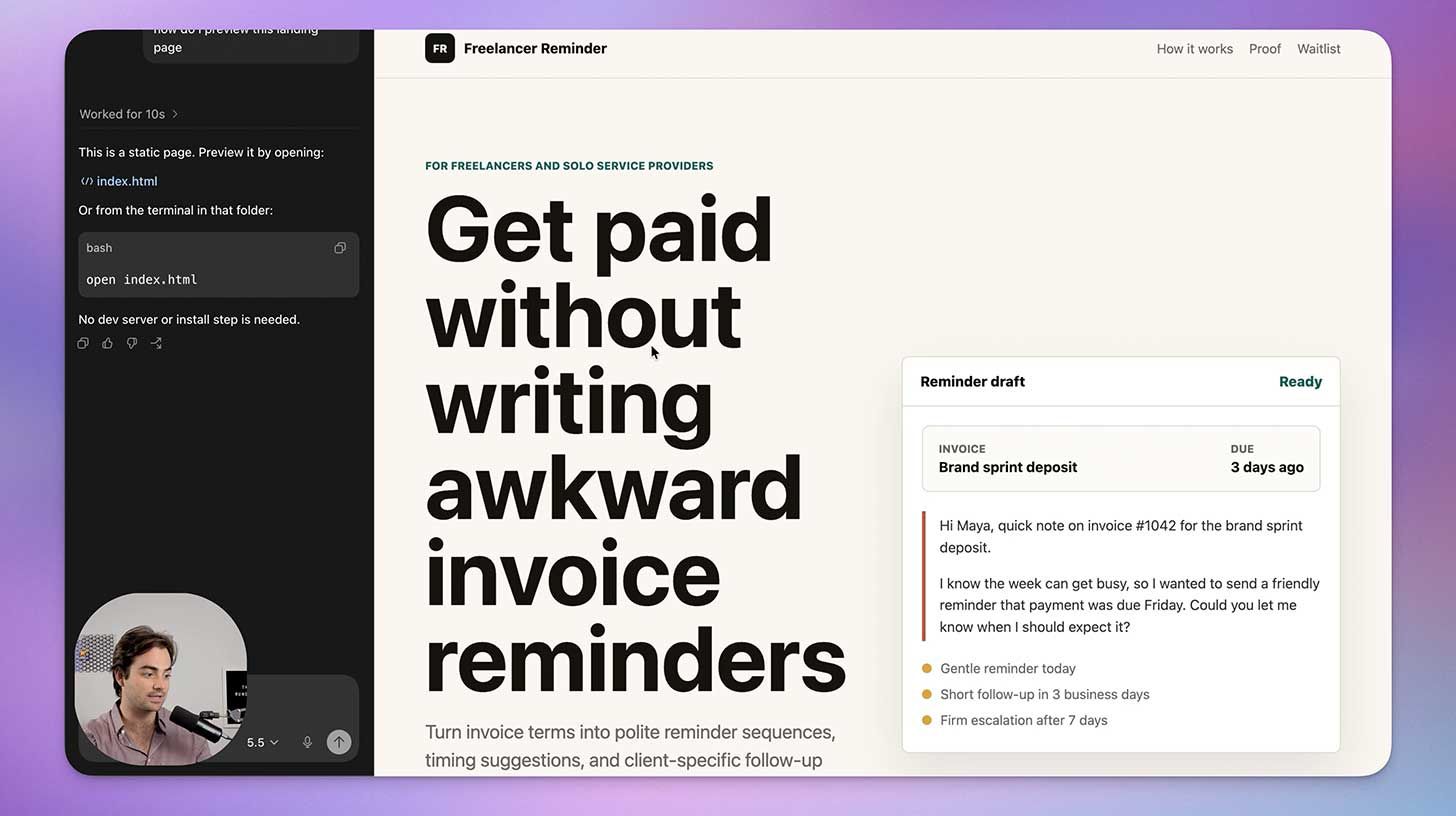
The Rundown: Learn how to use Codex and Airtable to build an infinite business idea generator. If you build websites, apps, or automations with AI, this will help you find the painful problem people may pay you to fix.
Step-by-step:
Sign in to Airtable, then open the Codex desktop app. New to Airtable? Think Google Sheets with better AI fields and automations.
In Codex, add Airtable under Plugins and connect your account. Start a new thread, @Airtable, and ask Codex to check your bases and connection.
Describe the workflow to Codex instead of pasting a schema: “I want to mine Reddit pain points into business ideas. Create Airtable tables for raw posts and business ideas. Add the fields I need, and link each idea to supporting posts.”
Set up a Codex automation that checks three subreddits: “Every weekday, check [SUBREDDIT_1], [SUBREDDIT_2], and [SUBREDDIT_3] for complaints about slow, expensive, confusing, or repetitive work. Add evidence to Raw Reddit Posts. Dedupe first. Avoid private sources. Create Business Ideas when evidence supports them.”
Use Airtable AI to classify pain clusters, score evidence, and rank ideas using only linked posts.
Going further: Add a second Codex automation that reviews the strongest idea each week, then drafts a landing page, prototype, tweet thread, or newsletter test.
PRESENTED BY DATADOG
📊 The State of AI Engineering in 2026
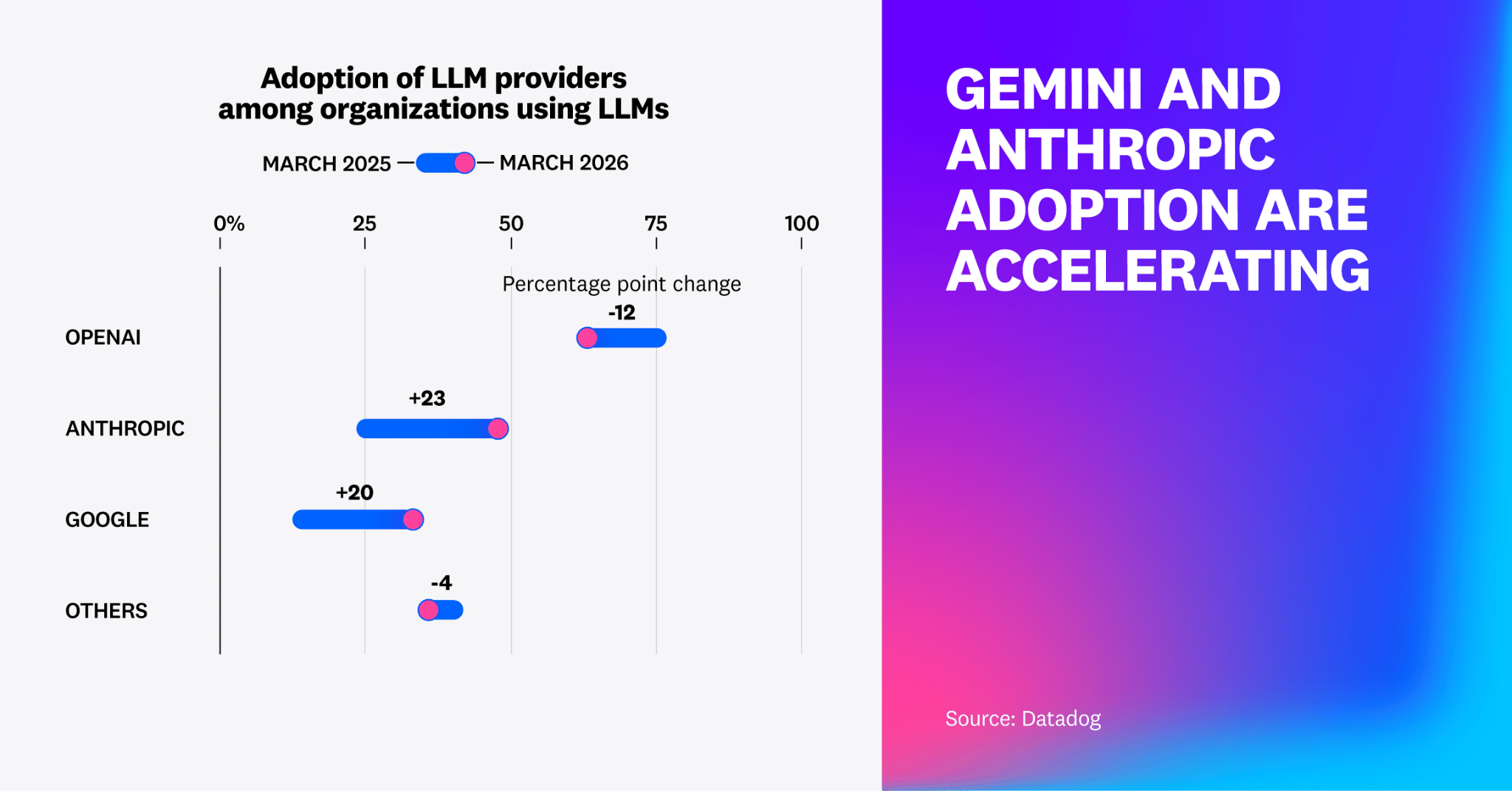
The Rundown: Datadog analyzed LLM telemetry from 1,000+ customers to reveal what’s actually shifting in enterprise AI: which models are winning, why token costs keep climbing, and what going multi-model means for reliability.
The report covers:
How model-provider adoption is shifting across the industry
Why LLM tech debt compounds faster than teams retire old models
What the doubling of agent frameworks means for observability
Where token costs hide, and why prompt caching stays underutilized
Benchmark your stack against the industry’s largest dataset on AI engineering — download the report.
AI RESEARCH
🔬 OpenAI’s o3 helps tackle childhood rare-disease cases
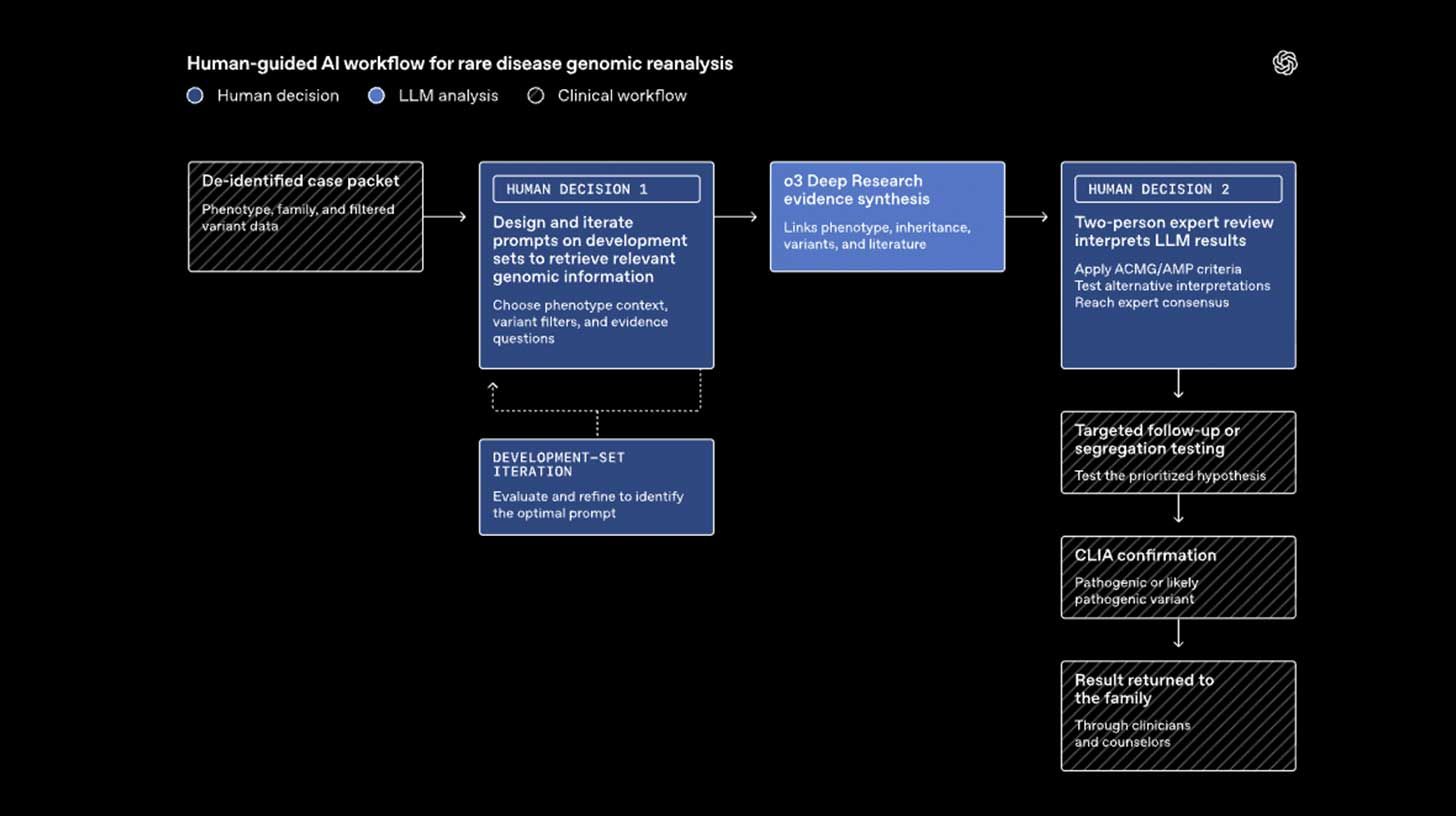
Image source: OpenAI
The Rundown: Researchers at Boston Children’s and Harvard ran 376 unsolved pediatric genetic cases through o3 Deep Research — all prior specialist dead ends — and doctors confirmed 18 new diagnoses after the model surfaced leads worth testing.
The details:
The team fed o3 each case’s de-identified symptoms and a shortlist of suspect genes, then had it weigh inheritance, public databases, and recent research.
The workflow produced 18 confirmed diagnoses out of 376 cases, helping address 4.8% after earlier specialist reviews had come up empty.
In seven of the cases, the diagnosis already existed at another clinic or public database, just never actually reaching the patients’ local records.
Even after full sequencing, about half of rare-disease cases go unsolved, with files piling up too fast for doctors to reexamine them with newer research.
Why it matters: As the doctors mention, rare-disease work has a backlog problem. Clinicians don’t have the bandwidth to revisit cases or dig and work across disconnected databases and clinics. But a year-old general Deep Research model can, providing a tool to help give more “dead-end” cases another chance at answers.
QUICK HITS
🛠️ Trending AI Tools
🚀 GLM 5.2 - Z AI’s powerful new open-weights model
🎥 Palmier - Generate, edit, and export AI videos without leaving your timeline
👩🏻💻 Claude Code - New artifact integrations for previewing work as live, interactive, sharable pages
🔎 Exa Agent - Exa’s cost-effective, frontier-level web research API
📰 Everything else in AI today
Amazon MGM Studios is no longer moving forward with its Sam Altman ‘Artificial’ film after Amazon’s $50B investment in OpenAI, with the nearly completed film now seeking a new distributor.
The Atlantic found four song datasets circulating among AI developers featuring millions of tracks, exposing a massive trove of unlicensed music used to train models.
Commerce Secretary Howard Lutnick reportedly warned ASML that the U.S. believes one of its advanced chipmaking machines has reached China, with the firm denying the claim.
Tesla trademarked “Megapod,” a system bundling servers, networking, power, and cooling for AI data center workloads.
COMMUNITY
🤝 Community AI workflows
Every newsletter, we showcase how a reader is using AI to work smarter, save time, or make life easier.
Today’s workflow comes from reader Jon in Los Angeles:
“I’m a 60-year-old sales coach/consultant in automotive SaaS, and I had an amazing experience creating a website for a friend who’s a surfboard shaper. His site had been down for a while, so I figured I’d give vibe coding a shot.
With a few prompts, Claude helped me find his old website, where I grabbed most of his text content, and also helped me with prompts to turn it into code. I just told it what I wanted the layout and aesthetic to be, since my friend is a true craftsman.
A week later, we had a fully functional website. I’ve always respected the work coders/engineers do — I could never do that, but after this experience, I get wanting to be in front of a screen for hours on end to develop something.”
How do you use AI? Tell us here.
🎓 Highlights: News, Guides & Events
Read our last AI newsletter: Step into Midjourney’s spa for a body scan
Read our last Tech newsletter: Xbox’s studio crisis gets bigger
Read our last Robotics newsletter: Meet Eno, the anti-humanoid robot
Today’s AI tool guide: Mine Reddit complaints into business ideas
RSVP to next workshop on June 25: Get consultant-grade strategy from AI
See you soon,
Rowan, Joey, Zach, Shubham, and Jennifer — the humans behind The Rundown




Stay Ahead on AI.
Join 2,000,000+ readers getting bite-size AI news updates straight to their inbox every morning with The Rundown AI newsletter. It's 100% free.