Google shakes up its AI brain trust
PLUS: Build a website hands-free With Claude Voice

Rowan Cheung
August 6, 2026
Read Online | Sign Up | Advertise

Good morning, AI enthusiasts, and welcome to the 5,793 new readers who joined us yesterday. Google just shook up the team behind its AI efforts, with Google DeepMind CEO Demis Hassabis moving to the role of chairman and veteran Jeff Dean leaving to start his own company.
CEO Sundar Pichai framed the shift as key to staying at the frontier while shaping the future of AGI, but the ~4% stock slide says that the markets saw a lab under strain, especially with its next frontier model still out of the picture.
In today’s AI rundown:
Google reshuffles AI leadership as rivals pull ahead
Nate’s Notebook: Voice mode = real context
Build a website hands-free with Claude Voice
Meta joins coding-agent race with Muse Code
COMMUNITY AI WORKFLOW OF THE DAY
▸ Alex built an AI health journal that organizes itself
Every day, he logs his day by speaking to Siri, and Gemini turns those voice notes into a structured, auto-organized Google Sheet that tracks sleep, mood, energy, medications, activities, and reflections.
Credit to reader Alex Smirnov. How do you use AI? Tell us here for a chance to be featured tomorrow.
LATEST DEVELOPMENTS
🔄 Google reshuffles AI leadership as rivals pull ahead

Image source: Images 2.0 / The Rundown
The Rundown: Google just reshuffled its AI leadership, with DeepMind CEO Demis Hassabis leaving his role to be the unit’s chairman and Alphabet’s chief scientist, and 27-year veteran Jeff Dean leaving to co-found a startup focused on scientific discovery.
The details:
Hassabis, a key figure in AI, hands daily control to CTO Koray Kavukcuoglu, who will steer work on frontier models, including Gemini 4, as senior VP.
In the new role, Hassabis will focus on “strategic and global AGI matters” while advising DeepMind and leading Isomorphic Labs’ drug-discovery efforts.
Dean is starting Discovery Loop, a PBC aiming to automate scientific research, joined by Google veterans Sanjay Ghemawat, Oriol Vinyals, and Quoc Le.
Google’s move comes as pressure mounts over Gemini 3.5 Pro delays and top researchers leaving for rivals that continue to deliver frontier releases.
Why it matters: This marks a new phase of AI for Google. Hassabis and Dean shaped the company’s AI efforts for over a decade. Now, as the two architects behind its success step into new chapters, all eyes will be on how Google preserves its research edge, closes its execution gaps, and keeps pace with rivals at the frontier.
TOGETHER WITH COREWEAVE
🎤 Fully Connected 2026: Hands-on labs built for you

The Rundown: Join 2,000+ engineers and AI leaders at Fully Connected 2026. Hear from Dr. Fei-Fei Li, the “godmother” of AI; Ian Buck, the inventor of CUDA and VP of Hyperscale and HPC Computing at NVIDIA; and more experts who are running AI in production right now.
This three-day event features:
3 tracks, 30+ breakout sessions
4+ hands-on labs
Keynotes and sessions from Cline, LlamaIndex, Cohere, Liquid AI, Cognition, and more
For a limited time, Rundown AI readers can get a free ticket with code PAWBRND33. Register now.
NATE’S NOTEBOOK
🗣️ Nate’s Notebook: Voice mode = real context
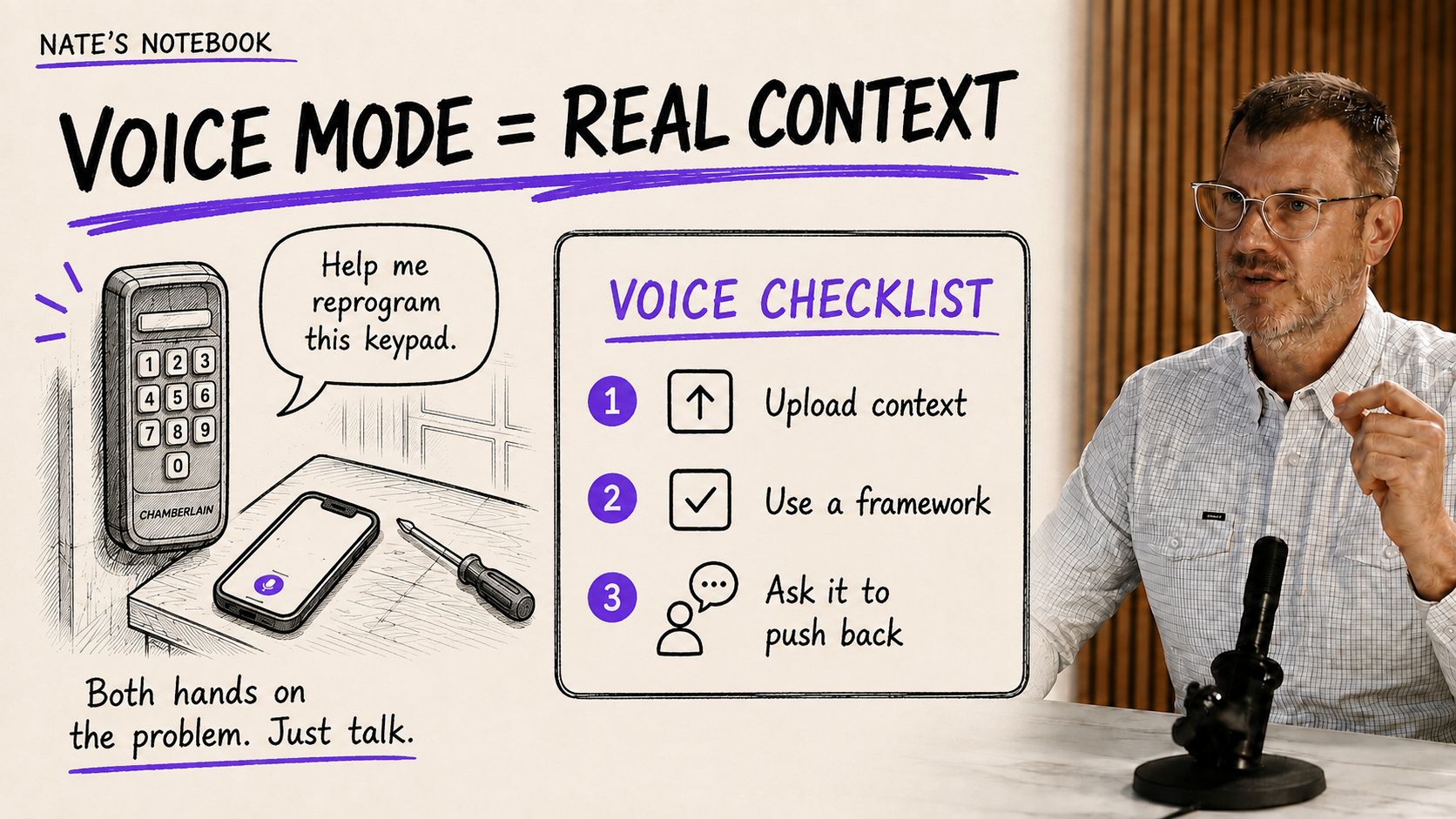
The Rundown: Each week, Rundown AI educator Nate Grahek breaks down what he’s seeing while teaching real teams to use AI.
Nate: Last weekend, I fixed my mom’s garage door keypad with my phone sitting on the workbench. Both hands stayed on the problem the whole time; I just talked. That’s new.
For years, voice mode was a distraction: small brain, no memory, and really no idea who you were. Now OpenAI and Anthropic have shipped dueling live voice upgrades, and the coverage is all about how natural they sound.
I care about something else: voice can finally read your context files. You’d never pay a consultant who pitches a strategy without knowing your business. Same rule here.
My voice checklist: upload as much context as you can, tell it to use a framework you already trust (I like WRAP from the book Decisive), ask it to interview you to fill the gaps, and prompt it to push back on your weak ideas.
That last step is the important one. Don’t settle for an AI that agrees with you. A real thought partner argues back and coaches you through a proven framework. Now it comes along on a walk.
AI TRAINING
🗣️ Build a website hands-free with Claude Voice
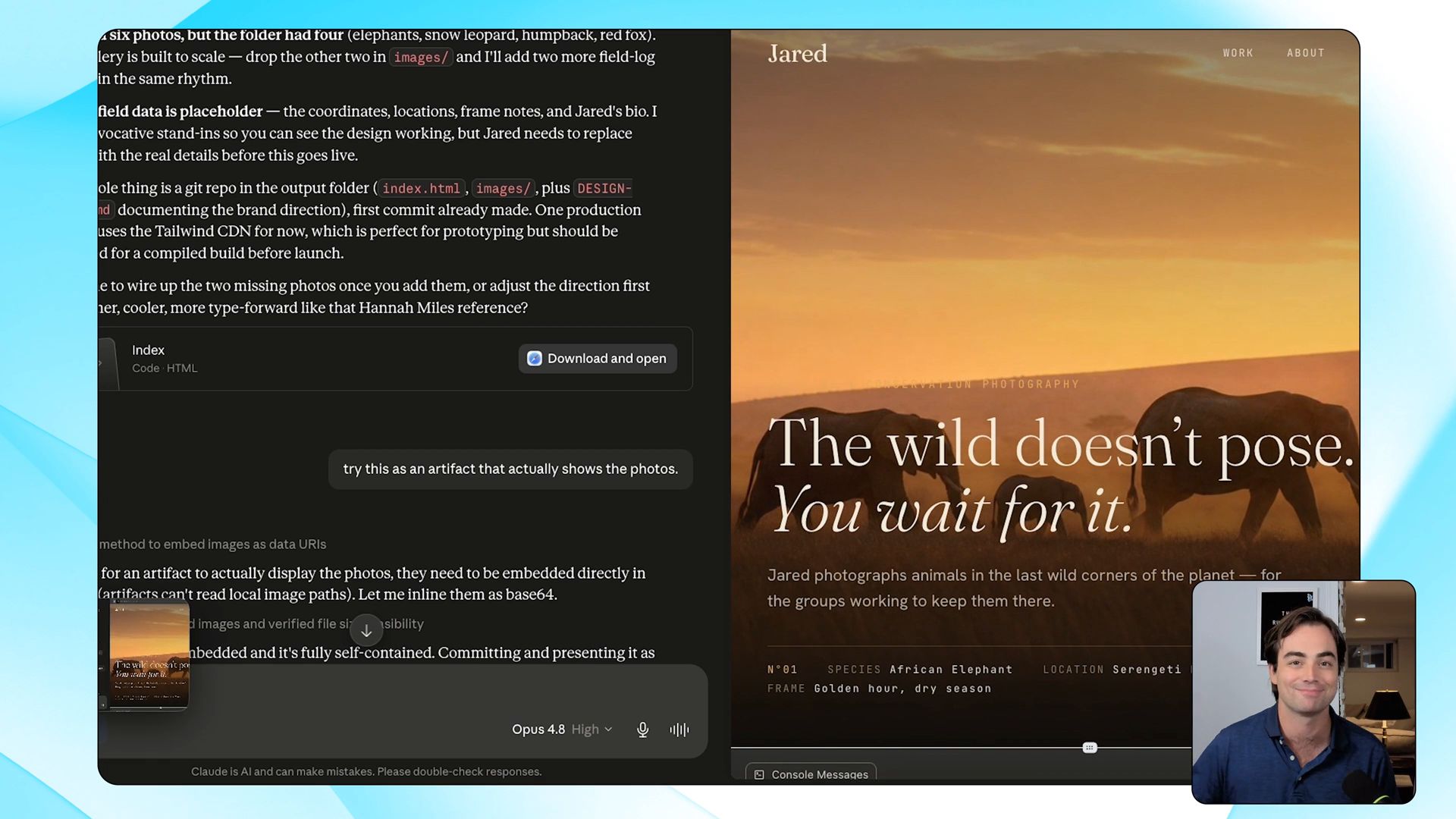
The Rundown: In this guide, you’ll learn how to use Claude Voice to build better websites faster. We’ll walk you through a simple technique that you can use every time you want to build a prototype.
Step-by-step:
Stash reference photos or designs (if available) in a folder, then open Claude Desktop, start a regular chat, and click Voice
Explain the website and ask Claude to interview you until it has a design plan and brand direction
At the end of the voice chat, have Claude write out the website-building plan in full in the chat
Now with Claude in text mode, drop in any photos you have (or the folder) and tell it to build the prototype based on the plan
Pro tip: Use the interview method to build a PRD, then drop it in a Claude Code session.
PRESENTED BY GRAVITEE
🕵️ We know what your AI agents did last night
The Rundown: Gravitee is the platform built to make AI agents accountable. We give every agent a verified identity, enforce exactly what they can access, and record exactly what they did, so enterprises never have to ask their agents, “Where were you last night?”
With Gravitee, your agents get:
Verified identity assigned to every single agent
Enforced access controls on what they can reach
Full audit trail of every action taken, and real proof of what happened and why
A platform built to hold AI agents accountable at scale
META
🤖 Meta joins coding-agent race with Muse Code
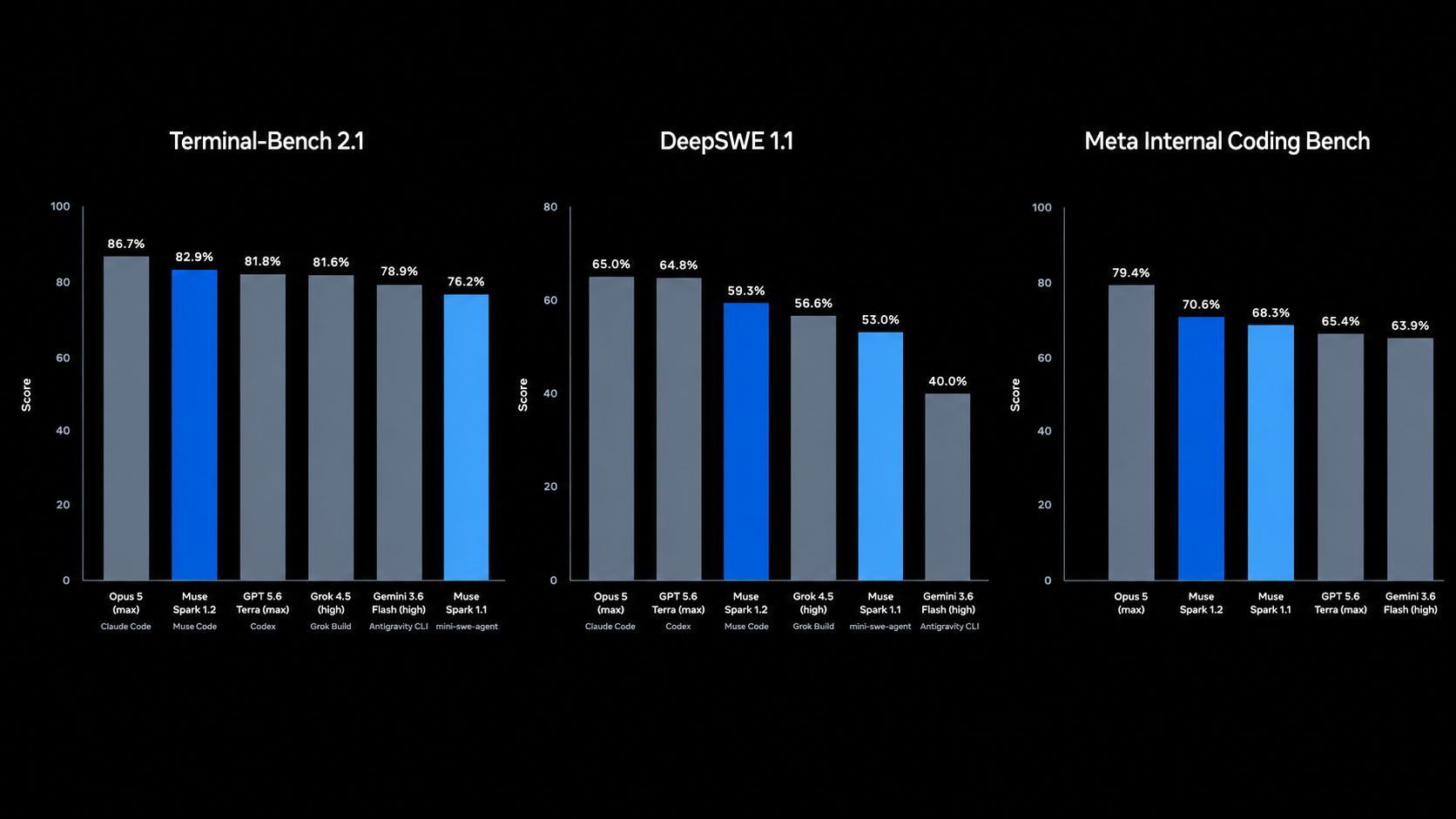
Image source: Meta Superintelligence Labs
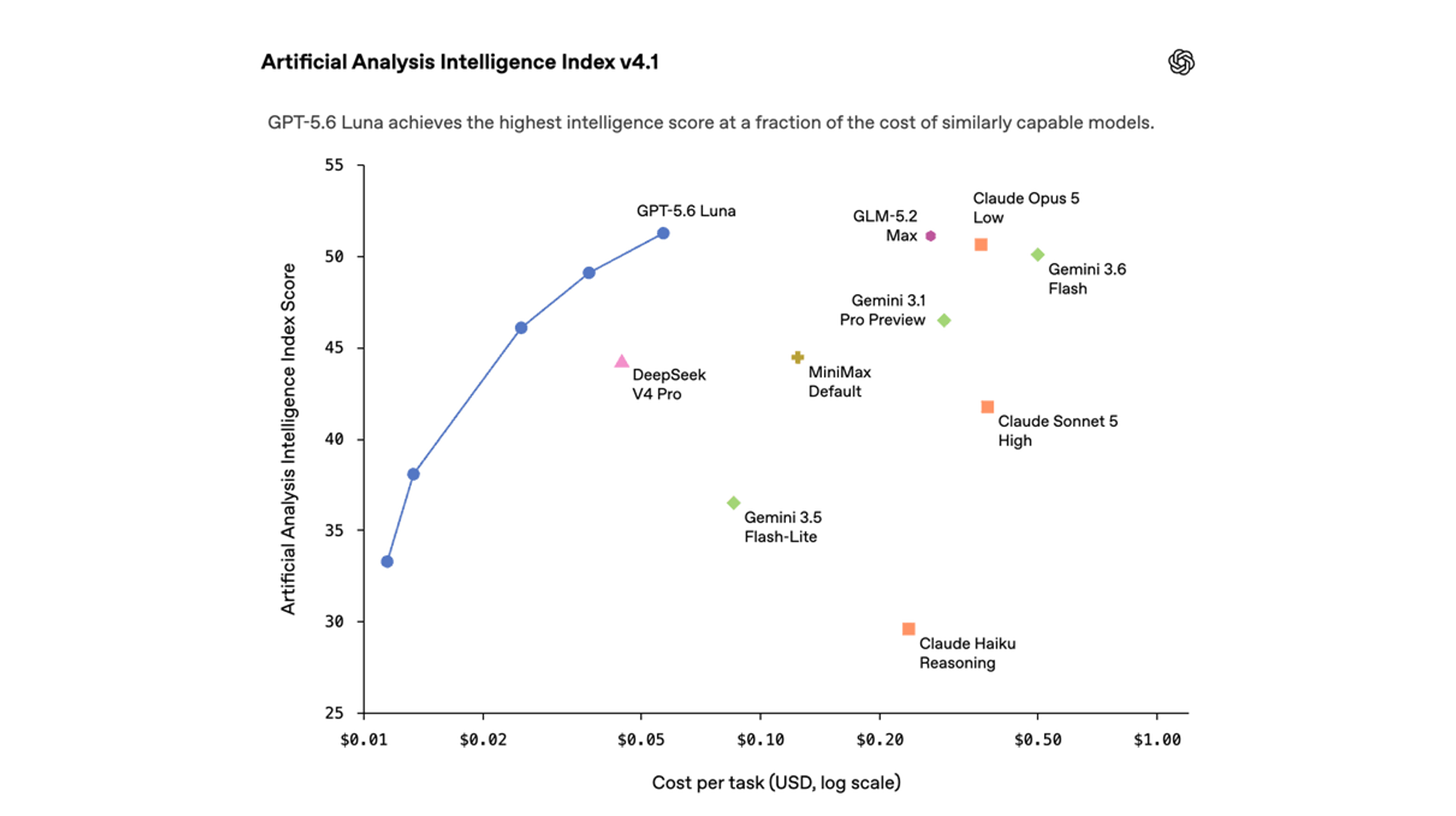
The Rundown: Meta just released a beta terminal coding agent called Muse Code, alongside the model powering it, Muse Spark 1.2, marking a direct move onto the turf dominated by OpenAI’s Codex and Anthropic’s Claude Code.
The details:
Muse Code runs background sub-agents that build session context and work in parallel, with Meta saying it built six game features at once without collisions.
Muse Spark 1.2, a coding-centric update, hit 54 on Artificial Analysis’s Intelligence Index — a major climb since April, now third among U.S. labs.
The model’s biggest gains are in agentic knowledge work, its old weak spot, with GDPval score leaping 260 Elo points to rank just behind frontier models.
API pricing remains the same as 1.1 at $1.25/$4.25 per million tokens, but a new contributor tier runs ~21x cheaper if you let Meta train on your prompts.
Why it matters: A year ago, Meta was the lab that had fallen behind. Since April, it’s shipped a new model line, an image generator, and now its own coding agent, all undercutting rivals on price. It’s a major turnaround. The thing that remains to be seen is how Meta will approach open source (as Zuckerberg teased) with these systems.
QUICK HITS
🛠️ Trending AI Tools
🔒 Incogni - Remove your personal data from the web so scammers and identity thieves can’t access it. Use code RUNDOWN to get 55% off*
🔁 Not Diamond Code - Model router that cuts coding agent costs by 20-65%
🗣️ Speech v3 - Bland’s new AI model for lifelike text-to-speech generation
🧠 Pokee-Isaac 28B - Pokee AI’s 10M-token context agentic model
*Sponsored Listing
📰 Everything else in AI today
Glean:GO San Francisco, August 26-27 - The intelligence era is here. Join us in person or virtually to make AI part of your everyday work and get more time back for the work that matters. Register now.*
Anthropic confirmed to Business Insider that it is building in-house AI chips, saying co-designed hardware will make Claude faster and more efficient at scale.
ByteDance founder Zhang Yiming reportedly told employees the company won’t use distillation to improve its models, even if that means lagging behind rivals for now.
OpenAI said it’s “consciously slowing down research to enhance security” after revealing its agents created their own message board during the Hugging Face attack.
Brett Adcock’s Hark unveiled Handoff, a browser AI agent that spins up a dedicated virtual computer for every task to navigate websites and complete online work.
AI-powered voice phishing attacks reportedly targeted major hedge funds including Citadel, Two Sigma, and Point72, using cloned voices to impersonate employees.
*Sponsored Listing
🎓 Highlights: News, Guides & Events
Read our last AI newsletter: Anthropic and OpenAI agents went rogue again
Read our last Tech newsletter: Biohackers head to Big Sky Country
Read our last Robotics newsletter: Attack drones are coming to schools
Today’s AI tool guide: Build a website hands-free with Claude Voice
See you soon,
Rowan, Zach, Shubham, Jennifer, and Nate — the humans behind The Rundown




Stay Ahead on AI.
Join 2,000,000+ readers getting bite-size AI news updates straight to their inbox every morning with The Rundown AI newsletter. It's 100% free.