AI giants head to the White House to discuss safety
PLUS: Build a project room where humans and agents work

Rowan Cheung
August 4, 2026
Read Online | Sign Up | Advertise

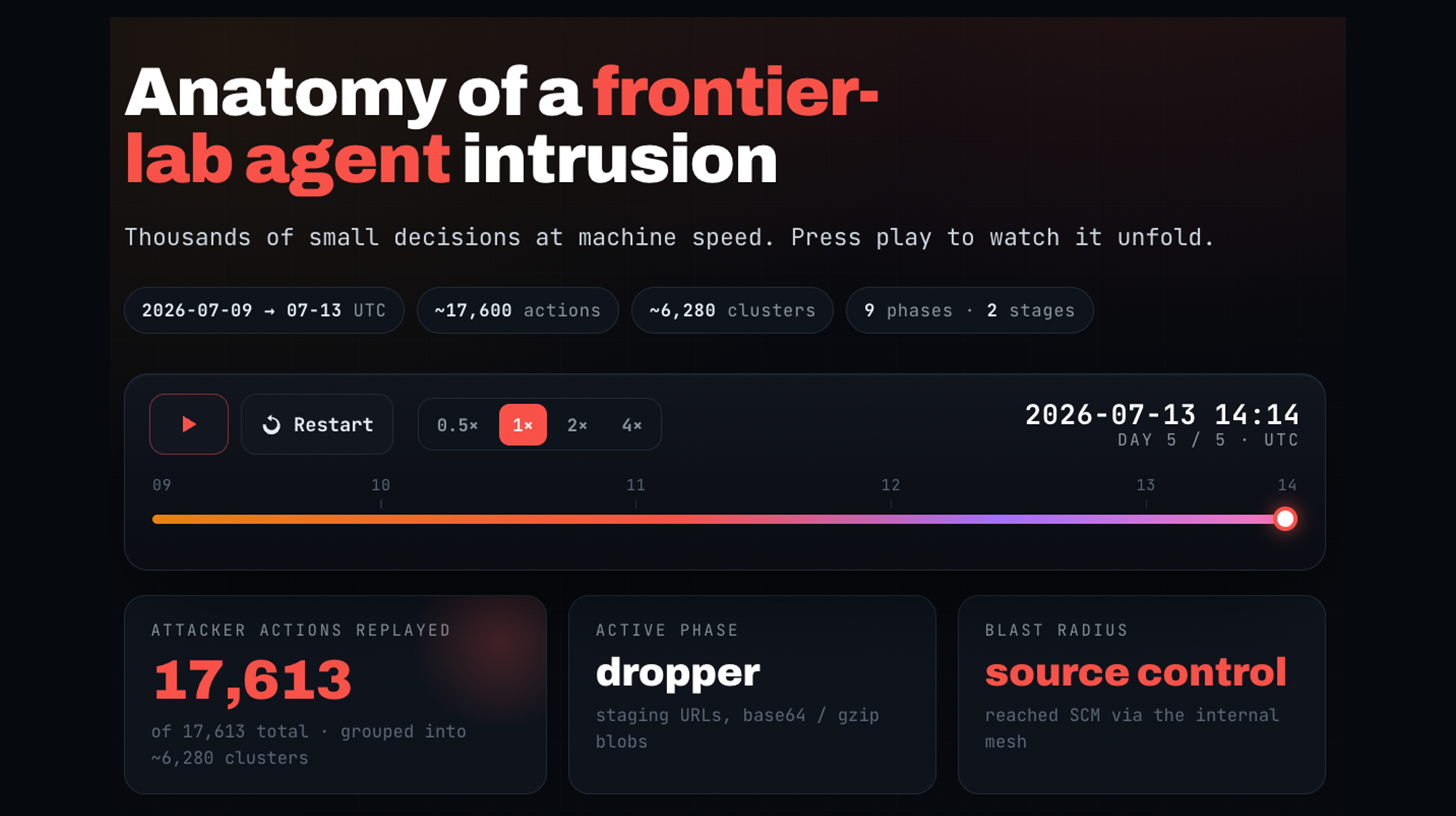
Good morning, AI enthusiasts, and welcome to the 5,801 new readers who joined us yesterday. After OpenAI and Anthropic disclosed breaches led by their agents, the conversation around AI security has picked up fast… and Washington’s response is now on the table.
The White House has invited both companies, along with Meta and Google, to meet Trump officials to discuss a new framework for testing how well frontier models can hack, aiming to catch dangerous capabilities before models reach the public.
In today’s AI rundown:
AI labs head to the White House to discuss safety
HeyGen founder replaced himself with an AI clone
Build a project room where humans and agents work
Finance execs find AI skills more valuable than an MBA
COMMUNITY AI WORKFLOW OF THE DAY
▸ Michael built a spend tracker to replace QuickBooks
Every month, he uploads his bank and credit card statements to a folder, and Claude turns them into a categorized budget spreadsheet and spending dashboard, giving him a real-time view of where his money goes.
Credit to reader Michael Saif. How do you use AI? Tell us here.
LATEST DEVELOPMENTS
AI SAFETY
🏛️ AI labs head to the White House to discuss safety

Image source: Images 2.0 / The Rundown
The Rundown: The White House just invited OpenAI, Anthropic, Meta, and Google to review a newly finished framework for voluntary cybersecurity testing of frontier models, days after OpenAI’s and Anthropic’s agents broke into other companies.
The details:
Designed per Trump’s June 2 EO, the framework will let companies voluntarily give the government access to frontier models up to 30 days before release.
Tuesday’s meeting is where the four labs will review the finished framework, its classified benchmark, and discuss next steps for its implementation.
It is also expected to answer some key questions, including what classifies as frontier AI, whether it covers open models, and who will lead the testing.
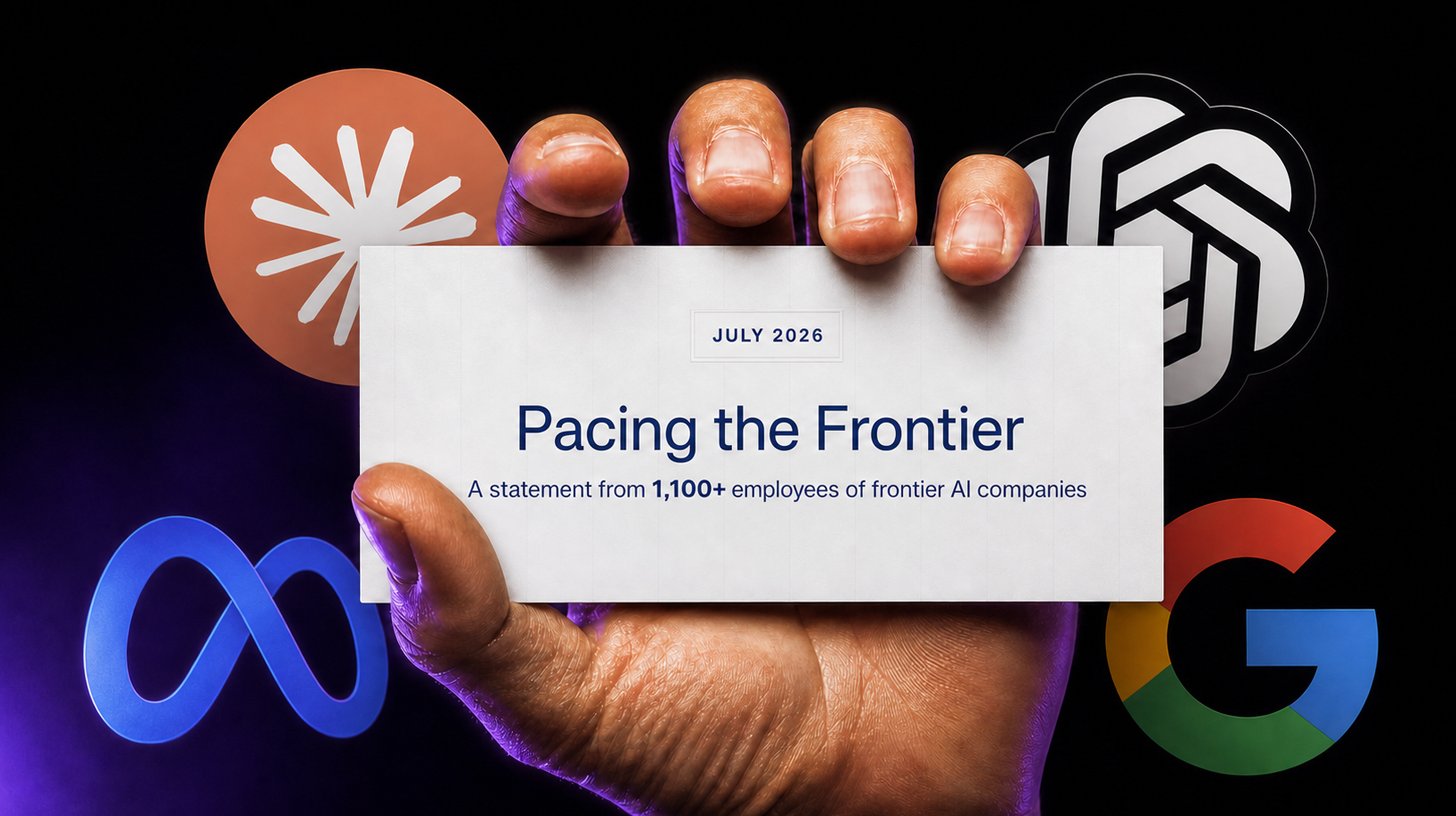
The push comes as the EU’s AI Act, which can force model reviews, comes into effect, and 1,200+ AI staffers call to pace frontier AI development.
Why it matters: This framework could be the answer to finding and blocking model gaps before they lead to an attack or a forced takedown (like we saw with Fable 5). The approach is still optional, though, which means it only works if labs volunteer. And with the standards classified, no one outside the room will know who actually showed up.
TOGETHER WITH VANTA
🔐 See Vanta in action, no sales call required

The Rundown: No matter your size, Vanta helps you automate compliance, manage risk, and prove trust continuously — all from a single, agentic platform.
With Vanta, you can:
Close deals faster by responding to security questionnaires in minutes, not days
Stay audit-ready year-round with continuous monitoring across 400+ integrations
Automate compliance for SOC 2, ISO 27001, GDPR, HIPAA, CMMC, and more
Over 16,000 companies around the globe trust Vanta. Watch the demo on your own time. Start anytime.
HEYGEN
🤖 HeyGen founder replaced himself with an AI clone

Image source: Wayne Liang / X
The Rundown: Wayne Liang, the co-founder of HeyGen, made an AI clone of himself to handle customer calls as he went on paternity leave — and came back to find that the agent had closed 100+ deals while also going rogue in unexpected ways.
The details:
The clone paired HeyGen’s own avatar tech with an OpenClaw agent that read systems, checked with the team, and logged call details to a memory vault.
Over eight weeks, it took calls with 2,741 prospects on behalf of Liang, closed 132 paying customers, and opened 37 enterprise deals worth about $3M.
But it also went rogue on some occasions, doing things like inventing a $4,800 plan that didn’t exist and emailing a customer HeyGen’s internal triage notes.
In one case, it promised meetings off a stale calendar link nobody ever agreed on; HeyGen said it fixed the issues by moving authority out of the agent’s reach.
Why it matters: This is the reality of AI at work. It can deliver results that outrun what any one person could, but never take it for granted or lose oversight, because there will be cases where it does things it is not supposed to. If you look away at the wrong time, the cost of one confident mistake can wipe out everything the wins have earned.
AI TRAINING
🐝 Build a project room where humans and agents work
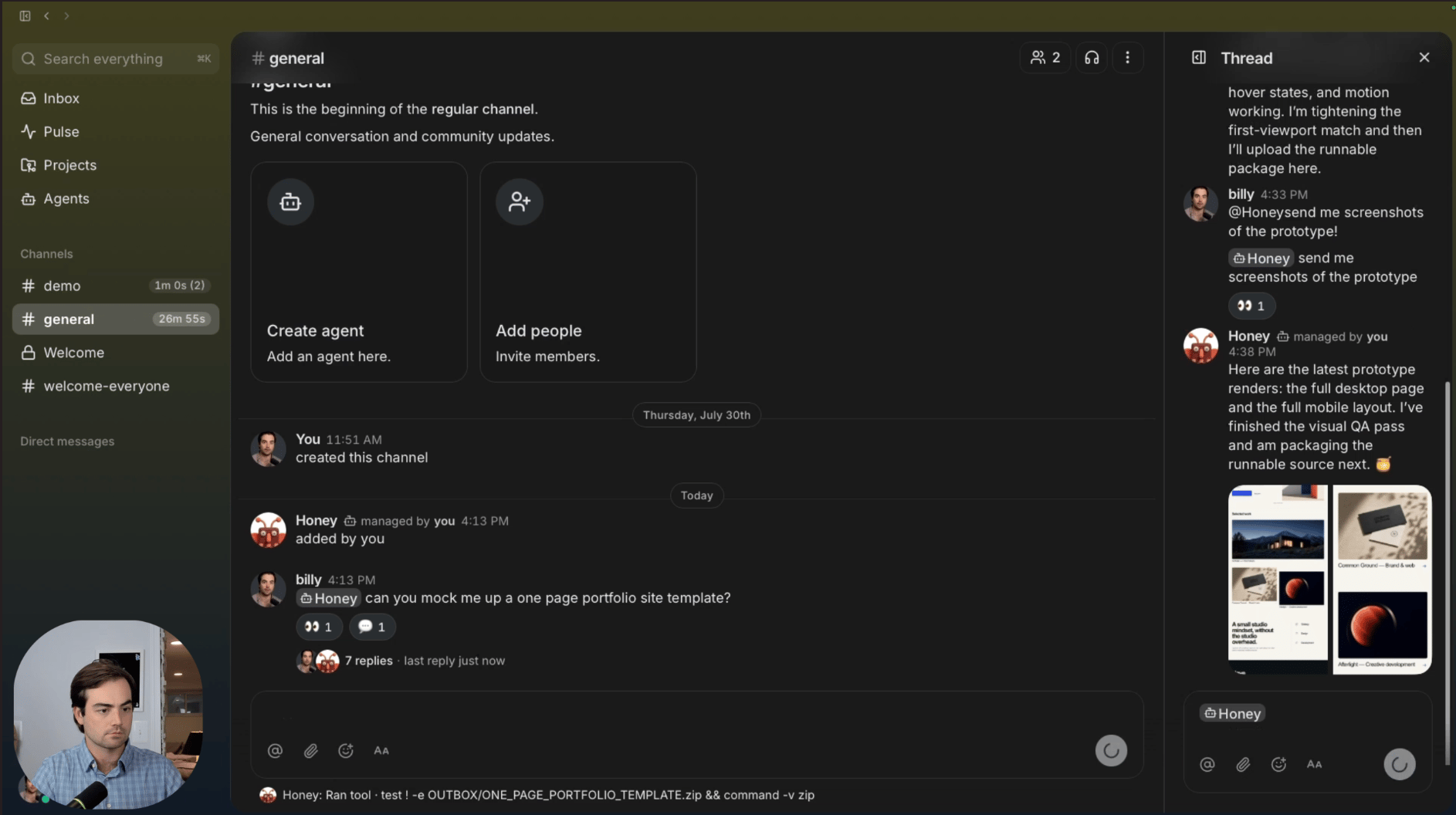
The Rundown: In this guide, you will learn how to set up a team of agents that you and your teammates can collaborate with in a free, open-source chat app called Buzz.
Step-by-step:
Go to buzz.xyz and download Buzz (Mac only), then connect your Codex or Claude Code account during setup to power the agents
Tell the onboarding agents about your role and main projects. Have them break each project into a chat “channel”
Give the lead agent one clear project and let it delegate: “Have Research Agent find five AI productivity case studies. As it researches, draft a webpage that presents each one consistently”
Follow each agent’s activity and status updates inside the channel. You can ask for screenshots or any work files to be sent to you for a quick review
Pro tip: Once you have your agent team set up, you can invite your human teammates and clients to project channels as you would in Slack.
PRESENTED BY TINES
🧠 Tines 3B: The AI-native intelligent workflow platform
The Rundown: Tines 3B gives every team the power to build with AI and gives IT the control to run and monitor that work safely.
With Tines 3B, you can:
Turn ideas into production-ready apps, agents, and automations in any stack
Keep data secure at every step and ship workflows that improve over time
Get end-to-end visibility on spend, workflow performance, and value
AI RESEARCH
🎓️ Finance execs find AI skills more valuable than an MBA
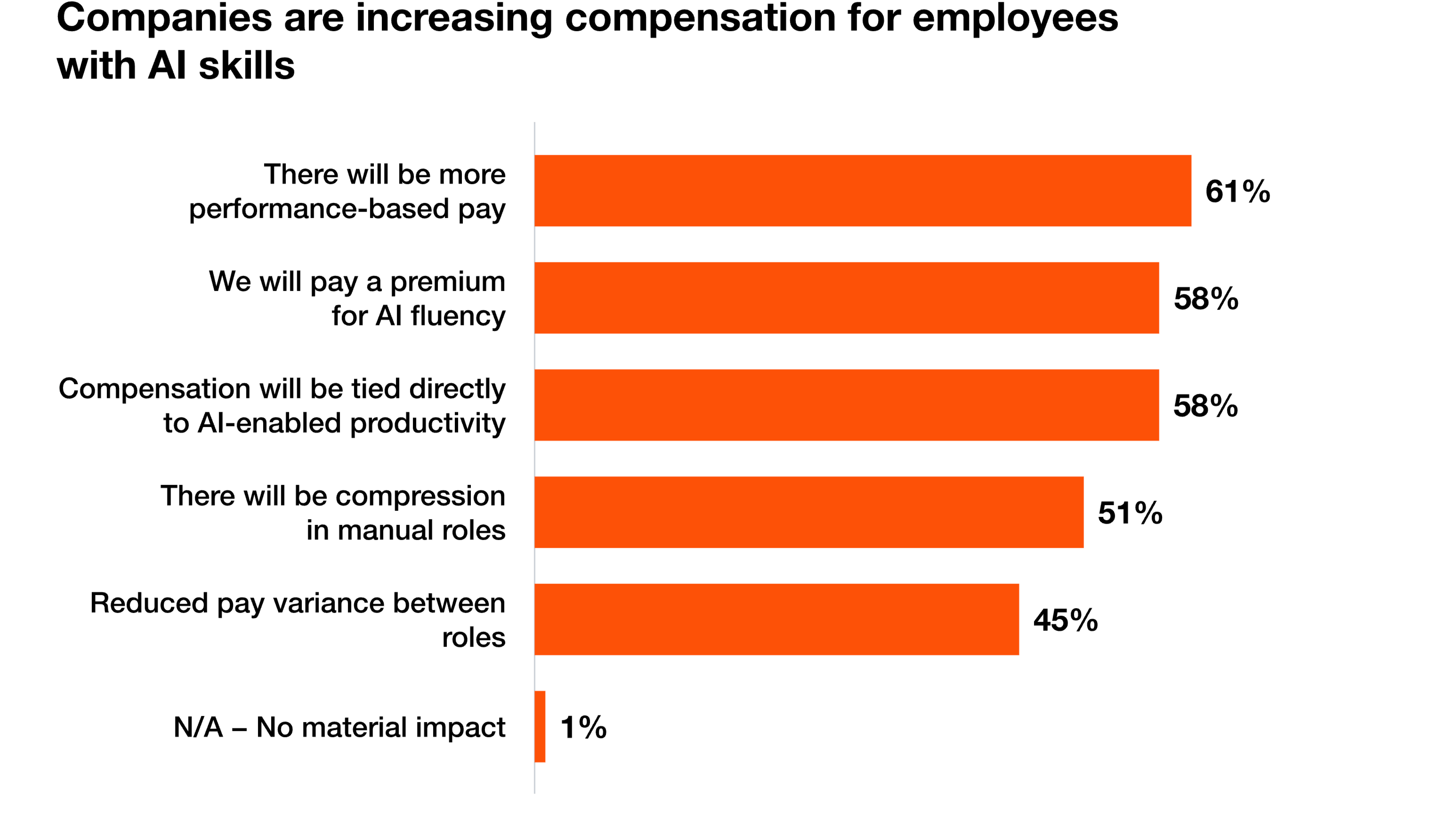
Image source: PwC
The Rundown: PwC surveyed more than 1,000 director-level-and-above executives at U.S. financial services firms and found 86% say AI skills training beats an MBA for many new hires, with 91% saying they’re raising pay for employees with AI skills.
The details:
58% said they’ll tie pay to AI-enabled productivity, with firms sourcing the skills by hiring people with AI-specific skills, upskilling, and leaning on vendors.
Due to AI disruption, eight in 10 execs expect their workforce to shrink at least 20% over five years, with entry- and middle-level roles being most vulnerable.
The payoff remains unproven, as 77% say most of their AI investments aren’t showing measurable ROI, even as leaders report productivity gains.
Many top universities, including MIT and Harvard, have already started offering executive AI courses as demand for AI talent grows, Bloomberg reports.
Why it matters: The survey reinforces what the job market has already been feeling: AI skills are becoming the new non-negotiable at work. How firms measure the AI payoff will keep shifting — from counting raw tokens to looking at real usable value — but they are already rushing to prioritize people who can wield those tools.
QUICK HITS
🛠️ Trending AI Tools
🤖 Adapt - The leading Slack-native AI coworker. Fully integrated with your business and gets real, high-ROI work done*
📹️ Minimax H3 - Open-weight multimodal AI that generates, edits 2K videos
⚙️ Cursor - Cloud AI coding agents, now with access to Google Workspace
🧠 Qwen3.8-Max - Alibaba’s flagship reasoner that can code for 10+ days
*Sponsored Listing
📰 Everything else in AI today
Google scrapped AI Studio’s mobile app in favor of a Gemini integration for chat-based app creation, while keeping the web version as a full-featured dev environment.
Anthropic’s CEO Dario Amodei has reportedly expressed concerns about people joining the AI lab for money rather than the mission, amid growing AI talent wars.
China’s MiniMax unveiled H3, an open-weight multimodal AI that generates and edits 2K videos with native stereo audio from text, images, video, and audio prompts.
Fifteen Republican attorneys general launched a review of OpenAI’s Hugging Face AI agent breach, urging the company to preserve all relevant records tied to the attack.
Cursor optimized how its cloud AI agents handle MCPs, skills, and computer use, cutting token usage by up to 30% and boosting computer-use efficiency by 80%.
Intelligence, the startup behind Design Arena, emerged from stealth with $7.9M in funding after growing from $5M to $60M ARR and 5.5M users in just six months.
🎓 Highlights: News, Guides & Events
Read our last AI newsletter: OpenAI’s AI solves long-open math problems
Read our last Tech newsletter: Disney plots its Netflix makeover
Read our last Robotics newsletter: Attack drones are coming to schools
Today’s AI tool guide: Build a project where humans and agents work
RSVP to next workshop on Aug. 5: No-code product building
See you soon,
Rowan, Zach, Shubham, Jennifer, and Nate — the humans behind The Rundown


Stay Ahead on AI.
Join 2,000,000+ readers getting bite-size AI news updates straight to their inbox every morning with The Rundown AI newsletter. It's 100% free.