Google's $99 Fitbit gets a wild new update
PLUS: Flock tightens data rules after backlash

Jennifer Mossalgue
August 14, 2026
Read Online | Sign Up | Advertise

Good morning, tech enthusiasts. Google’s smartwatch is getting a first-of-its-kind way to track insulin-resistance trends — with no blood draw or glucose sensor — and it’s coming to Pixel and Fitbit wearables.
The feature debuts alongside the $399 Pixel Watch 5, which brings Gemini, Google’s most accurate GPS yet, and an industry-first breathing-emergency detector — but it also reaches all the way down to the $99 screenless Fitbit Air.
In today’s tech rundown:
Google wearables now track insulin resistance
Flock tightens data rules after backlash
Google makes Pixel a Gemini machine
Joby buys its way into the defense tech race
Quick hits on other tech news
LATEST DEVELOPMENTS
🩺 Google wearables now track insulin resistance
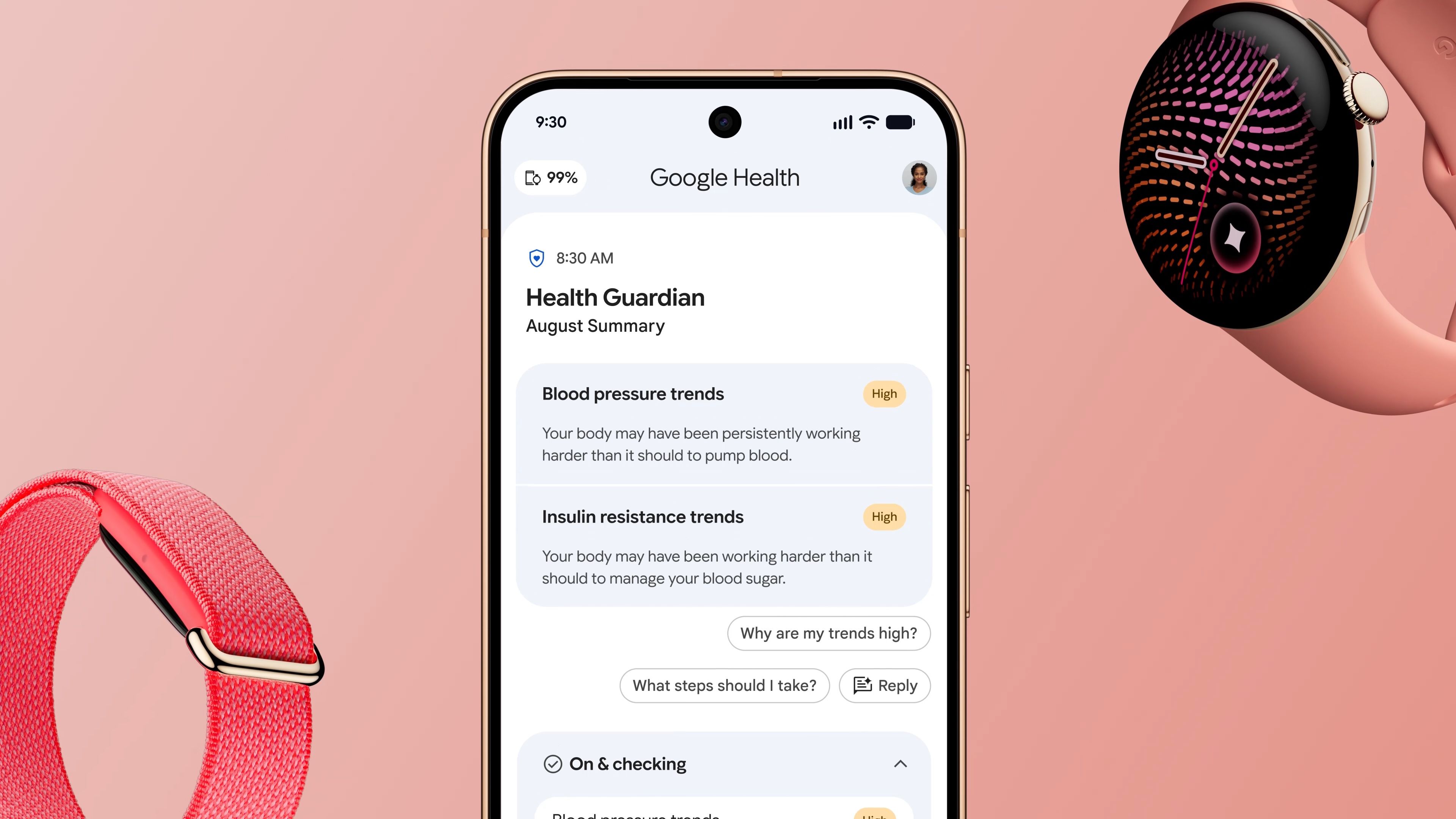
Image source: Google
The Rundown: Google is tracking insulin resistance from the wrist, with no blood draw or glucose sensor. The feature, just unveiled at Made by Google, arrives with the Pixel Watch 5 and reaches back to the $99 Fitbit Air, a band with no screen.
The details:
The feature is part of Google’s Health Guardian suite, which adds blood-pressure and sleep-breathing insights and breathing-emergency detection.
Rather than reading blood glucose, the system combines signals including heart-rate patterns, sleep, activity, and skin temperature to estimate changes.
Google positions the product as an early-warning wellness tool, not a medical diagnosis, treatment device, or substitute for glucose monitoring.
The feature is due this fall for the Pixel Watch 3, 4, and 5, as well as Fitbit Air, turning the launch into a software rollout across Google’s wearable portfolio.
Why it matters: If it works reliably, Google is turning everyday wearables into a new kind of metabolic early-warning system, surfacing risk before most people would ever think to get tested. More importantly, putting it on a $99 Fitbit could move a once-clinical signal into the mainstream, without asking users to do anything extra.
TOGETHER WITH DREXEL
🔥 Drexel’s MS in Artificial Intelligence & Machine Learning

The Rundown: Unleash the power of AI with Drexel University’s Master’s in Artificial Intelligence & Machine Learning. This interdisciplinary program is taught by leaders and experts across a variety of specializations to provide a deep understanding of the latest methodologies, techniques, and ethics being used in the field today.
With Drexel you will:
Learn AI/ML from the experts actively building it
Explore an interdisciplinary curriculum spanning today’s top methodologies
Get ethics training that’s treated as core curriculum, not an afterthought
FLOCK
📸 Flock tightens data rules after backlash
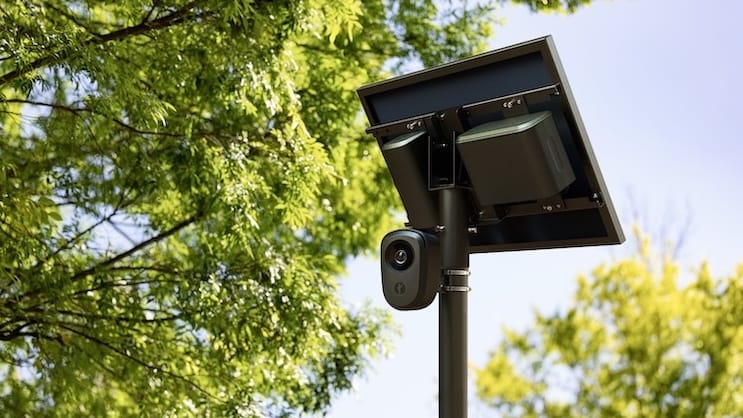
Image source: Flock
The Rundown: Flock Safety — the $8.4B company behind more than 120K roadside cameras that log where cars go — is tightening its privacy rules after a report found its network was used in 46 cases of police officers accused of abusing the system.
The details:
Flock is shrinking its recommended default retention window from 30 days to seven, though existing customers can keep their current policies.
By year-end, every law-enforcement customer must turn on Audit Assistance, which flags abnormal search behavior and can automatically lock users out.
Cities will get more control over who searches their cameras, including the ability to let outside agencies query data for violent crime or missing persons.
Privacy groups aren’t convinced. The American Civil Liberties Union called much of the package a “thinly veiled PR attempt.”
Why it matters: Flock’s network records roughly 20B plate scans a month. At that scale, defaults become de facto privacy policy, and the new guardrails still leave police deciding whom to search without imposing a warrant requirement or independently proving that Flock’s abuse detector catches what it should.
📱 Google makes Pixel a Gemini machine
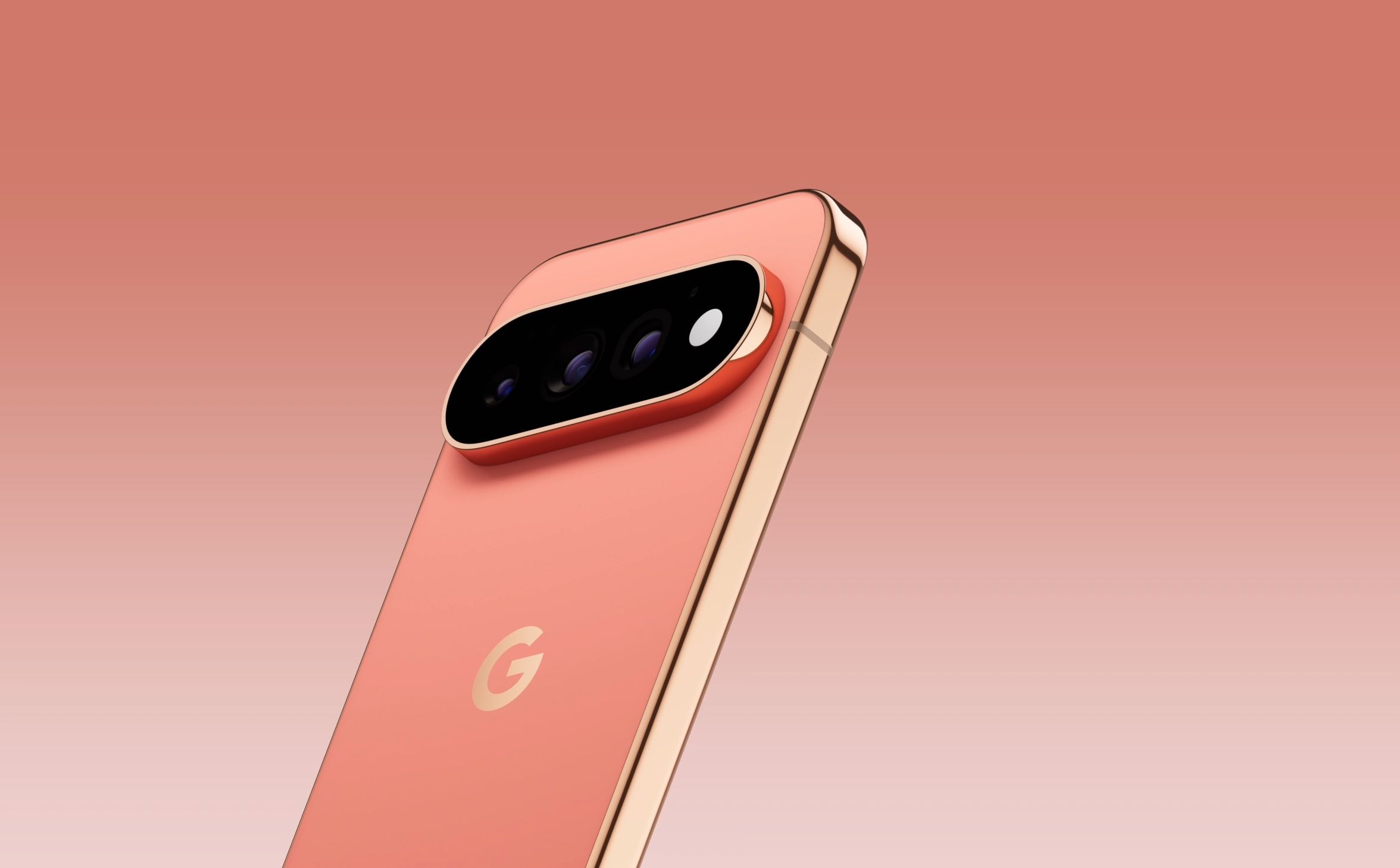
Image source: Google
The Rundown: Google’s latest hardware event just turned the Pixel into a test bed for Gemini-first computing: iterative phones, an ambient light in the camera bar, AI-inflected photography, and Android’s long-overdue answer to the AirTag.
The details:
The Pixel 11 family ($899 base, $1,099 Pro, $1,299 Pro XL, $1,899 Pro Fold) ships Aug. 20 with Tensor G6, 256GB as the new entry tier, and Qi2.2 charging.
Cameras get a big upgrade: 48MP and 56% better light sensitivity on the base Pixel 11, and a revised 50MP main, larger 48MP telephoto, 120x zoom on Pro.
HiLight, an RGB LED ring in the Pro camera bar, colors incoming calls from favorites and pulses while Gemini listens, with more uses promised later.
Gemini can now handle multistep tasks across 40+ apps, surface context from chats/bookings, and suggest actions in apps like Calendar and Maps.
Why it matters: Google gets first crack at defining Gemini on its own hardware while Apple prepares to run Google models inside Siri. And the $29 Pixel Tag, shipping Nov. 11, pushes that rivalry beyond the screen into everyday objects, tapping a Find Hub network of more than 1B Android devices.
JOBY AVIATION
🚁 Joby buys its way into the defense tech arms race

Image source: Joby Aviation
The Rundown: California eVTOL maker Joby Aviation is paying $500M — roughly $450M cash and $50M stock — for Resonant Sciences, a 250-person Dayton, Ohio, defense-tech company whose workforce is more than 90% security-cleared.
The details:
Under the deal, which is expected to close in the first half of 2027, Resonant will keep its name and CEO while becoming Joby’s dedicated defense division.
The new unit will absorb Joby’s existing defense initiatives, including turbine-electric, hydrogen-electric, and defense-autonomy programs.
Resonant makes more than $100M a year, and its core operations are profitable; Joby’s air-taxi business is still in the investment-and-loss phase.
Why it matters: Joby’s $38.6M in Q2 revenue still came overwhelmingly from Blade, the helicopter business it bought last year, which contributed $36.2M. Joby, on its part, expects to use another $385M–$415M of cash in the second half of 2026. Resonant gives the company something it doesn’t yet have: a sizable, profitable business.
QUICK HITS
📰 Everything else in tech today
Instagram swapped its decade-old wordmark for a half-cursive, half-print hybrid that Adam Mosseri called a modern refresh, and the internet read it as "Instagzam."
Whoop plans to lease 107K square feet next to its Boston headquarters, roughly doubling its local footprint as the screenless fitness-tracker maker prepares for an IPO.
Bumble ended its women-message-first rule, letting men also initiate a match, and extended the reply window from 24 to 72 hours.
Ford plans to begin prototype production of its $28K Fathom electric pickup in early 2027 at a $2B-overhauled Louisville, Kentucky, plant.
Sonos is reportedly preparing the Ace Ultra, a premium successor to its Ace headphones with potentially deeper earcups, Wi‑Fi, voice controls, and up to 5 colors.
Databricks closed a $5B round at a $190B valuation after planning to raise just $1B and drawing $15B in investor interest.
Meta said it has removed more than 750K Australian Facebook and Instagram accounts believed to belong to under-16s as it complies with the country’s ban.
Uber is developing a “tween” ride option that would let adults add children aged 10 to 12 to an Uber Family profile, reports Bloomberg.
Facebook launched a standalone iOS Creator Studio app, using an AI assistant to give creators personalized performance advice and identify priority comments.
Tandem PV said it will begin selling 30.4%-efficient perovskite-on-silicon solar panels later this year, testing whether a lab-record tech can survive utility-scale deployment.
China’s experimental maglev train reportedly accelerated from 0 to 800 km/h in 5.3 seconds on a 1 km test track, setting a short-distance acceleration record.
Heart Aerospace’s battery-powered X1 aircraft completed a 27-minute first flight using less than $5 of electricity, marking a step toward its planned 30-seat hybrid.
🎓 Highlights: News, Guides & Events
Read our last AI newsletter: OpenAI feels the frontier need for speed
Read our last Tech newsletter: Apple’s almost-glass iPhone
Read our last Robotics newsletter: Honor’s robot phone is finally here
Today’s AI tool guide: Build a work ‘Second Brain’ that updates itself
RSVP to next workshop on Aug. 21: Land your first AI consulting gig
See you soon,
Rowan, Zach, Shubham, Jennifer, and Nate — The Rundown’s editorial team


Stay Ahead on AI.
Join 2,000,000+ readers getting bite-size AI news updates straight to their inbox every morning with The Rundown AI newsletter. It's 100% free.