A crawling, detachable robot hand
PLUS: Zipline comes to more cities

Jennifer Mossalgue
January 22, 2026
Read Online | Sign Up | Advertise

Good morning, robotics enthusiasts. EPFL roboticists just built a robotic hand that can detach itself and crawl away from its arm — basically “Thing” from The Addams Family, but engineered in Switzerland.
With freakishly flexible, reversible fingers, it can grip from either side — and even juggle extra tasks with a sixth digit. Is this the next big leap in real-world dexterity?
In today’s robotics rundown:
Robotic hand detaches and crawls on its own
Zipline soars to $7.6B as it targets Houston, Phoenix
Sailbots take on Category 5 hurricanes
Serve Robotics moves into hospital bots
Quick hits on other robotics news
LATEST DEVELOPMENTS
EPFL
✌🏼 Robotic hand detaches and crawls on its own
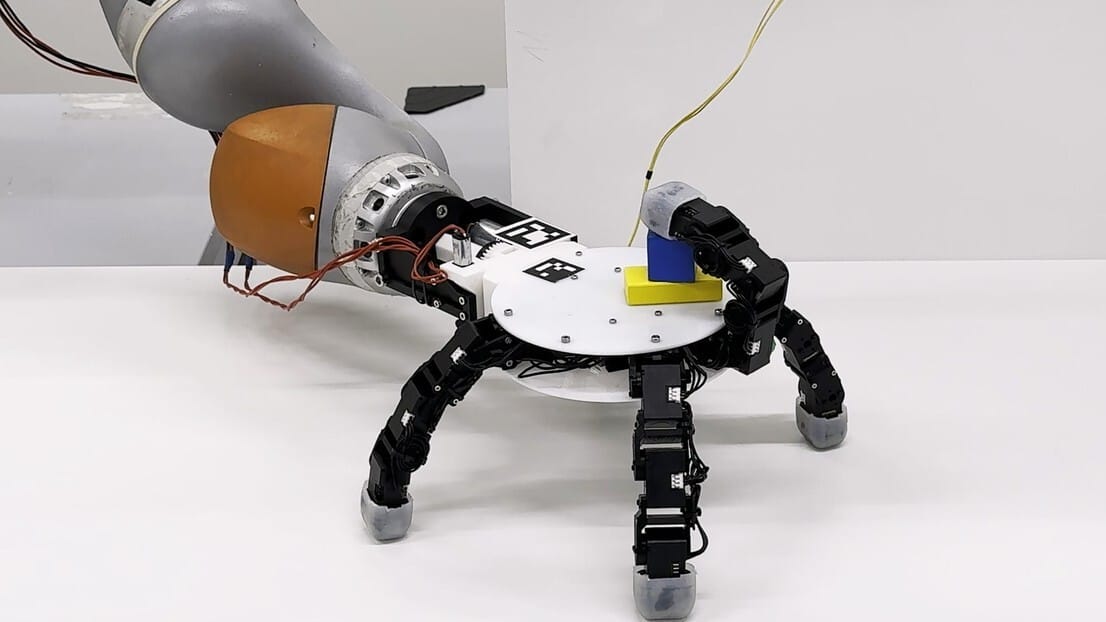
Image source: EPFL
The Rundown: Researchers at Switzerland’s EPFL just built a robotic hand that can detach from its arm, scuttle across a surface, and grab objects beyond the reach of conventional manipulators.
The details:
The EPFL team built this robotic hand from 3D printable parts, with the ability to detach from its arm, crawl, grab objects, and reattach itself.
The reversible design lets any finger combination form opposing thumb-like pairs, enabling grasping from either side without repositioning.
Each finger bends in both directions with more than twice the range of motion of a human hand, optimized via genetic algorithms for grasping and locomotion.
With five fingers, it replicates most human grasps; add a sixth finger, and it can tackle two-handed tasks singlehandedly, like unscrewing a large bottle cap.
Why it matters: This hand challenges a core assumption in robotics — that manipulators must stay bolted to their arms. By treating it as an autonomous agent that can deploy, complete a task, and return, EPFL’s design hints at a future where robotic limbs become interchangeable tools rather than fixed appendages.
ZIPLINE
🌯 Zipline soars to $7.6B as it targets Houston, Phoenix
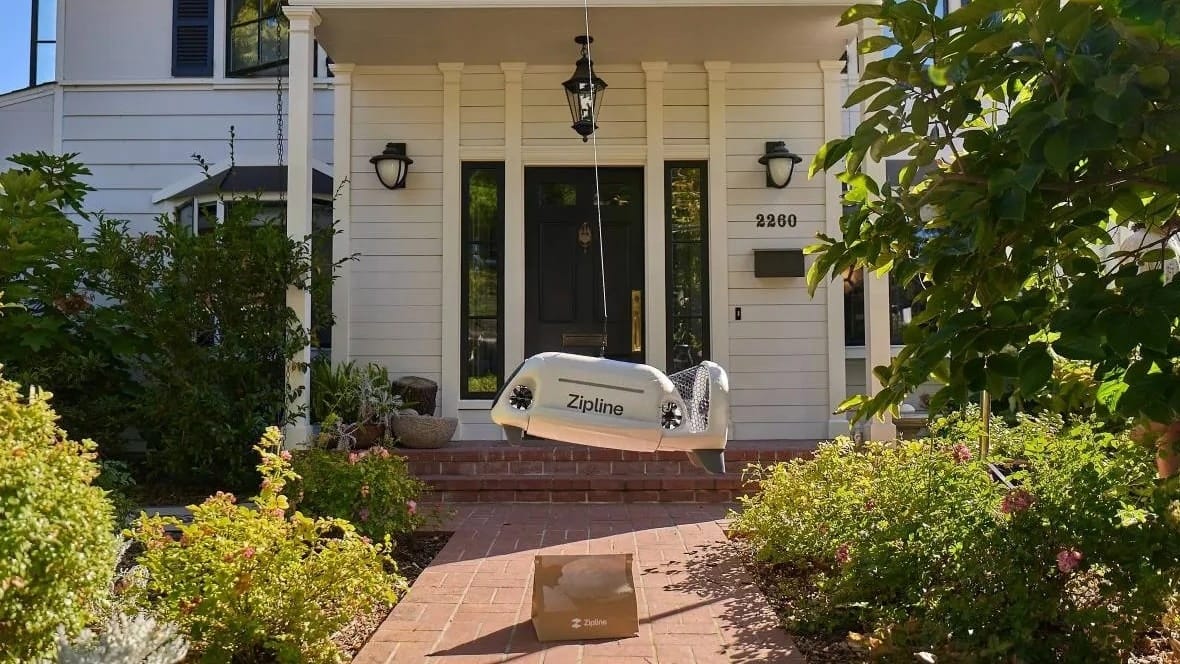
Image source: Zipline
The Rundown: Zipline just raised more than $600M to fuel a fresh U.S. push that will launch its autonomous drone delivery in Houston and Phoenix in early 2026 and support expansion into at least four states.
The details:
Zipline’s valuation has nearly tripled in under three years, leaping from $2.75B in mid-2021 to $7.6B today.
Zipline says it has surpassed 2M commercial deliveries globally, with its drones flying more than 125M autonomous miles and delivering over 20M items.
The company began operations in 2016, delivering blood by drone in Rwanda, and has spent the past decade building a vertically integrated logistics stack.
Its Platform 2 drones, tailored for suburban home delivery, can carry up to 8 lb. within a 10‑mile radius, while the Platform 1 handles 120‑mile round trips.
Why it matters: Zipline says its newest U.S. sites can ramp to 100 deliveries a day in just two days, turning what used to be slow, geofenced pilots into something that starts to look like real infrastructure. Rivals Amazon Prime Air and Walmart’s drone partners Wing and DroneUp are pushing hard too — the drone wars are officially on.
CLIMATE ROBOTICS
🌊 Sailbots take on Category 5 hurricanes
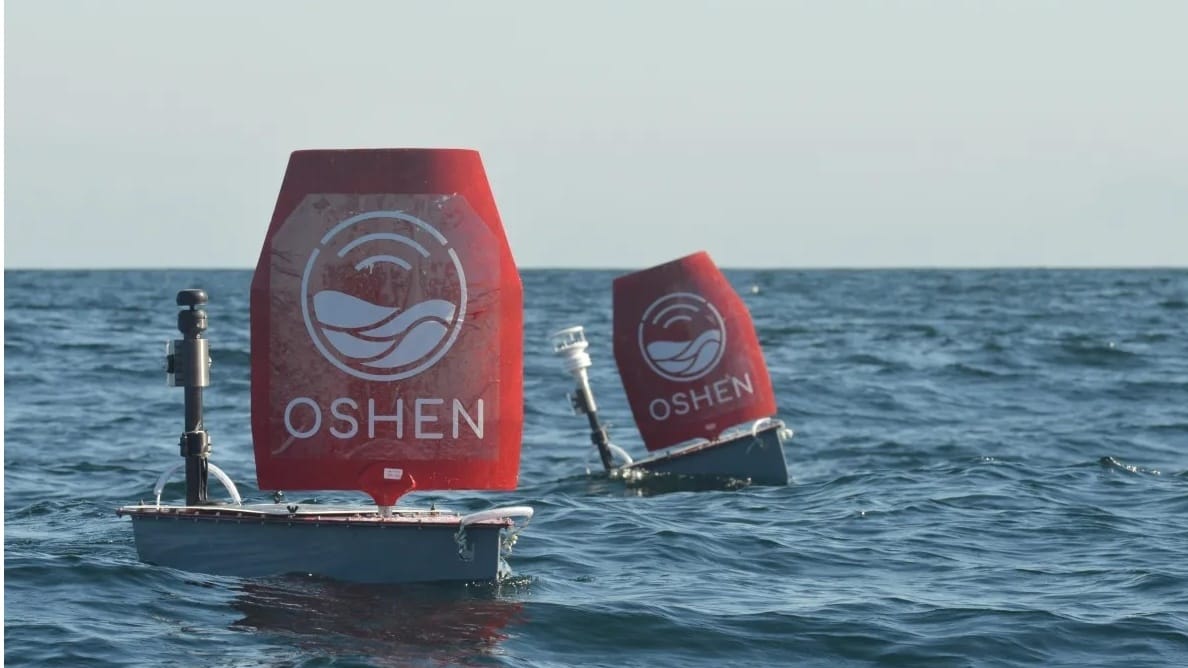
Image source: Oshen
The Rundown: Bootstrapped UK startup Oshen has built swarms of low-cost autonomous “C-Star” robots that recently became the first ocean bots to survive and collect data from inside a Category 5 hurricane, its founder told Techcrunch.
The details:
Oshen builds autonomous micro-robots that can survive up to 100 days at sea and are cheap enough to deploy in swarms for ocean data collection.
Founder Anahita Laverack launched the company in 2022 after realizing how little real-time ocean data exists for weather and climate modeling.
OAA commissioned Oshen to deploy C-Stars near the U.S. Virgin Islands for Hurricane Humberto; three of five bots rode out the full Category 5 storm.
Oshen, now based in Plymouth (England’s marine tech hub), is signing new government and defense contracts, including with the UK government.
Why it matters: Oshen’s C-Star swarms show how micro-robots could plug a critical gap in hurricane and climate models by streaming real-time data from places that are tough to reach, intensifying competition with larger uncrewed fleets like Saildrone’s USVs already collecting high-res storm data for NOAA and navies worldwide.
SERVE ROBOTICS
🏥 Serve Robotics moves into hospital bots
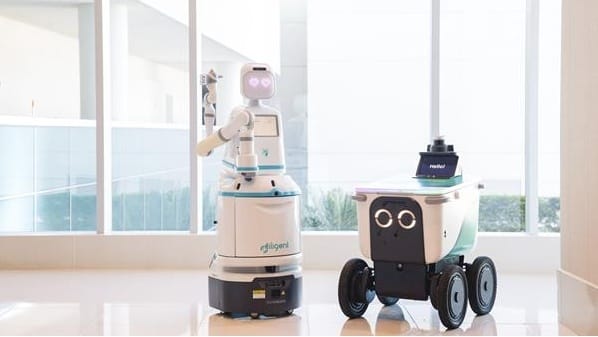
Image source: Serve Robotics
The Rundown: Serve Robotics is pushing beyond burrito runs into the far messier world of hospital logistics, agreeing to buy Austin-based Diligent Robotics in an all-stock deal valuing the startup at about $29M.
The details:
The deal extends Serve from sidewalk delivery to hospital logistics, but CEO Ali Kashani frames it as a natural expansion of the same autonomy stack.
Diligent’s Moxi robots are already one of the largest deployed hospital service fleets in the U.S., with roughly 100 robots across more than 25 hospitals.
Serve plans to keep Diligent operating independently while sharing software, autonomy tools, and data so that “every robot learns from every robot.”
Serve’s sidewalk fleet, which runs on both DoorDash and Uber Eats networks, scaled from 100 to more than 2K robots over the past year.
Why it matters: This deal turns Serve from a niche food-delivery player into one of the first companies running a shared autonomy stack across both public sidewalks and hospital corridors — a real-world stress test for “physical AI,” the bet that one platform can learn to navigate any human-occupied space and port those lessons everywhere.
QUICK HITS
📰 Everything else in robotics today
1X’s VP of AI, Eric Jang, who helped scale 1X from a small Norway-based startup to a global humanoid giant, announced on X that he is leaving the company.
Chinese robotics firm UBTech signed a deal to supply its Walker S2 humanoids to Airbus for aviation manufacturing, which sent UBTech’s shares surging.
UBTech says its Walker S2 humanoids are now autonomously performing assembly and material-handling tasks inside a Chinese wind turbine factory.
XPeng’s CEO, He Xiaopeng, said their automotive-grade ET1 humanoid has rolled off the production line, with the first mass-produced test units focused on reliability.
Hyundai’s Boston Dynamics hired Milan Kovac, Tesla’s former senior VP and head of the Optimus humanoid program, as a group adviser and outside director.
DEEP Robotics launched an AI-powered firefighting system that uses coordinated robot dogs and other specialized robots to handle high-risk firefighting missions.
Microsoft unveiled Rho-alpha, a robotics AI that converts everyday language into robot actions by combining vision and touch for more reliable real-world manipulation.
Boston Dynamics updated its Spot platform and Orbit software to version 5.1 and introduced the Spot Cam 2 sensor head, sharpening its inspection capabilities.
Zhejiang University researchers built FlexiRay, a soft robotic gripper that uses an internal camera and mirror system to “see” around corners.
COMMUNITY
🎓 Highlights: News, Guides & Events
Read our last AI newsletter: Anthropic writes Claude's Constitution
Read our last Tech newsletter: Biotech’s big three (and they’re wild)
Read our last Robotics newsletter: 1X now has a world model
Today’s AI tool guide: Make Claude an expert at anything with Skills repo
RSVP to next workshop @ 4PM EST Thursday: AI Foundations Bootcamp pt.3
See you soon,
Rowan, Joey, Zach, Shubham, and Jennifer — The Rundown’s editorial team

Stay Ahead on AI.
Join 2,000,000+ readers getting bite-size AI news updates straight to their inbox every morning with The Rundown AI newsletter. It's 100% free.