1X now has a world model
PLUS: Skild AI hits $14B for robot brains

Jennifer Mossalgue
January 15, 2026
Read Online | Sign Up | Advertise

Good morning, robotics enthusiasts. 1X wants its Neo humanoids to learn the way humans do: by watching. The Norwegian startup just unveiled a physics-based world model that lets robots learn tasks from video instead of code.
Right now, that means Neo is learning high fives and handling air fryer baskets, but the approach puts 1X in serious company.
In today’s robotics rundown:
1X releases a world model for Neo
Skild AI hits $14B for building robot brains
Motional robotaxis target Vegas comeback
Robot learns to lip sync by watching YouTube
Quick hits on other robotics news
LATEST DEVELOPMENTS
1X
🌎 1X releases a world model for Neo

Image source: 1X / YouTube
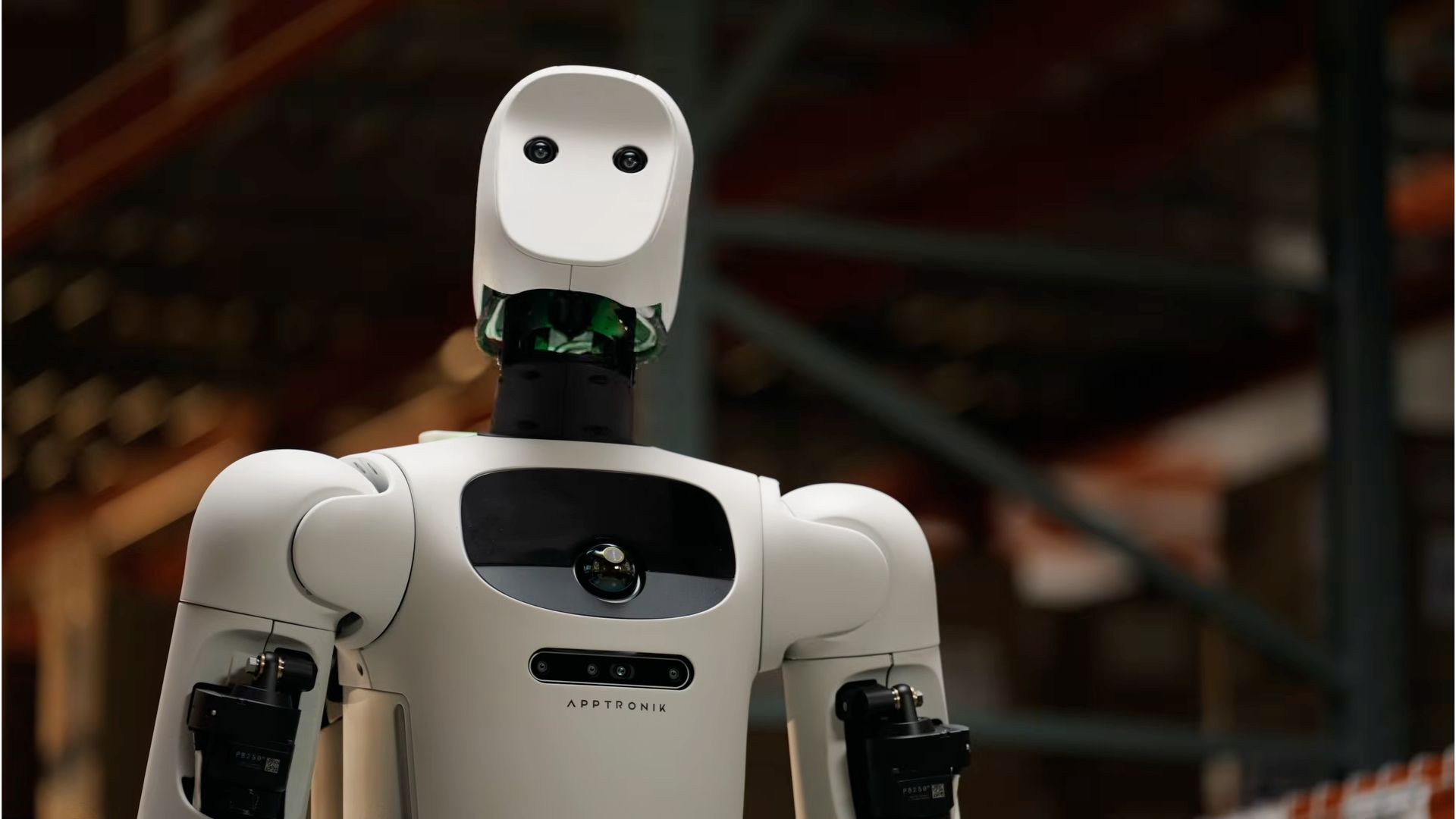
The Rundown: Humanoid maker 1X just released a physics-based world model that uses video and prompts to teach its Neo robots new tasks, moving closer to bots that can learn by observation rather than pre-programming.
The details:
The company unveiled its 1X World Model as it prepares to ship Neo to customers who preordered the home robots in October.
Neo captures video data linked to prompts and feeds it back into the model, which then distributes learned behaviors across the entire network of bots.
1X joins competitors like Skild AI (more on it below) and Field AI in pursuing adaptive robotic software that learns from observation.
The world model represents a step toward robots that teach themselves rather than requiring exhaustive pre-programming for each action.
Why it matters: While 1X claims Neo can “transform any prompt into new actions” and “master nearly anything you could think to ask,” the actual learned tasks remain limited to basics like removing air fryer baskets and making toast. Still, the ability to learn simple tasks from observation puts 1X in direct competition with major players.
SKILD AI
🧠 Skild AI hits $14B for building robot brains
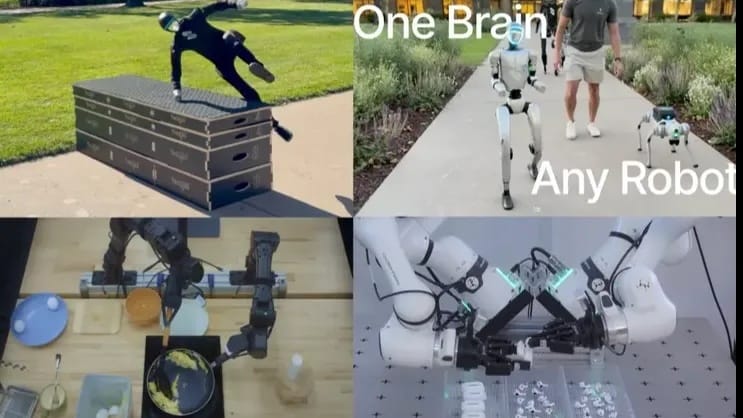
Image source: Skild AI
The Rundown: Skild AI, a Pittsburgh-based startup building foundation models to let robots learn by watching humans, tripled its valuation to $14B in seven months on the promise of general-purpose robot brains.
The details:
Skild builds foundation models that retrofit existing robots with adaptive capabilities, allowing machines to learn new tasks without extensive retraining.
Its valuation jumped from $4.5B last summer, reflecting investor confidence that learn-as-you-go software represents the breakthrough needed for robots.
The startup’s models learn by observing human demos, addressing the core bottleneck that keeps robots locked into narrow, pre-programmed routines.
Skild was founded in 2023 by Carnegie Mellon roboticists Deepak Pathak and Abhinav Gupta, and has raised over $300M in a single Series A round.
Why it matters: The sheer amount of training required for robots to learn each new task remains the biggest hurdle to adoption. Adaptive software that lets machines learn as they go could clear the path for broader deployment, though Skild AI faces growing competition from rivals like Field, Physical Intelligence, Figure, and (now) 1X.
MOTIONAL
🎰 Motional robotaxis target Vegas comeback

Image source: Hyundai Motor Group
The Rundown: Motional, the struggling autonomous vehicle company born from Hyundai and Aptiv’s $4B joint venture, is rebooting its robotaxi ambitions with an AI-first self-driving system and a plan to launch driverless service in Las Vegas.
The details:
The company paused operations in 2024 after missing deadlines and cutting 40% of staff, prompting Hyundai to inject $1B after Aptiv withdrew backing.
Motional ditched its complex web of machine learning models for an end-to-end foundation model that adapts to new cities through retraining.
The company will launch IONIQ 5 robotaxi rides with safety drivers later this year, then remove human operators by December 2026 for driverless service.
Test rides showed progress in navigating chaotic Las Vegas hotel pickup zones, though the system still struggled around double-parked delivery vans.
Why it matters: Motional’s promise arrives as Zoox already operates a free public robotaxi service on the Las Vegas Strip and Waymo offers commercial rides in other cities. Whether foundation models can compress years of development into months will determine if Motional survives or becomes another pricey cautionary tale.
ROBOTICS RESEARCH
👄 Robot learns to lip sync by watching YouTube
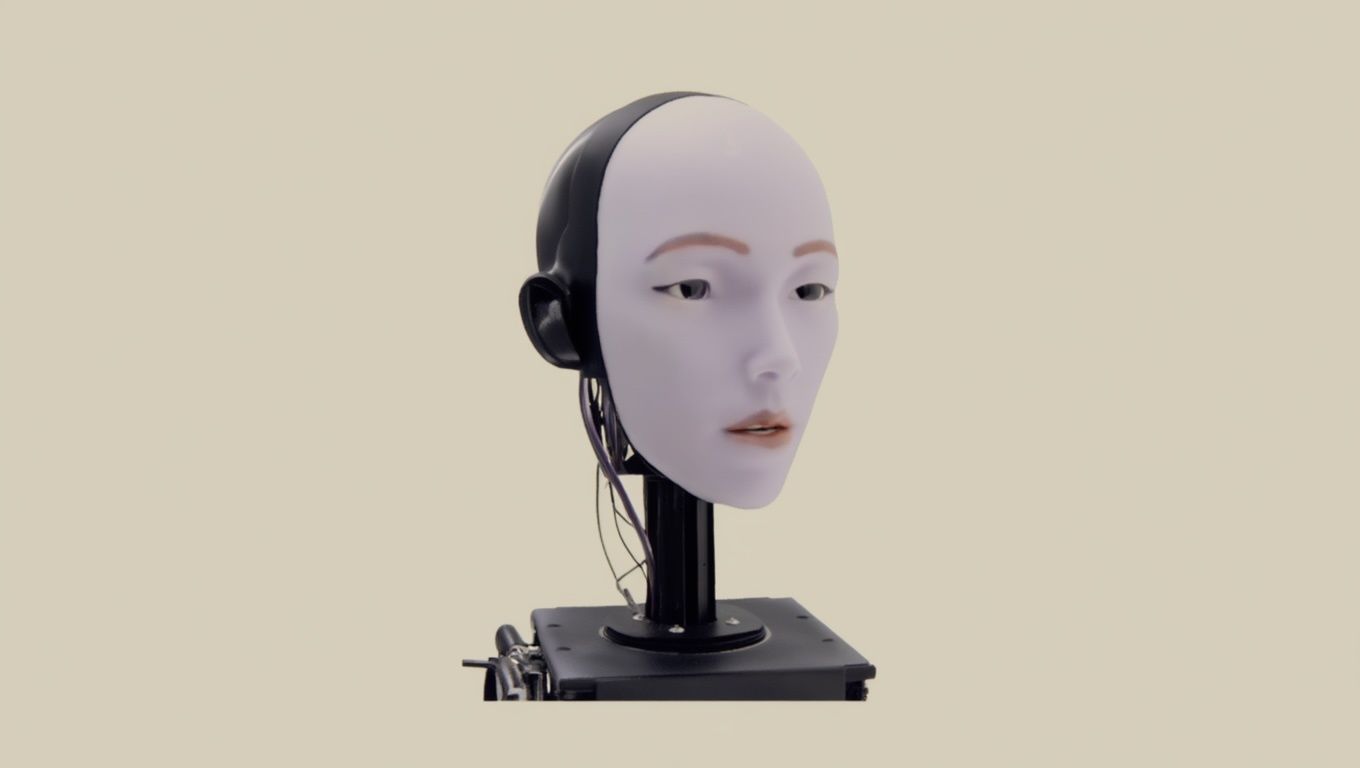
Image source: Columbia / Reve
The Rundown: The team at Columbia Engineering’s Creative Machines Lab developed a flexible silicone robotic face with 26 tiny motors, then let it learn lip syncing by watching YouTube videos rather than preprogrammed rules.
The details:
The robot first spent hours making random expressions in front of a mirror to learn how its own face moves.
It then watched videos of humans talking and singing to map those movements to speech sounds, an approach dubbed a "vision-to-action" language mode.
The system outperformed five existing approaches and generalized across 11 languages without requiring language-specific training data.
When paired with ChatGPT, the lip-syncing skill creates what the researchers call “a whole new depth to the connection” between robots and humans.
Why it matters: Robots like Hanson’s Sophia have been lip-syncing to speech for nearly a decade, but rule-based systems still deliver stiff, uncanny results. Columbia’s learning-based approach could finally narrow that gap — though making robots this emotionally convincing raises concerns of its own.
QUICK HITS
📰 Everything else in robotics today
German auto supplier Schaeffler inked a deal with London-based startup Humanoid to deploy hundreds of bipedal machines across its factories over the next five years.
New York Governor Kathy Hochul is moving to legalize robotaxis statewide, except in New York City, where Waymo and others remain stuck in regulatory limbo.
NYU engineers developed fluid-driven gears that use spinning liquid instead of interlocking teeth, a breakthrough that could make robots more immune to wear.
Shanghai-based AgiBot reportedly captured 39% of the global humanoid robot market in 2025 with over 5,100 units already shipped.
Autonomous trucking startup Kodiak is tapping automotive supply giant Bosch to build production-grade sensors and steering systems for its driverless rigs.
A Nature review of 47 ray-inspired underwater robots found that researchers are still struggling to find effective actuators for mid-sized designs.
China’s Matrix Robotics unveiled MATRIX-3, a humanoid with synthetic skin, 27 DoF hands, and a brain that learns new tasks from spoken commands without training.
Dutch robotics firm Vitestro released its first public video demonstrating Aletta, an autonomous robot that performs diagnostic blood draws without human intervention.
Japanese researchers developed a machine learning system that lets robots learn human grasping techniques from minimal training data, cutting motion errors by 74%.
The Association for Advancing Automation released a 403-page safety standard consolidating U.S. and international rules for industrial robots into one document.
COMMUNITY
🎓 Highlights: News, Guides & Events
Read our last AI newsletter: Gemini’s ‘Personal Intelligence’ upgrade
Read our last Tech newsletter: A moon hotel is taking reservations
Read our last Robotics newsletter: Walmart expands drone empire
Today’s AI tool guide: Get the most out of Google’s Gemini in Gmail
RSVP to next workshop @ 4PM EST Friday: AI foundations bootcamp pt. 2
See you soon,
Rowan, Joey, Zach, Shubham, and Jennifer — The Rundown’s editorial team

Stay Ahead on AI.
Join 2,000,000+ readers getting bite-size AI news updates straight to their inbox every morning with The Rundown AI newsletter. It's 100% free.