Get the latest AI news, understand why it matters, and learn how to apply it in your work — all in just 5 minutes a day. Join over 2,000,000+ subscribers.

Google's new AI co-scientist
Read Online | Sign Up | Advertise

Good morning, AI enthusiasts. Google just turned AI into every scientist's dream research partner — showcasing a co-scientist system capable of making new drug discoveries and outperforming human experts.
With a team of specialized agents helping crack scientific mysteries at superhuman speed, the future of research and AI-driven discovery has never been brighter.
P.S. We just hit 1M daily readers! We couldn't have grown this tiny newsletter into something special without your feedback, shares, and support over the past 2 years. Thank you for being part of this journey — exciting things ahead!
In today’s AI rundown:
Google’s multi-agent AI co-scientist
Microsoft’s game-generating Muse AI
Building phone apps with zero code
The largest AI model for biology
4 new AI tools & 4 job opportunities
LATEST DEVELOPMENTS
🔬 Google’s multi-agent AI co-scientist

Image source: Google
The Rundown: Google just launched an AI co-scientist, a multi-agent research assistant (built on Gemini 2.0) that accelerates scientific discoveries by generating and validating new hypotheses across areas like medicine, genetics, and more.
The details:
The system deploys six specialized AI agents working in parallel, from hypothesis generation to validation of research proposals and final review.
In trials at Stanford and Imperial College, the system identified new drug applications and predicted gene transfer mechanisms in just days.
Initial testing shows 80%+ accuracy on expert-level benchmarks, outperforming both existing AI models and human experts.
Google is rolling out access through a Trusted Tester Program, targeting research organizations globally for trials across multiple scientific domains.
Why it matters: Recently, OpenAI CEO Sam Altman said next-gen models will start discovering “new bits of scientific knowledge.” Google’s AI co-scientist now seems to be following that path. What we are seeing is the early stage of a new era where AI will serve as an integral part of scientists’ toolkits.
TOGETHER WITH TELY AI
📝 Running a lead-generating blog on autopilot

The Rundown: With Tely AI, you don’t need an SEO or content team — AI does it all. It researches your industry, competitors, and website to find the best keywords to rank on Google and produces expert-level articles promoting your company & product.
With Tely AI, you can:
Publish up to 60 articles every month
See Google index results in just 2 weeks
Enjoy full automation for writing, SEO, and publishing
Convert traffic into valuable business leads
MICROSOFT
🎮 Microsoft’s game-generating Muse AI

Image source: Microsoft
The Rundown: Microsoft researchers just introduced Muse, an AI model that can generate minutes of cohesive gameplay from a single second of reference frames and controller actions.
The details:
Muse is the first World and Human Action Model (WHAM) with the ability to predict 3D environments and actions for producing consistent game structures.
The model creates unique, playable 2-minute sequences that follow actual game physics and mechanics from just a single second of gameplay input.
It has been trained on over seven years of continuous gameplay data, covering 1B+ images and controller actions, from the popular Xbox game Bleeding Edge.
Microsoft is open-sourcing Muse’s model weights, demonstrator tool, and sample data, allowing other developers and researchers to build on the release.
Why it matters: Game development requires several months of character design, animation, and testing, but models like Muse could cut down this cycle to mere days. It won’t be long before AI-created games are climbing the charts — and Elon seems to agree, given his recent xAI gaming studio reveal.
AI TRAINING
📱 Build phone apps with zero code

The Rundown: Windsurf lets you create fully functional mobile applications using its AI assistant and plain English commands, all without writing a single line of code.
Step-by-step:
Install Windsurf and Xcode (with iOS 17.5 simulator) for testing
Create a new project using 'npx create-expo-app your-app-name'
Use Cascade AI assistant to build your app by describing its features in plain English.
Test and refine your app using the iOS simulator.
Pro tip: We did an extensive workshop on building using Windsurf with Kevin Hou, the Head of Product Engineering at Codeium. You can access it here (alongside an exclusive, free Rundown University member code for a 2-month Windsurf Pro plan).
PRESENTED BY INNOVATING WITH AI
💼 Start your career as an AI Consultant

The Rundown: Innovating with AI’s new program, AI Consultancy Project, equips AI enthusiasts with all the resources they need to capitalize on the booming AI consulting market – set to grow 8x to $54.7B by 2032.
The program offers:
Tools and framework to find clients and deliver top-notch services
A 6-month roadmap to build a 6-figure AI consulting business
Student landing their first AI client in as little as 3 days
Click here to request early access to The AI Consultancy Project.
ARC INSTITUTE AND NVIDIA
🧬 The largest AI model for biology

Image source: Nvidia
The Rundown: Arc Institute and Nvidia just released Evo 2, an upgrade to its genome foundation AI model trained on over 9T DNA building blocks from 128,000 species (the entire tree of life) — making it the largest AI system for biological research and design.
The details:
The model processes sequences up to 1M nucleotides long, enabling analysis of entire bacterial genomes and human chromosomes at once.
Evo 2 achieved 90% accuracy in predicting cancer-causing gene mutations during testing, also successfully designing working synthetic genomes.
The system was trained on 2,048 NVIDIA H100 GPUs, with its 40B parameters matching the scale of top language models.
Arc is making Evo 2 freely available through NVIDIA's BioNeMo platform, allowing researchers worldwide to use and build on the tech.
Why it matters: As AI models start mastering individual biological tasks like protein folding, Evo 2 is a shift toward systems that understand life's code as a whole. The ability to work across species at scale could transform how we approach everything from drug development to synthetic organisms.
QUICK HITS
🛠️ Trending AI Tools
🤝 Fiverr Go - Empowering freelancers to scale their business with AI
💼 Career Dreamer - Google’s AI experiment to discover career possibilities
🗣️ Lingo.dev - Ship apps translated to every language in minutes
⚙️ Webdraw - Explore, remix, and build AI apps with 50+ models
💼 AI Job Opportunities
🎨 UiPath - Brand Team Intern
🛠️ Grammarly - Technical Support Specialist
🤝 Hippocratic AI - People Generalist
📈 OpenAI - Senior Performance Marketer
📰 Everything else in AI today
IMAGINE AI LIVE '25 will connect business leaders with AI innovators on enterprise AI strategies at Fontainebleau Las Vegas, May 28 to 30—apply now for 25% off.*
Perplexity open-sourced R1 1776, a retrained version of DeepSeek’s reasoning model that delivers the same performance without built-in censorship.
Microsoft unveiled Majorana 1, a new palm-sized quantum chip that uses a new design material to scale toward more reliable and practical quantum computers.
Apple introduced the iPhone 16e as its most affordable device offering Apple Intelligence. It starts at $600 and also includes the company’s first 5G modem.
Convergence AI released Proxy 1.0, a free web agent that can click, type, and navigate the web on a user’s behalf to automate tasks.
Clone Robotics posted a new video of ‘Protoclone,’ a bipedal, musculoskeletal (and terrifying) android with an anatomically accurate body and 500 sensors.
*Sponsored Listing
COMMUNITY
🎥 Join our next live workshop

Join our workshop on Friday at 4 PM EST to learn how to use the newest Grok 3 model effectively and how it stands out in the current AI landscape with Dr. Alvaro Cintas, The Rundown’s AI professor.
RSVP here. Not a member yet? Join The Rundown University on a 14-day free trial.
🤝 Share The Rundown, get rewards
We’ll always keep this newsletter 100% free. To support our work, consider sharing The Rundown with your friends, and we’ll send you more free goodies.

See you soon,
Rowan, Joey, Zach, Alvaro, and Jason—The Rundown’s editorial team

Clone Robotics unveils synthetic human prototype
Read Online | Sign Up | Advertise

Good morning, robotics enthusiasts. Clone Robotics just gave a glimpse of the world’s first synthetic android designed to mimic the human skeletal, muscular, vascular, and nervous structures.
We’re headed into a humanoid-driven future, but the question remains: are we ready for synthetic machines that look, walk, and talk just like us? What do you think?
In today’s robotics rundown:
The world’s first bipedal musculoskeletal android
Figure’s Helix AI brain for humanoids
Chinese automakers pivot to humanoids
Field AI targeting a $2B valuation
Quick hits on other major news
LATEST DEVELOPMENTS
CLONE ROBOTICS
🤯 The world’s first bipedal musculoskeletal android

Image source: Clone Robotics
The Rundown: American-Polish startup Clone Robotics unveiled Protoclone V1, a groundbreaking synthetic android with skin, muscles, tendons, and veins (that pump water)—sparking both awe and a dose of dystopian fear.
The details:
This faceless android (currently a prototype) has 200 degrees of freedom, 1,000 myofibers, and 500 sensors to move and work like humans.
In a 40-second video from Clone, it was seen suspended in a workshop and executing dynamic movements of hands and legs.
Protoclone is being built using the principles of biomimetics, where it replicates all human soft tissues—with water serving as hydraulic fluid rather than motors.
Co-founder Dhanush Radhakrishna said the android will start selling this year at a premium, but the price will eventually drop to around $20K.
Why it matters: Radhakrishna hails the Protoclone V1 as “ground zero for the age of androids.” The work is certainly groundbreaking, but it remains to be seen if it would prove handy in dangerous environments where we want machines to move and adapt in ways more than humans can.
FIGURE AI
🧠 Figure’s Helix AI brain for humanoids

Image source: Figure
The Rundown: Figure AI just unveiled Helix, an AI system that enables humanoid robots to understand speech and reason through problems – bringing us closer to robots that can think and act like humans.
The details:
Helix allows Figure’s humanoids to adapt to new tasks without additional training or code, allowing the robots to work in diverse environments like homes and warehouses.
CEO Brett Adcock shared a clip that showed two Helix-equipped robots collaboratively storing unfamiliar groceries, showing real-world adaptability.
Helix coordinates a 35-DoF action space at 200Hz to control everything from finger movements to end-effector trajectories, head gaze, and torso.
The architecture of Helix includes two systems: a pre-trained 7B parameter VLM and an 80M parameter visuomotor policy.
Why it matters: With Helix, Figure may have solved one of robotics’ biggest challenges: getting robots to adapt to new situations without specific programming. This breakthrough also likely explains why Figure ended its OpenAI partnership — they’ve developed their own powerful internal AI system.
EV MAKERS
🚘 Chinese automakers pivot to humanoids

Image source: Ideogram/The Rundown
The Rundown: Chinese electric vehicle companies like BYD and XPeng – which already use humanoids in their smart factories – are beginning to mass-produce their own specialized humanoid robot models.
The details:
China-owned GAC Group has developed the GoMate humanoid to install wires on its production line, with plans to begin mass production by 2026.
EV startup Nio has also partnered with robot maker UBTech while simultaneously forming an in-house R&D team to build humanoids.
The country is promoting automation through initiatives like the Robotics+ action plan, which aims to double the density of manufacturing robots.
Currently, China controls 63% of the companies in the world’s supply chain for humanoid components, particularly in actuator parts and rare Earth processing.
Why it matters: With supply chain access and the government’s push, Chinese companies can produce humanoids (and EVs) at much lower prices. Currently, Unitree’s H1 comes at $90K, about half the cost of Boston Dynamics’ Atlas. Similarly, Unitree G1 is priced at $13K as compared to Tesla Optimus’ projected $25K.
FIELD AI
🦄 Field AI targets a $2B valuation

Image source: Field AI
The Rundown: California-based robotics startup Field AI is in talks to raise funds at a massive $2B valuation, a 4x jump from last summer when Nvidia and others valued it at $500M, according to The Information.
The details:
Field AI is developing advanced AI models to enhance robotic capabilities in industries such as construction and oil and gas.
Their key technology works as a general-purpose robot brain that enables machines to operate autonomously, without GPS or pre-programmed routes.
Field’s software works through an external hardware unit compatible with robots from companies like Boston Dynamics and Unitree Robotics.
It is currently working on a large multimodal model that integrates text, images, voice, and lidar sensor data to improve robotic autonomy.
Why it matters: Field AI’s tech allows robots to operate autonomously in challenging environments, which has applications across multiple sectors. The talks of the next round at such a massive valuation show it’s ready to compete alongside rivals like Skild AI and Physical Intelligence.
QUICK HITS
📰 Everything else in robotics today
MagicLab launched the MagicHand S01, a dexterous hand that can perform precise and complex movements like grasping, gripping, and two-finger movements.
Shenzhen-based UBTech Robotics debuted Una, a humanoid designed to provide “emotional companionship” at the LEAP tech event in Saudi Arabia.
Uber Eats is now using Avride robots to deliver orders in Jersey City, New Jersey – the company is already using robots in 11 cities with plans to expand.
Realbotix Corp. has launched its proprietary AI vision system, which includes face and object recognition, facial tracking, and real-time scene detection capabilities.
UK startup Engineered Arts is debuting its human-faced humanoid Ameca, capable of advanced facial expressions and more nuanced gestures.
Chinese tech firm Baidu is reportedly launching its robotaxi service, Apollo Go, in Dubai, marking the company’s entry into the Middle East.
Diligent Robotics has reportedly reached a new milestone for its healthcare humanoid Moxi with 1 million deliveries across its entire fleet.
A dozen Tiangong humanoid robots will reportedly line up to run the Beijing half marathon in April in a world first.
The UK’s Robotic Living Lab opened at Manchester Fashion Institute to enable fashion designers to mass-produce more sustainably with cobot arms.
Canadian startup Maple Advanced Robotics won the Hannover Mess Robotics Award for its Autonomous Adaptable Robot System
Unitree Robotics says orders for its humanoid robots “surged” in China after its H1 model performed a dance routine on CCTV to celebrate China’s Lunar New Year.
COMMUNITY
🎥 Join our next live workshop

Join our workshop Friday at 4 PM EST to learn how to use the newest Grok 3 model effectively and how it stands out in the current AI landscape with Dr. Alvaro Cintas, The Rundown’s AI professor.
RSVP here. Not a member yet? Join The Rundown University on a 14-day free trial.
See you soon,
Rowan, Jennifer, and Joey—The Rundown’s editorial team

OpenAI’s ex-CTO launches rival lab
Read Online | Sign Up | Advertise

Good morning, AI enthusiasts. OpenAI's former CTO just unveiled her secretive new AI venture — and she's bringing some serious talent along.
With experts from top AI labs and a bold open-science vision for user-focused applications, will Mira Murati be the latest ex-OpenAI leader to rewrite the AI industry playbook?
P.S. We just launched two more newsletters! Join The Rundown Robotics for bi-weekly email updates on the Robotics industry and The Rundown Tech for bi-weekly email updates on everything happening in Tech — all in our signature rundown style.
In today’s AI rundown:
Mira Murati’s OpenAI rival ‘Thinking Machines Lab’
OpenAI’s new software engineering benchmark
Creating consistent visuals for presentations
Fiverr’s AI platform for gig workers
4 new AI tools & 4 job opportunities
LATEST DEVELOPMENTS
MIRA MURATI
🧠 Mira Murati’s OpenAI rival ‘Thinking Machines Lab’

Image source: Getty Images
The Rundown: OpenAI’s former CTO Mira Murati officially brought Thinking Machines Lab, a new AI research company, out of stealth with the mission to make AI systems more “widely understood, customizable, and generally capable” through open science.
The details:
Thinking Machines plans to develop frontier models focused on science and programming with an emphasis on human-AI collaboration and multimodality.
Murati has hired a dream team for the company with OpenAI’s John Schulman and Barret Zoph as well as experts from DeepMind, Character AI, and Mistral.
The AI lab has also expressed commitment to open science and confirmed plans to regularly publish technical papers, code, datasets, and model specs.
Its introduction comes just six months after Murati abruptly left OpenAI “to create time and space for her own exploration”.
Why it matters: The move makes Murati the latest to go from OpenAI leadership to founding a rival lab, with Ilya Sutskever’s SSI also in talks to raise $1B+. While the stacked team may emerge as a major new player, its commitment to open science could be the big catalyst pushing the industry towards a more open-source mindset.
TOGETHER WITH FIREFLIES AI
📝 AI that takes notes in real-time

The Rundown: Fireflies’s Notetaker is trusted by millions of users across platforms like Microsoft Teams and Google Meet — and now it offers real-time features that can extract instant, actionable insights from your daily meetings.
During live calls, Fireflies can:
Capture bullet-point notes summarizing the conversation in real-time
Curate action items, create comments, and bookmark key moments
Understand 100+ languages from different parts of the world
Answer questions you may have about the meeting
OPENAI
📊 OpenAI’s new software engineering benchmark

Image source: OpenAI
The Rundown: OpenAI just introduced SWE-Lancer, a new benchmark designed to measure AI’s coding performance against real-world freelance software engineering jobs — putting LLMs to the test with a total of $1M in actual task payouts.
The details:
SWE-Lancer features over 1,400 freelance software engineering tasks from Upwork, spanning from minor bug fixes to high-value feature implementations.
The benchmark evaluates both coding and technical management decisions of LLMs, challenging them to write code and select engineering proposals.
It introduces monetary metrics, with success measured by how much a model could theoretically "earn" by completing tasks correctly.
All top models struggled on the benchmark, with Claude 3.5 Sonnet performing best — solving nearly half of the tasks and earning $400k out of the $1M.
Why it matters: The benchmarks are increasing their difficulty to try and properly evaluate increasingly capable AI, but it’s hard to see any of these tests standing the test of time. Plus, while models “struggled” on the benchmark, $400k of value is no joke — and is a good example of the scale of displacement about to arrive in dev work.
AI TRAINING
🎨 Create consistent visuals for presentations
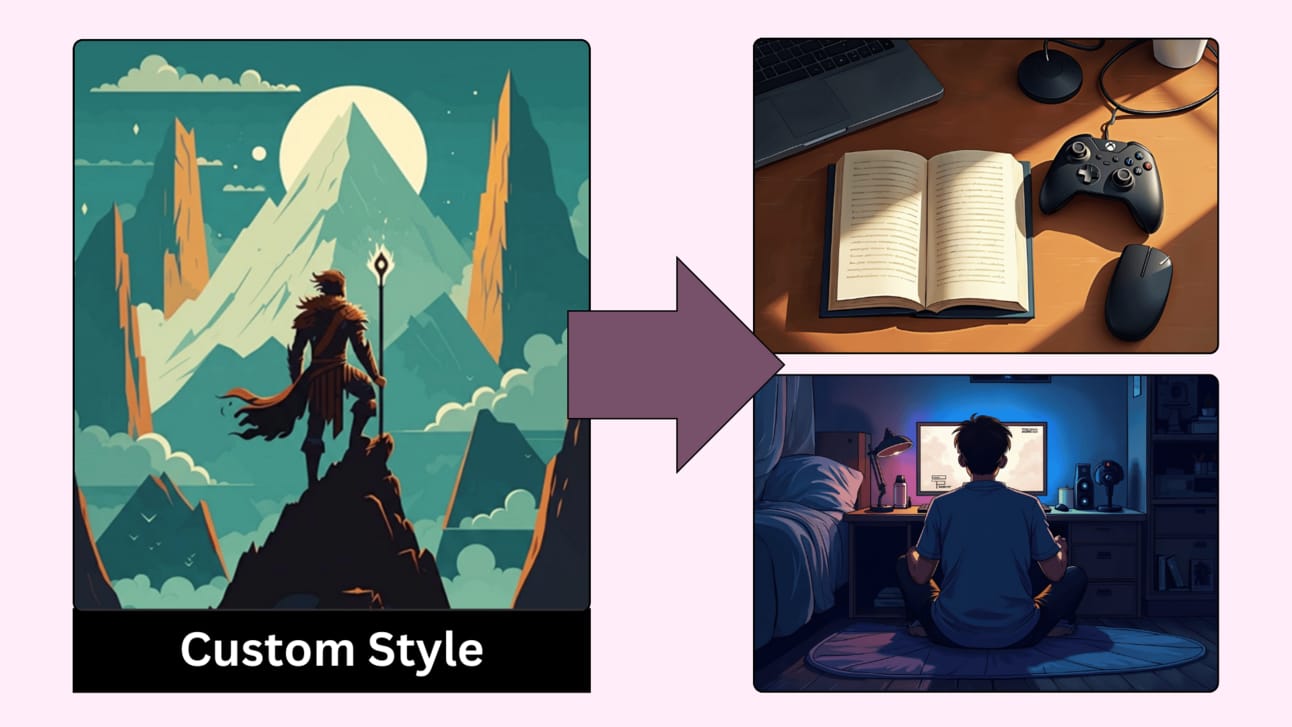
The Rundown: Freepik lets you maintain a unified presentation style by creating custom AI styles that generate consistent visuals across all your slides.
Step-by-step guide to use it:
Visit Freepik AI Suite and select the “Create” option in the main dashboard.
Click the plus icon in the Style section.
Upload 10-50 reference images and select Ultra/High quality for optimal results.
Use targeted prompts for each slide type and generate visuals with your custom style at 100% strength for consistency.
Pro tip: Check out our exclusive workshop on creating custom styles with Freepik here. Additionally, The Rundown University members enjoy a free monthly premium Freepik plan.
PRESENTED BY HEROKU
🏗️ Make AI work for you

The Rundown: Heroku’s new Managed Inference and Agents platform lets developers easily deploy, scale, and manage AI-augmented applications and agents.
Heroku’s platform offers:
Streamlined AI integration
Advanced AI tools
Scalable AI logic
Join Heroku’s pilot program for early access to powerful tools that can put AI to work for you.
FIVERR
🤖 Fiverr’s AI platform for gig workers

Image source: Fiverr
The Rundown: Freelance service platform Fiverr just launched Fiverr Go, a new suite of AI tools that lets gig workers train models on their work and automate future jobs, while also announcing an equity program giving top performers shares in the company.
The details:
Freelancers can train personal AI Creation Models for $25/mo, allowing them to sell AI-generated versions of their work while retaining ownership rights.
A $29 monthly Personal AI Assistant helps manage client communications and handle routine tasks, using past interactions to provide customized responses.
Access is initially limited to "thousands" of vetted Level 2 and above freelancers in specific categories like voiceover, design, and copywriting.
The company is also launching an equity program that will give top-performing freelancers shares in Fiverr, though specific details haven't been disclosed.
Why it matters: AI is in the process of upending traditional gig work, and Fiverr is attempting to give freelancers a stake in automation instead of competing against it. While the platform could help some creators scale, it also will likely face some backlash from creatives who may feel that opting out of AI is becoming unavoidable.
QUICK HITS
🛠️ Trending AI Tools
🤖 Grok-3 - xAI’s new SOTA next-gen reasoning model (slowly rolling out)
🌎 Mistral Saba - Language model designed for Middle Eastern and South Asian cultures and linguistics
🧠 DeepHermes 3 Preview - Nous Research’s new 8B model with the ability to balance reasoning and speed
🤝 AndSend - AI Customer Relationship Agent that spots opportunities, suggests timely messages, and helps you reach your goals
💼 AI Job Opportunities
🛡️ Palantir Technologies - Principal Infrastructure Security Engineer
🌎 Soundhound AI - Sales Director, LATAM
📝 Anyscale - Technical Content Writer
🎓 Metropolis - Director, Learning & Development
📰 Everything else in AI today
OpenAI CEO Sam Altman posted a poll on X asking what project users would like to see open-sourced, with an “o3-mini” level model leading over a “phone-sized model.”
Elon Musk announced the launch of xAI’s Gaming Studio during its Grok-3 demo, with plans to build games with AI.
xAI also revealed that a Voice Mode for Grok will go live in ‘about a week’, with the company providing a brief teaser at the end of the recent demo.
HP acquired Humane’s AI software platform and team for $116M and will discontinue its AI Pin hardware, with plans to integrate AI capabilities across HP’s device portfolio.
Meta announced Llamacon, the company’s first dedicated generative AI developer conference, for April 29.
Google rolled out new AI features to Google Meet, including a scrollable caption history allowing users to review up to 30 minutes of live and translated captions.
COMMUNITY
🎥 Join our next live workshop

Join our next workshop today at 3 PM EST and learn how to create custom AI soundtracks for your business content with Udio’s Andrew Sanchez, CEO/Co-founder, and Ian Braunstein, Head of Product.
RSVP here. Not a member yet? Join The Rundown University on a 14-day free trial
🤝 Share The Rundown, get rewards
We’ll always keep this newsletter 100% free. To support our work, consider sharing The Rundown with your friends, and we’ll send you more free goodies.
See you soon,
Rowan, Joey, Zach, Alvaro, and Jason—The Rundown’s editorial team

xAI's 'smartest AI on Earth' arrives
Read Online | Sign Up | Advertise

Good morning, AI enthusiasts. Elon Musk’s xAI just introduced the world to its next-gen Grok-3 model family — taking center stage in the AI race merely within two years of its existence.
But, with OpenAI and Anthropic circling the waters with releases of their own, will Grok-3's self-proclaimed ‘smartest AI on Earth’ title stand for long?
In today’s AI rundown:
Elon Musk and xAI’s next-gen Grok-3
Mistral’s first region-specific AI
Run AI models locally for autocomplete code
The New York Times’s AI for newsroom
4 new AI tools & 4 job opportunities
LATEST DEVELOPMENTS
XAI
🚀 Elon Musk and xAI’s next-gen Grok-3

Image source: xAI
The Rundown: Elon Musk and just xAI unveiled Grok-3 as ‘the smartest AI on Earth’ — achieving SoTA performance across math, science, and coding tasks and outperforming Gemini-2 Pro, Claude 3.5 Sonnet, and GPT-4o on key benchmarks.
The details:
The main Grok-3 model is being rolled out slowly via the Grok app, and a smaller Grok-3 mini version promises faster responses.
Both models topped the AIME‘24, GPQA, and LiveCodeBench benchmarks, with an early version of Grok-3 ranking #1 on Chatbot Arena.
The models also have reasoner variations, where they ‘think through’ problems like OpenAI’s o3-mini and DeepSeek R1. They also support deep research.
The models have been trained on 10x more compute than Grok-2, using xAI’s Colossus supercomputer with 200,000 H100 GPUs (proving scaling laws hold).
Why it matters: Grok-3 positions two-year-old xAI at the top of the AI race. But, it will be interesting to see how long its leadership lasts as OpenAI gears to launch GPT-4.5, followed by a unified GPT-5. Anthropic, DeepMind, and Chinese players like Alibaba and DeepSeek are also taking major strides in the domain.
TOGETHER WITH HUBSPOT
🧠 100+ ChatGPT prompts to revolutionize your workflow

The Rundown: HubSpot’s free, comprehensive “How to Use ChatGPT at Work” guide provides 100+ ready-to-use prompts to help professionals boost efficiency and adopt AI-driven workflows.
Inside, you’ll find:
A quick crash course to master ChatGPT in under 30 minutes
Practical industry use cases to spark real-world inspiration
100+ prompts to streamline tasks and accelerate productivity
Expert tips to tackle common AI roadblocks with confidence
Get your free copy and join 10,000+ professionals leveling up with AI.
MISTRAL
🌍 Mistral’s first region-specific AI

Image source: Mistral
The Rundown: French AI startup Mistral just released Mistral Saba, a language model designed for Middle Eastern and select South Asian regions — marking the company’s first push into localized AI tailored for specific cultures and nuanced linguistics.
The details:
Saba is a 24B model trained on Middle Eastern and South Asian datasets, offering faster and more cost-efficient performance than larger models.
The model supports both Arabic and South Indian-origin languages like Tamil and Malayalam, addressing cross-regional linguistic and cultural needs.
Saba is designed for conversational AI and culturally relevant content creation, enabling more natural engagement of Arabic-speaking audiences.
It is available via API and via local deployment, with Mistral also revealing work on custom models for strategic enterprise customers.
Why it matters: The race for the biggest and best general model is always on and garnering the headlines, but smaller, specialized systems are also seeing massive improvements — with particular value for regions with languages and nuances that aren’t always covered thoroughly in major datasets.
AI TRAINING
🤖 Run AI models locally for autocomplete code

The Rundown: In this tutorial, you’ll learn how to create your own private AI coding assistant by combining Ollama's local models with the CodeGPT extension for autocompletion and chat capabilities.
Download and install Ollama, then run ollama run deepseek-coder:base in your terminal.
Install the CodeGPT extension from your VS Code's marketplace
Enable auto-completion in CodeGPT settings and select the Ollama model you downloaded.
Start coding and use Tab to accept AI suggestions!
Pro tip: Download additional models like deepseek-r1:14b for more advanced chat-based assistance when needed.
PRESENTED BY INNOVATING WITH AI
🤝 Turn AI passion into a consulting career

The Rundown: Innovating with AI's new program, AI Consultancy Project, transforms AI enthusiasts into professional consultants — tapping into a market projected to reach $54.7B by 2032.
The 6-month program delivers:
Proven frameworks for client acquisition and service delivery
A step-by-step path to six-figure consulting income
Students who land their first AI client in as little as 3 days
Click here to request early access to The AI Consultancy Project.
THE NEW YORK TIMES
📰 The New York Times’s AI for newsroom

Image source: Ideogram / The Rundown
The Rundown: The New York Times is making a significant transition to allow the use of AI tools in its newsroom, utilizing both external and internal tools to assist with tasks like SEO headlines, editing, summaries, and product development.
The details:
AI can now be used for SEO, brainstorming, research, and social, but is still prohibited for drafting articles, image generation, and other editorial tasks.
Tools like GitHub Copilot, Google’s Vertex AI, NotebookLM, and OpenAI’s non-ChatGPT API are available under NYT’s approval.
The paper also introduced Echo, an in-house AI summarization tool designed to condense articles, briefings, and interactive content.
The shift comes as NYT remains locked in a copyright lawsuit against OpenAI, alleging the company improperly trained models on Times content.
Why it matters: It’s been a rocky relationship between major publishers and AI, but it is inevitable that nearly every outlet will shift policies to take advantage of the productivity increases that the tech brings. Other notable pubs using AI are Financial Times, Vox Media, Axel Springer, and the Associated Press.
QUICK HITS
🛠️ Trending AI Tools
📖 Perplexity Deep Research - Generate in-depth research reports in minutes
🤖 ChatGPT 4o - New upgraded model with upgrades to creative writing, coding, instruction following, and more
🗣️ Nova-3 by Deepgram - New voice AI model for real-time multilingual transcriptions in real-world enterprise use cases
📣 SEO AI Agent - Automate your entire SEO workflow with AI
💼 AI Job Opportunities
📱 OpenAI - iOS Engineer, Sora
🔐 Glean - Infrastructure Security Engineer
📊 Palantir Technologies - Sales Operations Analyst
🚀 Weights & Biases - Senior Demand Generation Manager (US)
📰 Everything else in AI today
OpenAI founder Ilya Sustkever’s SSI is reportedly in talks to secure over $1B in funding, set to reach a valuation of over $30B just months after its launch.
Nous Research released DeepHermes-3, an 8B parameter open-source model featuring a toggle to balance reasoning and speed for different use cases.
OpenAI published a guide to prompting its o-series reasoning models, emphasizing simpler, more direct approaches over traditional instructions.
SoftBank’s Arm is reportedly planning to develop its first in-house AI chip with Meta slated as an early customer, a major shift from its traditional licensing model.
OpenAI CEO Sam Altman posted that testers of GPT-4.5 have had “feel the AGI” moments, with hype continuing to build for a potential launch of the new model.
Chinese AI startup DeepSeek suspended its chatbot app downloads in South Korea after regulators raised concerns about data privacy practices.
COMMUNITY
🎥 Join our next live workshop
Join our next workshop on Wednesday at 3 PM EST and learn how to create custom AI soundtracks for your business content with Udio’s Andrew Sanchez, CEO/Co-founder, and Ian Braunstein, Head of Product.
RSVP here. Not a member yet? Join The Rundown University on a 14-day free trial.
🤝 Share The Rundown, get rewards
We’ll always keep this newsletter 100% free. To support our work, consider sharing The Rundown with your friends, and we’ll send you more free goodies.
See you soon,
Rowan, Joey, Zach, Alvaro, and Jason—The Rundown’s editorial team

Apple's budget-friendly iPhone
Read Online | Sign Up | Advertise

Good morning, tech enthusiasts. Welcome to the first edition of our newly updated Tech newsletter! Here, you’ll find what’s new and next in the tech world – from Big Tech to startups and everything in between – all delivered in our signature rundown style.
If you’re receiving this, you signed up when joining our flagship AI newsletter, or you’ve been subscribed for over a year before our hiatus of this newsletter (but we’re back!). If you’re no longer interested, you can simply unsubscribe.
Be on the lookout for our Tech newsletter bi-weekly on Tuesday and Friday at around 7 AM PST!
In today’s tech rundown:
Apple’s newest family member
Meta spends billions on undersea cable
X blocks links to Signal
SpaceX to overhaul air traffic control
Quick hits on other major news
LATEST DEVELOPMENTS
APPLE
📱Apple’s newest family member

Image source: Ideogram/The Rundown
The Rundown: At a major launch event tomorrow, Apple is expected to unveil a long-awaited upgrade to the iPhone SE, the brand’s most affordable iPhone model ever, as well as refreshed MacBook and iPad Air models.
The details:
Coming after a wait of three years, the new SE model could include an iPhone 14-like design along, with an upgraded camera, Face ID, and Apple Intelligence.
It is also likely to be the first iPhone to feature Apple’s in-house cellular modem, replacing Qualcomm's technology.
Apple analyst Ming-Chi Kuo expects Apple to ship 12 million units of the new iPhone in the first half of 2025, followed by another 10 million in the second half.
Apple is also expected to launch new iPad Air and MacBook Air models, with a faster, more efficient M4 chip and 32GB of RAM.
Why it matters: The event marks Apple’s first major launch of 2025, with speculation swirling over whether we’ll see an SE update with iPhone 16-style features or something toned down. Yes, this isn’t as high frills as Apple’s flagship releases, but that lower price point will be key to the company’s growth in key markets like India.
META
🌊 Meta spends billions on undersea cable

Image source: Ideogram/The Rundown
The Rundown: Meta has confirmed an ambitious plan to build an underwater cable spanning 50,000 kilometers, or longer than the Earth’s circumference, to provide the high-speed connectivity needed to drive global digital and AI innovation.
The details:
The multibillion-dollar Project Waterworth is Meta’s first undersea cable project that it is developing on its own, without partners.
Under this, it will deploy the longest subsea cable of 24 fiber pairs and use novel routing and burial techniques to cover deep waters and high-risk areas.
The network will connect five continents, with points in the U.S., India, Brazil, South Africa, and other key regions.
Key reasons for investing in the network are Meta’s interest in expanding its digital services in growing markets like India and rolling out AI services globally.
Why it matters: More than 95% of the world's internet traffic is transferred through undersea cables, so it’s no surprise that big tech firms are sinking billions into building their subsea infrastructure. While the scale of Meta’s project is by far the largest, Google, Amazon, and Microsoft also have partnerships of their own.
SIGNAL
👀 X blocks links to Signal

Image source: Ideogram/The Rundown
The Rundown: X is reportedly preventing users from posting links to the popular encrypted messaging app Signal, which is notably used by journalists to receive confidential information from sources.
The details:
Journalist Matt Binder first spotted the block, which applies to posts, direct messages, and profile descriptions.
Users attempting to add their Signal.me URL are met with error messages, including warnings about spam, malicious activity, or automated requests.
Previously posted Signal.me links on X are still clickable but now display a warning about potential safety issues.
In the past, X has also briefly blocked links to Instagram, Facebook, Mastodon, as well as Substack after the release of its Twitter-like Notes.
Why it matters: X’s reported action is raising concerns about free speech and platform control, and Binder flagged Signal’s relevance in recent weeks as federal whistleblowers have relied on the service to report DOGE activity to the press. So far, X has not provided an official explanation for blocking Signal’s links.
SPACEX
🚀 SpaceX to overhaul air traffic control

Image source: Ideogram/The Rundown
The Rundown: In the wake of the deadly crash last month in D.C, Elon Musk’s SpaceX has been called into Virginia’s Air Traffic Control Command Center to assess and help overhaul the current ATC system.
The details:
Secretary of Transportation Sean Duffy said that SpaceX will “get a firsthand look” at the current tech and envision a “new, better, modern and safer system.”
Duffy had also said earlier that Musk’s DOGE team would “plug in” to the FAA to help upgrade the aviation system.
The FAA has been under scrutiny since the crash last month, with the SpaceX visit coming after the FAA reportedly fired hundreds of probational employees.
Critics argue that Musk’s White House status and his government contracts, mostly through SpaceX, are a glaring conflict of interest.
Why it matters: SpaceX has secured some $13 billion in government contracts over the past five years, making it one of the largest government contractors – with Musk’s sway only growing. Musk had played a role in firing the last FAA administrator after the FAA fined SpaceX for failing to submit safety data.
QUICK HITS
📰 Everything else in tech today
Lyft announced plans to launch a fleet of self-driving robotaxis in Dallas “as soon as 2026,” in an apparent attempt to keep pace with rival Uber.
President of Mexico Claudia Sheinbaum threatened to sue Google if the company continued to show the Gulf of Mexico as the ‘Gulf of America’.
Amazon is soon removing a useful feature from its site that lets users download purchased books to a computer and then copy them to Kindle.
South Korea has blocked DeepSeek, with the Chinese AI app no longer available on local app stores, after acknowledging it failed to meet data protection laws.
Reddit CEO Steve Huffman confirmed that the company is planning to implement paywalls on exclusive content later this year.
South Korean President Choi Sang-mok said the country aims to stockpile 10,000 GPUs this year for its advancements in AI, citing geopolitics as a key motivator.
Meta exec Joel Kaplan told the EU that they “won’t shy away” from getting President Donald Trump involved if Meta products continue to face legal crackdowns in the EU.
Tesla confirmed the launch of its Full Self-Driving in Mexico while reportedly being stalled in China over the trade war between China and the U.S.
Auto supplier ZF Lifetec has developed a heel airbag for automobiles to protect the feet of front-seat occupants in the event of a crash.
COMMUNITY
🎥 Join our next live workshop
Join our next workshop on Wednesday at 3 PM EST and learn how to create custom AI soundtracks for your business content with Udio’s Andrew Sanchez, CEO/Co-founder and Ian Braunstein, Head of Product.
RSVP here. Not a member yet? Join The Rundown University on a 14-day free trial.
See you soon,
Rowan, Jennifer, and Joey—The Rundown’s editorial team

Meta joins the robotics race
Read Online | Sign Up | Advertise

Good morning, AI enthusiasts. Silicon Valley's robotics race just got a surprising new player — and Meta's not playing by the usual rules.
While other tech giants rush to build their own machines, Zuck and co. are betting on becoming the foundational layer that powers them all.
In today’s AI rundown:
Meta sets sights on humanoid robotics development
Perplexity launches freemium Deep Research feature
How to develop data-driven content strategies
NBA showcases AI and robotics at 2025 All-Star Weekend
4 new AI tools & 4 job opportunities
LATEST DEVELOPMENTS
META
🦾 Meta sets sights on humanoid robotics development

Image source: Grok / The Rundown
The Rundown: Meta is launching a new initiative to develop AI, hardware, and software platforms for humanoid robots, aiming to become the foundational tech provider for the industry rather than building consumer products.
The details:
A new team within Meta’s Reality Labs division, led by former Cruise CEO Marc Whitten, will focus on robot hardware, AI systems, and safety standards.
Meta plans to leverage its existing AI and sensor tech from AR/VR development to create a software platform on which other manufacturers can build.
Meta has reportedly discussed potential partnerships with robotics companies like Unitree and Figure AI, focusing initially on household robots.
While not planning its own branded robot, the company aims to provide an underlying platform similar to how Android powers smartphones.
Why it matters: Everyone seems to be getting into the robotics game, with reports of Apple and OpenAI also exploring the hyper-competitive sector. While Meta has the infrastructure and resources to compete, its rumored focus on building a foundational layer could mark a unique path from other competitors creating their own robots.
TOGETHER WITH CODELINK
💡Building AI is tough

The Rundown: CodeLink tackles the complexity of implementing AI head-on. Where most projects fail due to talent shortages and strategy gaps – yours doesn't have to.
With CodeLink, you’ll experience:
Proven Track Record: From MVPs to enterprise AI, CodeLink helps companies turn AI ambition into real-world success.
Talent & Expertise: CodeLink’s skilled engineers ensure AI delivers measurable impact.
Ready to gain an edge? Book a call with CodeLink today.
PERPLEXITY
🧠 Perplexity launches freemium Deep Research feature

Image source: Perplexity
The Rundown: Perplexity just launched its own Deep Research tool, an AI-powered research agent designed to provide in-depth reports in minutes — directly competing with similar (and identically named) offerings from OpenAI and Google.
The details:
Deep Research autonomously conducts dozens of searches, reads hundreds of sources, and synthesizes findings into a structured report in 2-4 minutes.
The tool excelled on Humanity’s Last Exam, scoring 21.1%, surpassing Gemini Thinking (6.2%) and Grok-2 (3.8%) — but falling short of OpenAI’s 26.6%.
Unlike OpenAI’s current $200/month paywall on its Deep Research, Perplexity’s tool is free (5 per day) for casual users, with Pro users getting more usage.
Perplexity CEO Aravind Srinivas threw a jab at OpenAI CEO Sam Altman on X, saying he ‘mogged’ him with the company’s latest release.
Why it matters: The time it takes to go from premium features to free alternatives continues to get shorter, with Perplexity undercutting OpenAI directly (though early reviews have been mixed). But with AI leaders all pushing these tools, the question isn't if AI will reshape research workflows — it’s how soon it will become the norm.
AI TRAINING
📝 How to develop data-driven content strategies

The Rundown: In this tutorial, you’ll learn how to use Perplexity with DeepSeek to identify high-potential content opportunities and optimize your content strategy based on market gaps and audience demand.
Step-by-step:
Head to Perplexity, toggle the Pro option, and select Reasoning with R1 (5 free searches for new users).
Ask it to analyze content gaps and trending topics in your field of interest.
Request to research audience preferences and successful formats.
Create your 30-day content strategy by asking for an actionable plan.
Pro tip: Before running your analysis, gather your current content performance metrics to compare against Perplexity's recommendations. The Rundown University members can access the top prompts here.
PRESENTED BY PARALLAXIS
🛠️ Build a strong AI data foundation

The Rundown: Parallaxis helps companies navigate the shifting AI/ML landscape with a proprietary evaluation framework that helps transform complex data operations into structured, mature systems that drive AI success.
The Parallaxis Data Maturity Framework helps you:
Identify gaps & risks in your data strategy
Optimize for AI & ML adoption
Get a clear roadmap to success
Talk to Parallaxis and download the Data Maturity Framework here.
NBA
🏀 NBA showcases AI and robotics at 2025 All-Star Weekend

Image source: National Basketball Association (@NBA) on X
The Rundown: The NBA showed off several new AI and robotics innovations being implemented for teams like the Golden State Warriors as part of its 2025 All-Star Technology Summit, including robots for rebounding, coaching, wellness, and more.
The details:
A.B.E. (Automated Basketball Engine) rebounds and passes during shooting practice, with Stephen Curry already incorporating it into his training routine.
M.I.M.I.C. robots run offensive and defensive plays under a coach’s direction, providing consistent practice that can execute opponent’s formations.
K.I.T. (Kinematic Interface Tool) focuses on player wellbeing, offering companionship and motivation in the locker room and during workouts.
B.E.B.E. (Bot-Enhanced Basics & Equipment) helps organize equipment and repetitive tasks like inflating basketballs.
Why it matters: The robotics revolution has come to professional sports, with the NBA providing an interesting look into the potential for specialized robots that can make major impacts for pro teams looking for any edge possible. While seeing these robots in action is still jarring for now, it won’t be long before the tech is absolutely everywhere.
QUICK HITS
🛠️ Trending AI Tools
🎬 Animate Anyone 2 - Alibaba’s open-source character animation model
💻 OmniParser V2 - Turn any LLM into a Computer Use Agent
👩🏻💻 UI2Code - Instantly convert UI designs into production-ready frontend code
🤖 SAP Joule Agents - Business process-driven AI automation
📰 Everything else in AI today
Elon Musk revealed that xAI’s Grok 3 would be released later tonight, calling it ‘the smartest AI on Earth.’
OpenAI released a new version of its 4o model, bringing upgraded performance in creative writing, coding, instruction following, and more.
Robotics startup Figure AI is reportedly discussing a new $1.5B funding round that would vault the company’s valuation to a whopping $39.5B.
Google rolled out new memory upgrades to Gemini Advanced, allowing the model to remember and reference past chats in its responses.
Apple is reportedly planning to bring Apple Intelligence features to its Vision Pro headsets in April, including features like Writing Tools, Genmoji, and Image Playground.
OpenAI’s board of directors unanimously voted to reject Elon Musk’s 97.4B offer to purchase the company, saying it was “not in the best interests of OAI’s mission.”
COMMUNITY
🎥 Join our next live workshop
Join our next workshop on Wednesday at 3 PM EST and learn how to create custom AI soundtracks for your business content with Udio’s Andrew Sanchez, CEO/Co-founder and Ian Braunstein, Head of Product.
RSVP here. Not a member yet? Join The Rundown University on a 14-day free trial.
🤝 Share The Rundown, get rewards
We’ll always keep this newsletter 100% free. To support our work, consider sharing The Rundown with your friends, and we’ll send you more free goodies.
See you soon,
Rowan, Joey, Zach, Alvaro, and Jason—The Rundown’s editorial team

Humanoid maker Figure eyes $1.5B
Read Online | Sign Up | Advertise
Good morning, robotics enthusiasts. Welcome to the first edition of our new Robotics newsletter! If you’re receiving this, you signed up when joining our flagship AI newsletter, and you can simply unsubscribe if you’re no longer interested.
We believe Robotics is on the verge of its ‘ChatGPT moment‘ in 2025—so it’s our mission to make sure you’re far ahead of the curve before that moment happens.
Be on the lookout for our Robotics newsletter bi-weekly on Monday and Thursday at around 7 AM PST!
In today’s robotics rundown:
Figure AI eyes $39.5B valuation
Meta joins the humanoid race
Apptronik raises $350M for Apollo bot
3D-printed swarm bots to the rescue
Quick hits on other major news
LATEST DEVELOPMENTS
FIGURE
💰 Figure AI eyes $39.5B valuation

Image source: Figure
The Rundown: Silicon Valley-based Figure AI, which is developing general-purpose humanoids for warehouses, factories, and homes, is negotiating a $1.5B funding round at a $39.5B valuation, according to Bloomberg.
The details:
The round is expected to be led by Align Ventures and Parkway Venture Capital, with potential participation from other investors.
The interesting bit here is the valuation. It represents a whopping 15-fold increase from Figure's previous valuation of $2.6B.
Backed by OpenAI and Microsoft, Figure makes commercial and residential humanoids and has already signed two customers, including BMW.
Initially, the company used OpenAI’s models, but CEO Brett Adcock recently stated they ended the collaboration for in-house end-to-end robot AI.
Why it matters: Figure is riding high with interest and investments coming from giants like Microsoft, Nvidia, Amazon, and even Jeff Bezos. Humanoids are a hot ticket, and the potential new valuation, combined with the upcoming technological breakthroughs teased by CEO Brett Adcock, is keeping the entire space on its toes.
META
🤖 Meta joins the humanoid race

Image source: Ideogram/The Rundown
The Rundown: Meta is jumping into the red-hot humanoid market by forming a new team within its Reality Labs unit, according to an internal memo seen by Bloomberg. But, the Facebook owner is going a bit differently about it.
The details:
Instead of a branded robot, Meta reportedly aims to build the underlying AI, sensors, and software for robots.
The company is already in talks with humanoid developers like Unitree Robotics and Figure AI, focusing on developing hardware for a household robot.
The new team will be led by Marc Whitten, former CEO of GM’s now-dropped robotaxi company Cruise.
Meta has already invested $65 billion into AI and is ramping up plans to sell its Ray-Ban-branded smart glasses.
Why it matters: The move will expand Meta’s investments in AI and maximize the applications of its Llama AI models. The company certainly has the resources to compete against Apple, Nvidia, and Tesla, but its focus on building the foundational hardware and software layer will separate it from the pack.
APPTRONIK
🦿 Apptronik scores $350M for Apollo bot

Image source: Apptronik
The Rundown: Austin-based humanoid startup Apptronik raised $350M in a Series A round, with backing from Google, to scale its Apollo robot, designed specifically for physically demanding warehouse jobs.
The details:
Apptronik has been working with Google’s DeepMind to build robot behavioral models, similar to Boston Dynamics’s deal with Robotics and AI Institute.
The company has raised $378M since it was founded in 2016 at the University of Texas at Austin’s robotics lab.
Apollo features linear actuators for joints such as the elbows and knees, which are lower-cost and easier to scale compared to rotary motors and gear trains.
Apptronik also has pilot agreements with Mercedes-Benz and GXO Logistics and has teamed up with NASA to advance humanoids.
Why it matters: Apptronik is another big player to watch, with nearly a decade of experience compared to relative newcomers Figure, 1X, and Tesla. While the company has yet to move out of the pilot phase with any of its partnerships, we may soon see Apollo handling new jobs, such as in homes or on space missions.
RESEARCH
🔥 3D-printed swarm bots to the rescue

Image source: Tufts University/Nitin Sanket
The Rundown: U.S. researchers have designed tiny 3D-printed swarm robots about the size of the palm of your hand that can spread out to investigate wildfire-ravaged areas, conduct search and rescue missions, or clear minefields.
The details:
A Tufts University research team published a paper in Nature Communications on the rescue capacities of soft-jointed tiny robots built with 3D printers.
The robots can be printed on a 3D printer in just a few hours, meaning a bank of printers could produce hundreds of bots on demand at low cost.
They are sturdy enough to be dropped out of a helicopter or run over by a car, plus they can climb up steep inclines and over sand and rocks.
Their soft joints have a more fluid pattern of motion, making them more adaptable to varied terrain compared to rigid robots.
Why it matters: This opens the door to use cases for 3D printed robots, with the scientists adding that the printers can apply materials of different strengths to create a harder or softer skeletal structure based on need. Plus, tiny swarm bots can take on other jobs like transporting food or relief supplies or tracking biological pests.
QUICK HITS
📰 Everything else in robotics today
Quasi Robotics unveiled Version 2.2 of its Model C2 software, enhancing security, navigation, and performance for autonomous mobile robots.
Australian robotics company FBR’s stocks crashed 49% following a disappointing update related to its U.S. launch plans for the Hadrian X bricklaying robot.
Anthropic is collaborating with the UK government to integrate AI into public services, aiming to improve accessibility and efficiency.
Analyst Ming-Chi Kuo cites that Apple is focused on developing a humanoid assistant while Apple researchers are developing a tabletop bot.
MIT researchers are helping drones fly in the dark using millimeter waves, paving the way for autonomous drones to shuttle inventory between large warehouses.
Japanese researchers have developed the largest-ever biohybrid hand combining robotics with living human tissues, which holds promise for more advanced prosthetics.
London-based Humanoid offered a first look at its next-gen HMND 01 robot in action, demonstrating its mechanical design, AI integrations, and motion control.
COMMUNITY
🎥 Join our next live workshop
Join our next workshop on Wednesday at 3 PM EST and learn how to create custom AI soundtracks for your business content with Udio’s Andrew Sanchez, CEO/Co-founder and Ian Braunstein, Head of Product.
RSVP here. Not a member yet? Join The Rundown University on a 14-day free trial.
See you soon,
Rowan, Jennifer, Joey —The Rundown’s editorial team

Anthropic's hybrid AI model is coming
Read Online | Sign Up | Advertise

Good morning, AI enthusiasts. While other AI labs have been rushing out model after model, Anthropic has been eerily quiet since the launch of 3.5 Sonnet in June of 2024.
But the startup’s long silence is reportedly about to be broken — with a new hybrid reasoning system launching in the ‘coming weeks’ that could be right on time for the industry’s shifting model meta.
In today’s AI rundown:
Anthropic prepares next major Claude model
YouTube brings AI video generator to Shorts
Using ChatGPT as your thesis-writing assistant
Gemini Flash 2.0 leads new AI agent leaderboard
4 new AI tools & 4 job opportunities
LATEST DEVELOPMENTS
ANTHROPIC
🧠 Anthropic prepares next major Claude model

Image source: Anthropic
The Rundown: Anthropic is set to release a new AI model in the coming weeks, according to a new report from The Information — which will combine traditional language capabilities with advanced reasoning features, excel at coding, and offer developers more control over balancing speed and compute.
The details:
The hybrid approach will allow the new model to function as either a standard LLM or a deep reasoning engine, adapting to different use cases on demand.
The model will also introduce a sliding scale system that lets developers precisely control how much reasoning power to allocate to each query.
At maximum reasoning, the model reportedly shows particular strength in real-world programming tasks and can handle large-scale codebases.
Recent rumors had suggested that Anthropic already internally had a model better than OpenAI’s o3, but it hadn’t been released due to safety concerns.
Why it matters: While OpenAI, Google, and others have continued rolling out models, Anthropic has been eerily quiet since Sonnet 3.5. A major upgrade could thrust the company right back into the spotlight — and with ChatGPT now shifting to a more hybrid model approach, Anthropic could be well prepared for a potential AI ‘meta’ shift.
TOGETHER WITH TANKA
🧠 Where collaboration meets long-term memory

The Rundown: Tanka is the world's first B2B universal chat app with AI long-term memory, inspired by decade-long neuroscience research and built on proprietary memory knowledge graph — saving you hours of writing messages and emails with context-aware AI smart replies.
With Tanka, you’ll get:
A unified communication hub integrated with tools like WhatsApp, Slack, Gmail, Outlook, Telegram, and more
An AI work assistant for context-rich smart replies, reminders, and actionable insights
A personalized memory bank that remembers key discussions, achievements, and todos
YOUTUBE
🎬 YouTube brings AI video generator to Shorts

Image source: YouTube
The Rundown: YouTube announced that it is rolling out Veo 2, Google DeepMind's latest video generation model, into its Shorts platform — allowing creators to generate custom video clips and backgrounds directly from text descriptions.
The details:
Creators can generate video clips or dynamic backgrounds for Shorts with text prompts and can specify styles, camera effects, and cinematic looks.
The update enhances the existing Dream Screen feature with faster generation times and improved physics for more realistic movement and scenes.
All AI-generated content will include Google’s SynthID watermarks and clear labeling to maintain transparency about artificial content.
The feature is launching first in the U.S., Canada, Australia, and New Zealand through the Shorts camera interface.
Why it matters: This update injects state-of-the-art AI video directly into the workflows of content creators across YouTube, taking a giant leap from just backgrounds to full clips and scenes. While this unlocks new creative possibilities, it will likely blur the already fuzzy lines between real and AI content even further.
AI TRAINING
📚 Using ChatGPT as your thesis-writing assistant

The Rundown: In this tutorial, you’ll learn how to use ChatGPT's new Deep Research feature to analyze hundreds of academic sources to create comprehensive literature reviews at a doctoral level.
Step-by-step:
Access ChatGPT's Deep Research feature by selecting the “Deep Research” button.
Write your query using this template: "Provide a literature survey on [Topic] from [Year], including [Requirements]."
Wait 5-30 minutes while it analyzes hundreds of sources and creates citations.
Review your report with clickable citations and verified academic sources.
Pro tip: We did an extensive workshop showing prompting tips for Deep Research, open-source alternatives that do not require a subscription, and how to create your own for free here.
PRESENTED BY ARCEE
💘 Fall for agentic AI that just works

The Rundown: Arcee Orchestra provides a seamless, turn-key platform that simplifies agentic enterprise AI — with purpose-built SLMs to do exactly what users need.
Join Arcee AI for a webinar on Feb. 26th to:
Discover the impact of our SLMs that power Arcee Orchestra
Create production-ready AI agents in minutes with our no-code interface
Explore the benefits of an all-in-one agentic AI solution
Learn how our intelligent routing delivers precise results for any task
AI LEADERBOARDS
🏆 Gemini Flash 2.0 leads new AI agent leaderboard

Image source: Galileo
The Rundown: Galileo Labs just launched a new AI agent leaderboard to rank how effectively models can handle real-world tool interactions, with Google’s Gemini 2.0 and OpenAI’s GPT-4o debuting at the top spots in the evaluation.
The details:
The leaderboard evaluated 17 top LLMs on 14 benchmarks, including tests on tool usage and selection, long context, complex interactions, and more.
Flash 2.0 led with a 0.938 score, outperforming more expensive competitors while excelling across the board on benchmarks.
Open-source models are closing the gap, with Mistral's latest Small release achieving scores comparable to some premium offerings at lower price points.
DeepSeek’s V3 and R1 models were absent from the testing due to a lack of function calling support but will be included if the capabilities are added.
Why it matters: Agents are still in the early stages, but the sector is a key focus in 2025, and measuring these capabilities will likely be a major scoreboard going forward. With a range of different strengths and agentic areas, the tests show that choosing an agent may come down to a user’s specific use case over brand names or pricing tiers.
QUICK HITS
🛠️ Trending AI Tools
🎥 Firefly Video Model - Adobe’s IP-safe AI video generation tool
❤️ Loveable Visual Edits - Fast, precise AI app building with a Figma-like experience
🎶 Beatoven AI - AI composer for crafting the perfect background music
📚 Alice.tech - Turn generic course materials into personalized learning and exam prep
💼 AI Job Opportunities
🎯 Scale AI - SEAL Research Scientist, Agent Robustness
⚙️ LabelBox - Technical Program Manager
🔥 Celestial AI - Thermal Engineer
🤝 UiPath - Customer Success Manager
📰 Everything else in AI today
IMAGINE AI LIVE '25 connects business leaders with AI innovators for three days of enterprise AI strategies at the Fontainebleau Las Vegas May 28-30. Apply today to save 25%.*
Elon Musk revealed that xAI’s Grok 3 would be released in a week or two during a conversation at the 2025 World Governments Summit, saying the model surpasses all others in reasoning capabilities.
Over a dozen major news publishers filed a lawsuit against Cohere, alleging copyright infringement and trademark violations for using their content to train AI models and generating articles that mimicked their brands.
Baidu plans to make its Ernie chatbot and advanced search freely available starting April 1, aiming to boost adoption in the wake of growing competition from DeepSeek.
Apptronik announced a $350M Series A funding round, with plans to scale production of its Apollo robot and expand into healthcare and consumer markets.
Elon Musk’s letter of intent to acquire OpenAI was revealed, with a deadline of May 10, an all-cash offer of $97.4B, and requirements like full access to company records.
*Sponsored Listing
COMMUNITY
🎥 Watch our last exclusive workshop

We just did a full workshop on building your own AI-powered personal assistant to streamline your daily tasks with Dr. Alvaro Cintas, The Rundown’s AI professor.
Watch it here. Not a member yet? Join The Rundown University on a 14-day free trial.
🤝 Share The Rundown, get rewards
We’ll always keep this newsletter 100% free. To support our work, consider sharing The Rundown with your friends, and we’ll send you more free goodies.
See you soon,
Rowan, Joey, Zach, Alvaro, and Jason—The Rundown’s editorial team
No matching search results
Try using different keywords, double-check your spelling, or explore related categories.
Stay Ahead on AI.
Join 2,000,000+ readers getting bite-size AI news updates straight to their inbox every morning with The Rundown AI newsletter. It's 100% free.