Get the latest AI news, understand why it matters, and learn how to apply it in your work — all in just 5 minutes a day. Join over 2,000,000+ subscribers.

Amazon is joining the reasoning race
Read Online | Sign Up | Advertise

Good morning, AI enthusiasts. The AI landscape is about to get even more competitive — with Amazon reportedly set to jump into the reasoning race with a powerful hybrid model of its own.
With this new reasoner coming alongside Alexa’s upcoming AI-powered upgrades, could this be the year that finally establishes the retail giant as a true AI powerhouse?
In today’s AI rundown:
Amazon’s hybrid reasoning AI model
Cohere’s SOTA multilingual vision model
Finding perfect prospects with AI
OpenAI’s $50M NextGenAI consortium
4 new AI tools & 4 job opportunities
LATEST DEVELOPMENTS
AMAZON
🧠 Amazon’s hybrid reasoning AI model

Image source: Ideogram / The Rundown
The Rundown: Amazon is reportedly developing an advanced reasoning AI model under its Nova brand—set for a June release—in what would be its most ambitious push yet to compete with OpenAI, Anthropic, and Google.
The details:
The company aims to create a "hybrid reasoning" system that delivers quick responses and methodical, multi-step problem-solving through a unified model.
Cost-effectiveness is a central focus, with Amazon looking to undercut competitor pricing while still delivering top-tier performance.
Amazon has reportedly set ambitious goals to rank among the top five models, especially on benchmarks for software development and math skills.
The project falls under Amazon's AGI division led by Rohit Prasad—signaling a strategic shift despite the company's massive $8B investment in Anthropic.
Why it matters: Amazon’s stake in Anthropic isn’t holding it back from developing its own rival models—aiming to compete in reasoning while undercutting both rivals and partners on price. With an AI-enhanced Alexa+ also in the pipeline, the retail giant is quickly positioning itself as a serious contender across multiple fronts in the AI race.
TOGETHER WITH UNSTRUCTURED
🎯 Improve RAG accuracy by 84%

The Rundown: Contextual chunking is the next level in document retrieval accuracy, and Unstructured is going to show you how it beats Gemini 2.0’s long context windows every time—helping you say goodbye to high error rates and hello to precise RAG apps.
Join Unstructured’s live session to learn:
How contextual chunking amplifies retrieval precision
Comparisons with Gemini 2.0’s long context window approach
Real-world strategies to reduce error rates and build stronger RAG pipelines
COHERE FOR AI
🌐 Cohere’s SOTA multilingual vision model

Image source: Cohere
The Rundown: Cohere's non-profit research arm, Cohere For AI, unveiled Aya Vision, an open multimodal AI that brings vision-language capabilities to 23 languages representing over half the world's population—setting new performance benchmarks.
The details:
Aya Vision comes in two sizes, with the 8B version outperforming rivals 10x its size and 32B beating those more than 2x its size, like Llama-3.2 90B Vision.
The model can interpret and describe images, answer visual questions, and translate visual content across diverse languages—from Vietnamese to Arabic.
It has been released under a CC non-commercial license and can be accessed on Kaggle, Hugging Face, or via WhatsApp.
Cohere has also open-sourced the Aya Vision Benchmark, which evaluates VLMs on open-ended questions around real-world, multilingual scenarios.
Why it matters: We’ve previously written about AI models breaking down language barriers, and now, breakthroughs like Aya Vision are achieving the same for visual content. Leveraging advanced AI won’t be limited to English-speaking audiences only, with users across the globe soon having access to a powerful universal visual translator.
AI TRAINING
🔍 Finding perfect prospects with AI

The Rundown: In this tutorial, you will learn how to use Perplexity’s Deep Research feature to quickly generate focused B2B prospect lists and craft personalized outreach messages that convert better.
Step-by-step:
Define your targeting criteria clearly (such as industry, company size, location, and pain points).
Head over to Perplexity to generate prospects by entering a specific prompt requesting companies that match your criteria.
Ask it to prioritize and analyze your prospects by identifying the most promising fits and explaining why they'd benefit from your solution.
Generate personalized outreach messages for each priority prospect that reference their specific situation and funding.
Pro tip: You can use separate AI tools for research and content writing, e.g., take your prospect insights from step 3 and feed them into your favorite writing assistant for drafting polished outreach messages.
PRESENTED BY INNOVATING WITH AI
💼 Start your career as an AI Consultant

The Rundown: Innovating with AI’s new program, AI Consultancy Project, equips AI enthusiasts with all the resources they need to capitalize on the booming AI consulting market — which is set to grow 8x to $54.7B by 2032.
The program offers:
Tools and framework to find clients and deliver top-notch services
A 6-month roadmap to build a 6-figure AI consulting business
Student landing their first AI client in as little as 3 days
Click here to request early access to The AI Consultancy Project.
OPENAI
🎓 OpenAI’s $50M NextGenAI consortium

Image source: OpenAI
The Rundown: OpenAI announced NextGenAI, a new academic consortium backed by $50M in funding to support AI research and education across 15 leading institutions, including Harvard, MIT, and Oxford University.
The details:
The initiative provides research grants, compute resources, and API access to help students, educators, and researchers advance high-impact AI applications.
The partner institutions will tackle challenges from reducing rare disease diagnosis time to digitalizing historical texts and public domain materials.
The consortium comes after OpenAI's ChatGPT Edu launch last May, an affordable version of GPT-4o created specifically for educational institutions.
Notably, Perplexity is also moving in a similar direction, with eventual plans to make its Pro subscription free for students.
Why it matters: AI is on track to completely augment the traditional scientific research and educational structures — and providing top institutions with both the resources and means to integrate the tech more widely into their workflows will help lead to even more rapid advancements across the board.
QUICK HITS
🛠️ Trending AI Tools
🧮 Data Science Agent - Google’s new tool for automating data analysis
🗣️ Asyncflow v1.0 - Text-to-speech AI with over 450 voice options
🖥️ Browser Operator - Opera’s in-browser AI agent for completing tasks
🧠 Pieces Long-term Memory - AI agent to capture, resurface past workflows
💼 AI Job Opportunities
🛡️ Abridge - Governance, Risk and Compliance (GRC) Analyst
⚖️ OpenAI - Employment Counsel
🏗️ Scale AI - Enterprise Product Manager
📢 Metropolis - Marketing Coordinator
📰 Everything else in AI today
Google’s Pixel 10 will reportedly introduce “Pixel Sense”, an on-device assistant capable of processing data from over 15 Google apps to complete different tasks.
Tencent’s Yuanbao AI app surpassed DeepSeek as the top iPhone app downloaded in China this week, coming on the heels of its “fast-reasoning” Hunyuan Turbo release.
ASLP Labs introduced DiffRhythm, an open-weights model capable of generating complete 4-min songs with vocals in just 10 seconds, using lyrics and style prompts.
Amazon created a new dedicated agentic AI group within AWS, with CEO Matt Garman calling it a “potential multi-billion business” that will help users automate tasks.
Cortical Labs launched CL1, the world's first commercial “Synthetic Biological Intelligence” system that combines living human brain cells with silicon hardware.
Cornell and Tel Aviv researchers created ProtoSnap, an AI that matches template characters to ancient cuneiform tablets, unlocking untranslated 3,000-year-old texts.
IPO-bound Coreweave announced the acquisition of AI developer platform Weights and Biases to integrate its capabilities into its cloud infra platform.
OpenAI CEO Sam Altman said GPT-4.5 will roll out to Plus users in phases “over a few days” and suggested a credit-based system for accessing advanced features like Sora.
COMMUNITY
🎥 Join our next live workshop

Join our next workshop this Friday at 3:30 PM EST with Dr. Alvaro Cintas, The Rundown’s AI professor. You'll learn how to use the latest AI tools to take your coding to the next level, and how we're leveraging AI-powered coding at The Rundown.
RSVP here. Not a member? Join The Rundown University on a 14-day free trial.
🤝 Share The Rundown, get rewards
We’ll always keep this newsletter 100% free. To support our work, consider sharing The Rundown with your friends, and we’ll send you more free goodies.

See you soon,
Rowan, Joey, Zach, Alvaro, and Jason—The Rundown’s editorial team

Telekom, Perplexity debut 'AI Phone'
Read Online | Sign Up | Advertise

Good morning, AI enthusiasts. The smartphone revolution is entering its next phase — and T-Mobile's parent company is leading the charge.
With a new (Perplexity-powered!) phone that puts AI front and center, is this the mainstream device that could finally challenge the mobile status quo?
In today’s AI rundown:
Telekom’s Perplexity-powered 'AI Phone'
Anthropic’s $3.5B raise at $61.5B valuation
Speeding up research processes with AI
Microsoft’s new healthcare AI assistant
4 new AI tools & 4 job opportunities
LATEST DEVELOPMENTS
DEUTSCHE TELEKOM & PERPLEXITY
📱 Telekom’s Perplexity-powered 'AI Phone'

Image source: Deutsche Telekom
The Rundown: T-Mobile's parent company, Deutsche Telekom, just announced the development of an "AI Phone" in partnership with Perplexity, marking one of the first major carrier-led initiatives to build a smartphone optimized for AI experiences.
The details:
The device will feature Perplexity Assistant as its centerpiece, accessible directly from the lock screen — eliminating the need to navigate between apps.
Perplexity CEO Aravind Srinivas described the partnership as taking their tech from an “answer machine to an action machine" that can handle daily tasks.
The phone will also integrate AI partners like Google Cloud AI for real-time translation, ElevenLabs for podcast creation, and Picsart for avatar generation.
The device is slated for release later this year with an expected price under $1k, with DT also offering an app version of its Magenta AI starting this summer.
Why it matters: While tech giants have just begun to infuse AI into current phones (with mixed results), this feels like the first step toward shifting mobile experiences from app-centric interfaces to more proactive AI-powered assistants. It’s also a big win for Perplexity, which continues to establish a foothold in every area of the AI boom.
TOGETHER WITH RECALL
🧠 Bring order to content chaos with Recall

The Rundown: Recall is your own personal AI encyclopedia — helping you transform scattered content into an interconnected knowledge base that grows smarter the more you use it.
Features include:
High-quality content summaries
Automatic categorization and smart linking
Personalized review schedules
Also launching this month: Augmented Browsing, which surfaces related content from your knowledge base as you browse — turning stored knowledge into active intelligence.
Try Recall now and get 20% off with code Rundown.
ANTHROPIC
💰 Anthropic’s $3.5B raise at $61.5B valuation

Image source: Anthropic
The Rundown: Mere days after releasing Claude 3.7 Sonnet with hybrid reasoning, Anthropic closed a massive $3.5B Series E funding round—tripling its valuation to $61.5B and solidifying its position as a leading competitor to OpenAI.
The details:
The investment has been led by Lightspeed Venture Partners, with participation from Salesorce Ventures, Cisco, Fidelity, Jane Street, and others.
Anthropic said the funds will help expand computing resources for developing models, strengthen AI safety research, and accelerate international expansion.
The company recently debuted Claude 3.7 Sonnet as its ‘most intelligent model to date,’ alongside a Claude Code agentic coding tool.
The model will also help power Alexa+, Amazon’s upgraded voice assistant unveiled last week. Amazon previously invested $8B in Anthropic.
Why it matters: Anthropic was quiet for a stretch, but the floodgates are now open for both new models and dollars. This massive valuation shows that despite the panic that set over DeepSeek, money is still flowing heavily into top AI startups, with the big four — OpenAI, Anthropic, Google, and xAI — still going unwavered.
AI TRAINING
🔬 Speeding up research processes with AI

The Rundown: In this tutorial, you will learn how to use Grok's DeepSearch feature to scan hundreds of websites and uncover the latest scientific breakthroughs or research frontiers in minutes.
Step-by-step:
Access DeepSearch on Grok's platform (currently free).
Craft a query using a structured format covering key aspects of emerging research in your industry (like breakthroughs or experimental technologies).
Review the report and refine your exploration by requesting technical details about specific innovations or comparing different research approaches.
Pro tip: You can also ask DeepSearch to identify under-explored research areas within your field. The Rundown University members can access the top prompts here.
PRESENTED BY CONVEYOR
✍️ Let Phil write winning RFPs

The Rundown: Meet Phil — Conveyor’s AI agent that automates your proposal process. From generating near-flawless responses to coordinating multiple teams, Phil helps you secure more wins with less hassle.
Phil, the AI agent for RFPs, can do all of this autonomously:
Generate 95% accurate AI answers to proposals
Maintain your source material and conduct RFP research
Organize your project, collaborate with other teams, and update systems
Sign up for early access and upgrade your proposal process with Phil.
MICROSOFT
🏥 Microsoft’s new healthcare AI assistant

Image source: Microsoft
The Rundown: Microsoft just introduced Dragon Copilot, a new voice-activated AI assistant that combines dictation capabilities with ambient listening to streamline clinical documentation and automate tasks for healthcare professionals.
The details:
The system merges Microsoft’s Dragon Medical One voice dictation with DAX Copilot's listening features into a single assistant for clinical workflows.
The assistant automatically generates documentation like clinical notes and referral letters while providing access to trusted medical information.
Early testing shows clinicians save approximately five minutes per patient encounter and report reduced feelings of burnout and fatigue.
The assistant will launch in the U.S. and Canada in May 2025, with availability via desktop, browser, or mobile app. More regions to follow soon.
Why it matters: Administrative burden is a massive challenge in healthcare and one that is ripe for AI to handle. Microsoft, Google, and other competitors are churning out AI tools that are quickly reshaping all aspects of medicine — from the treatments themselves to overall patient care and administration.
QUICK HITS
🛠️ Trending AI Tools
🔎 ARI - A deep research agent for generating professional reports in minutes
🤖 Copilot - Microsoft’s AI assistant, now available via MacOS
👁️ SmolVLM2 - HuggingFace’s tiny multimodal models for video understanding
🎧 Findaway Voices by Spotify - Create AI audiobooks and publish to Spotify
📰 Everything else in AI today
Chipmaking giant TSMC announced an additional $100B investment in the U.S., bringing its total commitment to $165B for five new plants in Arizona.
The latest version of Grok-3 moved to the top of the LM Arena leaderboard, dethroning GPT 4.5-Preview just hours after the OpenAI model took the No. 1 spot.
Stability AI partnered with Arm to deliver its Stable Audio Open on smartphones, achieving 30x faster on-device audio generation—without using the internet.
Google introduced Data Science Agent in its Colab coding environment, a tool that creates complete, working notebooks to automate data analysis tasks.
Podcastle unveiled Asyncflow v1.0, a text-to-speech AI model with over 450 voices and developer API access — with voice cloning requiring just seconds of audio input.
Google announced that its Project Astra live video and screen-sharing capabilities will be rolling out to Gemini Advanced subscribers on Android this month.
COMMUNITY
🎥 Join our next live workshop
Join our next workshop this Friday at 3:30 PM EST with Dr. Alvaro Cintas, The Rundown’s AI professor. You'll learn how to use the latest AI tools to take your coding to the next level, and how we're leveraging AI-powered coding at The Rundown.
RSVP here. Not a member? Join The Rundown University on a 14-day free trial.
See you soon,
Rowan, Joey, Zach, Alvaro, and Jason—The Rundown’s editorial team

TSMC's $100B fuels U.S. chip boom
Read Online | Sign Up | Advertise

Good morning, tech enthusiasts. TSMC is investing $100B to expand its U.S. operations—one of the largest foreign bets on America.
Following Apple’s $500B pledge, the chipmaking giant is all in on “Made in USA” and creating thousands of jobs. Of course, new U.S. tariffs on foreign goods kicking off today make the timing no accident.
In today’s tech rundown:
TSMC’s $100B bet on the U.S.
Apple teases new MacBook Air
Microsoft shutting down Skype
SPHEREx mapping the universe
Quick hits on other major news
LATEST DEVELOPMENTS
TSMC
💰 TSMC’s $100B bet on the U.S.

Image source: Ideogram/The Rundown
The Rundown: Taiwan Semiconductor Manufacturing Co. (TSMC), the world’s largest chipmaker, announced at a press conference alongside President Trump that it will invest $100B over four years to expand its U.S. operations.
The details:
The planned expansion will see the development of three semiconductor fabrication plants, two packaging facilities, and a major R&D center in Arizona.
It is expected to create 40,000 construction jobs over the next four years and tens of thousands of high-paying, high-tech jobs.
TSMC began producing 4nm chips in Arizona in January, but the future plants are expected to make chips using 2nm or other advanced technologies.
The $100B follows TSMC’s $65B pledged last year—taking its total U.S. investment to $165B. It also secured $6.6B in federal funding in 2024.
Why it matters: The move by TSMC, a key supplier to Nvidia, Intel, and Apple, is set to boost U.S. economic output by over $200 billion in the next decade. President Trump, who plans new tariffs on semiconductors as soon as April, described the massive investment as “a matter of economic security.”
APPLE
🍎 Apple teases new MacBook Air

Image source: Ideogram/The Rundown
The Rundown: Apple CEO Tim Cook teased the launch of a device this week with a short teaser on X that read, “There’s something in the Air” — the not-so-subtle clue that a new MacBook Air is on its way.
The details:
Bloomberg’s Mark Gurman reported that the new MacBook Air will come with an upgraded M4 chip and in two sizes: 13-inch and 15-inch.
Other expected upgrades are RAM configurations up to 32GB, faster memory bandwidth, two additional CPU cores, and a 12 MP center stage camera.
The MacBook Air refresh could also offer support for running two external displays with the lid open, much like the M4 MacBook Pro.
Finally, it may also use an enhanced Neural Engine, paving the way for Apple Intelligence features like notification summaries and more.
Why it matters: While it remains to be seen what exactly Apple has up its sleeve, the M4-powered MacBook Air is the most expected candidate. With this chip, Apple could future-proof MacBook Air for Apple Intelligence. The company is also rumored to be working on other Air devices, including iPads, keyboards, and maybe even an iPhone.
MICROSOFT
🧑🏻💻 Microsoft shutting down Skype

Image source: Ideogram/The Rundown
The Rundown: Microsoft announced that it is shutting down its once-popular video calling service, Skype, on May 5—replacing it with a free-to-use version of Microsoft Teams for consumers.
The details:
Skype users can now log in to the Teams app to access their message history and contacts or opt to export their data before Skype goes away.
One major change here is that Microsoft is sunsetting the paid telephony parts of Skype that allowed you to call domestic or international numbers.
Microsoft bought Skype from eBay for $8.5B in 2011, marking its largest acquisition at the time.
However, despite its initial dominance, Skype struggled to compete with new-age offerings in the market, including Zoom, WhatsApp, and Google Meet.
Why it matters: Since Microsoft shut down Skype for Business in 2021, it’s safe to say that the move to wind down the consumer version has also been in the works for a while. The platform leaves a lasting legacy—being one of the first to pioneer end-to-end encryption, which is now a standard in most messaging services.
NASA
🪐 SPHEREx mapping the universe

Image source: NASA
The Rundown: This week, NASA is launching its latest space telescope, SPHEREx, on a SpaceX Falcon 9 rocket to capture the world’s most complete sky survey and better understand how the universe evolved over several billion years.
The details:
The $488M SPHEREx mission will observe over 450 million galaxies and 100 million stars to gather data on cosmic inflation and the origins of the universe.
It will sit in low Earth orbit and produce a map of the entire sky in 102 different color bands, far exceeding the color resolution of previous all-sky maps.
The mission will measure the light from galaxies—including those billions of light years away—to understand how they took shape in the early universe.
Managed by NASA's Jet Propulsion Laboratory, SPHEREx will also search for water and organic molecules in deep space to complement future missions.
Why it matters: SPHEREx will map the entire sky, giving unprecedented insights into the evolution of the universe and our Milky Way. This could ultimately help scientists figure out what conditions led to the birth of our planet and search for those signs in the darkness of the universe—to find potentially habitable planets, maybe even life.
QUICK HITS
📰 Everything else in tech today
AI startup Anthropic closed a massive $3.5B Series E funding round and tripled its valuation to $61.5B.
AI infrastructure firm CoreWeave, providing cloud-based GPUs to companies like Meta and Microsoft, filed for an IPO, aiming to raise $4B at a $35B+ valuation.
Fintech startup Ramp announced that it has nearly doubled its valuation to $13B after a $150M secondary share sale.
Adobe released a powerful Photoshop app for iPhone for free, with an Android version expected to arrive later this year.
Mozilla revised the Terms of Use for its Firefox browser after users raised alarms over an update indicating the company sought rights to all data entered or uploaded.
Lenovo unveiled a new concept laptop, the Yoga Solar PC, featuring a solar panel with an impressive 24% conversion rate.
Uber is piloting a teen-focused service in India that lets parents set up accounts for their kids with additional live safety features.
Smartphone maker Xiaomi secured 10,000 orders in just 3 days for its first premium EV—the SU7 Ultra.
COMMUNITY
🎥 Join our next live workshop

Join our next special workshop this Friday at 3.30 PM EST to learn about how AI can take your coding from 0 to 100—whether you’re just starting out or looking to level up your skills, with Dr. Alvaro Cintas, The Rundown’s AI professor.
RSVP here. Not a member? Join The Rundown University on a 14-day free trial.
See you soon,
Rowan, Jennifer, and Joey—The Rundown’s editorial team

Apple's AI emergency
Read Online | Sign Up | Advertise

Good morning, AI enthusiasts. If you were hoping that your iPhone’s Siri would finally live up to the AI hype with the launch of Apple Intelligence, you might be waiting a few more YEARS.
A fully revamped Siri may now be reportedly delayed as far as 2027 — and with voice assistant rivals like Amazon pushing ahead, Apple’s AI rollout is quickly turning into a full-blown internal emergency.
In today’s AI rundown:
Apple's Siri overhaul facing major delays
New AI voice to cross ‘uncanny valley’
Auto-screen resumes with AI
Sora video AI coming to ChatGPT
4 new AI tools & 4 job opportunities
LATEST DEVELOPMENTS
APPLE
🍎 Apple's Siri overhaul facing major delays

Image source: Apple
The Rundown: Apple's plans for a completely revamped AI-powered Siri have been pushed back, according to a new report from Bloomberg insider Mark Gurman — with employees now believing the assistant won't be fully modernized until 2027.
The details:
The smart assistant currently operates with a fragmented architecture, where traditional functions and newer AI features work as separate systems.
Apple had planned to merge the two into a single architecture, but the integration has reportedly fallen behind schedule.
Adoption metrics show that users aren't embracing current Apple Intelligence features, with many finding them limited compared to rival offerings.
The AI division is also reportedly struggling with talent poaching, leadership changes, and challenges in securing necessary AI chips.
Why it matters: Apple is known for perfecting existing tech rather than being first to market, but the rapid evolution of voice AI is exposing a massive gap in its capabilities. The year 2027 is a century away in AI progress—and with Alexa upgrades and other rivals levelling up, it’s starting to feel like a full-blown AI emergency for Apple.
TOGETHER WITH HUBSPOT
💰 Turn AI into your income engine
The Rundown: HubSpot’s new “200+ AI-Powered Income Ideas” free guide offers actionable strategies to turn artificial intelligence into your own personal revenue generator — unlocking a gateway to financial innovation in the digital age.
With this guide, you can:
Explore hundreds of revenue-generating ideas across industries with real-world applications
Follow simple, step-by-step instructions that make AI accessible to everyone
Adopt cutting-edge strategies to keep you ahead in today's fast-paced market
SESAME
🗣️ New AI voice to cross ‘uncanny valley’

Image source: Sesame
The Rundown: Oculus co-founder Brendan Iribe’s new startup Sesame just launched a demo of its voice tech aiming to cross the "uncanny valley" of AI speech — showcasing a model that responds with genuine emotions and natural speech patterns.
The details:
Sesame’s Conversational Speech Model gives natural voice responses by considering a conversation's context in real-time, not just individual sentences.
The system also incorporates emotional awareness, allowing the AI to adjust its tone and rhythm based on the conversation's mood and content.
Early demos showcase abilities like adjusting speaking pace, incorporating natural pauses, and maintaining conversational threads when interrupted.
Sesame is also developing AI glasses that integrate its voice tech, offering an always-available AI companion to observe the world and assist in real-time.
Why it matters: After spending years with subpar voice assistants, consumers are in for an eye-opening shift as voice technology gets a massive upgrade in 2025. With Hume, Alexa+, and now Sesame making moves, this past week has given a glimpse of the more human, context-aware systems to come.
AI TRAINING
📝 Auto-screen resumes with AI

The Rundown: In this tutorial, you’ll learn how to use AI tools to evaluate job applications by extracting key qualifications, identifying missing skills, and getting objective feedback.
Step-by-step:
Head over to your favorite AI assistant, e.g, ChatGPT, Claude, or Gemini.
Create a template prompt defining your job requirements and asking for a summary, match score, matched skills, and red flags.
Process each resume by adding its text below the template prompt and submitting it to the AI assistant.
Track results in a spreadsheet and use your AI to draft personalized follow-up emails for each candidate tier.
Pro tip: You can also add your own resume to the template to improve it based on the AI feedback. The Rundown University members can access the top prompts here.
PRESENTED BY HUME
🗣️ Give your AI a real voice

The Rundown: While other text-to-speech systems just “read” words aloud, Octave is the first TTS that grasps their meaning. Built on a speech-language model, it brings natural expression to AI voice generation.
With Octave, you’ll experience:
The ability to describe emotive voices for any character or persona
Context-aware expression that matches emotional intent
Acting instructions like “whisper with intrigue” or “speak angrily”
Consistent across long-form content (audiobooks, podcasts)
OPENAI
🎬 Sora video AI coming to ChatGPT

Image source: OpenAI
The Rundown: OpenAI confirmed plans to integrate its Sora video-generation tool directly into the ChatGPT interface during the company’s first “Sora Global Office Hours” chat on Discord, alongside a new model and image generation capabilities.
The details:
Sora product lead Rohan Sahai revealed during a Discord office hours session that the integration is actively being developed, though no timeline was shared.
The ChatGPT version will likely have limited functionality compared to Sora’s web app, which offers advanced features like video editing and splicing.
Beyond ChatGPT integration, the company is exploring a dedicated mobile app for Sora and is actively recruiting engineers for the project.
Also in the works is a Sora-powered image generator that could surpass the current DALL-E 3 model in photorealism and a faster Sora Turbo model.
Why it matters: While Sora was once the tool everyone was holding their breath for, advances from competitors and a disappointing rollout have dampened its impact. Adding Sora into ChatGPT will put it front and center for better workflow integrations, but big quality upgrades are still needed to match rivals like Google’s Veo 2 and Kling.
QUICK HITS
🛠️ Trending AI Tools
🤖 GPT 4.5 - OpenAI’s latest model with advanced emotional intelligence
💨 Hunyuan Turbo S - Tencent’s new ‘fast-thinking’ AI model
🖼️ Ideogram 2a - Fast image generation AI, optimized for graphics and text
🎬 Pika 2.2 - Upgraded video AI with transition and transformation capabilities
💼 AI Job Opportunities
🔍 Deepmind - Research Engineer, Gemini Embedding
🕶️ Palantir Technologies - Forward Deployed Engineer (Mixed Reality)
📑 Shield AI - Proposal Manager, Hivemind Solutions
📊 Mistral AI - FP&A Manager (Paris)
📰 Everything else in AI today
DeepSeek revealed that its AI models theoretically generate 545% profit margins on inference costs, a stark contrast to U.S. rivals currently operating at a loss.
Anthropic CEO Dario Amodei said that the company is “reserving” Claude 4 models for “substantial leaps” and that AI will surpass the best human coders in 2026.
SoftBank is reportedly seeking $16B in loans to fuel its AI investment strategy — with Elon Musk posting that CEO Masayoshi Son is “already over-leveraged.”
Anthropic will join the Department of Energy’s “1,000 Scientist AI Jam,” where its Claude model will be evaluated on scientific research and national security use cases.
Samsung launched new $300 Galaxy A series phones, bringing AI features like Circle to Search and AI photo editing to compete with Apple's new $599 iPhone 16e.
Chinese smartphone giant Honor announced a $10B AI investment plan to transform into a global AI device ecosystem company.
COMMUNITY
🎥 Join our next live workshop

We just did a full workshop on how to take full advantage of Claude 3.7 Sonnet’s frontier reasoning capabilities, along with advanced prompting strategies, with Dr. Alvaro Cintas, The Rundown’s AI professor.
Watch it here. Not a member yet? Join The Rundown University on a 14-day free trial.
🤝 Share The Rundown, get rewards
We’ll always keep this newsletter 100% free. To support our work, consider sharing The Rundown with your friends, and we’ll send you more free goodies.
See you soon,
Rowan, Joey, Zach, Alvaro, and Jason—The Rundown’s editorial team

Figure fast-tracks its home robot
Read Online | Sign Up | Advertise

Good morning, robotics enthusiasts. Robotics major Figure is bringing its humanoids into the home—with plans to start testing *as soon as this year*.
Figure is charging toward a $39.5B valuation and evolving faster than ever. But are humanoids ready to leave controlled factory floors and step into the messy chaos of our homes?
In today’s robotics rundown:
Figure fast-tracking home humanoids
Beijing pouring billions on robot ambitions
The shape-shifting ‘GOAT’ robot
Harvard’s walking-jumping bug bot
Quick hits on other robotics news
LATEST DEVELOPMENTS
FIGURE
🤖 Figure fast-tracking home humanoids

Image source: Figure
The Rundown: Just days after launching the Helix AI system for humanoids, California-based robotics company Figure revealed plans to bring its robots into homes this year—two years ahead of the original schedule.
The details:
CEO Brett Adcock posted on X that he intends to start carrying out alpha tests using the latest iteration of its robot, Figure 02.
He said that the accelerated timeline is a direct result of integrating Helix, the company’s proprietary “generalist” Vision-Language-Action (VLA) model.
The model integrates visual data and language commands, allowing robots to understand speech and handle unfamiliar objects end-to-end.
These advances unlocked Figure’s second customer use case in just 30 days while also leading the company to end its OpenAI partnership.
Why it matters: Figure is pushing its humanoid robot business forward at breakneck speed, but bringing these machines from industrial settings into homes won’t be easy. While still in its early stages, Figure appears to be pulling ahead of rivals like Apptronik and Tesla, many of whom still rely on remote operation rather than true autonomy.
CHINA
🔥 Beijing pouring billions on robot ambitions

Image source: Ideogram/The Rundown
The Rundown: In response to the U.S. ramping up its AI and robotics efforts, Beijing committed up to CNY 100B ($13.7B) to fast-track key research and industrialization projects—strengthening its bid for leadership in the two sectors.
The details:
Beijing aims to achieve over 100 technological breakthroughs and develop at least 10 world-leading software and hardware products by 2027.
As part of this, the city will focus on deploying 10,000 robots with embodied intelligence, which is AI capable of learning and making decisions in real time.
These robots will be initially utilized in domains like scientific research, auto manufacturing, retail, home services, and elderly care.
Beijing also plans to “nurture 50 core enterprises along the industrial chain,” according to Chinese media outlet Yicai Global.
Why it matters: Beijing is home to around 2,400 AI-focused enterprises, with its core AI industry surpassing $41.2B in value last year. This initiative, along with the development of its AI city, E-Town, underscores the city's commitment to funding its ambitions of becoming a global leader in AI and robotics.
EPFL
⛰️ The shape-shifting GOAT robot

Image source: CREATE EPFL
The Rundown: Researchers from the École Polytechnique Fédérale de Lausanne (EPFL) School of Engineering developed Good Over All Terrains (GOAT), a robot that can change its shape on the fly to move faster over different terrains.
The details:
Inspired by how animals move in nature, GOAT can switch between a flat 'rover' and a sphere configuration to drive, roll, and even swim across different paths.
The robot's frame is made from low-cost materials—two crossed elastic fiberglass rods with four motorized rimless wheels.
Most interestingly, it uses only a satellite navigation system and an orientation-measuring device to determine the optimal path. No cameras/sensors onboard.
In field testing, GOAT navigated a 2.8-mile path through mountains, water, and urban areas, outperforming multimodal robots, the team said.
Why it matters: The GOAT robot’s bio-inspired design can navigate unpredictable terrain efficiently with limited environmental knowledge—and by adapting its shape, it can conserve energy. While more work needs to be done, the team envisions it could prove useful for environmental monitoring and disaster response.
HARVARD
🪳 Harvard’s walking-jumping bug bot

Image source: Harvard Microrobotics Laboratory
The Rundown: Inspired by the remarkable jumping abilities of springtail arthropods, Harvard University researchers developed a 1.7-inch micro-robot that can jump a whopping 23 times its own body length.
The details:
The bot has a robotic version of the springtail's furcula, a tail-like, spring-loaded appendage that is folded in beneath its body, held under tension.
When the furcula’s latch-mediated spring is released, the robot flings into the air, executing powerful jumps.
Based on the Harvard Ambulatory MicroRobot platform, the tiny bot achieved a maximum jumping distance of 1.4m, far more than any same-sized insect.
The bot can also walk swiftly, using its four ceramic actuator-powered legs to achieve speeds of up to 8.4 body lengths per second.
Why it matters: The robot's jumping mechanism activates in just 14 milliseconds, mimicking the speed of a natural springtail, and it can even manipulate objects and scuttle across water. What sets this micro-bot apart is its versatility, making it a good candidate for future search and rescue missions and even space exploration.
QUICK HITS
📰 Everything else in robotics today
NASA sent an ice-hunting drill to the Moon’s south pole to search for frozen water reservoirs—an essential step in its plan to send humans there in 2027.
The viral video of a Unitree humanoid nearly attacking a bystander at the Spring Festival Gala in China sparked fresh debate about robot safety.
China’s Wuhan Glory Road Intelligent Technology Co. recently unveiled its heavy-lifting Laborer-1 humanoid, designed to carry loads ranging from 88 to 132 lbs.
Chinese researchers developed a new self-powered biosensor that can detect E. coli bacteria in drinking water and autonomously destroy it.
UK robotics company ULC Technologies signed a deal to design and develop a new robotic system for solar panel installation, potentially revolutionizing the field.
Vancouver-based Nexera Robotics secured $4.5M to further improve its tech aimed at enabling robots to interact with diverse objects more reliably.
German researchers found that humanoids with “eyes” are more likely perceived by humans as having a mind and being capable of expressing emotions.
COMMUNITY
🎥 Join our next live workshop

We just did a full workshop on how to take full advantage of Claude 3.7 Sonnet’s frontier reasoning capabilities, along with advanced prompting strategies with Dr. Alvaro Cintas, The Rundown’s AI professor.
Watch it here. Not a member yet? Join The Rundown University on a 14-day free trial.
See you soon,
Rowan, Jennifer, and Joey—The Rundown’s editorial team

OpenAI's GPT-4.5 is here
Read Online | Sign Up | Advertise

Good morning, AI enthusiasts. OpenAI just dropped its largest model yet — but instead of crushing benchmarks, GPT-4.5 is doubling down on *feeling more human*.
With Sam Altman calling it "the first model that feels like talking to a thoughtful person," will users embrace this emotional evolution or scoff at the lack of raw performance gains they've come to expect?
In today’s AI rundown:
OpenAI’s GPT-4.5 with emotional intelligence
Tencent’s new ‘fast-thinking’ model
Building a smart calendar management system
Ideogram eyeing speed boost with new model
4 new AI tools & 4 job opportunities
LATEST DEVELOPMENTS
OPENAI
🔥 OpenAI’s GPT-4.5 with emotional intelligence

Image source: OpenAI
The Rundown: OpenAI just released GPT-4.5 (code-named Orion), the company’s largest model to date — which uses unsupervised learning instead of reasoning to achieve deeper world knowledge and improved emotional intelligence.
The details:
OpenAI says GPT 4.5 delivers a more natural conversational experience, with an improved understanding of human intent and greater emotional intelligence.
The model hallucinates less and delivers more accurate answers than previous versions, with testers liking it for pro tasks, creative work, and everyday queries.
It isn't a step up from previous models on math or science but does surpass o3-mini and o1 on SWE-Lancer, OpenAI’s new freelance coding task benchmark.
Only Pro users and developers on paid plans can access GPT-4.5 immediately, with Plus and Team users gaining access next week.
Notably, the API price of the model has been kept shockingly high at $75/$150 per million input/output tokens. For reference, GPT-4o costs just $2.50/$10.
Why it matters: While the benchmarks and pricing might leave some disappointed, 4.5 seems like more of a ‘vibe’ personality upgrade than a major step up. With high costs and fewer improvements than users have come to expect, this might also be the last stop both practically and acceleration-wise in non-reasoning model development.
TOGETHER WITH TURING
🎤 NeurIPS 2024, decoded
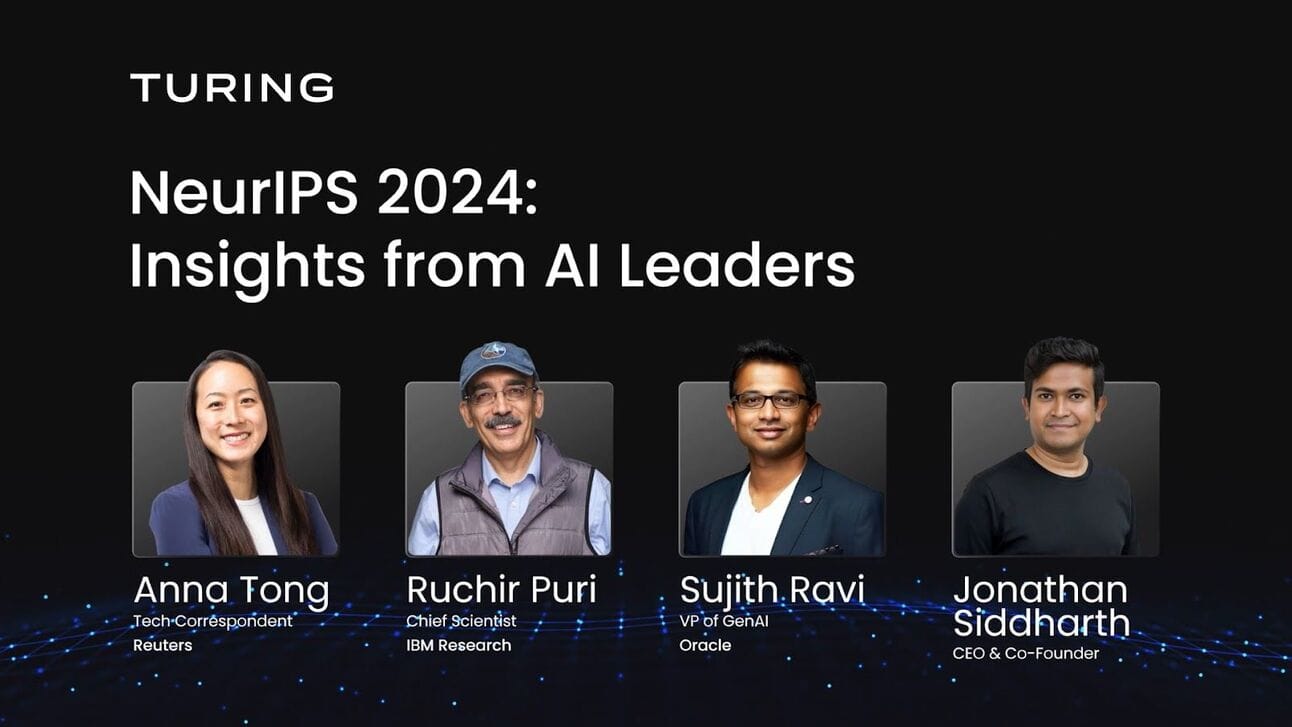
The Rundown: What happened at NeurIPS 2024? This recap breaks down the biggest AI advancements from leaders at Oracle, IBM, and Turing so you can stay ahead without the noise.
Gain insights on:
Multi-agent reasoning: How AI systems are learning to collaborate
Real-time adaptation: Smarter, more responsive models in action
Frontier scaling: Pushing the limits of training and optimization
TENCENT
💨 Tencent’s new ‘fast-thinking’ model
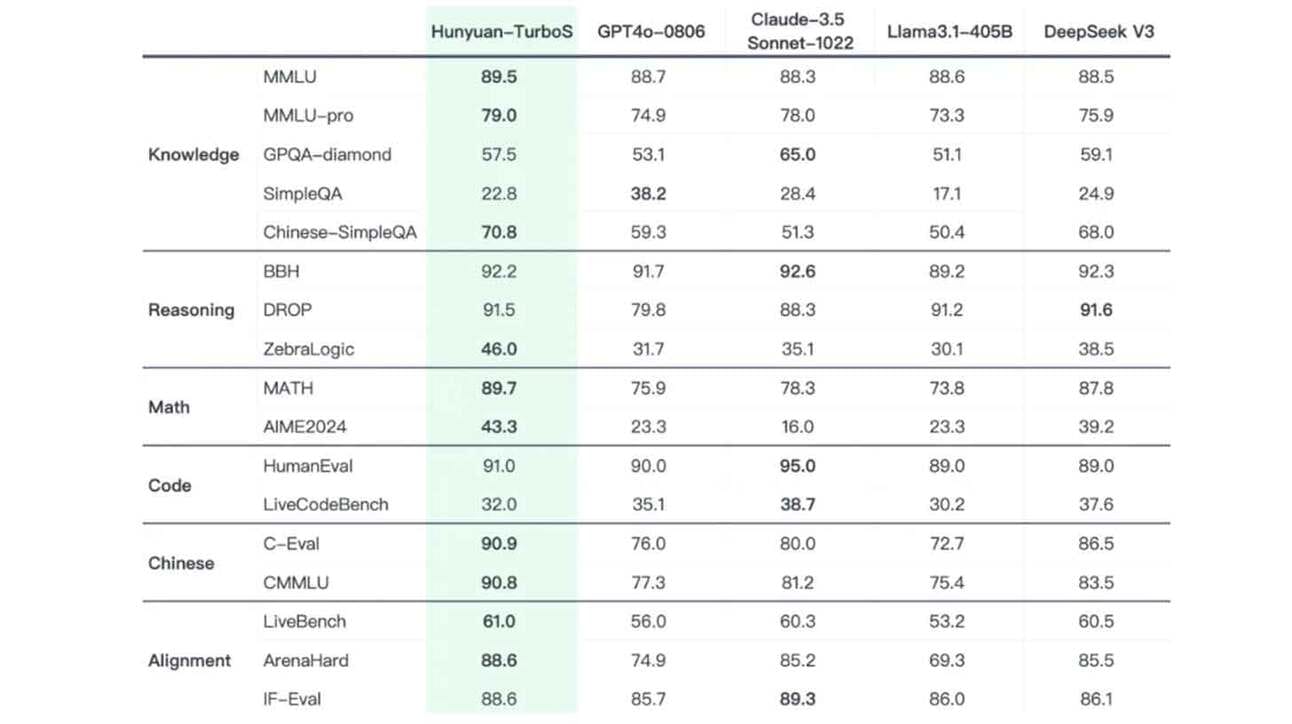
Image source: Tencent
The Rundown: Chinese giant Tencent just released Hunyuan Turbo S, a new ‘fast-thinking’ AI designed for instant responses rather than deep reasoning — achieving 2x the speed while matching the performance of leading models on key benchmarks.
The details:
Turbo S matches models like DeepSeek V3, GPT-4o, and 3.5 Sonnet across knowledge, mathematics, and reasoning despite a focus on speed.
Tencent has significantly lowered the price of the new model, making it a fraction of the cost of the previous generation.
The company is also preparing to launch a complementary T1 reasoning model with "deep thinking," positioning the two models for different use cases.
The release comes amid increasing AI competition from China, with DeepSeek nearing a new launch and Alibaba debuting QwQ-Max for reasoning this week.
Why it matters: It wasn’t long ago that reasoning models were the new shiny toy, and now we have a ‘fast-thinking’ vs. ‘slow-thinking’ divide. With DeepSeek’s R1 shining a massive global spotlight on Chinese AI, rival labs are quickly rushing to one-up the industry darling — and U.S. chip restrictions don’t seem to be slowing anything down.
AI TRAINING
📅 Building a smart calendar management system

The Rundown: In this tutorial, you will learn how to create a personalized AI calendar assistant that can check your schedule and create events using n8n's workflow automation and AI capabilities.
Visit n8n and create a new workflow.
Add a chat trigger as your entry point.
Set up an AI Agent with calendar tools (Get Events and Create Event) using AI expressions, such as {{ $fromAI('placeholder_name') }}.
Add system instructions for the AI agent node to guide the AI's behavior.
Pro tip: Test your assistant with natural language prompts like "Find a one-hour slot tomorrow in my calendar and schedule a research meeting with Alex."
Check out our recent workshop showing how to create AI agents with n8n here.
PRESENTED BY AUGMENT CODE
🤖 Where pro engineers meet real AI

The Rundown: Augment Code isn’t your average AI assistant — it’s purpose-built for serious software engineers handling massive codebases. Backed by Eric Schmidt and trusted by top teams like Webflow, Lemonade, and DDN, Augment helps take productivity to the next level.
With Augment Code, you can:
Instantly integrate into VS Code, JetBrains, or Vim to stay in the zone
Leverage full-codebase context in under 200ms to keep your workflow fast
Handle tens of thousands of files or millions of lines effortlessly
IDEOGRAM
🖼️ Ideogram eyeing speed boost with new model

Image source: Ideogram / The Rundown
The Rundown: Ideogram launched its 2a model, a major update to the text-to-image platform that significantly reduces generation time and cost while maintaining high-quality outputs—with optimizations for graphic design and photorealistic generations.
The details:
2a generates image outputs in just 10 seconds, with an even faster ‘2a Turbo’ option delivering results at twice the speed.
The new model excels at graphic design and text generation, with the ability to create content like homepages, movie posters, and advertisements.
It is also optimized for photorealism and is priced at 50% less than Ideogram 2.0 for both API and web use.
Users can access it now via Ideogram’s web platform, API, or through applications like Freepik, Poe, and Gamma.
Why it matters: While many image-generation models still struggle with basic spelling, Ideogram’s latest release is taking graphic design and text generation to absolutely mindblowing new levels. With these new abilities, another complete step change in creative workflows is about to be unlocked.
QUICK HITS
🛠️ Trending AI Tools
💬 Scribe - ElevenLabs’ new SOTA speech-to-text model
🪨 Granite 3.2 - IBM’s compact open models for enterprise use
🗣️ Octave TTS - Generate AI voices with emotional delivery
🧑🔬 Deep Review - AI co-scientist for literature reviews
📰 Everything else in AI today
Pika Labs released its new 2.2 model, featuring upgraded quality, 10-second, 1080p resolution generations, and new transition and transformation capabilities.
Meta is reportedly planning to release a standalone Meta AI app in Q2 with potential paid subscription options similar to OpenAI's model.
Figure is pushing up its timeline to bring its humanoid robots into the home, beginning Alpha testing this year thanks to improvements from its recently revealed Helix AI.
Microsoft rolled out new updates to Copilot, including a dedicated MacOS app, the ability to upload PDF or text files, and UI improvements.
Meta introduced Aria Gen 2 glasses with advanced sensors, on-device AI processing, and an all-day battery for research in machine perception, contextual AI, and robotics.
You Labs unveiled ARI, a research agent capable of analyzing up to 400 sources and generating professional reports with charts, citations, and visuals in under 5 minutes.
COMMUNITY
🎥 Join our next live workshop
Join our workshop today at 4 PM EST to learn how to take full advantage of Claude 3.7 Sonnet’s frontier reasoning capabilities, along with advanced prompting strategies with Dr. Alvaro Cintas, The Rundown’s AI professor.
RSVP here. Not a member yet? Join The Rundown University on a 14-day free trial.
🤝 Share The Rundown, get rewards
We’ll always keep this newsletter 100% free. To support our work, consider sharing The Rundown with your friends, and we’ll send you more free goodies.
See you soon,
Rowan, Joey, Zach, Alvaro, and Jason—The Rundown’s editorial team

Instagram Reels may get a new home
Read Online | Sign Up | Advertise
Good morning, tech enthusiasts. As TikTok faces a potential ban in the U.S., tech companies are racing to fill the void with their own alternatives, including Meta’s Instagram—which may soon spin off Reels as a standalone app.
It’s no secret that Meta has long hoped to dethrone its Chinese rival, but the question remains: will TikTok’s vast Gen Z fanbase embrace what it has to offer?
In today’s tech rundown:
Instagram’s standalone Reels app
Waymo robotaxis racing ahead
Amazon’s first quantum chip
Biotech’s DeepSeek moment
Quick hits on other major news
LATEST DEVELOPMENTS
👀 Instagram’s standalone Reels app

Image source: Ideogram/The Rundown
The Rundown: Meta’s Instagram is reportedly considering launching its Reels offering as a standalone short-form video app to take advantage of ByteDance-owned TikTok’s uncertain future in the U.S.
The details:
Instagram’s CEO Adam Mosseri was reportedly heard discussing the plan, according to an anonymous source cited by The Information.
Code-named “Project Ray,” the proposed app will likely support longer reels, going up to three minutes, and improved content recommendations.
The move comes after Meta launched a video-editing app called Edits, tailored for Instagram, to compete with TikTok-centric CapCut.
In 2018, Meta launched a standalone video app called Lasso to take on TikTok, but it was shut down two years later due to low user adoption.
Why it matters: If the move takes effect, Meta could strengthen Instagram’s user base and engagement by drawing a big chunk of TikTok’s 170 million U.S. users—should the platform go dark after April 5 due to a Trump ban. However, it won’t be an easy win, as rivals like X, YouTube, and Bluesky are also ramping up their vertical video game.
WAYMO
🚘 Waymo robotaxis racing ahead

Image source: Ideogram/The Rundown
The Rundown: Alphabet-owned Waymo announced that its fleet of self-driving taxis is now serving over 200,000 paid rides every week in the U.S.— marking a 20-fold jump from two years ago and pushing the company far ahead of its competitors.
The details:
Waymo’s driverless taxis operate in Los Angeles, San Francisco, and Phoenix, with plans to test in 10 new cities this year, including Austin, Atlanta, and Miami.
The company says its driverless taxis have captured 22% of the taxi market in San Francisco, surpassing Lyft and in tight competition with Uber.
Alphabet also invested an additional $5B in Waymo last year, supporting its rapid expansion and technological development plans.
As of October 2024, the company’s self-driving taxis were covering 1 million+ miles a week—a number that will only grow as it launches in new markets.
Why it matters: Waymo remains far ahead of the competition, especially with Cruise shutting down its robotaxi program and Zoox testing in just two cities. However, challenges do persist—Waymo's service is confined to geofenced areas, and regulatory and safety roadblocks can easily complicate expansion, putting operations at risk.
AMAZON
💻 Amazon’s first quantum chip

Image source: Amazon Web Services
The Rundown: Amazon has stepped into the quantum race with its first quantum computing chip, Ocelot, which it hopes will shave off as much as five years in the effort to build the world’s first viable quantum computer.
The details:
Developed in partnership with the California Institute of Technology, the Ocelot prototype integrates two small silicon microchips stacked atop each other.
It uses cat qubits, a type of qubit technology that suppresses certain quantum errors, which is essential for building fault-tolerant quantum computers.
Amazon says that the chip’s design could cut down resource costs associated with quantum error correction by as much as 90%.
Just recently, Microsoft unveiled its first quantum chip, Majorana. Google, meanwhile, announced its first quantum chip, Willow, in December.
Why it matters: One of the biggest challenges in quantum computing is qubits' sensitivity to vibrations, heat, and electromagnetic disturbances, leading to computational errors. Amazon’s Ocelot chip tackles this with its “cat qubit” design, which enhances stability. Its simpler architecture could also make scaling easier.
BIOTECH
🧪 Biotech’s DeepSeek moment

Image source: Ideogram/The Rundown
The Rundown: The biotech industry is having a DeepSeek moment as China celebrates a small biotech company’s drug for outperforming Merck’s cancer drug Keytruda—a $30B-a-year immunotherapy juggernaut and pharma’s bestselling drug.
The details:
The new drug from Akeso, Ivonescimab, outperformed Keytruda in treating lung cancer during Chinese trials last year.
Patients treated with the drug went 11.1 months before their tumors reappeared, compared to 5.8 months for Keytruda.
After the findings were revealed, shares in Akeso’s US partner, California-based Summit Therapeutics, more than doubled to a record high.
Over the past decade, Chinese firms have been innovating with advanced drugs, signing billions of dollars in licensing deals with Western companies.
Why it matters: China approved 37 new drugs in 2024, but concerns over trial data quality have led regulators to impose strict legal restrictions on its biotech firms. Now, with a global trial for Akeso’s new drug underway, the results could signal China’s rising strength in cutting-edge drug development.
QUICK HITS
📰 Everything else in tech today
Amazon unveiled Alexa+, its highly anticipated next-generation digital AI assistant, priced at $19.99 but free to 100M+ Amazon Prime members.
OpenAI is finally making its video generation model, Sora, available to users in the EU and UK via subscriptions to ChatGPT’s Plus and Pro tiers.
Meta is reportedly planning to release a standalone app for its AI assistant, Meta AI, as soon as this spring—in a move to take on ChatGPT.
Meta also revealed its second-gen experimental smart glasses—Aria Gen 2—intended to bolster research into AI, robotics, and machine perception.
Fintech company Stripe announced a tender offer for employees and shareholders that valued the company at $91.5 billion—41% higher than last year.
Nvidia plans to launch its next-gen AI computing chip, Blackwell Ultra, next month at the GTC conference.
Jeff Bezos’ rocket company Blue Origin is launching pop star Katy Perry and broadcast journalist Gayle King into space for a high-priced 10-minute joy ride.
Canadian biotech startup Afynia Laboratories raised $5 million in seed funding to commercialize a blood test for endometriosis.
COMMUNITY
🎥 Join our next live workshop
Join our workshop today at 4 PM EST to learn how to take full advantage of Claude 3.7 Sonnet’s frontier reasoning capabilities, along with advanced prompting strategies with Dr. Alvaro Cintas, The Rundown’s AI professor.
RSVP here. Not a member yet? Join The Rundown University on a 14-day free trial.
See you soon,
Rowan, Jennifer, and Joey—The Rundown’s editorial team

Amazon's new AI-powered Alexa
Read Online | Sign Up | Advertise

Good morning, AI enthusiasts. Alexa’s long-awaited AI revamp is here — and it may be Amazon’s biggest AI move yet.
With a massive intelligence upgrade and new agentic power set to land in the hands of over 100M Prime members, is this the ‘ChatGPT moment’ for voice assistants?
In today’s AI rundown:
Amazon’s gen AI-powered Alexa+
ElevenLabs’s new speech-to-text AI
Personalize your AI coding assistants
Inception Labs’ ultra-fast diffusion model
4 new AI tools & 4 job opportunities
LATEST DEVELOPMENTS
AMAZON
🔊 Amazon’s gen AI-powered Alexa+

Image source: Amazon
The Rundown: Amazon just unveiled Alexa+, its highly-anticipated next-generation digital assistant completely rebuilt with AI — promising more conversational interactions, personalization, and agentic capabilities for everyday tasks.
The details:
Alexa+ can connect and leverage multiple LLMs, including Amazon's Nova and Anthropic's Claude, choosing the best model for each task at hand.
The revamped assistant can perform complex agentic tasks like booking reservations, ordering groceries, purchasing concert tickets, and more.
Other features include document analysis, remembering user preferences, maintaining conversation context, and integration with hundreds of services.
It will cost $19.99 monthly but comes free with Amazon Prime membership, with early access rolling out in the U.S. next month.
Why it matters: Legacy voice assistants like Alexa and Siri have lagged massively behind the AI boom, but this release will finally put advanced voice agents in the homes of 100M+ Prime members — potentially triggering another ‘ChatGPT moment’ for consumers outside the tech bubble (assuming it goes better than Apple Intelligence).
TOGETHER WITH WORKOS
🔐 Protect your AI apps from bad actors

The Rundown: WorkOS Radar is a security solution that shields your AI platform from fake signups, throwaway emails, and brute force attempts — all powered by advanced device fingerprinting and real-time detection.
With WorkOS Radar, you can:
Rapidly detect and challenge unfamiliar and suspicious devices in real time
Stop free-tier abuse and fraudulent behavior with advanced detection
Customize threat responses to fit your app’s exact security needs
ELEVENLABS
🗣️ ElevenLabs’s new speech-to-text AI

Image source: ElevenLabs
The Rundown: ElevenLabs released Scribe, a new speech-to-text model that claims to be the most accurate in the world, outperforming industry leaders like Google's Gemini 2.0 Flash and OpenAI's Whisper v3 across dozens of languages.
The details:
Scribe supports 99 languages, with claimed accuracy rates exceeding 95% for over 25 languages, including English, Italian, and Spanish.
The model raises the bar in a variety of languages that traditionally lack speech recognition and transcription options, like Serbian, Cantonese, and Malayalam.
Its other features include multi-speaker labeling, word-level timestamps, and the ability to detect non-verbal audio markers like laughter or music.
Scribe is priced at $0.40 per hour of transcribed audio for pre-recorded audio, with a low-latency version for real-time applications coming soon.
Why it matters: With Scribe’s accuracy and focus on the unpredictability of real-world audio, people can expect flawless subtitles, searchable podcast archives, and more. It also opens up high-level transcriptions to a more global audience — particularly for low-resource languages that have previously been neglected by other models.
AI TRAINING
🤖 Personalize your AI coding assistants

The Rundown: In this tutorial, you’ll learn how to add custom instructions to Cursor and Windsurf AI coding tools to personalize and enhance your AI coding development workflow.
Here’s your step-by-step guide:
Download Cursor or Windsurf on your device from their official websites.
To set up Windsurf rules, create a .windsurfrules file in your project root or choose between global rules or project rules via “Edit Rules” in Settings.
Similarly, to configure rules in Cursor, head over to its Settings and set up global AI rules or project-specific rules.
Pro tip: Global rules set universal preferences, while project rules define instructions for specific project requirements. You can also browse this GitHub repo for ready-to-use templates of Cursor rules.
PRESENTED BY INNOVATING WITH AI
💼 Start your career as an AI Consultant

The Rundown: Innovating with AI’s new program, AI Consultancy Project, equips AI enthusiasts with all the resources they need to capitalize on the booming AI consulting market — set to grow 8x to $54.7B by 2032.
The program offers:
Tools and framework to find clients and deliver top-notch services
A 6-month roadmap to build a 6-figure AI consulting business
Student landing their first AI client in as little as 3 days
INCEPTION LABS
⚡ Inception Labs’ ultra-fast diffusion model

Image source: Inception Labs / Artificial Analysis
The Rundown: Inception Labs just emerged from stealth with Mercury, a new ‘diffusion’ LLM that generates text up to 10x faster than traditional LLMs while still matching their quality — with speeds over 1000 tokens/sec on standard H100 chips.
The details:
LLMs generate text one token at a time, but Mercury’s diffusion approach generates entire blocks in parallel for increased speed, efficiency, and control.
Their first model, Mercury Coder, matches or beats the coding performance of models like GPT-4o Mini and Claude 3.5 Haiku at 5-10x the speed.
Inception was founded by Stanford professor Stefano Ermon, who researched how to apply diffusion (commonly used for image and video generation) to text.
Mercury models can serve as drop-in replacements for traditional models in areas like code generation, customer support, and enterprise automation.
Why it matters: By bringing "Sora-like" diffusion to text, Inception is going against the grain on fundamental assumptions about how AI should generate language. Its technique could potentially enable more powerful agents, better and more efficient reasoning, and AI experiences that feel truly instantaneous.
QUICK HITS
🛠️ Trending AI Tools
🎥 Wan 2.1 - Alibaba’s new open-source SOTA AI video suite
🧠 Advanced Voice - ChatGPT’s conversational voice feature for free users
⚙️ Gemini Code Assist - Free AI coder with 180K code completions per month
📹 Project Starlight by Topaz Labs - Bring old videos back to life with AI
📰 Everything else in AI today
Hume AI released Octave, a text-to-speech LLM that understands emotional context, allowing creators to design custom voices with control over emotion and delivery.
Perplexity introduced a redesigned voice mode in its latest iOS update, featuring six different voice options, direct search result navigation, and more.
Poe launched Poe Apps, enabling users to create apps and visual UI interfaces using a combination of reasoning, multimodal, image, video, and audio models on the platform.
Vevo Therapeutics launched the Arc Virtual Cell Atlas featuring Tahoe-100M, an open-source dataset mapping 60,000 drug-cell interactions across 100M cells.
Exa launched Websets, a search product that deploys agents for better results, beating Google by over 20x and OpenAI Deep Research by 10x on complex queries.
IBM unveiled its new Granite 3.2 model family, featuring compact reasoning, vision-language, and specialized time series models for enterprise use.
Microsoft launched Phi-4 multimodal and Phi-4 mini SLMs, matching or exceeding the performance of models twice their size on certain tasks.
COMMUNITY
🎥 Join our next live workshop

Join our next workshop today, Thursday, February 27th, at 1 PM EST and learn how to transform your creative concepts into professional videos with LTX Studio's Tom Factor, Director of Creative Strategy and AI, and Alon Yaar, VP of Product.
RSVP here. Not a member yet? Join The Rundown University on a 14-day free trial.
🤝 Share The Rundown, get rewards
We’ll always keep this newsletter 100% free. To support our work, consider sharing The Rundown with your friends, and we’ll send you more free goodies.
See you soon,
Rowan, Joey, Zach, Alvaro, and Jason—The Rundown’s editorial team
No matching search results
Try using different keywords, double-check your spelling, or explore related categories.
Stay Ahead on AI.
Join 2,000,000+ readers getting bite-size AI news updates straight to their inbox every morning with The Rundown AI newsletter. It's 100% free.