Get the latest AI news, understand why it matters, and learn how to apply it in your work — all in just 5 minutes a day. Join over 2,000,000+ subscribers.

23andMe goes bankrupt
Read Online | Sign Up | Advertise

Good morning, tech enthusiasts. Genetic testing company 23andMe—which was once valued at over $6 billion but was soon left in shambles due to a major data breach—just filed for bankruptcy.
However, if the company is sold, what happens to the sensitive data of its 15 million customers? While people are flocking to quickly delete their accounts, doing so is easier said than done.
In today’s tech rundown:
23andMe files for bankruptcy
Samsung’s AR smart glasses
Tesla’s European sales take a hit
Microsoft’s quantum chip sparks debate
Quick hits on other major news
LATEST DEVELOPMENTS
23ANDME
🔬 23andMe files for bankruptcy

Image source: 23andMe
The Rundown: Genetic testing company 23andMe filed for Chapter 11 bankruptcy protection on Sunday, marking a dramatic turn of events for the once-pioneering biotech firm—and raising concerns about the genetic data of its 15M customers.
The details:
23andMe, which allowed customers to explore their genetic makeup through saliva samples, cited ongoing financial struggles as the reason for the decision.
Co-founder and CEO Anne Wojcicki resigned this week following unsuccessful attempts to privatize the company amid ongoing financial struggles.
The company’s trouble started in 2023, when it suffered from a massive data breach that exposed the personal information of nearly 7M customers.
23andMe was valued at $6B after going public in 2021, but it all fell to less than $50M by the time the company filed for bankruptcy.
Why it matters: While 23andMe assures it will protect the data of all customers during the transition, those seeking to remove it could face challenges. Even after receiving deletion requests, the company has to retain at least some data for up to three years—including your genetic info, date of birth, and sex—to comply with legal obligations.
SAMSUNG
👓 Samsung’s AR smart glasses
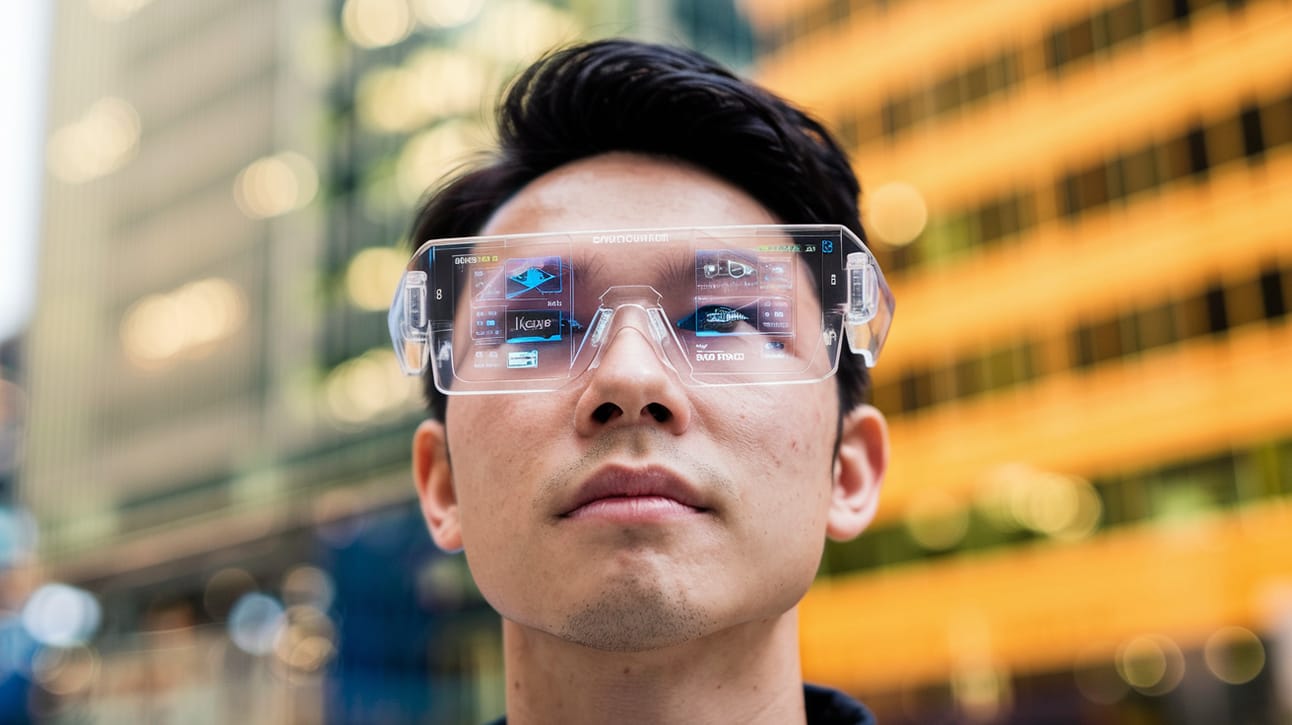
Image source: Ideogram/The Rundown
The Rundown: Samsung is reportedly finalizing a new line of augmented reality smart glasses, codenamed “Haean,” with a built-in display and advanced AI features—all set to launch later this year and take on Apple and Meta’s AR devices.
The details:
While Samsung has yet to confirm Haean, rumors suggest the glasses will come with AI features, including gesture recognition and payment capabilities.
They are expected to use multiple cameras and sensors to track user movements and interact with the environment.
On the software side, the glasses are anticipated to run Google's Android XR OS, coupled tightly with Samsung’s smart devices and wearables.
Samsung reportedly plans to launch the glasses by the end of 2025, alongside its upcoming extended reality (XR) headset—Project Moohan.
Why it matters: Positioned to compete with AR industry giants, Samsung’s version promises advanced features like facial recognition, gesture-based controls, and real-time text translation. This launch is also a key move in Samsung’s broader strategy to expand its presence in the XR market.
TESLA
🚘 Tesla’s European sales take a hit

Image source: Tesla
The Rundown: Tesla's European sales dropped by nearly 45% in February, resulting in a market share of just 9.6%—the lowest in five years. Meanwhile, Chinese rival BYD has overtaken Tesla in global revenue, clocking more than $100B in 2024.
The details:
Chinese EV brands sold nearly 20,000 vehicles in Europe last month, compared to Tesla's 15,700 units.
Analysts attribute this downturn to CEO Elon Musk's political involvement with Donald Trump and anti-labor sentiment, which has led to consumer backlash.
Additionally, delays in updates to the Model 3 and Model Y may have caused potential buyers to delay purchases, further impacting sales.
BYD, one of Tesla’s biggest Chinese rivals, recently took a lead in EV revenues and reported $107B in 2024 — a 29% increase from the previous year.
Why it matters: Tesla is feeling the heat from European and Chinese competitors, who are quickly closing the gap in terms of price, features, and overall availability. BYD, despite the newly imposed EU tariffs, is pushing its strategy of low-priced EVs and plug-ins, with sales projections pointing toward rapid growth this year.
MICROSOFT
☄️ Microsoft’s quantum chip sparks debate

Image source: Microsoft
The Rundown: Microsoft's recent announcement of Majorana 1 quantum chip, which is said to be powered by topological qubits, ignited a fierce debate among physicists this week, who claim it lacks conclusive evidence.
The details:
At a global physics summit, Microsoft’s quantum lead presented data claiming the chip uses elusive Majorana zero modes to create error-resistant qubits.
Physicists criticized the lack of evidence, noting that Microsoft’s Nature paper explicitly states the results “do not represent evidence for topological modes.”
Skeptics argued that the company’s protocol test could produce false positives, calling the data provided “unconvincing.”
Microsoft’s claims, which CEO Satya Nadella likened to “quantum’s transistor moment,” have drawn comparisons to its 2021 retraction of similar research.
Why it matters: Amazon’s quantum execs have reportedly dismissed the claims as “hype,” and critics warn that overstated breakthroughs risk undermining public trust in quantum computing, especially as Microsoft’s stock surged post-announcement. However, Microsoft maintains its findings are valid and plans to release additional data.
QUICK HITS
📰 Everything else in tech today
Apple announced iOS 18.4 will start rolling out next month with several new features, including lossless audio and ultra-low latency audio to AirPods Max.
Waymo, Alphabet’s autonomous vehicle subsidiary, announced plans to launch its robotaxi service, Waymo One, in Washington, D.C., by 2026.
Han Jong-hee, co-chief executive officer of Samsung Electronics, passed away at the age of 63 due to a heart attack, the company announced.
Tech giant IBM is set to cut around 9,000 U.S. jobs this year, with a significant portion of the roles reportedly shifting to India.
Apple is reportedly exploring the integration of AI-powered cameras into future versions of both the standard and Ultra versions of the Apple Watch.
Fintech startup Alchemy launched a $100M fund to provide content creators with upfront payments based on projected future income.
Revel, a NYC-based EV charging infrastructure startup, launched its first fast-charging station in San Francisco, with plans to expand across the Bay Area soon.
Yale researchers developed a CRISPR technology that can assess genetic interactions on a host of immunological responses to diseases, including cancer.
German startup Isar Aerospace is gearing up to launch its Spectrum rocket, marking the inaugural flight of an orbital launch vehicle from continental Europe.
Yahoo struck a deal to sell TechCrunch, the 20-year-old tech journalism site, to media investment firm Regent for an undisclosed amount.
Twitter's iconic bird logo, which was removed from the company's former San Francisco headquarters, sold for nearly $35,000 at an auction.
A new survey finds that two in five tech workers quit in the past year due to a lack of flexibility concerning hours, location, and the “intensity of work.”
COMMUNITY
🎥 Join our next live workshop

Join our next workshop this Friday at 4 PM EST with Dr. Alvaro Cintas, The Rundown’s AI professor. You'll learn how to use the latest AI tools to take your content creation to the next level.
RSVP here. Not a member? Join The Rundown University on a 14-day free trial.
See you soon,
Rowan, Jennifer, and Joey—The Rundown’s editorial team

Stealth startup dethrones image giants
Read Online | Sign Up | Advertise

Good morning, AI enthusiasts. The text-to-image race just got a surprising new frontrunner — with Reve emerging from stealth with a model that instantly topped global rankings under the codename "Halfmoon."
With next-level design and text capabilities, indistinguishable-from-reality photorealism, and world-class prompt adherence, a new AI creative powerhouse just announced itself in a BIG way.
In today’s AI rundown:
Reve’s new leading image model
DeepSeek quietly drops V3 upgrade
Turn any YouTube video into your tutor
ARC Prize returns to challenge AI reasoning
4 new AI tools & 4 job opportunities
LATEST DEVELOPMENTS
REVE
🌜 Reve’s new leading image model

Image source: Reve / The Rundown
The Rundown: Reve just emerged from stealth with Reve Image 1.0, a new text-to-image AI model that topped global rankings with the codename “Halfmoon” over the last week—showcasing exceptional prompt accuracy, text rendering, and image quality.
The details:
The model claimed the #1 position in Artificial Analysis' Image Arena, outperforming rivals like Google's Imagen 3, Midjourney v6.1, and Recraft V3.
Reve said its mission is to “enhance visual generative models with logic,” with 1.0 showing impressive prompt adherence and long text rendering in tests.
The platform also features natural language editing, photo uploads, and an ‘explore’ tab to view community prompts and generations.
A preview of Reve Image 1.0 is currently free to try (though no API access yet), with the company saying that “much more is coming soon”.
Why it matters: What a stealth debut from Reve, with their first model already topping the leaderboards against established giants in the text-to-image arena. 1.0 seems to combine the best of the SOTA image models — with extreme photorealism, world-class prompt following, editing tools, and absolutely next-level text capabilities.
TOGETHER WITH VANTA
🦺 Simplify compliance with automation and AI

The Rundown: Navigating new compliance requirements can be a daunting task, but with the right automation tools, it doesn't have to be. Whether you’re a fast-growing startup or an established security team, Vanta can help you achieve continuous compliance (and more).
Join the live demo on April 3 to learn how Vanta can help you:
Automate compliance for frameworks like SOC 2, ISO 27001, HIPAA, HITRUST, and ISO 42001
Continuously monitor controls to build and reinforce your security foundation
Scale your compliance program and manage vendor risk with automated tools and AI
DEEPSEEK
🐳 DeepSeek quietly drops V3 upgrade

Image source: Deepseek
The Rundown: Chinese AI startup DeepSeek just released an updated version of its V3 model, a massive 641GB model capable of running on high-end personal computers — also featuring a highly permissive open source MIT License for broad use.
The details:
The V3 update, V3-0324, uses a Mixture-of-Experts architecture that activates only 37B parameters per token, dramatically reducing compute demands.
Testers have shown it can run smoothly on Apple's Mac Studio computers, making it the first model of this caliber accessible outside data centers.
Early users have also reported upgraded math and coding capabilities, with another calling it the best non-reasoning model available.
V3-0324 can be accessed with an open-source MIT License, a change from the previous V3 model that had a more restrictive custom license.
Why it matters: China’s AI darling continues to ship, with a supposedly minor update bringing some big upgrades. Rumors about the upcoming R2 release are also gaining momentum, hinting at another 'DeepSeek moment' that could shake the AI world—potentially signaling a new leader in the field.
AI TRAINING
🎓 Turn any YouTube video into your tutor

The Rundown: In this tutorial, you will learn how to convert YouTube videos into personal tutors with Google AI Studio, which lets you ask questions about any video by simply pasting the link—making complex content instantly accessible for learning.
Step-by-step:
Visit Google AI Studio and log in with your Google account.
Select "Gemini 2.0 Flash" from the Model dropdown menu on the right side of the screen.
Paste your YouTube video link in the prompt area, followed by your specific question about the content.
Ask follow-up questions to explore the video content more deeply, referencing specific timestamps if needed.
Pro tip: When exploring videos on complex educational subjects, you can ask the AI to "Create a simple explanation of the [concept]" or "Generate a quiz based on this lecture to test my understanding."
PRESENTED BY INNOVATING WITH AI
🤝 Turn AI passion into a consulting career

The Rundown: Innovating with AI's new program, AI Consultancy Project, transforms AI enthusiasts into professional consultants — tapping into a market projected to reach $54.7B by 2032.
The 6-month program delivers:
Proven frameworks for client acquisition and service delivery
A step-by-step path to six-figure consulting income
Students who land their first AI client in as little as 3 days
Click here to request early access to The AI Consultancy Project.
ARC FOUNDATION
🧠 ARC Prize returns to challenge AI reasoning

Image source: ARC Foundation
The Rundown: The ARC Prize Foundation just launched ARC-AGI-2, a new benchmark designed to push the frontier of AI reasoning capabilities — alongside a $1M competition to drive research toward more efficient general intelligence systems.
The details:
ARC-AGI-2 targets skills that remain difficult for AI while being easy for humans, with tasks solvable by at least two humans in under two attempts.
Current AI reasoners perform poorly on ARC-AGI-2, with even OpenAI's o3-low scoring only an estimated 4%, compared to 75.7% on the previous version.
ARC also introduced an efficiency metric alongside raw performance, measuring cost per task to test both capability and resource efficiency.
The ARC Prize 2025 competition launches this week with $1M in prizes, including $700k for the first to achieve 85% accuracy within efficiency limits.
Why it matters: Many of the top AI labs feel that AGI is just around the corner, and ARC’s original AGI-1 benchmark was already seeing top models like the o3 score in the 80s (not without controversy). While the new iteration may be a better test, it’s still hard to imagine it lasting long — but the AGI goalposts will likely continue to shift.
QUICK HITS
🛠️ Trending AI Tools
🪄 Promptimize - Browser extension that gives you the power of an expert prompt engineer in a single click*
🧠 Hunyuan T1 - Tencent AI matching DeepSeek in performance and pricing
⚙️ Zapier MCP - Connect AI across 8,000+ apps without API integrations
🤔 Claude “Think” - Tool to improve Claude’s problem-solving performance
*Sponsored Listing
📰 Everything else in AI today
Sam Altman announced new internal leadership promotions at OpenAI, with Mark Chen appointed as Chief Research Officer and Brad Lightcap’s role expanding as COO.
Alibaba’s Qwen team open-sourced Qwen2.5-VL-32B-Instruct, a new vision-language model featuring enhanced mathematical reasoning and visual capabilities.
Netflix co-founder Reed Hastings donated $50M to his alma mater, establishing the Hastings Initiative for AI and Humanity to study the tech’s risks and future impact.
Alibaba-affiliate Ant Group reportedly adopted a hybrid chip strategy combining Chinese and American chips, which reduced AI development costs by 20%.
Google started rolling out ‘Project Astra’ features that give advanced vision, live video, and screen reading capabilities to Gemini.
Alibaba released LHM, a new AI model that creates animated 3D avatars from just a single reference image.
COMMUNITY
🎥 Join our next live workshop

Join our next workshop this Friday at 4 PM EST with Dr. Alvaro Cintas, The Rundown’s AI professor. You'll learn how to use the latest AI tools to take your content creation to the next level.
RSVP here. Not a member? Join The Rundown University on a 14-day free trial.
🤝 Share The Rundown, get rewards
We’ll always keep this newsletter 100% free. To support our work, consider sharing The Rundown with your friends, and we’ll send you more free goodies.

See you soon,
Rowan, Joey, Zach, Alvaro, and Jason—The Rundown’s editorial team

Ex-Cruise CEO's $2B robot startup
Read Online | Sign Up | Advertise

Good morning, robotics enthusiasts. Kyle Vogt, who co-founded Cruise and Twitch, is now racing ahead with The Bot Company—a robotics startup that just raised $150M, reaching a $2B valuation in less than a year since its inception.
The San Francisco-based company is tapping a market hungry for AI-powered robots with a “non-humanoid” bot for helping with household chores. But with no design yet on the table, can it scale up in time to compete with Amazon, Figure, and 1X?
In today’s robotics rundown:
Ex-Cruise CEO’s robot startup valued at $2B
Undersea bots to search for missing MH370
Tesla to build ‘legions’ of robots
1X launches NEO Gamma’s home trials
Quick hits on other robotics news
LATEST DEVELOPMENTS
THE BOT COMPANY
🦄 Ex-Cruise CEO’s robot startup valued at $2B

Image source: Ideogram/The Rundown
The Rundown: Former Cruise CEO Kyle Vogt’s new San Francisco-based robotics startup, The Bot Company, has reportedly raised $150M in funding at a $2B valuation—without even launching a product to date.
The details:
Vogt founded the company last year alongside Paril Jain, who led Tesla’s AI team, and former Cruise software engineer Luke Holoubek.
Sources who spoke to Reuters say the company is developing non-humanoid robots equipped with a base and grips to assist with household chores.
The company plans to use advanced AI models, including large language models, to enable its robots to understand natural language commands.
Vogt, who also co-founded Twitch, launched the startup five months after he resigned as CEO of the Cruise, the robotaxi startup acquired by GM.
Why it matters: The Bot Company is tapping the market for domestic automation, drawing strong investor backing from the outset. Yet with few design details revealed, investors seem to be betting solely on its potential—leaving open the question of whether it can keep pace with competitors like 1X, Amazon, and Figure.
OCEAN INFINITY
🚤 Undersea bots to search for missing MH370

Image source: Ocean Infinity
The Rundown: Texas robotics company Ocean Infinity has been granted a permit to renew the search for Malaysia Airlines Flight 370, which is thought to have crashed in the southern Indian Ocean more than a decade ago, killing all 239 people onboard.
The details:
Ocean Infinity will deploy a fleet of autonomous underwater vehicles capable of operating at depths up to 6,000 meters for as long as 100 hours at a time.
These vehicles are equipped with advanced sensors, including AquaPix sonar, which provides high-res imagery and 3D digital terrain maps of the seafloor.
Multiple AUVs can be deployed simultaneously, allowing for efficient coverage of the 5,800-square-mile search area.
Ocean Infinity's new state-of-the-art Armada 7806 offshore support vessel will serve as a base and can be operated remotely, requiring no onboard crew.
Why it matters: The Malaysian government will pay Ocean Infinity a fee of $70M if its 18‑month search locates the wreckage. This latest effort follows previous unsuccessful attempts—including a search that ended in 2018—though Ocean Infinity claims that its new technological advancements now position it for success.
TESLA
🤖 Tesla to build ‘legions’ of robots

Image source: Tesla
The Rundown: At an emergency all-hands meeting last week, Tesla CEO Elon Musk announced that the first Optimus humanoid has been completed at the new pilot production line at the Fremont Factory—with "legions" of robots expected soon.
The details:
Musk’s ambitious production targets for Optimus include 5,000 units this year, with the capacity to produce up to 12,000 units if necessary.
Looking ahead, the company plans to increase production to 50,000 units in 2026, with the possibility of using snap-on parts for customized use cases.
He also mentioned the potential for Optimus to be used outside of Tesla-controlled environments by the second half of 2026.
Musk predicted that Optimus would be the “biggest product of all time” and could be 10 times or even 20 times larger than any other product ever made.
Why it matters: Musk has said that Optimus has the potential to reach up to 10,000 different tasks in future updates and significantly increase Tesla’s profits by trillions of dollars. While competitors like Apptronik and Figure have a head start in real-world applications, none have publicly announced production goals to match Tesla’s.
1X
🧹 1X launches NEO Gamma’s home trials

Image source: 1X
The Rundown: Norwegian robotics startup 1X is set to launch early in-home trials of its NEO Gamma humanoid by the end of 2025, aiming to place the beige knit-suited bot in "a few hundred to a few thousand" homes.
The details:
While NEO Gamma uses AI to walk and balance, it is not yet fully autonomous and will rely heavily on human teleoperators during these early trials.
This “early adoption" program aims to gather data for developing autonomous capabilities and to teach the robot how to behave in real-world contexts.
NEO Gamma, unveiled in February, is designed to perform various household tasks such as vacuuming, watering plants, and making coffee.
The company is outspoken in saying its humanoid is still a “long way away from commercial scaling and deployment.”
Why it matters: 1X CEO Bernt Børnich says NEO Gamma needs to "live and learn among people" to advance its development, but collecting data from microphones and cameras in homes raises privacy flags. Still, 1X says moving NEO Gamma out of the lab and into homes is a crucial step to advancing the tech.
QUICK HITS
📰 Everything else in robotics today
Global ad firm WPP is partnering with Nvidia, Boston Dynamics, and Cannon to explore robotic-assisted cinematography, releasing a video of Atlas filming on set.
Mercedes-Benz is trialing a handful of Apptronik’s Apollo robots in two of its auto plants for tasks such as moving components to the production line and quality checks.
California-based Dexterity launched a massive new robot called Mech, touted as the “world’s first industrial superhumanoid,” which can lift 136 lb. with its arms.
BlueHalo announced that it has won a contract worth more than $30M to provide its advanced underwater robotic tech for U.S. Navy expeditionary and security missions.
Lyft announced it is working with May Mobility to introduce autonomous vehicles on its platform, with the rollout set to begin in Atlanta this summer and Dallas next year.
Tokyo Electric Power Company is set to deploy robots to retrieve highly radioactive sandbags at the Fukushima Daiichi nuclear power plant this week.
Swedish AI startup IntuiCell created a robot dog named Luna that it says has a functional digital nervous system capable of learning and adapting like humans.
SwitchBot is integrating more than 45 of its products with Home Assistant in the coming months, including robot vacuums, smart shades, and its garage door opener.
Stockholm-based Rerun, a company developing physical AI for robotics, drones, and autonomous vehicles, has raised $17M, bringing its total funding to $20.2M.
COMMUNITY
🎥 Join our next live workshop

Join our next workshop on Wednesday at 2 PM EST to learn how to build an AI-powered sales rep using Zapier Agents — with Jane Zhang and Anna Marie Clifton from the Zapier team.
RSVP here. Not a member? Join The Rundown University on a 14-day free trial.
See you soon,
Rowan, Jennifer, and Joey—The Rundown’s editorial team

AI finds cancers with 99% accuracy
Read Online | Sign Up | Advertise

Good morning, AI enthusiasts. AI just crossed a critical medical threshold — blowing away human experts with a 99.26% accuracy rate in detecting certain types of cancer.
With breakthrough treatments, rapidly evolving patient care, and now near-perfect diagnostic capabilities, AI’s future in stomping out cancer is looking brighter than ever.
In today’s AI rundown:
New AI’s near-perfect cancer detection
Tencent’s Hunyuan T1 reasoning model
Create custom AI videos to boost engagement
Perplexity’s bold bid to take over TikTok
4 new AI tools & 4 job opportunities
LATEST DEVELOPMENTS
AI RESEARCH
🔬 New AI’s near-perfect cancer detection

Image source: Daffodil International University and Charles Darwin University
The Rundown: Researchers just unveiled an AI model called ECgMLP that identifies endometrial cancer with 99.26% accuracy from microscopic tissue images—drastically outperforming human specialists and current automated methods.
The details:
ECgMLP uses specialized attention mechanisms to spot cancer cells in microscopic tissue images that doctors might miss during standard analysis.
Current human diagnostic methods for endometrial cancer only achieve 78-81% accuracy, far below this model’s accuracy of more than 99%.
Researchers also tested its versatility across other cancers, detecting colorectal (98.57%), breast (98.20%), and oral (97.34%) with high accuracy.
Why it matters: Medical diagnostics are undergoing a major shift, with AI now consistently outperforming humans in life-saving detection tasks. With many cancers being highly treatable when caught early, these models will save a lot of lives — and eventually democratize access to expert-level cancer screening worldwide.
TOGETHER WITH VAPI
🗣️Voice AI agents for developers

The Rundown Vapi delivers natural voice interactions with flexible, secure integration. Vapi’s platform powers both simple inbound agents and complex interactive AI solutions, integrating any LLM, voice model, or your own tools.
Over 120k developers — from startups to Fortune 500 companies — trust Vapi for:
Flexible integration with your own data, APIs, and models
Human-like agents for natural conversations
Scaling to millions of calls at <500ms latency
Enterprise-grade security with LLM guardrails with HIPAA/SOC-2
Call 1‑844‑439‑8274 or click here to talk to Vapi.
TENCENT
🧠 Tencent’s Hunyuan T1 reasoning model

Image source: Tencent
The Rundown: Tencent just released Hunyuan T1, a new reasoning model that matches DeepSeek's R1 in performance and pricing—while tapping the industry's first hybrid Transformer-Mamba architecture for improved efficiency.
The details:
T1 matches or surpasses rivals like DeepSeek R1 and OpenAI’s o1 and GPT 4.5 across benchmarks, excelling especially in math and Chinese language evals.
Tencent claims the model is the first to combine Google's Transformer architecture with Carnegie Mellon and Princeton researchers’ Mamba system.
The hybrid approach reportedly delivers 2x faster speeds while reducing computing demands, particularly when handling long-text reasoning tasks.
As for pricing, T1 matches DeepSeek's competitive rates at 1 yuan ($0.14) per million tokens for input and 4 yuan ($0.55) per million tokens for output.
Why it matters: Between DeepSeek, Tencent, and Alibaba, China’s AI labs have almost completely closed the gap with the U.S. leaders — something that felt extremely far off just a year ago. With the next-gen R2 also coming soon, China feels closer than ever to officially taking the lead for the world’s top AI models.
AI TRAINING
🎬 Create custom AI videos to boost engagement

The Rundown: In this tutorial, you will learn how to use Synthesia's AI video platform to create personalized videos using AI avatars and add them to your emails to increase response rates.
Step-by-step:
Create a free Synthesia account, select a template, and add your script and on-screen text to create a basic video.
Add personalization variables using double curly brackets in both your script and on-screen text, then convert to a template.
Use your template to create individual videos by filling in the variable fields for each recipient.
Copy video thumbnails as GIFs directly into your emails and add call-to-action buttons to drive conversions.
Pro tip: You can also check out our extensive workshop showing how to create hyper-personalized video messages that drive engagement with Synthesia here. The Rundown University’s paid members will also get a 30% discount on the Creator Plan.
PRESENTED BY RECRAFT
🎨 Elevate your creative process with Recraft

The Rundown: Recraft is an AI-powered image generation and editing tool built to give creators total control, not replace their creativity. Trusted by 3M+ users, Recraft’s V3 model sits atop the Hugging Face text-to-image leaderboard — ahead of alternatives like Midjourney and DALL·E.
With Recraft, you can:
Generate lifelike images (with correct anatomy) indistinguishable from real photos
Enjoy real-time editing on an infinite canvas for true creative freedom
Create precise, accurate text overlays for posters, banners, and layouts
Keep complete ownership of your creative process
Incorporate Recraft into your design process today — use code RUNDOWN12 for $12 off any plan, exclusive to The Rundown AI readers.
PERPLEXITY
🔍 Perplexity’s bold bid to take over TikTok

Image source: Perplexity
The Rundown: AI search startup Perplexity just published its proposal to acquire TikTok's U.S. operations, promising to rebuild the platform's algorithm with transparency and American oversight while integrating its own search tech.
The details:
Perplexity plans to reconstruct TikTok's recommendation system in American data centers, promising full transparency by making the algorithm open-source.
The company would integrate its AI citation capabilities with TikTok videos, enabling users to cross-reference info in real time while watching content.
Perplexity also proposed enhancing TikTok with Nvidia Dynamo technology to scale recommendation models "100x" while improving inference speed.
The vision includes cross-platform benefits, with TikTok videos in Perplexity search results, and Perplexity's information engine powering TikTok searches.
Why it matters: Perplexity has had a wild few years, evolving from an AI search startup to developing its own models, partnering on an AI phone, building an AI browser, antagonizing Google in commercials, and now bidding on TikTok. It could be another publicity stunt, but the ban deadline is April 5 — so we’ll find out soon enough.
QUICK HITS
🛠️ Trending AI Tools
🛜 Web Search - Access the web and real-time info with Claude 3.7 Sonnet
🗣️ GPT-4o-tts and Transcribe - OpenAI’s text-to-speech & speech-to-text AI
🗺️ Mind Maps - New interactive visual creation tool in Google’s NotebookLM
🎥 KREA Video Training - Train video AI with your videos for custom styles
💼 AI Job Opportunities
🚀 The Rundown - Enterprise Partnerships Lead
📋 Snorkel - Technical Delivery Manager
✏️ Shield AI - Associate Visual Designer
🤖 Captions - Member of Technical Staff, ML Ops
📰 Everything else in AI today
Anthropic introduced a "think" tool for Claude, enabling the AI assistant to perform structured reasoning when handling complex tool use tasks.
OpenAI and Meta are seeking a partnership with India's Reliance Industries, with OpenAI considering a price cut of up to 85% on ChatGPT to break into the market.
Kai-Fu Lee said that "Sam Altman is probably not sleeping well,” with his startup 01.AI pivoting to DeepSeek's open models and operating at just 2% of OpenAI's annual costs.
Apple is developing a camera-equipped Apple Watch with AI Visual Intelligence features using its own models — hoping for implementation by 2027.
Zapier launched its own MCP protocol, enabling AI assistants to perform actions across 8,000+ apps without complex API integrations.
New studies from OpenAI and MIT research found that increased ChatGPT usage correlates with higher loneliness and emotional dependence in users.
Browser Use, which makes websites easier to navigate for AI agents, raised $17M in seed from Felicis’ Astasia Myers, Paul Graham, A Capital, and Nexus Venture Partners.
COMMUNITY
🎥 Join our next live workshop

Join our next workshop on Wednesday at 2 PM EST to learn how to build an AI-powered sales rep using Zapier Agents — with Jane Zhang and Anna Marie Clifton from the Zapier team.
RSVP here. Not a member? Join The Rundown University on a 14-day free trial.
🤝 Share The Rundown, get rewards
We’ll always keep this newsletter 100% free. To support our work, consider sharing The Rundown with your friends, and we’ll send you more free goodies.
See you soon,
Rowan, Joey, Zach, Alvaro, and Jason—The Rundown’s editorial team

Apple TV+ losing $1B yearly
Read Online | Sign Up | Advertise
Good morning, tech enthusiasts. Apple is reportedly losing $1B a year on its streaming service, Apple TV+, despite investing some $5B annually to produce hit shows like Severance.
While Netflix thrives on its massive library, Apple has been following a more curated strategy, releasing fewer but high-quality titles. The question is: will the company keep TV+ as this high-profile vanity project or make big changes to take on streaming giants?
In today’s tech rundown:
Apple TV+ losing $1B per year
Drones delivering gear on Mt. Everest
Google’s new low-cost Pixel 9a
AI forecasts weather in seconds
Quick hits on other major tech news
LATEST DEVELOPMENTS
APPLE
📺 Apple TV+ losing $1B per year

Image source: Apple TV+
The Rundown: Apple's streaming service, Apple TV+, is reportedly losing over $1B a year—the only subscription not generating profit—despite growing to 45M subscribers last year and earning critical acclaim for shows like Ted Lasso and Severance.
The details:
Apple has been investing heavily in content, spending $20B since 2019, with Severance season 2 reportedly costing $20M per episode.
However, losses are not unusual in the early days of the streaming business; Apple anticipates TV+ losses between $15B and $20B over its first decade.
Still, CEO Tim Cook has reportedly begun scrutinizing the platform's spending more closely, slashing its $5B content budget by $500M for 2024.
In terms of viewership, Apple TV+ continues to fall behind, accounting for just 0.3% of U.S. screen time in June 2024 — as compared to Netflix’s 8%.
Why it matters: Apple’s focus on quality garners major awards, but that hasn’t translated into subscriber numbers compared to Netflix, Disney+, and Amazon Prime. Of course, Netflix operated at a loss for years before turning profitable and Apple can also sustain the hit—it made $391B in total revenue during the last fiscal year.
DJI
🏔️ Drones delivering gear on Mt. Everest

Image source: Ideogram/The Rundown
The Rundown: Mount Everest expeditions are about to shift: DJI drones are being deployed alongside Nepalese Sherpas to transport supplies, haul equipment, and remove waste along some of the mountain’s most treacherous routes.
The details:
Starting next month, expedition companies will begin testing DJI FlyCart 30 drones capable of carrying loads up to 35 pounds at high altitudes.
These unmanned aircraft will transport equipment, retrieve ladders used for route-setting, remove waste, and even deliver hot meals and oxygen cylinders.
Drones can also assist Sherpas in safe route mapping and can go from the base camp to camp one in just 15 minutes—compared to a Sherpa’s 7 hours.
Nepalese drone startup AirLift first tested DJI drones last spring and noted they can handle the transport tasks despite extreme winds and temperatures.
Why it matters: Proponents argue that drones will make work safer, faster, and more efficient for Sherpas, eliminating repeated crossings of the treacherous Khumba Icefall, for example. However, critics fear that drones buzzing around Everest could jeopardize the livelihoods of people who rely on these expeditions for their families’ income.
📱 Google’s new low-cost Pixel 9a

Image source: Google
The Rundown: After a flood of leaks, Google officially unveiled the Pixel 9a, its latest mid-range smartphone with a larger battery, a new camera, and a slimmed-down design—all coming at a price tag lower than that of Apple’s “budget” iPhone 16e.
The details:
The Pixel 9a starts at $499 for the 128GB model in the U.S., the same price as last year’s model, and is powered by Google’s in-house Tensor G4 chip.
It features a sleek, flat profile with rounded edges, departing from the traditional camera bar design of other Pixel models.
The new phone also boasts a 6.3-inch Actua display with a 120Hz refresh rate and a peak brightness of 2,700 nits—35% brighter than the Pixel 8a.
Its dual rear camera system includes a 48MP main camera and a 13MP ultrawide—with AI photography features like Magic Eraser and Night Sight.
Why it matters: The Pixel 9a stands out in the mid-range market with its larger display, higher refresh rate, and more versatile camera setup—all at a lower price than the iPhone 16e’s $599. However, its real-world performance remains untested, as Google has delayed its release to "sometime in April."
UNIVERSITY OF CAMBRIDGE
☀️ AI forecasts weather in seconds

Image source: University of Cambridge
The Rundown: The University of Cambridge researchers developed Aardvark Weather, a groundbreaking AI-driven weather prediction system that can deliver accurate forecasts in one second without the need for a supercomputer.
The details:
The researchers say Aardvark relies on a machine-learning model using data from satellites, weather stations, and other sensors.
The system produces forecasts in about a second on a desktop computer, using thousands of times less computing power than conventional systems.
It already outperforms the U.S. national GFS forecasting system, despite using only 10% of the input data of existing systems.
The researchers say its simplicity can make tailored predictions possible for specific industries or locations, potentially democratizing weather forecasting.
Why it matters: By replacing hours-long supercomputer processing and extending accurate forecasts from five to eight days, Aardvark Weather can provide governments with a more efficient and accessible tool to anticipate natural disasters like floods and plan mitigation strategies in advance to save lives.
QUICK HITS
📰 Everything else in tech today
Nvidia CEO Jensen Huang said the company plans to invest hundreds of billions of dollars in U.S.-made chips and electronics over the next four years.
AI infrastructure startup CoreWeave is set to launch an IPO to raise nearly $2.5B—and mark one of the largest tech listings of 2025.
Tesla CEO Elon Musk confirmed that Tesla has completed its first Optimus humanoid robot at the new pilot production line at its Fremont Factory.
Telegram founder Pavel Durov said the messaging service now has 1B monthly active users, with each user opening Telegram 21 times daily and spending 41 minutes.
Google is introducing an AI-powered upgrade to Gmail’s search function that prioritizes your most-clicked emails and frequent contacts for better results.
Tesla is recalling nearly all Cybertrucks in the U.S., more than 46K vehicles, to fix an exterior panel that could detach when driving.
Social media users flagged that Google’s new Gemini AI is being used to remove watermarks on images from Getty Images and other stock media companies.
Amazon lost its legal battle against a record privacy fine of $812M handed out by Luxembourg's privacy regulator, a ruling upheld by the country's administrative court.
Meta announced that its AI-powered virtual assistant, Meta AI, is finally launching in the EU — but as a more limited version compared to what’s offered to U.S. users.
Firefly Aerospace's Blue Ghost lander completed its two-week mission on the moon, capturing HD images and marking the longest commercial mission on the moon.
COMMUNITY
🎥 Join our next live workshop

Join our next workshop this Friday at 4 PM EST to learn about how to use AI to transform and enhance images using AI for content creation and creative projects, with Dr. Alvaro Cintas, The Rundown’s AI professor.
RSVP here. Not a member? Join The Rundown University on a 14-day free trial.
See you soon,
Rowan, Jennifer, and Joey—The Rundown’s editorial team
Apple TV+ losing $1B yearly
Read Online | Sign Up | Advertise

Good morning, tech enthusiasts. Apple is reportedly losing $1B a year on its streaming service, Apple TV+, despite investing some $5B annually to produce hit shows like Severance.
While Netflix thrives on its massive library, Apple has been following a more curated strategy, releasing fewer but high-quality titles. The question is: will the company keep TV+ as this high-profile vanity project or make big changes to take on streaming giants?
In today’s tech rundown:
Apple TV+ losing $1B per year
Drones delivering gear on Mt. Everest
Google’s new low-cost Pixel 9a
AI forecasts weather in seconds
Quick hits on other major tech news
LATEST DEVELOPMENTS
APPLE
📺 Apple TV+ losing $1B per year
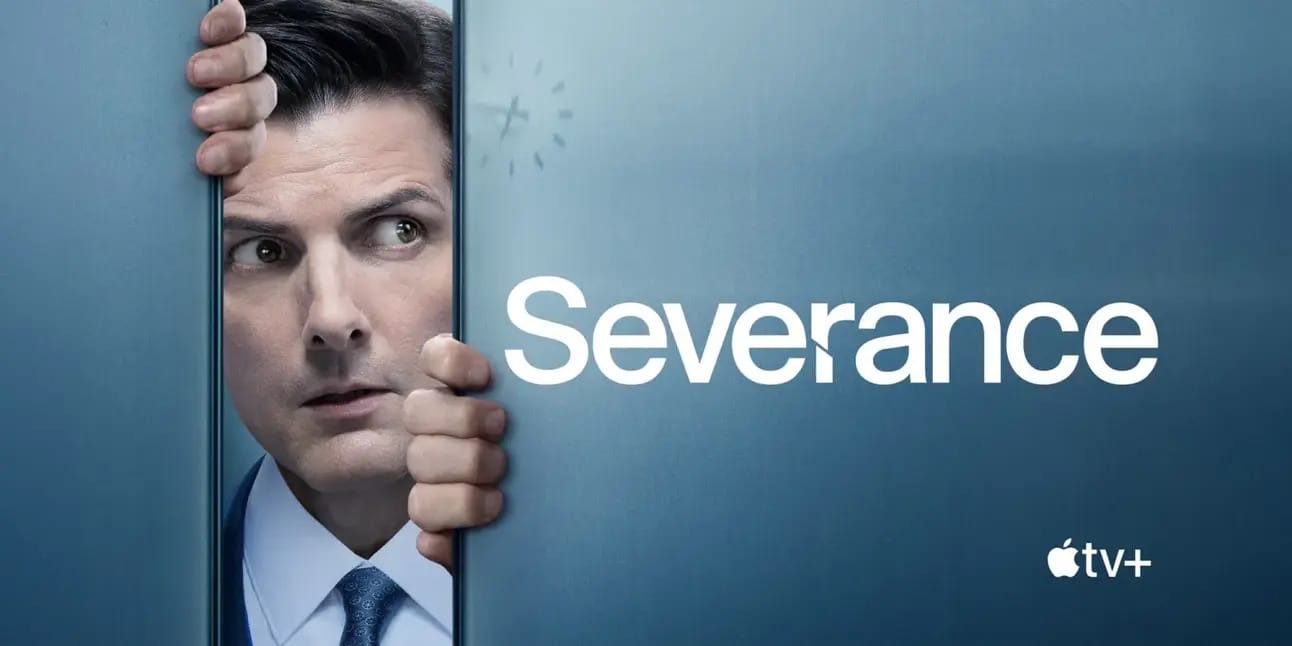
Image source: Apple TV+
The Rundown: Apple's streaming service, Apple TV+, is reportedly losing over $1B a year—the only subscription not generating profit—despite growing to 45M subscribers last year and earning critical acclaim for shows like Ted Lasso and Severance.
The details:
Apple has been investing heavily in content, spending $20B since 2019, with Severance season 2 reportedly costing $20M per episode.
However, losses are not unusual in the early days of the streaming business; Apple anticipates TV+ losses between $15B and $20B over its first decade.
Still, CEO Tim Cook has reportedly begun scrutinizing the platform's spending more closely, slashing its $5B content budget by $500M for 2024.
In terms of viewership, Apple TV+ continues to fall behind, accounting for just 0.3% of U.S. screen time in June 2024 — as compared to Netflix’s 8%.
Why it matters: Apple’s focus on quality garners major awards, but that hasn’t translated into subscriber numbers compared to Netflix, Disney+, and Amazon Prime. Of course, Netflix operated at a loss for years before turning profitable and Apple can also sustain the hit—it made $391B in total revenue during the last fiscal year.
DJI
🏔️ Drones delivering gear on Mt. Everest
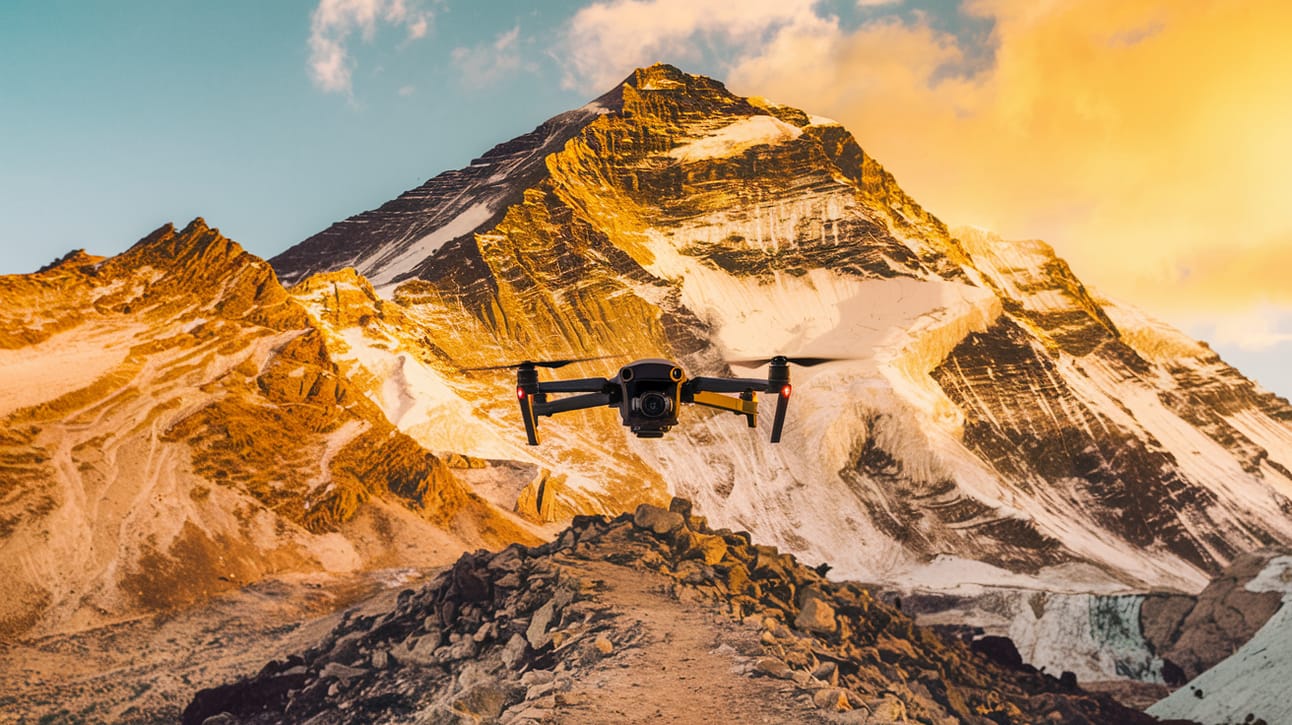
Image source: Ideogram/The Rundown
The Rundown: Mount Everest expeditions are about to shift: DJI drones are being deployed alongside Nepalese Sherpas to transport supplies, haul equipment, and remove waste along some of the mountain’s most treacherous routes.
The details:
Starting next month, expedition companies will begin testing DJI FlyCart 30 drones capable of carrying loads up to 35 pounds at high altitudes.
These unmanned aircraft will transport equipment, retrieve ladders used for route-setting, remove waste, and even deliver hot meals and oxygen cylinders.
Drones can also assist Sherpas in safe route mapping and can go from the base camp to camp one in just 15 minutes—compared to a Sherpa’s 7 hours.
Nepalese drone startup AirLift first tested DJI drones last spring and noted they can handle the transport tasks despite extreme winds and temperatures.
Why it matters: Proponents argue that drones will make work safer, faster, and more efficient for Sherpas, eliminating repeated crossings of the treacherous Khumba Icefall, for example. However, critics fear that drones buzzing around Everest could jeopardize the livelihoods of people who rely on these expeditions for their families’ income.
📱 Google’s new low-cost Pixel 9a
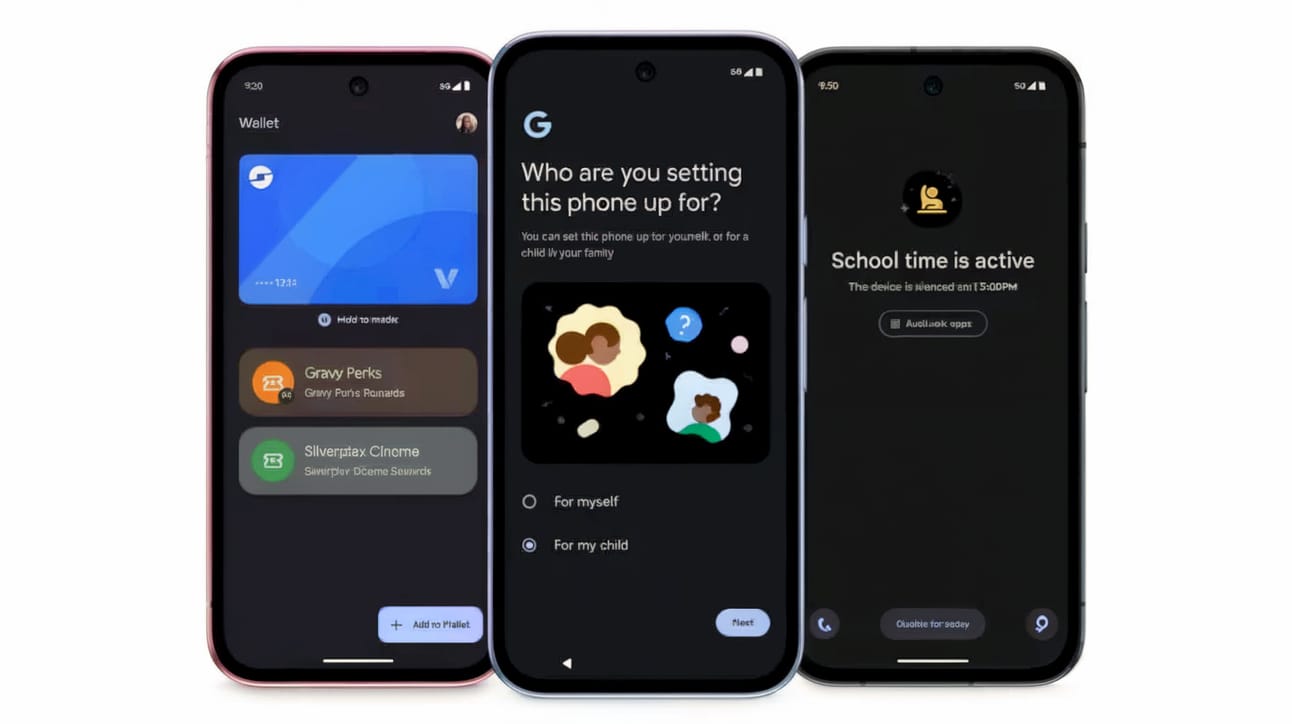
Image source: Google
The Rundown: After a flood of leaks, Google officially unveiled the Pixel 9a, its latest mid-range smartphone with a larger battery, a new camera, and a slimmed-down design—all coming at a price tag lower than that of Apple’s “budget” iPhone 16e.
The details:
The Pixel 9a starts at $499 for the 128GB model in the U.S., the same price as last year’s model, and is powered by Google’s in-house Tensor G4 chip.
It features a sleek, flat profile with rounded edges, departing from the traditional camera bar design of other Pixel models.
The new phone also boasts a 6.3-inch Actua display with a 120Hz refresh rate and a peak brightness of 2,700 nits—35% brighter than the Pixel 8a.
Its dual rear camera system includes a 48MP main camera and a 13MP ultrawide—with AI photography features like Magic Eraser and Night Sight.
Why it matters: The Pixel 9a stands out in the mid-range market with its larger display, higher refresh rate, and more versatile camera setup—all at a lower price than the iPhone 16e’s $599. However, its real-world performance remains untested, as Google has delayed its release to "sometime in April."
UNIVERSITY OF CAMBRIDGE
☀️ AI forecasts weather in seconds
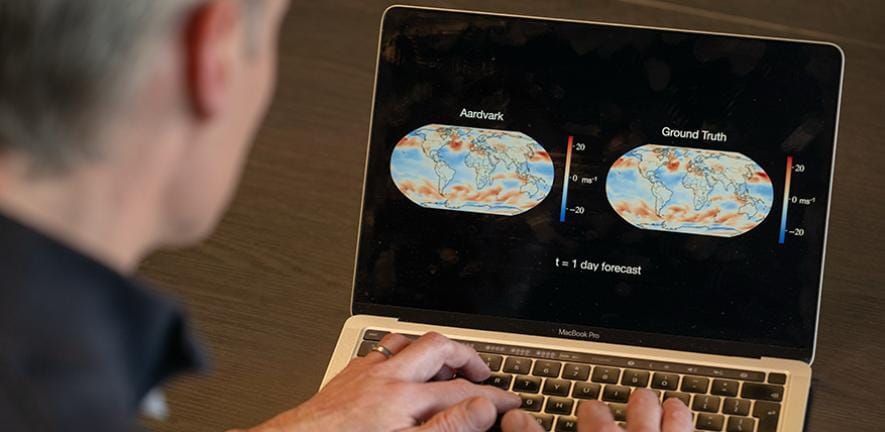
Image source: University of Cambridge
The Rundown: The University of Cambridge researchers developed Aardvark Weather, a groundbreaking AI-driven weather prediction system that can deliver accurate forecasts in one second without the need for a supercomputer.
The details:
The researchers say Aardvark relies on a machine-learning model using data from satellites, weather stations, and other sensors.
The system produces forecasts in about a second on a desktop computer, using thousands of times less computing power than conventional systems.
It already outperforms the U.S. national GFS forecasting system, despite using only 10% of the input data of existing systems.
The researchers say its simplicity can make tailored predictions possible for specific industries or locations, potentially democratizing weather forecasting.
Why it matters: By replacing hours-long supercomputer processing and extending accurate forecasts from five to eight days, Aardvark Weather can provide governments with a more efficient and accessible tool to anticipate natural disasters like floods and plan mitigation strategies in advance to save lives.
QUICK HITS
📰 Everything else in tech today
Nvidia CEO Jensen Huang said the company plans to invest hundreds of billions of dollars in U.S.-made chips and electronics over the next four years.
AI infrastructure startup CoreWeave is set to launch an IPO to raise nearly $2.5B—and mark one of the largest tech listings of 2025.
Tesla CEO Elon Musk confirmed that Tesla has completed its first Optimus humanoid robot at the new pilot production line at its Fremont Factory.
Telegram founder Pavel Durov said the messaging service now has 1B monthly active users, with each user opening Telegram 21 times daily and spending 41 minutes.
Google is introducing an AI-powered upgrade to Gmail’s search function that prioritizes your most-clicked emails and frequent contacts for better results.
Tesla is recalling nearly all Cybertrucks in the U.S., more than 46K vehicles, to fix an exterior panel that could detach when driving.
Social media users flagged that Google’s new Gemini AI is being used to remove watermarks on images from Getty Images and other stock media companies.
Amazon lost its legal battle against a record privacy fine of $812M handed out by Luxembourg's privacy regulator, a ruling upheld by the country's administrative court.
Meta announced that its AI-powered virtual assistant, Meta AI, is finally launching in the EU — but as a more limited version compared to what’s offered to U.S. users.
Firefly Aerospace's Blue Ghost lander completed its two-week mission on the moon, capturing HD images and marking the longest commercial mission on the moon.
COMMUNITY
🎥 Join our next live workshop

Join our next workshop this Friday at 4 PM EST to learn about how to use AI to transform and enhance images using AI for content creation and creative projects, with Dr. Alvaro Cintas, The Rundown’s AI professor.
RSVP here. Not a member? Join The Rundown University on a 14-day free trial.
See you soon,
Rowan, Jennifer, and Joey—The Rundown’s editorial team

Claude (finally) searches the web
Read Online | Sign Up | Advertise

Good morning, AI enthusiasts. Claude's days of being stuck in the past are officially over — with Anthropic finally giving its powerful AI assistant the ability to search and cite real-time web information.
With web search now in one of the market's most powerful models, will this late but crucial addition be the upgrade that puts the company ahead in the AI assistant race?
P.S. Don’t miss our next workshop today at 4 PM EST to learn how to use AI to transform images for content creation and creative projects. RSVP here.
In today’s AI rundown:
Claude gets real-time web search
OpenAI's voice AI with personality boost
Bring old photos to life with color
Apple shuffles AI leadership amid Siri crisis
4 new AI tools & 4 job opportunities
LATEST DEVELOPMENTS
ANTHROPIC
🔍 Claude gets real-time web search

Image source: Anthropic
The Rundown: Anthropic just added web search capabilities to Claude, giving its AI assistant access to real-time information and closing a major feature gap with competitors like ChatGPT and Gemini.
The details:
Web search integrates directly with Claude 3.7 Sonnet and automatically determines when to surf the internet for more current or accurate information.
Claude provides direct citations for web-sourced information, allowing users to verify sources and fact-check responses easily.
The feature is now available to all paid Claude users in the U.S., with international and free-tier expansion planned for the near future.
Users can also access the feature by toggling on the ‘Web Search’ tool in the profile settings of the platform.
Why it matters: It’s hard to believe it took this long for Claude to gain access to the web, given how long ago its rivals debuted the feature. But Anthropic’s models are among the most capable on the market — and getting real-time information gives a boost that could completely undercut more search-specific options like Perplexity.
TOGETHER WITH TURING
🗣️ Inside the minds of AI visionaries

The Rundown: Turing’s AGI Icons speaker series brings you direct access to the world’s top AI leaders like Sam Altman, Adam D’Angelo, and Jeff Dean — covering everything from the cutting-edge breakthroughs shaping tomorrow’s world to the ethical and societal implications of advanced AI.
Attend AGI Icons and experience:
Access to exclusive insights and in-depth conversations with AI visionaries
Exploration of the latest advances and ethical considerations in AI
Global networking with a community of AI enthusiasts and experts worldwide
OPENAI
🎙️ OpenAI's voice AI with personality boost

Image source: OpenAI
The Rundown: OpenAI launched its next-gen API-based audio models for text-to-speech and speech-to-text, giving developers the ability to customize AI speaking styles via text and delivering improved speech recognition across multiple languages.
The details:
The new gpt-4o-mini-tts model adapts its speaking style based on simple text prompts — like "speak like a pirate" or "use a bedtime story voice."
The GPT-4o-transcribe speech-to-text models reach SOTA performance across accuracy and reliability tests, outperforming existing Whisper models.
OpenAI also released openai.fm, a public demo platform allowing users to test different voice styles and experience the new models firsthand.
The models are available through OpenAI's API, with integration support through the Agents SDK for developers building voice-enabled AI assistants.
Why it matters: AI voice agents are about to be integrated with all sorts of applications and platforms — and being able to customize outputs with text commands is a massive unlock for more diverse, natural AI interactions. But these OpenAI demos don’t seem as human as voice rivals like Sesame and ElevenLabs, at least for now.
AI TRAINING
🎨 Bring old photos to life with color

The Rundown: In this tutorial, you will learn how to use the new native image generation feature in Gemini 2.0 Flash to instantly colorize black and white photos and make creative edits with simple text prompts.
Step-by-step:
Visit Google AI Studio and select "Gemini 2.0 Flash (Image Generation) Experimental" from the “Models” dropdown.
Upload your black-and-white image by clicking the message field’s "+" button.
Type "Colorize this image" and hit Run to transform your photo.
Make creative edits with additional prompts like "Add snow on the trees" or "Change the lighting to golden hour" and download your brand new image!
Pro tip: You should be very specific with color preferences in your prompts to get more personalized results. Try "colorize with warm, summer tones" instead of just "add color" for better outcomes.
PRESENTED BY INNOVATING WITH AI
🤝 Turn AI passion into a consulting career

The Rundown: Innovating with AI's new program, AI Consultancy Project, transforms AI enthusiasts into professional consultants — tapping into a market projected to reach $54.7B by 2032.
The 6-month program delivers:
Proven frameworks for client acquisition and service delivery
A step-by-step path to six-figure consulting income
Students who land their first AI client in as little as 3 days
Click here to request early access to The AI Consultancy Project.
APPLE
🍏 Apple shuffles AI leadership amid Siri crisis

Image source: Ideogram / The Rundown
The Rundown: Apple is making major changes to its AI leadership, according to Bloomberg insider Mark Gurman — with Vision Pro creator Mike Rockwell taking over Siri development to accelerate its delayed AI features and catch up to competitors.
The details:
Siri’s most significant AI upgrades, including personalization features teased with iPhone 16 marketing, have faced delays with no release timeline in sight.
Rockwell will now report directly to software chief Craig Federighi, completely removing Siri from current AI leader John Giannandrea's oversight.
A recent internal assessment found significant issues with Siri’s development, with team leads revealing missed deadlines and implementation hurdles.
The changes follow discussions at Apple's exclusive annual leadership summit, where AI strategy emerged as a critical priority.
Why it matters: Apple’s AI era has been a disaster — with Apple Intelligence, which was once thought to be a major driver of mass adoption, turning out into a series of overpromises that don’t even come close to matching capabilities seen elsewhere across the industry. A shakeup is clearly needed, but it’s a big ship to turn around.
QUICK HITS
🛠️ Trending AI Tools
🧠 Llama Nemotron - Nvidia’s new family of open-source reasoning models
🤖 EXAONE Deep - LG’s newly released reasoning model series
🌌 grok-2-image-1212 - xAI’s image generation model, now available via API
🗣️ Epiphany - Turn voice notes into instant actions in your favorite tools
💼 AI Job Opportunities
📊 OpenAI - Product Manager, Financial Engineering
🧠 AE Studio - Alignment Data Scientist
📝 Palantir Technologies - Legal Counsel
📣 DeepL - Marketing Operations Director
📰 Everything else in AI today
IMAGINE AI LIVE '25 connects business leaders with AI innovators for three days of enterprise AI discovery at the Fontainebleau Las Vegas May 28-30. Apply by Saturday, March 22 to save 20%.*
OpenAI released its o1-pro model via API, charging developers a whopping $150 and $600 per million input and output tokens — 10x the price of regular o1.
Perplexity is set to raise nearly $1B at an $18B valuation, potentially doubling its worth, as the AI search startup approaches $100M in annual recurring revenue.
Google’s NotebookLM added a new Interactive Mind Map feature, allowing users to turn their notes or source material into visual representations.
Meta is rolling out its AI assistant across 41 European countries — via Facebook, Instagram, WhatsApp, and Messenger — after a year-long regulatory battle.
Hugging Face published a response to the White House’s AI Action Plan, advocating for open-source AI systems to drive innovation over commercial models.
*Sponsored Listing
COMMUNITY
🎥 Join our next live workshop

Join our next workshop this Friday at 4 PM EST to learn about how to use AI to transform and enhance images using AI for content creation and creative projects, with Dr. Alvaro Cintas, The Rundown’s AI professor.
RSVP here. Not a member? Join The Rundown University on a 14-day free trial.
🤝 Share The Rundown, get rewards
We’ll always keep this newsletter 100% free. To support our work, consider sharing The Rundown with your friends, and we’ll send you more free goodies.
See you soon,
Rowan, Joey, Zach, Alvaro, and Jason—The Rundown’s editorial team

Nvidia's GR00T N1 AI for humanoids
Read Online | Sign Up | Advertise
Good morning, robotics enthusiasts. At this week’s jam-packed Nvidia GTC conference, CEO Jensen Huang unveiled Isaac GR00T N1, the world’s first open-source and fully customizable foundation model for humanoids.
Huang says that “the age of generalist robotics is here,” and that GR00T N1 is what developers need to train smarter, more capable humanoids—faster than we ever imagined. But will Nvidia’s advances live up to the hype?
In today’s robotics rundown:
Nvidia’s open-source AI for humanoids
Disney’s Star Wars droid comes to life
A robot that leaps like a squirrel
Humanoid with touch-sensitive ‘skin’
Quick hits on other robotics news
LATEST DEVELOPMENTS
NVIDIA
🧠 Nvidia’s open-source AI for humanoids

Image source: Nvidia
The Rundown: At its GTC 2025 conference in San Jose, Nvidia unveiled Isaac GR00T N1, its open-source foundational model designed to accelerate the development and capabilities of humanoids and “open the next frontier in the age of AI.”
The details:
GR00T N1 features a dual system architecture designed for “fast” and “slow” thinking systems, inspired by principles of human cognition.
The slow thinking system enables robots to perceive, reason, and plan actions, while the fast thinking system translates these plans into real-world action.
Nvidia is also releasing simulation frameworks and blueprints for generating synthetic training data, making GR00T N1 highly adaptable for various uses.
Pre-trained on both synthetic and real data, this model has demonstrated tasks such as grasping, object manipulation, and executing multi-step instructions.
Why it matters: While GR00T N1 is a big jump in humanoid robotics, its ability to fully deliver on its promises will become clearer as it's more widely integrated and tested in various real-world applications. Companies that are already implementing the tech in their humanoids include 1X, Boston Dynamics, Agility, and Figure.
DISNEY
🎢 Disney’s Star Wars droid comes to life

Image source: Nvidia/YouTube
The Rundown: During his GTC keynote, Jensen Huang revealed Nvidia has partnered with Disney and DeepMind to develop Newton, an open physics engine aimed at bringing a new wave of robots—starting with a Star Wars-inspired droid named “Blue.”
The details:
Huang introduced the “Blue” prototype on stage, showcasing how it uses Newton for complete real-time simulation and action.
Built on Nvidia's Warp framework, Newton will provide a customizable and scalable simulation environment, optimized for AI-driven robotic characters.
Nvidia says Newton will be compatible with DeepMind's MuJoCo and its own Isaac Lab, accelerating robotics workloads by over 70x.
It plans to release an early, open-source version of Newton later in 2025, allowing developers worldwide to experiment with the technology.
Why it matters: BDX droids like Blue are expected to roam around Disney parks this year, with Nvidia and DeepMind playing an integral role in powering the company’s future in robotics. However, it’s worth noting that the usefulness of this tech will go far beyond entertainment to more capable, expressive robots across various industries.
UC BERKELEY
🐿️ A robot that leaps like a squirrel

Image source: UC Berkeley
The Rundown: UC Berkeley researchers developed Salto, a squirrel-like robot that can take a flying leap and land on a narrow pipe—marking what the team says is the first time a bot has been able to stick the landing on such a small target.
The details:
Salto is the result of extensive research into squirrel biomechanics, including how a squirrel’s front legs absorb kinetic energy from jumping.
The robot features a motorized flywheel for balance, adjustable leg forces, and a passive gripper designed to minimize torque applied to the landing spot.
In tests, it successfully leaped from one PVC pipe to another 25 times out of 30, with two trials resulting in a perfect upright balance on the pipe.
Originally developed in 2016, Salto has been a work in progress; it started sticking landings on flat surfaces in 2020.
Why it matters: The team hopes that Salto’s small size and high, reactive jumps could allow the bot to quickly move through uneven terrain, which could mean life and death in search and rescue missions. Salto could also lead the way to agile bots working on construction sites, hopping from pipes while carrying cameras for inspection.
NEURA ROBOTICS
🇪🇺 Humanoid with touch-sensitive ‘skin’

Image source: Neura Robotics
The Rundown: German robotics company Neura Robotics is launching its third-gen 4NE-1 humanoid in June, with CEO David Rege saying that Europe’s new take on the generalist robot will be the best in the world.
The details:
The 4NE-1 stands nearly 6 feet tall and features 3D vision, touch sensors, and AI-driven cognition designed after human thought processes.
However, Neura says the difference is in its advanced sensor “skin,” enabling it to sense touch, predict contact, and measure pressure with precision.
The company is developing the cognitive humanoid using Nvidia’s GR00T N1 AI — joining players like Boston Dynamics and Agility Robotics with early access.
It has doubled its workforce to over 300 employees in a year and recently secured $130M in Series B funding for its Neuroverse platform.
Why it matters: In an era of tariff wars, Neura sees the development of its all-purpose 4NE-1 as crucial for European competitiveness. This push from the company comes as the UK’s Humanoid is still in the process of developing its robot and Norway’s 1X is gearing up to manufacture tens of thousands of units of its NEO humanoid by 2026.
QUICK HITS
📰 Everything else in robotics today
Apptronik, the company behind Apollo humanoid, announced it added an extra $53M to its Series A funding round, bringing the total funding from the round to $403M.
Boston Dynamics released a clip of its Atlas humanoid demonstrating some impressively fluid moves, including crawling, breakdancing, and cartwheeling.
Nvidia is partnering with GM to advance the autonomous driving systems of the carmaker as well as its manufacturing processes.
Unitree released a video showing its G1 humanoid performing a standing side flip—a world-first—using 23 degrees of freedom and cutting-edge technology.
Chinese developer Dobot unveiled a new humanoid called Atom, which has 28 degrees of freedom, ±0.05 mm precision, and a price tag of $27K.
PETA India donated a robotic elephant to a temple in India to be used in place of live animals in ceremonies, in a commitment to protecting endangered Asian elephants.
Chinese researchers developed a tiny robot to explore ocean depths of 10,600 meters (34,776 feet), now being tested in the Mariana Trench.
Researchers from Princeton and the University of Edinburgh found that an AI-powered robot can take over coffee-making duties in busy kitchens and cafes.
U.S. researchers created a reinforcement learning-based framework that allows legged robots to successfully ride a skateboard.
Chinese scientists developed a six-legged robot inspired by insect movements, for future mining operations on the Moon and missions to deep space asteroids.
COMMUNITY
🎥 Join our next live workshop
Join our next workshop this Friday at 4 PM EST to learn about how to use AI to transform and enhance images using AI for content creation and creative projects, with Dr. Alvaro Cintas, The Rundown’s AI professor.
RSVP here. Not a member? Join The Rundown University on a 14-day free trial.
See you soon,
Rowan, Jennifer, and Joey—The Rundown’s editorial team
No matching search results
Try using different keywords, double-check your spelling, or explore related categories.
Stay Ahead on AI.
Join 2,000,000+ readers getting bite-size AI news updates straight to their inbox every morning with The Rundown AI newsletter. It's 100% free.