Get the latest AI news, understand why it matters, and learn how to apply it in your work — all in just 5 minutes a day. Join over 2,000,000+ subscribers.

Ilya's SSI skyrockets to $32B
Read Online | Sign Up | Advertise

Good morning, AI enthusiasts. Former OpenAI chief scientist Ilya Sutskever just reportedly raised another massive round for his AI startup, Safe Superintelligence Inc. (SSI), catapulting its valuation to $32B in mere months.
But with no product in sight—just a bold vision for superintelligence and Sutskever's reputation—is this the most audacious bet yet in the AI funding frenzy, or a glimpse of Silicon Valley's new normal?
In today’s AI rundown:
Ilya’s SSI raises $2B at $32B valuation
Ex-OpenAI staff push back on for-profit shift
Build an AI-powered lead outreach automation
AI surpasses experts in tuberculosis diagnosis
4 new AI tools & 4 job opportunities
LATEST DEVELOPMENTS
SAFE SUPERINTELLIGENCE INC.
💰 Ilya’s SSI raises $2B at $32B valuation

Image source: SSI / Stanford University
The Rundown: Safe Superintelligence Inc. (SSI), co-founded by former OpenAI chief scientist Ilya Sutskever, just reportedly raised $2 billion at a post-money valuation of $32 billion, becoming one of the highest-valued startups just months after launch.
The details:
The $2B round has been led by Greenoaks (with $500M), with Lightspeed Venture Partners and Andreessen Horowitz in participation, FT reported.
A separate report from Reuters noted that Alphabet and Nvidia are also backing SSI, though their investment amount remains undisclosed.
The AI startup has been laser-focused on building “superintelligence” that goes beyond human-level AGI while making sure “safety always remains ahead.”
Previously, Sutskever told investors that the company has “identified a different mountain to climb,” hinting at a unique approach to AI development.
Why it matters: Even without a concrete product plan, SSI continues to rise, with its valuation growing sixfold since September 2024. The surge, alongside news of Mira Murati’s Thinking Machines planning a raise, reflects growing investor interest in AI startups led by prominent researchers, especially those emerging from OpenAI’s orbit.
TOGETHER WITH SANA
📈 Do real work with AI

The Rundown: Sana provides a powerful enterprise AI platform designed to let every team build no-code AI agents grounded in your organization's unique data.
Upgrade your workflow with AI that can:
Find the exact info you need
Answer and brainstorm any idea
Recap meeting actions and automate repetitive tasks
Solve complex, multi-step problems in seconds
OPENAI
🙅 Ex-OpenAI staff push back on for-profit shift

Image source: Getty Images
The Rundown: Twelve former OpenAI employees, who served in technical and leadership roles between 2018 and 2024, just filed a proposed amicus brief supporting Elon Musk's lawsuit challenging the AI lab's shift away from its nonprofit origins.
The details:
The brief makes the case that if OpenAI’s non-profit wing cedes its controlling stake in business, it would “fundamentally violate its mission statement.”
It adds that OpenAI’s restructuring would also “breach the trust of employees, donors, and other stakeholders” who supported the lab for its mission.
Todor Markov, who is now at Anthropic, called Altman “a person of low integrity” who used the charter merely as a “smoke screen” to attract talent.
They all noted the court should recognize maintaining the nonprofit is essential to ensure AGI benefits humanity rather than serving narrow financial interests.”
Why it matters: If admitted to the court record, these testimonies from former insiders could strengthen Musk's case ahead of the spring 2026 trial. OpenAI, for its part, says the non-profit remains intact and calls the changes a restructuring of its existing for-profit arm into a public benefit corporation while preserving the original mission.
AI TRAINING
🤖 Build an AI-powered lead outreach automation

The Rundown: In this tutorial, you’ll learn how to use Lindy AI's new loop feature to create an automated system that researches prospects and drafts personalized emails at scale with zero manual effort.
Step-by-step:
Set your Lindy AI agent context by adding a description like "You are an outreach agent that has access to spreadsheets, researches leads, and drafts personalized emails".
Create a workflow starting with "Message Received" trigger and an AI Agent configured to process spreadsheets of leads.
Add an "Enter Loop" node that processes leads in parallel, with "Search Perplexity" and "Draft Email" nodes inside the loop.
Finalize with an "Exit Loop" node and a summary AI Agent, then test your workflow with a sample spreadsheet.
Pro tip: The Rundown University members get 15% off Lindy Pro plans here.
PRESENTED BY WRITER
🤖 The agentic AI you've been waiting for

The Rundown: Despite the buzz, agentic AI has struggled to deliver — until now. Writer’s end-to-end platform finally makes agentic workflows real, effective, and scalable for enterprise.
In this product showcase, you'll:
Experience real agentic workflows live
Hear success stories from beta testers
Learn strategies to align your IT and business teams
Watch on demand and see the first platform for end-to-end agentic AI in action.
AI RESEARCH
🫁 AI surpasses experts in tuberculosis diagnosis

Image source: Ideogram/The Rundown
The Rundown: A new study led by Swiss researchers from Lausanne University Hospital demonstrated that AI can diagnose pulmonary tuberculosis with greater accuracy than human experts, exceeding WHO standards for non-sputum TB tests.
The details:
Presented at ESCMID Global 2025, the study introduced ULTR-AI, an AI system trained to read lung ultrasound images from smartphone-connected devices.
The system uses a combination of three different models to merge image interpretation and pattern detection and optimize diagnosis accuracy.
When tested on 504 patients (38% of whom had confirmed TB), it achieved 93% sensitivity and 81% specificity, beating human expert performance by 9%.
The AI can identify subtle patterns that humans often miss, including small pleural lesions invisible to the naked eye.
Why it matters: With TB cases rising and diagnostics scarce or unaffordable in low-resource settings, this AI system could revolutionize triage by providing faster, cheaper, and scalable testing. And since it runs in real time through a smartphone app, even minimally trained healthcare workers can use it effectively in remote locations.
QUICK HITS
🛠️ Trending AI Tools
🧠 Seed-Thinking-v1.5 - ByteDance’s reasoning AI that beats Deepseek R1
🤖 AI HQ - Writer’s end-to-end platform for building and supervising AI agents
🗣️ Amazon Nova Sonic - Amazon's Speech-to-speech AI on Bedrock
📊 Gemini in Sheets - Access Google’s Gemini AI models in Google Sheets
💼 AI Job Opportunities
✍️ The Rundown - Course Copywriter/Designer
🧮 Curai - Revenue Operations Manager
📢 Anthropic - Head of Corporate Communications
🏛️ Palantir Technologies - Meritocracy Fellowship
📰 Everything else in AI today
Meta’s unmodified, release version of Llama 4 Maverick appeared on LMArena, ranking below months-old models, including Gemini 1.5 Pro and Claude 3.5 Sonnet.
DeepMind CEO Demis Hassabis mentioned that the company plans to combine Gemini and Veo models into a unified omni model with better world understanding.
Netflix is reportedly working with OpenAI on a revamped search experience, allowing users to look up content using different new parameters, including their mood.
OpenAI beefed up its security with a new Verified Organization status, which will be required to unlock API access to its advanced models and capabilities.
OpenAI CEO Sam Altman said that the company plans to release an open-source model that would be "near the frontier.”
Elon Musk’s xAI started rolling out the memory feature to its Grok AI assistant, following a similar move from OpenAI last week.
COMMUNITY
🎥 Join our next live workshop

We just did a full workshop on n8n, where we teach you how to create your own AI assistant that speeds up your workflow and helps you get more done, led by Dr. Alvaro Cintas, The Rundown’s AI professor.
Watch it here. Not a member? Join The Rundown University on a 14-day free trial.
See you soon,
Rowan, Joey, Zach, Alvaro, Jason, and Shubham —The Rundown’s editorial team

Silicon Valley eyes Greenland for tech utopia
Read Online | Sign Up | Advertise

Good morning, tech enthusiasts. Silicon Valley tech billionaires are eyeing Greenland as the next big hub for innovation, envisioning a “freedom city” where regulation is as sparse as the island’s population.
The tech utopia would host cutting-edge AI, autonomous vehicles, and space launches, turning the icy landscape into a hotbed of innovation. Of course, Denmark isn’t the only one calling the plan “absurd” — what do you think, a billionaire’s fantasy or something that could actually work?
In today’s tech rundown:
Tech billionaires set sights on Greenland
Bezos-backed startup’s new $25K EV
Mira Murati’s AI venture eyes $2B funding
Instagram finally developing an iPad app
Quick hits on other tech news
LATEST DEVELOPMENTS
GREENLAND
🔥 Tech billionaires set sights on Greenland

Image source: Ideogram/The Rundown
The Rundown: Tech billionaires, including Peter Thiel and Marc Andreessen, are reportedly pushing for the creation of a deregulated “freedom city” in Greenland, as the Trump administration works to acquire the territory from Denmark.
The details:
The idea is to create a libertarian tech hub on the island for AI, autonomous vehicles, and micro-nuclear energy, with minimal government oversight.
The talks are still early, but Trump’s Denmark ambassador pick, Ken Howery—an ally of Peter Thiel—is reportedly taking the idea seriously.
The push mirrors existing "freedom city" experiments like the Thiel-backed Próspera in Honduras and California’s Solano County.
Melting Arctic ice has also heightened Greenland’s importance, offering access to rare-earth minerals and ideal conditions for massive AI data centers.
Why it matters: While proponents say tech cities could drive breakthroughs, critics warn they risk becoming corporate dictatorships with their own rules. Denmark, meanwhile, has dismissed U.S. interest—saying Greenland is “not for sale”—and past “free city” ventures like Próspera have faced government pushback.
SLATE AUTO
🛻 Bezos-backed startup’s new $25K EV

Image source: Ideogram/The Rundown
The Rundown: Amazon founder Jeff Bezos is reportedly a backer of Slate Auto, a Michigan-based auto startup aiming to launch the U.S.’s first $25K EV—a pickup slated to debut sometime in late 2026.
The details:
Slate Auto launched as part of an incubator run by former Amazon Consumer CEO Jeff Wilke and has been operating in stealth since 2022.
The company has reportedly poached 200–500 employees from Ford, GM, Stellantis, and failed EV startups like Fisker and Canoo to power its R&D efforts.
It is differentiating itself by adopting an open-source model and customization tools for its EVs—unlike Tesla and Rivian’s closed proprietary systems.
A spy photo also appeared on Reddit, showing what looks like a prototype of its small two-seater pickup with a boxy, minimalist design.
Why it matters: The project faces skepticism, as no automaker has yet delivered an EV at that price, and Slate remains tight-lipped about specs. But, if it manages to hit the price target, Bezos’s stealth bet could disrupt the market—a $25K EV pickup would be less than half the cost of Ford’s F-150 Lightning.
THINKING MACHINES
🦄 Mira Murati’s AI venture eyes $2B funding

Image source: Getty Images
The Rundown: Former OpenAI CTO Mira Murati’s new company, Thinking Machines Lab, is reportedly raising a $2B seed round—one of the largest in startup history—doubling its initial $1B target from February.
The details:
With this round, Thinking Machines Lab will be valued at an incredible $10B+, despite having no commercial product or revenue roadmap in place.
The startup aims to solve “black box” AI issues, prioritizing transparency and user control—a stark contrast to opaque models like OpenAI’s GPT family.
Murati’s all-star team counts employees from top AI labs, including OpenAI and Google DeepMind, among its ranks.
She left OpenAI in October after six years at the company, where she led work on ChatGPT, DALL-E, and code-generating system Codex.
Why it matters: Thinking Machines’ massive seed round joins a wave of ex-OpenAI ventures, like Ilya Sutskever’s SSI, raising big bucks. It also signals a shift in AI funding where investors are betting big on frontier AI, elite talent, and bold visions—like Murati’s push to ‘democratize’ AI.
META
⚡️ Instagram finally developing an iPad app

Image source: Ideogram/The Rundown
The Rundown: After 15 years of constant user complaints, Meta’s Instagram is finally said to be working on a native app for iPad, marking an end to the era of stretched iPhone versions of its service on Apple’s tablets.
The details:
The Information reports that Meta’s new app will feature full-screen browsing, enhanced Reels playback, and deeper integration with Apple Pencil.
The move is part of Meta’s push to capitalize on TikTok’s uncertain future in the U.S., as Instagram’s Reels competes for short-form video dominance.
The app may also introduce creator-focused tools, such as advanced analytics and scheduling, tailored for iPad workflows.
No launch date is confirmed, but the report suggests a rollout later this year—possibly without some advanced creator features.
Why it matters: Instagram CEO Adam Mosseri long brushed off iPad demand as a low priority—but growing user frustration and competitive pressure have forced a rethink. Still, it could be scrapped. In 2023, Meta promised an iPad app for WhatsApp, and it never arrived.
QUICK HITS
📰 Everything else in tech today
Apple shares skyrocketed 15% on Wednesday after President Donald Trump announced a 90-day pause on “reciprocal tariffs,” but then dropped again on Thursday.
Microsoft said it is buying 3.7M metric tons of carbon removal credits from project developer CO280 to meet its goal of becoming carbon-negative by 2030.
Google is reported to have laid off “hundreds of employees” in the division responsible for Android, Chrome, and Pixel—in a move to operate “more effectively.”
OpenAI launched a massive update to ChatGPT that enhances its memory, allowing the chatbot to reference all past conversations to provide more personalized responses
Senator Josh Hawley called on Meta CEO Mark Zuckerberg to testify before Congress over allegations that the company undermined U.S. national security.
Alphabet’s Waymo began its first international testing in Japan by manually driving its vehicles across seven Tokyo wards to collect mapping data.
Nissan announced a partnership with UK-based AI startup Wayve to integrate Wayve's autonomous driving technology into its vehicles.
Blue Origin's NS-31 mission, set for April 14, will feature an all-female crew, including pop star Katy Perry, journalist Gayle King, and Bezos’ fiancée Lauren Sánchez.
Cofertility, a startup co-founded by a former Uber exec that wants to make egg freezing free, raised $7.25M in Series A funding at a $16M valuation.
IFS, a Swedish provider of cloud enterprise software and industrial AI solutions, achieved a valuation of over €15B ($17B) amid soaring demand.
UK-based climate think tank Ember reported that clean energy sources accounted for 40.9% of electricity produced around the world in 2024.
China said that it has discovered a new mineral—a high-purity quartz—that could potentially foster new developments in semiconductors and photovoltaics.
WordPress launched a new, free AI-powered site builder in early access that allows users to build WordPress webpages “in minutes.”
COMMUNITY
🎥 Join our next live workshop

Join our next workshop today at 4 PM EST with Dr. Alvaro Cintas, The Rundown’s AI professor. By the end of the workshop, you’ll have your own AI assistant that speeds up your workflow and helps you get more done, with less manual effort.
RSVP here. Not a member? Join The Rundown University on a 14-day free trial.
See you soon,
Rowan, Jennifer, and Joey—The Rundown’s editorial team

ChatGPT now remembers everything
Read Online | Sign Up | Advertise

Good morning, AI enthusiasts. OpenAI just gave ChatGPT a massive memory boost, enabling it to automatically remember and reference key information across all your conversations without being asked.
Is this persistent memory the breakthrough that finally turns ChatGPT into the truly personalized AI assistant we've been waiting for?
In today’s AI rundown:
OpenAI gives ChatGPT a memory boost
Mira Murati’s AI startup eyes record funding
Turn YouTube videos into high-ranking blogs
Study: AI still struggles with software debugging
4 new AI tools & 4 job opportunities
LATEST DEVELOPMENTS
OPENAI
🧠 OpenAI gives ChatGPT a memory boost

Image source: OpenAI
The Rundown: OpenAI just rolled out a massive update to ChatGPT’s memory, enabling the AI assistant to automatically remember and reference information across all user conversations, delivering more personalized and relevant responses.
The details:
ChatGPT will cut across all conversations, listening in all the time and capturing users’ preferences, interests, needs, and even things they don’t like.
With all this information, the assistant will then tailor its responses to each user, engaging in conversations “that feel noticeably more relevant and useful.”
Unlike previous versions where users had to specifically request that information be remembered, the system now does this automatically.
If you want to change what ChatGPT knows about you, simply ask in the chat through a prompt.
Why it matters: This feature is a game changer for active users who hate switching between chats or constantly repeating themselves. ChatGPT's extended memory is a start to an exciting future where AI systems genuinely get to know you over time, becoming increasingly personalized and useful.
Privacy note: Users can opt out of the memory feature via ChatGPT's settings or use temporary chat mode for conversations they don't want remembered.
TOGETHER WITH INNOVATING WITH AI
💼 Start your career as an AI Consultant

The Rundown: Innovating with AI’s new program, AI Consultancy Project, equips AI enthusiasts with all the resources to capitalize on the rapidly growing AI consulting market – which is set to 8x to $54.7B by 2032.
The program offers:
Tools and framework to find clients and deliver top-notch services
A 6-month roadmap to build a 6-figure AI consulting business
Student landing their first AI client in as little as 3 days
Click here to request early access to The AI Consultancy Project.
THINKING MACHINES LAB
💰 Mira Murati’s AI startup eyes record funding

Image source: Getty Images
The Rundown: Former OpenAI CTO Mira Murati’s Thinking Machines Lab, an AI startup led by several OpenAI veterans, is reportedly pursuing one of the largest seed funding rounds in history.
The details:
Fresh out of stealth with nearly half of the founding team from OpenAI, Thinking Machines Lab is in talks to raise $2B at a valuation of “at least” $10B.
The value of the round is double what Murati was initially targeting, though details can change as the round is still said to be in progress.
Murati launched the AI startup six months after leaving OpenAI, where she spent nearly seven years working on AI systems, including ChatGPT.
While much remains under the wraps, the direction of Thinking Machines is towards “widely understood, customizable, and generally capable” AI systems.
Why it matters: With Thinking Machines Lab’s record-setting raise and Ilya Sutskever’s SSI also reportedly raising at a $30B valuation, the AI funding frenzy continues to reach new heights. What’s striking, though, is that both these startups are pulling massive investments without a public product or revenue roadmap.
AI TRAINING
📝 Turn YouTube videos into high-ranking blogs

The Rundown: In this tutorial, you’ll learn how to use NotebookLM to turn YouTube video content into SEO-optimized blog posts by analyzing transcripts and generating structured, search engine-targeted content.
Step-by-step:
Create a notebook in NotebookLM and add your YouTube video transcript as a source via YouTube link or pasted text.
Prepare your SEO strategy by identifying primary and secondary keywords (e.g., for AI automation: "AI workflow tools," "business process automation").
Craft a detailed prompt including your keywords and desired structure, then generate your content.
Enhance your post with images, links, formatting, and a compelling call-to-action before publishing.
Pro tip: For technical topics, include a glossary section defining complex terms to improve search visibility for beginners searching for explanations of these concepts.
PRESENTED BY IMAGINE AI LIVE
⏰ AI’s future won’t wait — will you keep up?

The Rundown: IMAGINE AI LIVE '25 isn’t just another event— it’s your ticket to leapfrog competitors who are still scrambling to understand AI's potential. Join industry pioneers at the Fontainebleau Las Vegas and get practical strategies to implement AI that drives immediate results.
Attend on May 28-30 at the Fontainebleau Las Vegas and you can:
Accelerate your AI journey by years, not months
Connect with cross-industry innovators who've already solved your challenges
Transform theoretical AI knowledge into actionable implementation roadmaps
Secure Your Competitive Edge with code AIDOESNTWAIT15 and save 15% if you register by today!
MICROSOFT RESEARCH
🤖 Study: AI still struggles with software debugging

Image source: Microsoft Research
The Rundown: Microsoft Research published a study revealing that AI agents—even those powered by the most advanced models available—still struggle with most software debugging tasks that human programmers routinely solve.
The details:
Microsoft used nine LLMs, including Claude 3.7 Sonnet, to power a “single prompt-based agent” tasked with 300 debugging issues from SWE-bench Lite.
In the test, the agent struggled to complete half of the assigned tasks, even when using frontier models that excel at coding as its backbone.
With debugging tools, 3.7 Sonnet performed best, solving 48.4% of issues, followed by OpenAI’s o1 and o3-mini with a 30.2% and 22.1% success rate.
The team found that the performance gap is due to a lack of sequential decision-making data (human debugging traces) in the LLMs’ training corpus.
Why it matters: As investors and executives from companies like Google and Meta continue pouring billions into AI coding agents, this study serves as a reality check of the current state. Despite impressive progress in code generation, AI still falls significantly short in debugging, one of programming's most crucial skills.
QUICK HITS
🛠️ Trending AI Tools
🧠 Gemini 2.5 Flash - Google’s new faster and cheaper reasoning model
🤖 Kimi-VL - Moonshot’s 3B-parameter VLM matching 10x larger models
🎥 Pika Twists - Manipulate objects or characters in footage while keeping the scene intact
💬 askplexbot - Perplexity’s new Telegram channel, allowing users to interact with or bring the chatbot into group chats
📰 Everything else in AI today
Ilya Sutskever's Safe Superintelligence (SSI) partnered with Google Cloud to use the company's TPU chips to power its research and development efforts.
Google CEO Sundar Pichai confirmed that the company will adopt Anthropic’s open Model Context Protocol to let its models connect to diverse data sources and apps.
Canva introduced Visual Suite 2.0, several AI features, and a voice-enabled AI creative partner that generates editable content at Canva Create 2025.
OpenAI countersued Elon Musk, citing a pattern of harassment and asking a federal judge to stop him from any “further unlawful and unfair action.”
OpenAI also open-sourced BrowseComp, a benchmark that measures the ability of AI agents to locate hard-to-find information on the internet.
TikTok parent ByteDance announced Seed-Thinking-v1.5, a 200B reasoning model—with 20B active parameters—that beats DeepSeek R1.
Elon Musk’s AI startup, xAI, made its flagship Grok-3 model available via API, with pricing starting at $3 and $15 per million input and output tokens.
AI company Writer launched AI HQ, an end-to-end platform for building, activating, and supervising AI agents in the enterprise.
COMMUNITY
🎥 Join our next live workshop

Join our next workshop this Friday at 4 PM EST with Dr. Alvaro Cintas, The Rundown’s AI professor. By the end of the workshop, you’ll have your own AI assistant that speeds up your workflow and helps you get more done, with less manual effort.
RSVP here. Not a member? Join The Rundown University on a 14-day free trial.
See you soon,
Rowan, Joey, Zach, Alvaro, Jason, and Shubham —The Rundown’s editorial team

Amazon's $15B robot warehouse push
Read Online | Sign Up | Advertise

Good morning, robotics enthusiasts. Amazon is reportedly looking to invest a whopping $15B to expand its U.S. warehouse network and grow its massive fleet of next-gen industrial robots.
The company’s warehouses are seeing a seismic shift, with hundreds of thousands of tireless robots working alongside humans—but are robots truly close to replacing human workers entirely?
In today’s robotics rundown:
Amazon’s $15B robot-driven warehouse push
Samsung and Google’s new home bot
Sanctuary seeks $175M in Apptronik sale
Robots probing melting Antarctic icebergs
Quick hits on other robotics news
LATEST DEVELOPMENTS
AMAZON
📦 Amazon’s $15B robot-driven warehouse push

Image source: Agility Robotics/YouTube
The Rundown: Amazon is reportedly seeking partners for a massive $15B expansion of its U.S. warehouse network—with the goal to build some 80 highly automated logistic facilities packed with next-gen industrial robots.
The details:
Bloomberg reports that the plan includes multi-story fulfillment centers with advanced robotics to automate sorting, packing, and inventory management.
Key investments are planned for hyper-local delivery hubs, with robotics cutting last-mile times and achieving 65% faster Prime deliveries last year.
The expansion will leverage Amazon’s latest robotics systems—Sequoia, Proteus, and Cardinal—while introducing next-gen automation.
For example, Proteus moves without floor markers, navigating alongside workers, while Digit (by Agility Robotics) is being tested for tote handling.
Why it matters: Amazon has rapidly expanded its robotics operations over the years, with the rebranded Amazon Robotics rolling out more than 750K robots and autonomous systems. New facilities, like the prototype in Louisiana, will host 10 times more robots than older warehouses, with the number only rising in the coming years.
SAMSUNG
🤖 Samsung and Google’s new home bot

Image source: Samsung
The Rundown: Samsung’s soccer ball-like home robot “Ballie”—first teased at CES 2020—is finally set to roll into homes this summer, thanks to a major partnership with Google to integrate the Gemini family of multimodal AI models.
The details:
Under the partnership, Gemini will enable Ballie to process inputs such as voice
commands, visual data from its camera, and environmental sensor readings.
The bot learns user habits over time to automate routines (e.g., morning music, ideal room temperature) and offers tailored advice on fashion, sleep, or health.
It also functions as a hub for Samsung’s SmartThings ecosystem, allowing control of connected devices, with a built-in camera enabling pet monitoring.
Equipped with LiDAR, 4K/2K cameras, and three-wheel navigation, Ballie also moves seamlessly through homes, avoiding obstacles and people.
Why it matters: Launching in mid-2025, Ballie marks Samsung’s big push into home robotics, leveraging its consumer electronics ecosystem against rivals like Apple and Google. With Gemini integration and a firm launch timeline, Samsung could easily take the lead in the category—price permitting.
SANCTUARY
🎯 Sanctuary seeks $175M in Apptronik sale

Image source: Apptronik
The Rundown: In a major shakeup among robotics startups, Vancouver-based humanoid maker Sanctuary is reportedly seeking to raise $175M by selling its majority stake in Texas-based robotics startup Apptronik.
The details:
Sanctuary acquired a stake in Apptronik for $10M in 2022, but its value surged after Google and others invested $350M in the company earlier this year.
Now, the sale of the stake could yield up to $125M, with venture capital firms contributing an additional $50M, aiming to close the round by May 2025.
Sanctuary reportedly plans to acquire Rapid Robotics, a San Francisco rival valued at $193.7M in August 2021, to expand its U.S. talent pool.
The company has been facing funding challenges, having raised $140M to date—far less than competitors like Tesla, which secured $700M in a single round.
Why it matters: Sanctuary’s scaling efforts have been slow—highlighted by last year’s CEO exit—but this sale is expected to bring fresh capital to support the development of its Phoenix humanoid. The company remains laser-focused on general-purpose robotics, even as rivals, including Apptronik, double down on manufacturing robots.
BRITISH ANTARCTIC SURVEY
🧊 Robots probing melting Antarctic icebergs

Image source: Yvonne Firing/British Antarctic Survey
The Rundown: Robot gliders were sent underwater to study one of the world’s largest icebergs, A-68, before it melted and broke apart, with a new study published this week in Nature Geoscience detailing how melting icebergs impact ocean dynamics.
The details:
The gliders—1.5m-long autonomous underwater vehicles with sensors—probed Antarctica’s A-68 after it broke off from the Larsen C ice shelf in 2017.
Their sensors collected unprecedented data on salinity, temperature, and chlorophyll levels near the massive iceberg.
Data showed that melting icebergs disrupt a layer of cold water called “Winter Water,” allowing nutrients to rise from deep waters and affecting the ecosystem.
Piloted from 12K km away during the Covid lockdowns, one of the gliders was also trapped under the iceberg for days before resurfacing with data.
Why it matters: This mission showcases the potential of robotics in polar research, with gliders operating in high-risk conditions near moving icebergs, collecting data that would have been impossible to gather otherwise. Scientists also say this data is crucial for understanding how icebergs affect ocean ecosystems and global climate systems.
QUICK HITS
📰 Everything else in robotics today
Figure CEO Brett Adcock is facing scrutiny for allegedly exaggerating the deployment of Figure humanoids at BMW’s plant, sparking concerns over transparency.
SpaceX CEO Elon Musk tweeted that Tesla’s Optimus humanoids will “hopefully” join a Starship mission to explore the surface of Mars by the end of 2026.
A new report found that industrial robotics will surge to an incredible $291B by 2035, up from the current market value of $55B.
Clone Robotics just released a new clip of its Protoclone V1, a groundbreaking synthetic android with skin, muscles, tendons, and veins (that pump water).
Rodney Brooks, co-founder of iRobot (creator of the Roomba) and a leading robotics expert, criticized the hype around humanoids, calling them "overhyped theater."
Shenzhen-based robotics company EngineAI has reportedly secured $28M in pre-A funding to further its advancements in humanoid robotics.
Brinc, a Seattle-based emergency response drone startup founded by 25-year-old Blake Resnick, raised $75M, bringing its total funding to around $157M.
Zoox, Amazon's autonomous vehicle subsidiary, is testing its robotaxi service in Los Angeles, deploying a fleet of Toyota Highlanders equipped with its self-driving tech.
Penn State researchers just developed a soft magnetically controlled robot capable of navigating human blood vessels for targeted drug delivery.
COMMUNITY
🎥 Join our next live workshop
Join our next workshop this Friday at 4 PM EST with Dr. Alvaro Cintas, The Rundown’s AI professor. By the end of the workshop, you’ll have your own AI assistant that speeds up your workflow and helps you get more done, with less manual effort.
RSVP here. Not a member? Join The Rundown University on a 14-day free trial.
See you soon,
Rowan, Jennifer, and Joey—The Rundown’s editorial team

Google's massive AI day
Read Online | Sign Up | Advertise

Good morning, AI enthusiasts. Google just turned its Cloud Next 2025 event into an AI showcase of epic proportions — revealing the company’s most powerful chip ever alongside upgrades across its entire ecosystem.
With a new agentic coding platform, Gemini 2.5 Flash, an agent-to-agent framework, and upgrades to image, video, voice, and music platforms, the tech giant is becoming a one-stop shop for all things AI.
In today’s AI rundown:
Big AI day at Google Cloud Next 2025
Google’s protocol for AI agent collaboration
Build your first AI voice assistant with Vapi
Samsung’s Gemini-powered Ballie home robot
4 new AI tools & 4 job opportunities
LATEST DEVELOPMENTS
🤖 Big AI day at Google Cloud Next 2025

Image source: Google
The Rundown: Google announced a flurry of AI news at its Google Cloud Next 2025 event, including a new agentic coding platform, next-gen AI chips, upgrades to its video, audio, and image models, a new Gemini 2.5 Flash model, and more.
The details:
Google’s Project IDX is merging with Firebase Studio, turning it into an agentic app development platform to compete with rivals like Cursor and Replit.
The company also launched Ironwood, its most powerful AI chip ever, offering massive improvements in performance and efficiency over previous designs.
Model upgrades include editing and camera control in Veo 2, the release of Lyria for text-to-music, and improved image creation and editing in Imagen 3.
Google also released Gemini 2.5 Flash, a faster and cheaper version of its top model that enables customizable reasoning levels for cost optimization.
Why it matters: This quick summary doesn’t do justice to the full breadth of announcements, with Google’s AI advances reaching across every aspect of the ecosystem. Between top models, advanced chips, and now its own competing IDE, Google continues to pack an absolutely massive punch with each new AI reveal.
TOGETHER WITH METRONOME
🧩 Solve the pricing puzzle for AI products

The Rundown: Pricing an AI product right can often feel like solving a puzzle without the box cover. Join 49 Palms (ex-Simon Kucher, Author of Monetizing Innovation) and Metronome CEO Scott Woody to figure out how to build sustainable and effective pricing for AI.
In this session, you'll learn how to:
Apply a 9-step pricing framework
Monetize AI–whether it’s your core offering or an add-on
Treat pricing as a product and confidently run pricing experiments
🤝 Google’s protocol for AI agent collaboration

Image source: …
The Rundown: Google launched Agent2Agent, a new open protocol that enables AI agents from different developers and frameworks to communicate and collaborate, with backing from 50+ tech and service giants, including Salesforce, SAP, and PayPal.
The details:
A2A enables agents to discover capabilities, manage tasks cooperatively, and exchange info across platforms—even without sharing memory or context.
The protocol complements Anthropic's popular MCP, focusing on higher-level agent interactions while MCP handles interactions with external tools.
Launch partners include enterprise players like Atlassian, ServiceNow, and Workday, along with consulting firms like Accenture, Deloitte, and McKinsey.
The system also supports complex workflows like hiring, where multiple agents can do candidate sourcing and background checks without humans in the loop.
Why it matters: AI agents are rapidly growing in capabilities, but unlocking their true capabilities will require a standard, streamlined way to interact with each other across platforms and frameworks. A2A could build on the success of MCP, helping build an interconnected system that allows multi-agent collaboration to tackle complex tasks.
AI TRAINING
🎙️ Build your first AI voice assistant with Vapi

The Rundown: In this tutorial, you will learn how to use Vapi to create AI-powered voice assistants that handle phone calls naturally, with customizable voices and integration capabilities.
Step-by-step:
Head over to Vapi and create an assistant by either scratch or selecting a starting template.
Select your preferred AI model that will power your conversations and your desired transcriber for accurate speech recognition.
Choose a voice from Vapi's library or create your own voice clone.
Finally, add tools and integrations that let your assistant take in-call actions, like checking calendars, scheduling appointments, or transferring to human agents when needed.
Pro tip: Focus on optimizing response latency (to under 1.5 seconds) for a natural conversation flow. We just did an extensive workshop on building AI Voice agents at The Rundown University, led by Jordan Dearsley, the Founder & CEO at Vapi.
PRESENTED BY INVISIBLE TECHNOLOGIES
📈 Implement AI That Actually Delivers ROI

The Rundown: Invisible trains 80% of the world's leading AI models — so they know how to make AI work for businesses. If your company is having trouble building AI into systems and workflows, this free ‘How to Implement AI that Actually Delivers ROI’ playbook is for you.
What you'll learn:
What's stopping you from getting more value from AI
What a well-implemented AI application looks like
How businesses should use AI (hint: not just as a chatbot)
SAMSUNG & GOOGLE
🤖 Samsung’s Gemini-powered Ballie home robot

Image source: Samsung
The Rundown: Samsung and Google just announced a major partnership to launch Ballie—a soccer ball-sized home robot teased for years at Samsung’s CES events—with Gemini AI models under the hood.
The details:
Ballie can roam homes autonomously on wheels, project videos on walls, control smart devices, and handle tasks through voice commands.
The robot will combine Gemini models with Samsung's own AI, delivering multimodal capabilities for voice, audio, and visual inputs.
It will launch in the U.S. and South Korea this summer, with plans for third-party app support also in the pipeline.
Ballie, first revealed at Samsung’s CES event in 2020, has gone through several iterations over the years, but is only now getting an official release.
Why it matters: The AI consumer robotics race is shaping up to be the next big tech frontier, and few are as well-positioned as Samsung to lead it—leveraging their expansive SmartThings ecosystem and, now, the power of Google’s Gemini models to deliver truly ‘smart’ home robots that could redefine the category.
QUICK HITS
🛠️ Trending AI Tools
🗣️ Nova Sonic - Amazon’s new speech-to-speech AI voice model
🤖 Cogito v1 Preview - New open-source LLM model family trained using IDA
🔎 Gemini Deep Research - Now available with 2.5 Pro Experimental
🧠 Nemotron Ultra - NVIDIA’s 253B parameter open-source reasoning model
💼 AI Job Opportunities
🎨 Palantir Technologies - Product Designer
🧑⚖️ Horizon3 - Senior Attorney
🚀 Faculty - Senior Manager (Growth)
📋 OpenAI - Project Manager, Recruiting Operations
📰 Everything else in AI today
Anthropic announced a new premium Claude Max tier, featuring options for $100/mo and $200/mo, offering up to 20x higher rate limits and priority access to new features.
The U.S. government reportedly halted planned restrictions on NVIDIA’s H20 AI chips to China, following CEO Jensen Huang’s promises of new U.S. investments.
Moonshot AI released Kimi-VL, a lightweight 3B-parameter vision-language model that matches the performance of models 10x larger on reasoning tasks.
UCL researchers introduced MindGlide, an AI system that analyzes MS brain scans in seconds and outperforms existing tools by up to 60% in detecting disease progression.
The NO FAKES Act was reintroduced to Congress, with YouTube, OpenAI, IBM and others joining entertainment leaders in support of legislation to combat AI deepfakes.
OpenAI launched the 'Pioneers Program’, aiming to partner with startups on creating industry-specific model evaluations and AI systems for real-world applications.
The EU unveiled the “AI Continent Action Plan,” committing €200B to build 13 AI factories and aiming to triple data center capacity across Europe within seven years.
COMMUNITY
🎥 Join our next live workshop

Join our next workshop this Friday at 4 PM EST with Dr. Alvaro Cintas, The Rundown’s AI professor. By the end of the workshop, you’ll have your own AI assistant that speeds up your workflow and helps you get more done, with less manual effort.
RSVP here. Not a member? Join The Rundown University on a 14-day free trial.
🤝 Share The Rundown, get rewards
We’ll always keep this newsletter 100% free. To support our work, consider sharing The Rundown with your friends, and we’ll send you more free goodies.

See you soon,
Rowan, Joey, Zach, Alvaro, and Jason—The Rundown’s editorial team

AI creates 1-minute cartoons
Read Online | Sign Up | Advertise

Good morning, AI enthusiasts. AI-generated video has always faced major limitations in length and consistency, but new research may have just unlocked a major leap in storytelling capabilities.
With researchers using a new method and a dataset of Tom and Jerry cartoons to create minute-long, coherent generations, the days of short, disconnected AI video clips may finally be numbered.
In today’s AI rundown:
NVIDIA and Stanford’s one-minute AI cartoons
Amazon’s new voice model, video upgrade
Create eye-catching thumbnails with GPT-4o
Murati’s Thinking Machines adds ex-OpenAI talent
4 new AI tools & 4 job opportunities
LATEST DEVELOPMENTS
AI RESEARCH
🎬 NVIDIA and Stanford’s one-minute AI cartoons

Image source: NVIDIA and Stanford University
The Rundown: NVIDIA and Stanford researchers just unveiled "Test-Time Training," an AI technique that enables longer video generation than previously possible—with demos producing minute-long cartoon clips with improved consistency and storytelling.
The details:
The system generates full minute-long animations with consistency across scenes, significantly outperforming existing methods in human evaluations.
TTT layers work by using neural networks as memory, allowing the model to remember and maintain consistency across much longer sequences.
The team demoed the tech using Tom and Jerry cartoons, showing multi-scene stories with dynamic motion and character interactions.
This approach modifies existing video models, adding TTT layers and enabling them to handle videos significantly longer than their original capability.
Why it matters: AI video has seen some mindblowing upgrades over the last year, but one of the biggest constraints is still the length of clips and maintaining consistency across shots. This new approach could eventually unlock the ability to tell longer, more coherent stories—without having to stitch together hundreds of generations.
TOGETHER WITH TELY AI
📝 Run a lead-generating SEO blog on autopilot with AI

The Rundown: With Tely AI, you don’t need an SEO expert or content team — AI does it all. It researches your industry, competitors, and website to find the best keywords for ranking on Google, delivering expert-level, well-researched articles that promote your company to customers.
With Tely AI, you can:
Publish up to 60 articles a month
See Google index results in just 2 weeks
Enjoy full automation for writing, SEO, and publishing
Work in English, German, Spanish, Portuguese, and other languages
AMAZON
🗣️ Amazon’s new voice model, video upgrade

Image source: AWS
The Rundown: Amazon just launched Nova Sonic, a new voice model for human-like voice interactions — alongside an upgraded Nova Reels 1.1 video model with upgraded quality and generation length.
The details:
Nova Sonic processes voice input and generates natural speech with a latency of 1.09 seconds, outperforming OpenAI's voice models by significant margins.
Sonic achieved a 4.2% word error rate across multiple languages and showed 46.7% better accuracy than GPT-4o for noisy, multi-speaker environments.
Reel 1.1 extends video generations to 2 minutes through both automated and manual modes, letting users craft content shot-by-shot or with single prompts.
Both models are available through Amazon Bedrock, with Nova Sonic costing approximately 80% less than comparable OpenAI options.
Why it matters: Amazon's one-two punch in voice and video shows the retail giant getting serious about the genAI race across the board. With its Act agentic browser tool, Alexa+’s AI infusion, and other efforts, Amazon is making a stronger case than ever for developers to give their AI stack a look over more popular competitors.
AI TRAINING
🎨 Create eye-catching thumbnails with GPT-4o

The Rundown: In this tutorial, you will learn how to use ChatGPT's native image generation to create custom YouTube thumbnails instantly — using just simple text prompts, reference images, or even rough sketches.
Step-by-step:
Upload a reference image of yourself or the main subject in ChatGPT, then write a detailed prompt describing exactly what you want in your thumbnail.
For style consistency, upload both a reference thumbnail you like and your subject image, then ask the AI to maintain the style while swapping elements.
Refine results with follow-up prompts or use the edit feature to highlight areas needing changes.
For maximum creative control, upload a rough sketch showing your layout, along with any reference images you want to include.
Pro tip: You can also use an image expander tool like Canva or Adobe’s Generative Fill to adjust your thumbnail for perfect YouTube dimensions (16:9).
PRESENTED BY SANA
🦾 AI that works as hard as you do

The Rundown: Sana’s AI agent platform gives your team one powerful interface to build and deploy AI agents grounded in your company’s knowledge — helping tackle complex challenges with intelligence that never stops working.
Sana empowers your team to:
Build custom AI agents for any department—no coding required
Unify all your AI tools through one consistent, intuitive platform
Integrate easily into your current systems with enterprise-grade security
THINKING MACHINE LABS
🧠 Murati’s Thinking Machines adds ex-OpenAI talent

Image source: Thinking Machines
The Rundown: Thinking Machines Lab, the AI startup founded by former OpenAI CTO Mira Murati, just added ex-OpenAI CRO Bob McGrew and GPT architect Alec Radford to its list of advisors—bringing the number of OpenAI alumni on its roster to nearly half.
The details:
19 of 38 listed ‘Founding Team’ members have previously worked at OpenAI, including OpenAI’s co-founder John Schulman, leading as chief scientist.
McGrew departed OpenAI in September after eight years, joining Murati just months after announcing a break from the industry.
Radford was pivotal in creating OpenAI’s GPT technology and left the company last year to pursue independent research.
The startup was recently reportedly seeking to raise as much as $1B at a $9B valuation, though little has been revealed on its potential products or roadmaps.
Why it matters: Murati continues to gather her former colleagues, with a roster including many of the minds behind ChatGPT, DALL-E, and other AI breakthroughs. With all of the competition we already have in the AI space, there are still labs from multiple OpenAI leaders in Murati and Ilya Sutskever (SSI) quietly waiting in the wings.
QUICK HITS
🛠️ Trending AI Tools
👁️ Gemini Live - Real-time visual AI on Android devices and via screen sharing
🎥 Runway Gen-4 Turbo - Produce 10-second videos in just 30 seconds
🔎 AI Mode - AI search with expanded visual and multilingual capabilities
🤝 ElevenLabs MCP - Create automated voice agents on other platforms
💼 AI Job Opportunities
🧩 Soundhound AI - Senior Director, Project Governance
🤝 Parloa - Partner Marketing Manager
📊 Deepmind - Senior Applied Data Scientist
🧮 Databricks - Accounting Manager
📰 Everything else in AI today
NVIDIA released Nemotron-Ultra, a 253B parameter open-source reasoning model that surpasses DeepSeek R1 and Llama 4 Behemoth across key benchmarks.
OpenAI published its EU Economic Blueprint, proposing a €1B AI accelerator fund and aiming to train 100M Europeans in AI skills by 2030.
Deep Cogito emerged from stealth with Cogito v1 Preview, a family of open-source models that it claims beats the best available open models of the same size.
Google rolled out its Deep Research feature on Gemini 2.5 Pro, claiming superior research report generation over rivals and adding new audio overview capabilities.
Chinese scientists used the Origin Wukong quantum computer to finetune 1B-parameter models, seeing 15% training improvements and 76% reduction in model size.
AI2 and Google Cloud announced a $20M joint investment to power and accelerate AI-driven cancer breakthroughs with the Cancer AI Alliance’s research platform.
Snapchat debuted Sponsored AI Lenses for brands, using AI-powered advertising to transform users into personal brand moments.
COMMUNITY
🎥 Join our next live workshop

Join our next workshop this Friday at 4 PM EST with Dr. Alvaro Cintas, The Rundown’s AI professor. By the end of the workshop, you’ll have your own AI assistant that speeds up your workflow and helps you get more done, with less manual effort.
RSVP here. Not a member? Join The Rundown University on a 14-day free trial.
🤝 Share The Rundown, get rewards
We’ll always keep this newsletter 100% free. To support our work, consider sharing The Rundown with your friends, and we’ll send you more free goodies.
See you soon,
Rowan, Joey, Zach, Alvaro, and Jason—The Rundown’s editorial team

Colossal 'resurrects' the dire wolf
Read Online | Sign Up | Advertise
Good morning, tech enthusiasts. Colossal Biosciences has done the unthinkable: it has brought back dire wolves—extinct for over 12,000 years—using advanced gene editing.
While the breakthrough is a testament to biotech’s power, it’s also stirring deep ethical questions—are we jumpstarting nature’s ancestral heartbeat or playing with fire?
In today’s tech rundown:
Colossal’s ‘de-extinction’ of the dire wolf
Apple takes a $638B dive as tariffs ramp up
Waymo faces backlash over in-car cameras
SpaceX, Blue Origin, ULA win secret launch deal
Quick hits on other major news
LATEST DEVELOPMENTS
COLOSSAL BIOSCIENCES
🐺 Colossal’s ‘de-extinction’ of the dire wolf

Image source: Colossal Biosciences
The Rundown: Colossal Biosciences, a Dallas-based biotech firm, just announced its successful "de-extinction" of the dire wolf, a species that has been extinct for ~12,500 years, using advanced genetic engineering and cloning techniques.
The details:
Colossal extracted DNA from a 13,000-year-old dire wolf tooth and a 72,000-year-old skull, sequenced, and compared it to modern-day gray wolves.
Then, through CRISPR editing, scientists made 15 ancient gene edits and 5 modern edits to gray wolf cells—including adaptations for size and musculature.
The edited cells were cloned via somatic cell nuclear transfer and implanted into dog surrogates, resulting in dire wolf pups: Romulus, Remus, and Khaleesi.
The three pups (or genetically modified gray wolves) currently live on a private preserve in the northern U.S. and are being monitored for health and behavior.
Why it matters: While these dire wolves are not perfect replicas, they represent a leap in gene editing and interspecies cloning, with the startup next targeting to bring back the woolly mammoth and Tasmanian tiger. But “de-extinction” also raises ethical debate, with skeptics arguing that this money could be better spent preserving at-risk species.
APPLE
🍏 Apple takes a $638B dive as tariffs ramp up

Image source: Ideogram/The Rundown
The Rundown: With Trump’s tariffs set to take full effect on Wednesday, April 9, Apple has endured one of its worst weeks ever—with shares plummeting 20% in just three days and wiping out $638B from its market value.
The details:
Under the new reciprocal tariffs, the U.S. will heavily tax products coming in from different countries, including Indian goods at 26% and Chinese at 54%.
Apple, which assembles iPhones in both these countries, is said to have flown plane-loads of products to stockpile in the U.S. and beat the tariff deadline.
Foxconn, Apple’s key supplier, is also shifting its iPhone production from China to India to produce 25-30M iPhones this year, compared to 12–13M last year.
Further, the iPhone maker is also reportedly considering expanding its manufacturing capacity in Brazil to pay lower import duties.
Why it matters: While companies like Tesla and Dell are also feeling the pressure, Apple is particularly vulnerable as 90% of its iPhones are made in China. Analysts warn that absorbing these costs could slash earnings per share by 15%. Or consumers may end up footing the bill—paying up to $2,300 for flagship models.
WAYMO
🚘 Waymo faces backlash over in-car cameras

Image source: Waymo
The Rundown: Waymo has been trying to quell concerns about the use of videos taken by in-vehicle cameras after a leaked draft policy said that the Alphabet-owned robotaxi business would use the data to sell ads and train its AI models.
The details:
Reliable software researcher Jane Manchun Wong uncovered the draft, which stated that Wamyo could share personal rider data to tailor ads and services.
The draft included provisions allowing California users to opt out under the state’s privacy law, including blocking the use of data sharing.
The policy has since sparked backlash over privacy concerns, as critics flag risks of surveillance and data exploitation in shared autonomous vehicles.
Waymo denied the policy’s accuracy, calling it just a "placeholder text" and clarifying that no changes to its privacy practices were planned.
Why it matters: The draft lacked clarity on what specific data (e.g., facial expressions, body language) would be collected or how it would be shared with Alphabet subsidiaries. Waymo has been trying to calm the storm, but the issue surely raises flags about privacy and security as AI companies try to feed their models with as much data as possible.
SPACE TECH
🚀 SpaceX, Blue Origin, ULA win secret launch deal

Image source: Ideogram/The Rundown
The Rundown: Elon Musk’s SpaceX, Jeff Bezos' Blue Origin, and the United Launch Alliance from Boeing and Lockheed Martin just won a $13.5B launch contract from the U.S. Space Force to send the Pentagon's newest wave of spy satellites into space.
The details:
SpaceX secured the largest share of the contract, bagging $5.9B for 28 launches (60% of missions) using its Falcon 9 and Falcon Heavy rockets.
Blue Origin grabbed $2.4B for seven missions with its New Glenn rocket, despite the vehicle having only completed a single test flight in January 2025.
ULA’s Vulcan rocket, certified in March 2025 after its 2024 debut, will handle 19 missions, including the launch of GPS satellites and classified payloads.
In all, the contracts will support 54 high-priority launches for satellites and classified payloads, with missions projected to occur between 2027 and 2032.
Why it matters: The contract, which nearly doubles the prior launch rate, signals America’s push to counter China’s growing spy satellite fleet. Plus, the move breaks SpaceX and ULA’s duopoly, bringing Blue Origin into the fold. However, the company still needs to prove its mettle with a second successful mission.
QUICK HITS
📰 Everything else in tech today
Meta is reportedly planning to build a $1B data center in central Wisconsin as part of its planned $65B investment to expand AI infrastructure.
Google DeepMind’s 145-page AI safety paper warns that human-level AGI could arrive by 2030 and lead to threats that can “permanently destroy humanity.”
Nintendo delayed pre-orders for the Switch 2 in the U.S., originally scheduled to begin April 9, citing concerns over new tariffs imposed by the Trump administration.
The TikTok saga in the U.S. continues with President Donald Trump granting a second 75-day extension to delay enforcement of the ban until June 18.
OpenAI is reportedly in talks to acquire io Products, the AI hardware startup founded by former Apple design chief Jony Ive and backed by OpenAI CEO Sam Altman.
Major U.S. and UK publishers are running an ad urging lawmakers to implement protections against AI companies using copyrighted content without attribution or pay.
Honda is testing a system that combines solar energy and lunar water resources to generate oxygen, hydrogen, and electricity aboard the International Space Station.
Meta is launching Teen Accounts to Facebook and Messenger, a new feature that automatically enrolls young users into a version of the app with built-in protections.
Apple is reportedly planning a redesign for the iPhone to mark its 20th anniversary in 2027 — with a new Pro model that will make more extensive use of glass.
Meta ended its third-party fact-checking program across its U.S. platforms, including Facebook and Instagram, on April 7, shifting to a user-driven Community Notes system.
COMMUNITY
🎥 Join our next live workshop

Join our next special workshop this Tuesday at 4 PM EST to learn how to create custom AI-powered workflows with Nick Huber, Ecosystems Lead at Poe.
RSVP here. Not a member? Join The Rundown University on a 14-day free trial.
See you soon,
Rowan, Jennifer, and Joey—The Rundown’s editorial team

OpenAI eyes Jony Ive's secretive startup
Read Online | Sign Up | Advertise

Good morning, AI enthusiasts. Apple's legendary design wizard and OpenAI's visionary CEO have been quietly building the next generation of AI devices — and now, their creations might become an official part of the OpenAI family.
With concepts like "phones without screens" in development and former Apple execs on the design front, could an OpenAI device be the 'iPhone moment' that AI hardware desperately needs?
In today’s AI rundown:
OpenAI eyes Jony Ive's AI device startup
Google expands Gemini Live video features
Build an AI sales rep that qualifies leads with Zapier
Shopify mandates company-wide AI usage
4 new AI tools & 4 job opportunities
LATEST DEVELOPMENTS
OPENAI
🎯 OpenAI eyes Jony Ive's AI device startup

Image source: GPT-4o / The Rundown
The Rundown: OpenAI is reportedly in talks to acquire io Products, a secretive AI hardware startup led by former Apple design chief Jony Ive and backed by OpenAI CEO Sam Altman, potentially valuing the company at over $500M.
The details:
io Products is reportedly developing AI-powered personal devices and household products, including a "phone without a screen" concept.
Ive and Altman began collaborating over a year ago, with Altman closely involved in the product development and the duo seeking to raise $1B.
Several prominent former Apple executives, including Tang Tan (who previously led iPhone hardware design) and Evans Hankey, have also joined the project.
The device in question is reportedly built by io Products, designed by Ive’s studio LoveFrom, and powered by OpenAI’s AI models.
Why it matters: While OpenAI's acquisition of an Altman-associated startup would come with its drama, the AI leader has repeatedly expressed interest in hardware. A unique, powerful OpenAI wearable or device would potentially be an ‘iPhone’ moment for AI hardware, especially as attempts from others have left plenty to be desired.
TOGETHER WITH VANTA
🪄 Turn startup struggles into strategic wins
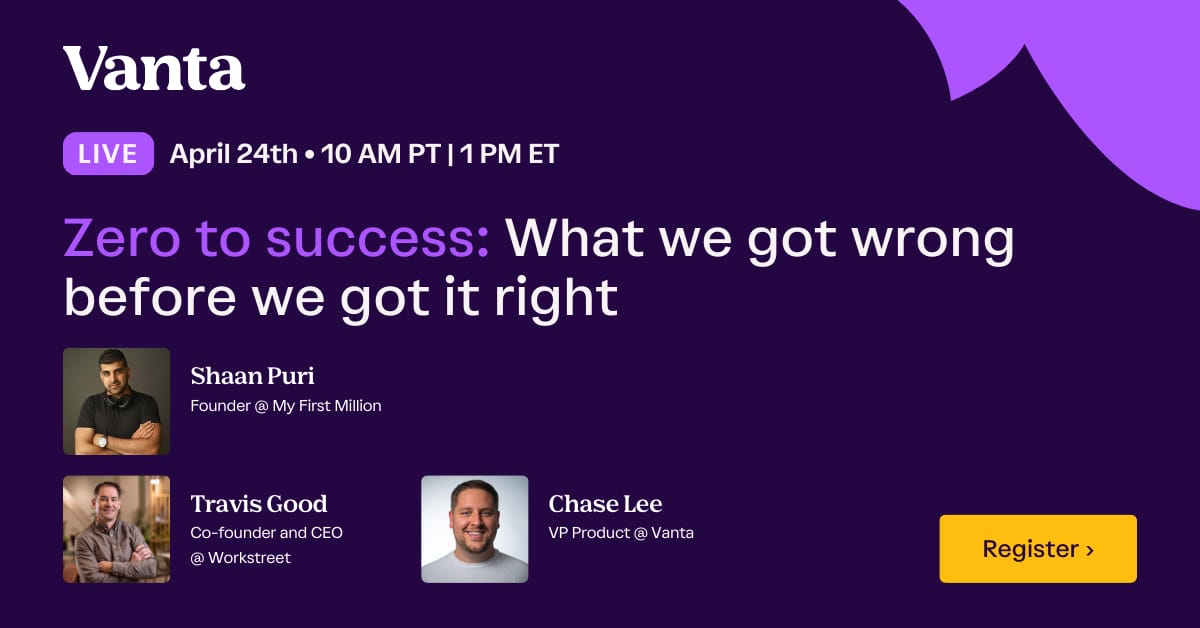
The Rundown: Every startup journey has bumps — but some are avoidable. Hear from startup veterans Shaan Puri (My First Million), Chase Lee (Trustpage, acquired by Vanta), and Travis Good (Workstreet) about what went wrong and what ultimately went right, and gain insider knowledge that could change your company’s future.
In this live session with Vanta, you’ll learn:
How to sidestep costly early mistakes
Tactical strategies for building your initial team and culture
Proven methods to navigate uncertainty with confidence
Reserve your spot for April 24th at 1 PM ET.
👁️ Google expands Gemini Live video features

Image source: Google
The Rundown: Google just announced an expanded rollout of Gemini Live's “Project Astra” capabilities, bringing real-time visual AI features to more Android devices and introducing new ways to interact with the AI through video and screen sharing.
The details:
The feature allows users to have multilingual conversations with Gemini about anything they see and hear through their phone's camera or via screen sharing.
The feature is rolling out today to all Pixel 9 and Samsung Galaxy S25 devices, with Samsung offering it at no additional cost to their flagship users.
Initial testing revealed the current "live" feature works more like enhanced Google Lens snapshots rather than continuous video analysis shown in demos.
Project Astra was initially revealed at Google I/O last May, with the feature rolling out for the first time last month to Advanced subscribers.
Why it matters: AI continues to gain more capabilities to see and understand the world around us — and while this implementation may not be the full Astra we initially saw, real-time visual analysis is coming quickly. Imagining this tech tied into smartglasses or wearables might be the ultimate final form that unlocks fully context-aware assistants.
AI TRAINING
🤖 Build an AI sales rep that qualifies leads with Zapier

The Rundown: In this tutorial, you will learn how Zapier Agents can help you create an AI-powered sales representative that automatically filters website leads and drafts follow-up emails for qualified prospects.
Step-by-step:
Visit Zapier Agents and select “+ New Agent”.
Give a name, a short description, and click on “Behavior” to connect Google Forms as the trigger for your agent to capture new responses.
Use natural language to tell your agent how to identify quality leads based on email domains and other factors.
Configure your agent to automatically create personalized email drafts in Gmail for qualified leads.
Pro tip: We just did an extensive workshop on building Zapier Agents at The Rundown University, led by Jane Zhang and Anna Marie Clifton from the Zapier team.
PRESENTED BY INNOVATING WITH AI
🤝 Turn AI passion into a consulting career

The Rundown: Innovating with AI's new program, AI Consultancy Project, transforms AI enthusiasts into professional consultants — tapping into a market projected to reach $54.7B by 2032.
The 6-month program delivers:
Proven frameworks for client acquisition and service delivery
A step-by-step path to six-figure consulting income
Students who land their first AI client in as little as 3 days
Click here to request early access to The AI Consultancy Project.
SHOPIFY
🧠 Shopify mandates company-wide AI usage

Image source: Getty Images
The Rundown: Shopify CEO Tobi Lütke released an internal memo mandating AI proficiency across the commerce giant, declaring that teams must prove AI can’t do the job before seeking additional resources and making AI a “baseline expectation.”
The details:
The memo establishes "reflexive AI usage" as a baseline expectation for all employees, with AI competency now included in performance evaluations.
Shopify is providing access to AI tools like Copilot, Cursor, and Claude for code development, along with dedicated channels for sharing AI best practices.
Lütke said that teams must now demonstrate why AI solutions can't handle work before being approved for new hires or resources.
He also described AI as a multiplier that has enabled top performers to accomplish "implausible tasks" and achieve "100X the work”.
Why it matters: The memo highlights a growing divide in corporate AI strategies — while some are banning AI entirely or moving slowly, forward-thinking firms like Shopify are treating AI adoption as non-negotiable. Its use is also clearly becoming a direct alternative to hiring, with Lutke asking what AI can handle before adding more humans.
QUICK HITS
🛠️ Trending AI Tools
🦙 Llama 4 - Meta’s newest family of open-weights AI models
🤖 Microsoft Copilot - New personalization upgrades and agentic actions
📸 Midjourney V7 - New Draft Mode for fast, voice-enabled creation
🧠 EverTutor Live - AI-powered voice tutor that teaches, adapts, and interacts
💼 AI Job Opportunities
💻 UiPath - Software Engineer II
🩺 Hippocratic AI - Clinical Customer Success Executive
💼 OpenAI - Director of Finance, Strategic Initiatives
📣 Cresta - Senior Demand Generation Manager
📰 Everything else in AI today
Meta GenAI lead Ahmad Al-Dahle posted a response to claims the company trained Llama 4 on test sets to improve benchmarks, saying that is “simply not true.”
Runway released Gen-4 Turbo, a faster version of its new AI video model that can produce 10-second videos in just 30 seconds.
Google expanded AI Mode to more users and added multimodal search, enabling users to ask complex questions about images using Gemini and Google Lens.
Krea secured $83M in funding, with the company aiming to add audio and enterprise features to its unified AI creative platform.
Hundreds of leading U.S. media orgs launched a "Support Responsible AI" campaign calling for government regulation of AI models' use of copyrighted content.
ElevenLabs introduced new MCP server integration, enabling platforms like Claude to access AI voice capabilities and create automated agents.
University of Missouri researchers developed a starfish-shaped wearable heart monitor that achieves 90% accuracy in detecting heart issues with AI-powered sensors.
COMMUNITY
🎥 Join our next live workshop

Join our next special workshop this Tuesday at 4 PM EST to learn how to create custom AI-powered workflows with Nick Huber, AI Ecosystems Lead at Poe.
RSVP here. Not a member? Join The Rundown University on a 14-day free trial.
🤝 Share The Rundown, get rewards
We’ll always keep this newsletter 100% free. To support our work, consider sharing The Rundown with your friends, and we’ll send you more free goodies.
See you soon,
Rowan, Joey, Zach, Alvaro, and Jason—The Rundown’s editorial team
No matching search results
Try using different keywords, double-check your spelling, or explore related categories.
Stay Ahead on AI.
Join 2,000,000+ readers getting bite-size AI news updates straight to their inbox every morning with The Rundown AI newsletter. It's 100% free.