Get the latest AI news, understand why it matters, and learn how to apply it in your work — all in just 5 minutes a day. Join over 2,000,000+ subscribers.

Unitree's $6K humanoid for everyone
Read Online | Sign Up | Advertise

Good morning, robotics enthusiasts. Chinese robotics company Unitree just dropped the R1 — a 4-foot-tall, 55-pound humanoid packed with 26 joints and a shockingly low $5,900 price tag.
Sleek, nimble, and way cheaper than rivals like Tesla and Figure, could this “sports robot” be the one that finally brings humanoids into the mainstream?
In today’s robotics rundown:
Unitree debuts humanoid for under $6K
Robotic hand learns by ‘body awareness’
Space rovers just got a major fix
Bioinspired muscles for human-like bots
Quick hits on other robotics news
LATEST DEVELOPMENTS
UNITREE
🔥 Unitree debuts humanoid for under $6K

Image source: Unitree/YouTube
The Rundown: China’s Unitree just unveiled its most game-changing — and affordable — humanoid yet: the R1. Standing four feet tall with 26 joints and weighing just 55 pounds, this nimble “sports robot” is set to hit the market at only $5,900.
The details:
Available for shipping now, the R1 drastically undercuts competitors like Tesla’s Optimus, Figure 02, and its own elder sibling, G1 (priced at $13,800).
The humanoid boasts 26 degrees of freedom that enable movements such as walking, waving, crouching, tumbling, and simple boxing.
R1’s brain runs on a quad-core Cortex-A76 CPU backed by perception and control algorithms, integrated cameras, and optional AI modules.
The current version offers developer and research customization but is not meant for practical household chores or factory work.
Why it matters: The launch is both a publicity move and a direct challenge to U.S. and European robotics firms. By shipping a functional, affordable humanoid now — capable of pre-programmed stunts like cartwheels — Unitree is testing global demand and daring customers to imagine what the first gen of personal robots could truly become.
MIT
👉🏽 Robotic hand learns by ‘body awareness’
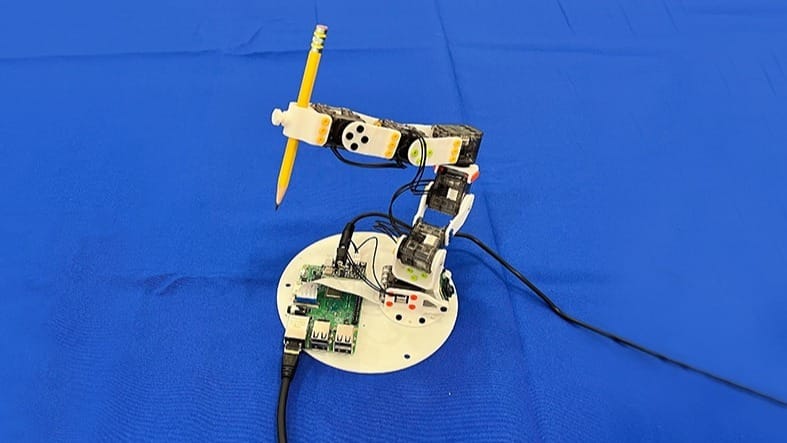
Image source: MIT CSAIL
The Rundown: MIT’s CSAIL lab developed a soft robotic hand that — rather than being packed with embedded sensors or precision hardware — relies entirely on the feed from a single consumer-grade camera trained on its movements.
The details:
Detailed in Nature, the new system, dubbed Neural Jacobian Fields (NJF), teaches robots to understand their bodies, using only vision.
At its core, NJF uses a deep neural network trained on multi-view video footage of a robot performing random actions.
In demos, the NJF-guided hand handled everything from marshmallows to plasticware, learning new dexterity from scratch using just ordinary cameras.
This vision-based approach lets robots adapt and improvise without tactile sensors, enabling them to learn new tasks and self-correct after minor damage.
Why it matters: MIT’s NJF is potentially redefining what robots can do by teaching them to perceive their own motion through vision. This innovative approach allows robots to become more adaptable, resilient, and practical for real-world environments, where unpredictability is the norm, not the exception.
SPACE ROBOTICS
🌕 Space rovers just got a major fix

Image source: UW–Madison/Dan Negrut
The Rundown: University of Wisconsin engineers discovered a fix that could prevent NASA’s robotic space rovers from getting their wheels stuck in extraterrestrial soil — by correcting a physics error in how they are tested pre-flight here on Earth.
The details:
The crux of the issue is simple but critical: wheels grip and sink in planetary soil very differently in low-gravity environments.
Most prototype testing happens on Earth without adjustment for this factor, ignoring the impact of gravity exerted on sand particles on the Moon or Mars.
These flawed assumptions helped strand NASA’s Spirit rover in Martian sand in 2009 — it is still stuck there despite numerous rescue attempts.
The team used open-sourced computer simulation software called Chrono and soil mechanics models to better mimic the conditions on Mars and the Moon.
Why it matters: The takeaway? The team says that engineers need to improve their test setups — using virtual models or creative gravity-neutral environments — to truly match extraterrestrial conditions. Otherwise, the next billion-dollar rover might also stall out in alien dust, just like Spirit.
NORTHWESTERN UNIVERSITY
💪 Bioinspired muscles for human-like bots
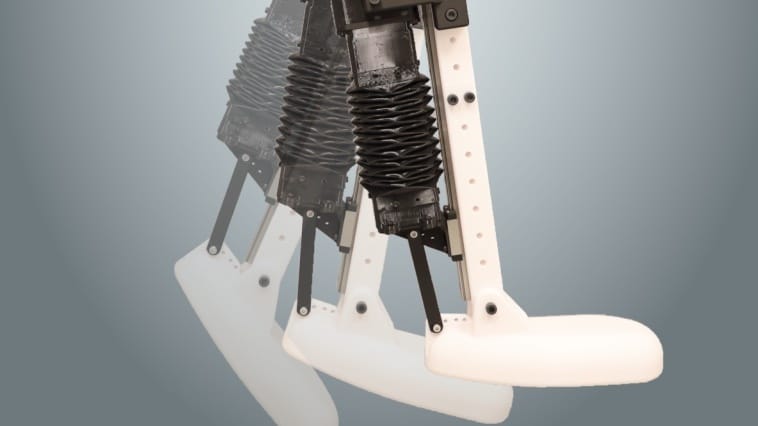
Image source: Northwestern University
The Rundown: Researchers at Northwestern University unveiled a new artificial muscle that could serve as the heart of next-gen, untethered robots designed to move and interact with the world much like living creatures, not mechanical objects.
The details:
The muscle is composed of soft, electrochemical actuators that contract and expand, enabling lifelike flexion and extension rather than jerky motions.
The team integrated the muscle into a life-sized humanoid leg, replicating not just the outer shape but the full musculoskeletal architecture.
The robot leg features 3D-printed plastic bones, elastic tendons, and embedded sensors that provide proprioceptive “touch.”
The artificial muscles are arranged in trios — analogous to the human quadriceps, hamstring, and calf — allowing it to move more like a human would.
Why it matters: The demo leg was able to generate enough power to kick a volleyball from a stationary position, an impressive feat that illustrates both the strength and speed of these soft actuators. While in nascent stages, this innovation could open new doors for applications in prosthetics and human-robot collaboration.
QUICK HITS
📰 Everything else in robotics today
Tesla is reportedly behind on its promise to build 5K Optimus humanoids this year, with The Information stating it has only produced a few hundred.
The 2025 World Artificial Intelligence Conference (WAIC) in Shanghai, July 26-28, showcased over 150 advanced robots, its largest and most sophisticated lineup ever.
AeroVironment and NASA JPL unveiled "Skyfall," a next-gen Mars mission concept that would deploy six autonomous helicopters directly from the entry capsule.
A Unitree G1 robot had a meltdown during a live performance in China that quickly went viral, showing the robot losing control mid-dance.
Chinese robotics firm EngineAI nabbed RMB 1 billion, or $139.7M, in funding, with plans to mass-produce its humanoids.
California-based Bonsai Robotics acquired farm-ng Inc. to combine their AI-driven autonomy with farm-ng’s customizable agriculture robots.
Polytechnic University of Turin developed a method to program robots with fast, instinct-like "fear" responses for improved risk assessment.
Zhejiang University researchers created a robot navigation system that merges deep neural networks with classical optimization to mimic human pathfinding.
Tesla is notifying users of its Robotaxi app that rides in the San Francisco Bay Area will initially be offered with a safety driver under a “friends and family” charter service.
Pony AI said it has received a permit to run fully driverless commercial robotaxi services in Shanghai’s Pudong New Area.
The NHTSA closed a 14-month investigation into Waymo following reports of minor collisions and unexpected driving behaviors involving its autonomous vehicles.
Detroit is using autonomous robots like BeBot to clean beaches, mow grass, collect waste, and charge city shuttles, ushering in smart, automated city maintenance.
COMMUNITY
🎥 Watch our last workshop

Check out our last live workshop with Dr. Alvaro Cintas, The Rundown’s AI professor. By the end of the workshop, you’ll know how to build useful AI agents with ChatGPT and understand the broader ecosystem of agentic tools out there.
Watch it here. Not a member? Join The Rundown University on a 14-day free trial.
See you soon,
Rowan, Jennifer, and Joey—The Rundown’s editorial team

🌏 China's cooperative AI counter-punch
Read Online | Sign Up | Advertise

Good morning, AI enthusiasts. Just days after the U.S. declared its intent to dominate the AI race, China dropped its own vision for the technology’s future with an action plan that strikes a very different tone.
With proposals for international cooperation and warnings against an "exclusive game," Beijing is positioning itself as the inclusive, open alternative to America's aggressive push — and turning decades of geopolitical playbooks upside down in the process.
In today’s AI rundown:
China’s AI action plan pushes global cooperation
Ex-OpenAI scientist to lead Meta Superintelligence Labs
Create personalized AI video avatars
Runway’s Aleph for AI-powered video editing
4 new AI tools & 4 job opportunities
LATEST DEVELOPMENTS
AI & CHINA
🇨🇳 China’s AI action plan pushes global cooperation

Image source: Reuters on YouTube
The Rundown: China just released an AI action plan at the World Artificial Intelligence Conference, proposing an international cooperation organization and emphasizing open-source development, coming just days after the U.S. published its own strategy.
The details:
The action plan calls for joint R&D, open data sharing, cross-border infrastructure, and AI literacy training, especially for developing nations.
Chinese Premier Li Qiang also proposed a global AI cooperation body, warning against AI becoming an "exclusive game" for certain countries and companies.
China’s plan stresses balancing innovation with security, advocating for global risk frameworks and governance in cooperation with the United Nations.
The U.S. released its AI Action Plan last week, focused on deregulation and growth, saying it is in a “race to achieve global dominance” in the sector.
Why it matters: China is striking a very different tone than the U.S., with a much deeper focus on collaboration over dominance. By courting developing nations with an open approach, Beijing could provide an alternative “leader” in AI — offering those excluded from the more siloed Western strategy an alternative path to AI growth.
TOGETHER WITH SLACK FROM SALESFORCE
📊 The data behind AI's workplace revolution

The Rundown: New research from Slack's Workforce Lab reveals daily AI usage has surged over 233% in six months, with users reporting 64% higher productivity and 81% greater job satisfaction. This isn't just about automation — it's about enabling workers to tackle tasks they couldn't otherwise and shifting how work gets done.
Join Slack’s Workforce Labs webinar to discover:
Fresh insights on who’s using AI at work and where it’s delivering the biggest impact
Real examples of AI agents helping employees with onboarding and decision-making
Strategies to automate busywork while enhancing creativity and collaboration
Practical implementation strategies that work for teams of all sizes
META
🤝 Ex-OpenAI scientist to lead Meta Superintelligence Labs

Image source: Alexandr Wang (@alexandrwang on X)
The Rundown: Meta CEO Mark Zuckerberg just announced that former OpenAI researcher Shengjia Zhao will serve as chief scientist of the newly formed Meta Superintelligence Labs, bringing his expertise on ChatGPT, GPT-4, o1, and more.
The details:
Zhao reportedly helped pioneer OpenAI's reasoning model o1 and brings expertise in synthetic data generation and scaling paradigms.
He is also a co-author on the original ChatGPT research paper, and helped create models including GPT-4, o1, o3, 4.1, and OpenAI’s mini models.
Zhao will report directly to Zuckerberg and will set MSL’s research direction alongside chief AI officer Alexandr Wang.
Yann LeCun said he still remains Meta's chief AI scientist for FAIR, focusing on “long-term research and building the next AI paradigms.”
Why it matters: Zhao’s appointment feels like the final bow on a superintelligence unit that Mark Zuckerberg has spent all summer shelling out for. Now boasting researchers from all the top labs and with access to Meta’s billions in infrastructure, the experiment of building a frontier AI lab from scratch looks officially ready for takeoff.
AI TRAINING
🎭 Create personalized AI video avatars

The Rundown: In this tutorial, you will learn how to create AI-generated videos featuring yourself or any character by training an AI model with personal images and then animating them with natural speech using Google Veo 3.
Step-by-step:
Go to Freepik and create a new Character by uploading 12-24 varied images of yourself
Use ChatGPT to generate detailed scene prompts: “Provide a prompt where the character is in a studio holding a product. Do not describe the character’s appearance”
Back in Freepik, select your character, paste the prompt with your character's name, and generate in 16:9 format
Upload your image to Google Gemini’s Video tool and prompt: “Guy talks to the camera saying: [dialogue]”
Pro tip: Use varied images when training your character and be specific with dialogue prompts for the most natural-looking results.
PRESENTED BY LOVABLE
💡 Build apps at prompt speed
The Rundown: Lovable lets anyone go from idea to production-ready app or website in a few hours, collapsing six-month roadmaps into a Friday night side project. Whether you need a personalized holiday planner or a fully fledged SaaS back end, Lovable’s AI handles the heavy lifting so you can focus on your users.
With Lovable, you can:
Turn an idea into reality without deep technical knowledge — just describe your vision
Use chat mode to tweak products in real time and create responsive UIs
Integrate with Stripe, Supabase, Figma, and automatically wire databases, APIs, and UI
Publish a live link, gather feedback, and quickly iterate, pivot, or monetize from Day 1
RUNWAY
📽️ Runway’s Aleph for AI-powered video editing
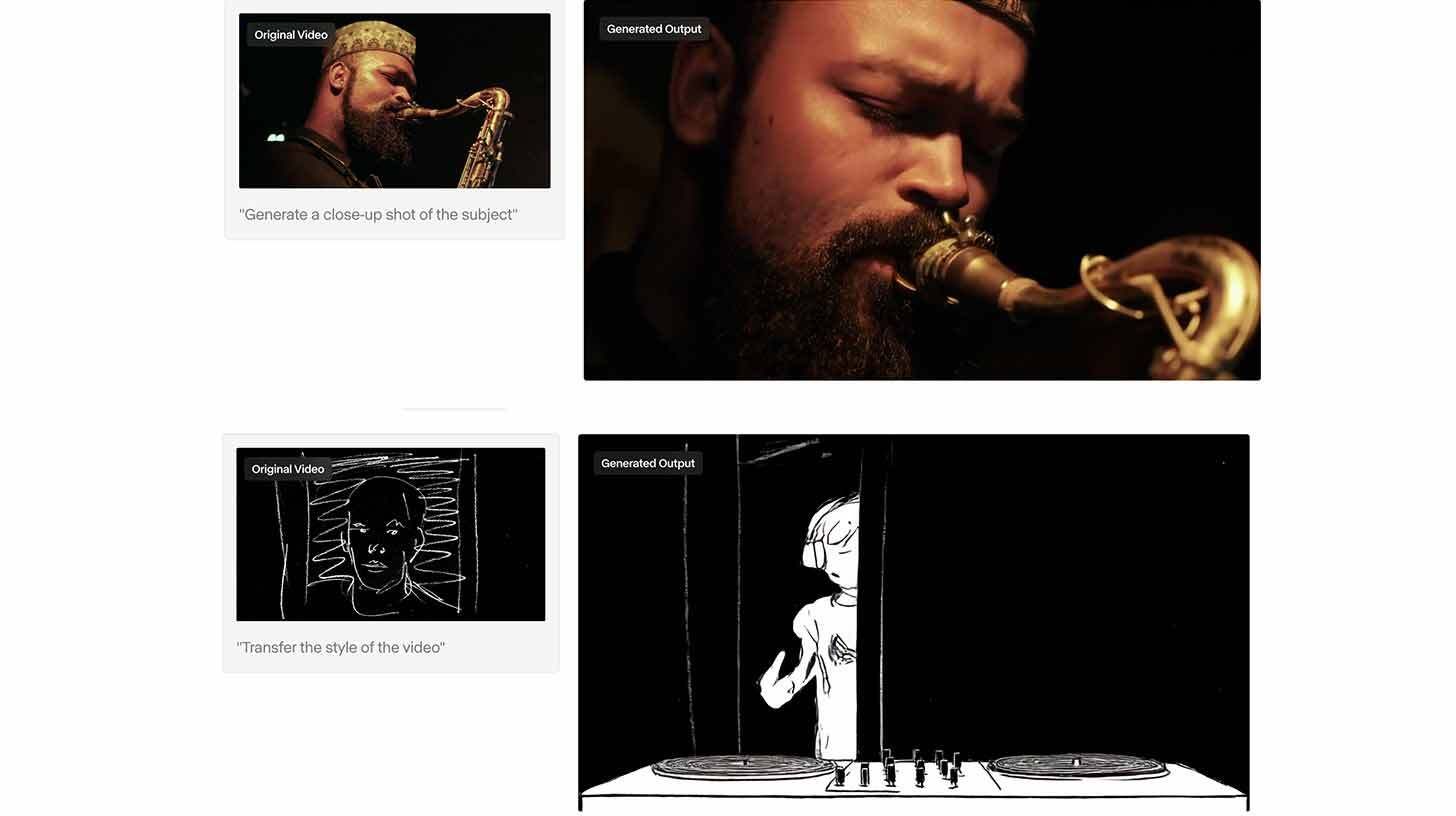
Image source: Runway
The Rundown: Runway just unveiled Aleph, a new “in-context” video model that edits and transforms existing footage through text prompts — handling tasks from generating new camera angles to removing objects and adjusting lighting.
The details:
Aleph can generate new camera angles from a single shot, apply style transfers while maintaining scene consistency, and add or remove elements from scenes.
Other editing features include relighting scenes, creating green screen mattes, changing settings and characters, and generating the next shot in a sequence.
Early access is rolling out to Enterprise and Creative Partners, with broader availability eventually for all Runway users.
Why it matters: Aleph looks like a serious leap in AI post-production capabilities, with Runway continuing to raise the bar for giving complete control over video generations instead of the random outputs of older models. With its already existing partnerships with Hollywood, this looks like a release made to help bring AI to the big screen.
QUICK HITS
🛠️ Trending AI Tools
👁️ Memories AI - ChatGPT for your video library, with unlimited video context
🗣️ Qwen3-MT - AI translation model with support for 92+ languages
💬 Seed LiveInterpret 2.0 - ByteDance’s AI translation speech system
📸 Higgsfield Steal - Recreate any picture from anywhere on the web
💼 AI Job Opportunities
🎓 The Rundown - AI Educator (Workshop Host)
📦 Scale AI - Head of Delivery
🔍 xAI - AI Engineer & Researcher
🔋 Figure AI - Battery Design Validation Test Engineer
📰 Everything else in AI today
OpenAI CEO Sam Altman said that despite users sharing personal info with ChatGPT, there is no legal confidentiality, and chats can theoretically be called on in legal cases.
Alibaba launched an update to Qwen3-Thinking, now competitive with Gemini 2.5 Pro, o4-mini, and DeepSeek R1 across knowledge, reasoning, and coding benchmarks.
Tencent released Hunyuan3D World Model 1.0, a new open-source world generation model for creating interactive, editable 3D worlds from image or text prompts.
Music company Hallwood Media signed top Suno “music designer” Imoliver in a record deal, becoming the first creator from the platform to join a label.
Vogue is facing backlash after lifestyle brand Guess used an AI-generated model in a full-page advertisement in the magazine’s August issue.
COMMUNITY
🎥 Watch our last workshop

Check out our last live workshop with Dr. Alvaro Cintas, The Rundown’s AI professor. By the end of the workshop, you’ll know how to build useful AI agents with ChatGPT and understand the broader ecosystem of agentic tools out there.
Watch it here. Not a member? Join The Rundown University on a 14-day free trial.
See you soon,
Rowan, Joey, Zach, Alvaro, and Jason—The Rundown’s editorial team

Meta wristband reads your mind
Read Online | Sign Up | Advertise

Good morning, tech enthusiasts. What if your next computer interface wasn’t a screen or keyboard — but your nervous system? Meta is building a wristband that reads muscle signals from your arm, letting you swipe through apps, move cursors, and even type in mid-air.
Could this mark the start of a post-touch era, where gestures replace gadgets?
In today’s tech rundown:
Meta’s computer-interfacing wristband
YouTube’s ad revenue climbs to $10B
Armada nabs $131M for portable data centers
Rocket Lab hits big, muddy challenge
Quick hits on other major tech news
LATEST DEVELOPMENTS
META
🔥 Meta’s computer-interfacing wristband
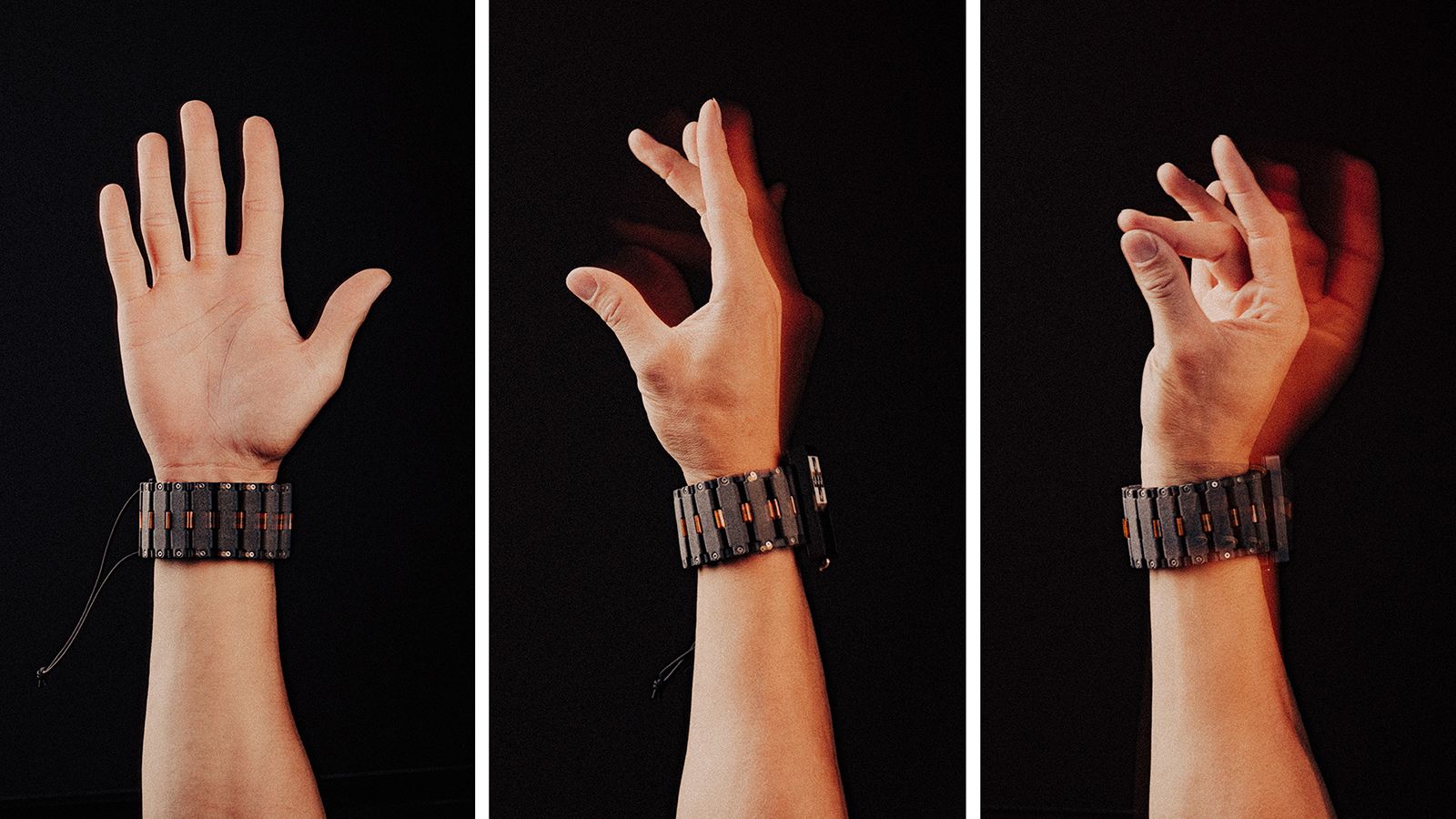
Image source: Meta Reality Labs
The Rundown: Meta researchers are collaborating with Carnegie Mellon to develop a wristband that lets you control a computer or phone by detecting micro-movements and nerve signals in your forearms, even if your hand doesn’t visibly move.
The details:
The wristband harnesses surface electromyography (sEMG) to read electrical signals generated by forearm muscles when you think about moving your hand.
Advanced AI parses intent from micro-voltage twitches, interpreting neural signals before any visible motion even happens.
Real-time machine learning algorithms transform raw sEMG data into actionable commands, such as cursor moves, clicks, and text input.
Users can “write” in the air as though holding a pen, with the system capturing handwriting and shapes and translating them into digital text or graphics.
Why it matters: By tapping into neural signals before muscle movement, the tech’s goal is to enable people with severe motor impairments to control computers, surf the web, and communicate — even if they can’t physically move their hands. Plus, it offers a simpler, nonsurgical solution compared to Elon Musk’s Neuralink brain chips.
TOGETHER WITH SAMBANOVA
⚡️Integrate the leading open-source models

The Rundown: SambaNova’s cloud platform lets you build with the best open-source models from Llama, DeepSeek, OpenAI, and more. All models are optimized with lightning-fast inference speed and powered by SambaNova’s purpose-built AI chip, the SN40L Reconfigurable Dataflow Unit (RDU).
SambaCloud offers:
Integrations to the most popular frameworks and tools such as Hugging Face, CrewAI, and Cline
APIs for building and a playground to test things out
Availability through the AWS Marketplace
YOUTUBE
😵💫 YouTube’s ad revenue climbs to $10B

Image source: Ideogram/The Rundown
The Rundown: YouTube just flexed its streaming dominance with a blockbuster quarter, shattering Wall Street forecasts and inching ever closer to the $10B-per-quarter ad revenue club.
The details:
Alphabet’s latest earnings reveal that YouTube’s ad revenue hit $9.8B in Q2 — up 13% year over year and beating analyst estimates by $200M.
Brands are steadily shifting ad budgets away from traditional broadcast TV and toward YouTube, lured by its massive reach and granular targeting capabilities.
YouTube’s growth is powered by a spike in living-room viewership, as more people access YouTube via smart TVs and streaming devices.
Nielsen now ranks YouTube as the No. 1 platform for TV viewing, with a 12.4% share for three consecutive months, outpacing even Disney and Netflix.
Why it matters: Nearly one in eight minutes spent watching TV happens on YouTube, reflecting not just a Gen Z migration but a mainstream redefinition of where “TV” happens. As pay-TV and legacy streamers scramble to catch up — with even Netflix trailing by a wide margin — YouTube is quickly becoming the new living-room default.
ARMADA
💥 Armada nabs $131M for portable data centers

Image source: Armada
The Rundown: Armada, the stealthy upstart on a mission to rewire edge computing, just scored a $131M funding round with heavyweight backing from Founders Fund, Microsoft’s M12 venture arm, and other prominent VC firms.
The details:
The capital will boost Armada’s rollout of Leviathan, a portable data center that comes housed in shipping containers, deployable almost anywhere.
These facilities, designed to run AI and large language model workloads, require no permits or major construction, and can come online in weeks.
Leviathans can run on solar, natural gas, diesel, or grid hookups, with infrastructure and advanced liquid cooling to support next-gen GPUs.
Armada’s lineup scales from briefcase-sized Beacons to cruiser-sized Galleons, but Leviathan is the real deal with 10x more compute.
Why it matters: Armada is targeting the digital no man’s lands: oil rigs, battlefields, disaster zones, and places where connectivity is scarce. Their units are “connectivity-agnostic,” relying on Starlink, satellite, and wireless for uplink, and they’re being tested by the U.S. Navy for processing drone and sensor data in extreme environments.
ROCKET LAB
🚀 Rocket Lab hits big, muddy challenge

Image source: Rocket Lab
The Rundown: Aerospace startup Rocket Lab, racing to launch its giant, reusable Neutron rocket from Virginia’s Wallops Island, is seeking emergency regulatory approval to move huge rocket parts across the region’s shallow waterways.
The details:
Rocket Lab has asked for clearance to ferry parts of Neutron across shallow waterways that snake to the Mid-Atlantic Regional Spaceport (MARS).
With its permanent solution — dredging a 5,300-foot deepwater channel — stalled in federal red tape, the startup is looking for an emergency stopgap.
The clock is ticking; its September 2025 delivery target is looming large, and any snag in transport could ripple into broader launch delays.
Adjacent to the MARS, Rocket Lab is constructing a huge manufacturing site and Launch Complex 3 to enable Neutron launches and eventual reusability.
Why it matters: The Neutron rocket, with a 13K kg low-Earth orbit payload capacity, puts Rocket Lab in direct competition with SpaceX’s Falcon 9, intensifying the pressure to deliver on reliability and turnaround times. Success may set up Rocket Lab as a premier U.S. launch supplier, and Virginia’s coast could become a hot new rocket hub.
QUICK HITS
📰 Everything else in tech today
Uber is rolling out a feature that lets women drivers on its U.S. ride-hailing app ask to be connected to female riders — a feature already available in 40 countries.
Elon Musk announced that X will revive Vine, the much-loved short-form video platform, in a new “AI form,” but gave no further details.
China’s BYD, the world’s largest EV maker, plans to launch its first locally assembled car in Pakistan in 2026.
Amazon is expanding its Kindle Colorsoft lineup with a lower-priced 16GB color-screen model for $249.99 and a $269.99 kids-focused bundle.
Apple is launching AppleCare One, a new $19.99 monthly subscription plan that includes coverage for up to three products.
Snapchat just launched a new tool called Home Safe for users to let their friends and family know that they made it home safely after being out.
SpaceX’s Starlink faced one of its largest global outages after a software malfunction took tens of thousands of users offline simultaneously.
Lyft released a new Safety Hub feature that lets riders “favorite” preferred drivers — giving them priority for future ride requests — and “block” drivers they wish to avoid.
Mastodon, the open-source alternative to X, started displaying in-app banners on its apps to encourage users to support the platform by making monetary donations.
Nevoya, a U.S. EV truck startup, grabbed $9.3M in seed funding to further its goal of reaching cost parity with diesel trucks for its EV fleet.
The FDA is probing the safety of Sarepta’s gene therapy, Elevidys, for Duchenne muscular dystrophy following multiple patient deaths from acute liver failure.
Italian rocket maker Avio is seeking approval to launch rockets from Virginia’s Wallops Island and negotiating with U.S. government agencies.
Neuralink projects $1B in revenue by 2031, targeting the implantation of its brain-computer interface chips in 20K people.
COMMUNITY
🎥 Join our next live workshop
Join our next workshop today at 4 PM EST with Dr. Alvaro Cintas, The Rundown’s AI professor. By the end of the workshop, you’ll know how to build useful AI agents with ChatGPT and understand the broader ecosystem of agentic tools out there.
RSVP here. Not a member? Join The Rundown University on a 14-day free trial.
See you soon,
Rowan, Jennifer, and Joey—The Rundown’s editorial team

OpenAI readies GPT-5 for August debut
Read Online | Sign Up | Advertise

Good morning, AI enthusiasts. GPT-5 is reportedly coming in August, and OpenAI CEO Sam Altman calls using the model a “here it is moment.”
As the company prepares to drop both its new flagship system and its first open-weight model in years, the next month could bring a new seismic shift in AI’s capabilities — if they can live up to the massive expectations.
Reminder: Our next live workshop is today at 4 PM EST — join and learn how to build useful AI agents with ChatGPT and become familiar with the broader ecosystem of agentic tools. RSVP here.
In today’s AI rundown:
OpenAI readies GPT-5 for August debut
AI designs cancer-killing proteins in weeks
Turn Comet into an AI-powered productivity assistant
Microsoft maps how workers use AI
4 new AI tools & 4 job opportunities
LATEST DEVELOPMENTS
OPENAI
📆 OpenAI readies GPT-5 for August debut

Image source: Theo Von on YouTube
The Rundown: OpenAI is reportedly planning to launch its next-gen GPT-5 in August, according to a report from The Verge — with CEO Sam Altman also speaking about the new model this week in a conversation with comedian Theo Von.
The details:
GPT-5 will combine language capabilities with o3-style reasoning into one system, eliminating the need to choose between models for various tasks.
Sam Altman described testing GPT-5 as a "here it is moment," claiming it instantly solved questions that made him feel "useless relative to the AI."
Altman said GPT-5 will be released “soon” but noted it will not have the capabilities used to achieve the recent gold medal at the IMO competition.
OAI also reportedly plans to release its first open-weight model since 2019 by the end of July, following a delay in its initial launch date due to safety tests.
Why it matters: Both GPT-5 and the open-weight model come with months of hype and extremely high expectations, but this next generation of models feels like a true step into the unknown. With Altman and others openly talking about existential shifts and mind-blowing capabilities, August could be the next major raising of the AI bar.
TOGETHER WITH SAMBANOVA
⚡️Integrate the leading open-source models

The Rundown: SambaNova’s cloud platform lets you build with the best open-source models from Llama, DeepSeek, OpenAI, and more. All models are optimized with lightning-fast inference speed and powered by SambaNova’s purpose-built AI chip, the SN40L Reconfigurable Dataflow Unit (RDU).
SambaCloud offers:
Integrations to the most popular frameworks and tools such as Hugging Face, CrewAI, and Cline
APIs for building and a playground to test things out.
Availability through the AWS Marketplace
AI & CANCER RESEARCH
🔬 AI designs cancer-killing proteins in weeks

Image source: Science 2025
The Rundown: Scientists from the Technical University of Denmark just developed an AI platform that designs custom proteins in weeks rather than years, enabling immune (T) cells to target and destroy cancer cells.
The details:
The system leverages three AI models to design "minibinder" proteins that attach to T cells, giving them “molecular GPS” to locate cancers like melanoma.
Researchers used the platform to design proteins for both common and patient-specific cancer markers, showing potential for tailored treatments.
The platform also includes virtual safety screening to predict and eliminate designs that might attack healthy cells before any lab testing begins.
It uses Google’s Nobel Prize-winning AlphaFold2 to predict proteins, with designs and testing happening in weeks versus years with other methods.
Why it matters: Another day, another AI medical breakthrough — and the sheer testing time compression these systems enable is leading to a flood of new discoveries. It also shows the potential of a “personalized medicine” future, with AI eventually being able to quickly design treatments tailored to the needs of each patient.
AI TRAINING
📅 Turn Comet into an AI-powered productivity assistant
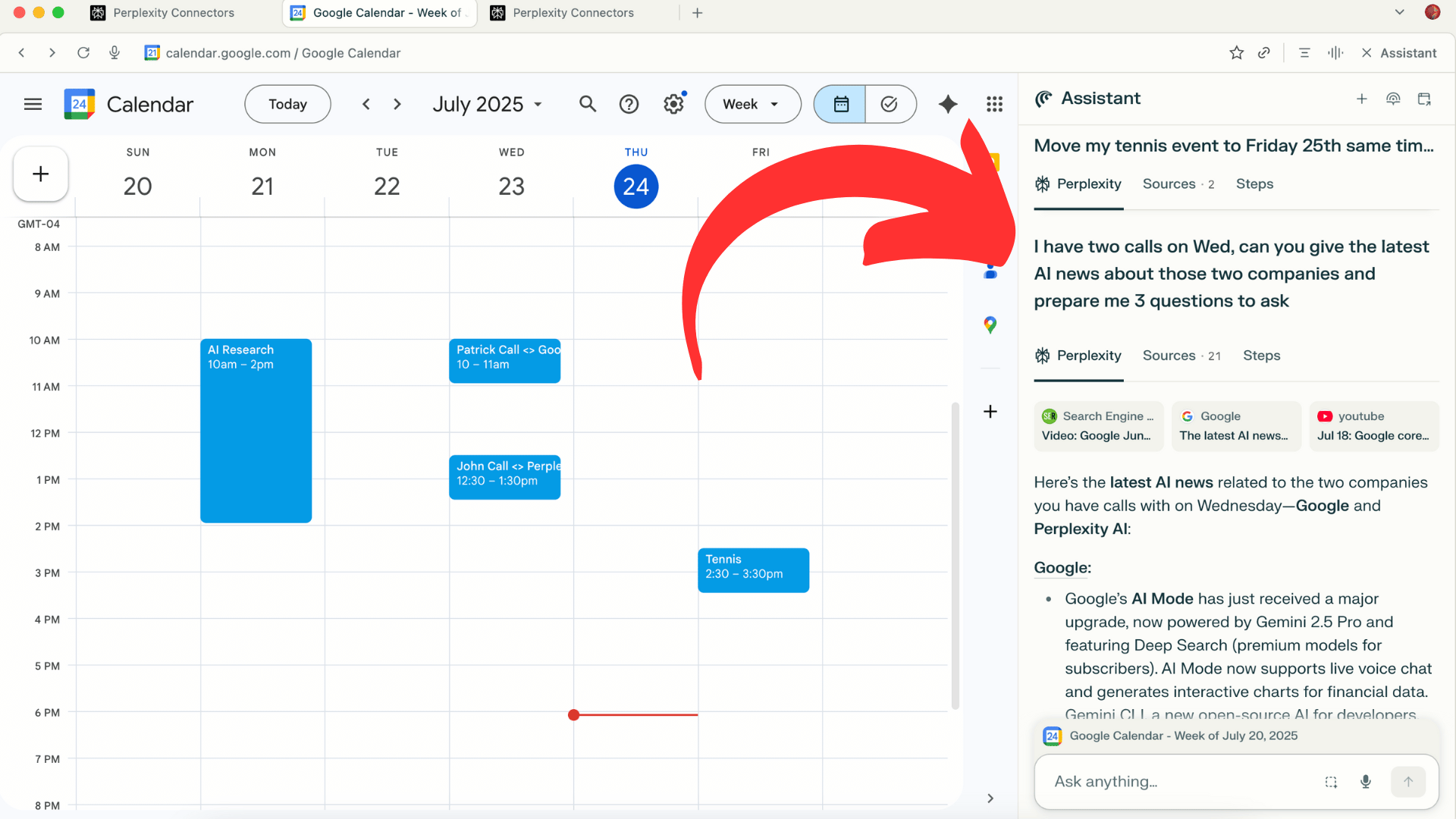
The Rundown: In this tutorial, you will learn how to use Perplexity’s Comet AI browser to connect to your calendar and email and get intelligent summaries, event management, and automated company research based on your meetings.
Step-by-step:
In Perplexity Comet, select your profile, Connectors, and enable Calendar and Email
Get quick overviews: “What's on my calendar next week?”
Reschedule with communication: “Move my tennis event to Friday, 25th, same time, and draft an email to the participant asking if that works”
Research and prep questions: “I have two calls on Wed, can you give me the latest AI news about those two companies and prepare me 3 questions to ask”
Pro tip: Use the research and question prep feature before every business meeting to lead more productive conversations.
PRESENTED BY FIDDLER
📊 2025 LLM Guardrails Benchmarks Report
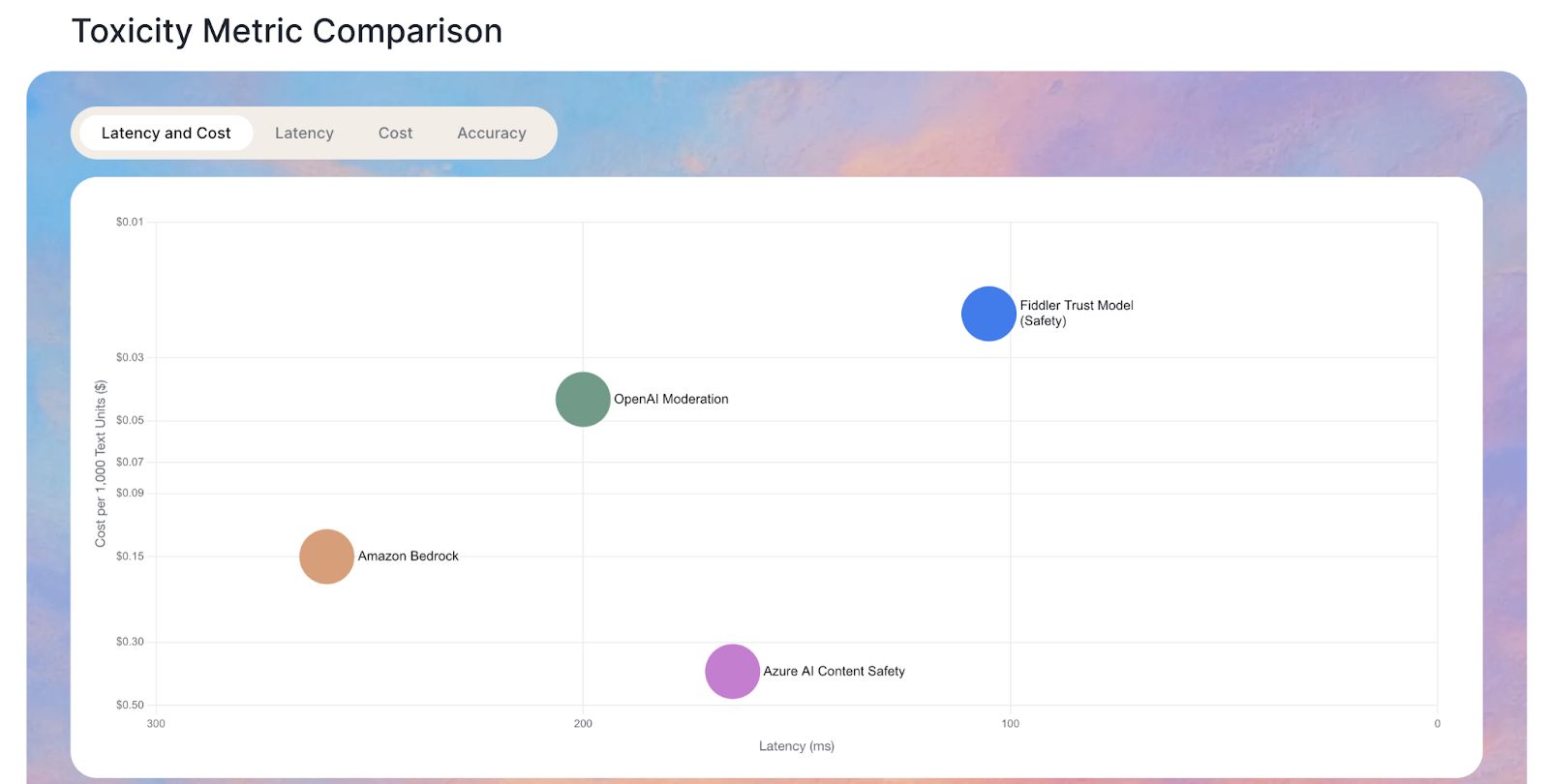
The Rundown: Fiddler’s 2025 Enterprise Guardrails Benchmarks Report delivers objective data comparisons to navigate tradeoffs and help you choose the right guardrails for any LLM use case.
In the report, you’ll learn:
Detailed breakdowns of offerings from OpenAI, Amazon Bedrock, Azure, and Fiddler AI
Value metrics covering latency, cost, and accuracy for every application size
Security performance across jailbreak resistance, toxicity control, and faithfulness
Explore all the data and real-world guardrails scenarios now for free.
AI RESEARCH
💼 Microsoft maps how workers actually use AI
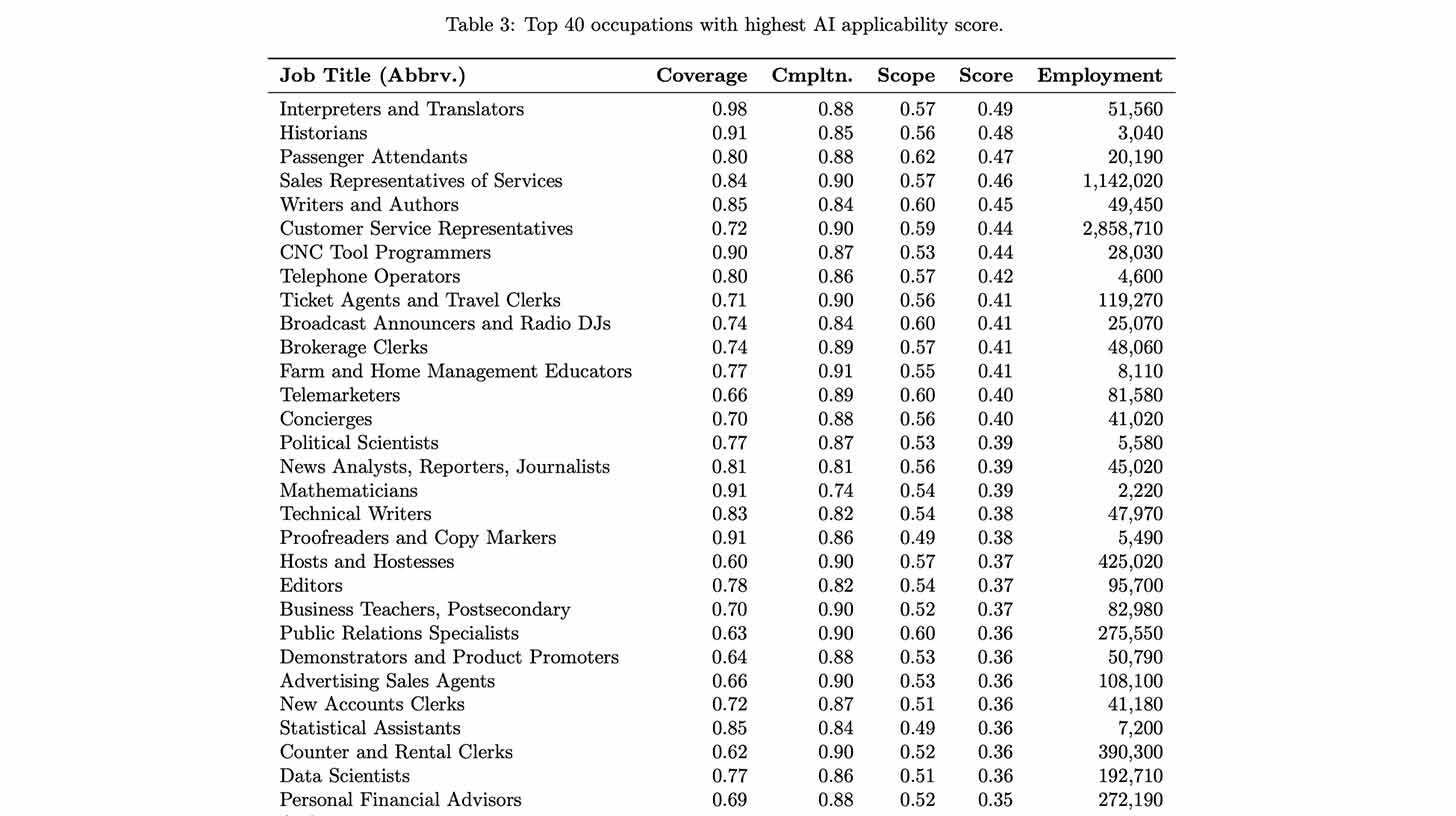
Image source: Midjourney
The Rundown: Microsoft just analyzed 200,000 conversations with Bing Copilot to reveal the jobs and tasks people are currently delegating to AI, investigating which occupations will be most and least impacted by the rapidly transforming workforce.
The details:
The most common user requests involved gathering info and writing content, with AI most frequently acting as a teacher, advisor, or info provider to users.
An “AI applicability score” linked AI usage to occupations, with data showing the highest impact for computer science, office support, sales, and media roles.
Jobs with low impact scores included those with hands-on tasks like phlebotomists, nursing assistants, maintenance workers, and surgeons.
Researchers found a weak correlation between wages and AI exposure, which goes against predictions that high earners would be disrupted by the tech.
Why it matters: This data shows a practical link between what AI excels at and where those skills translate directly to in the job market, and many of the highest exposures are already facing those massive disruptions. Plus — despite the huge advances with robotics, it appears physical and hands-on jobs are still the safest bet (for now).
QUICK HITS
🛠️ Trending AI Tools
🤖 Moby Agents - Triple Whale’s AI agent suite for e-commerce
⚡️ GitHub Spark - Create full-stack apps with natural language prompts
🧠 Ash - AI mental health app for anxiety, stress, and growth
💎 Opal - Build and share AI mini-apps with natural language
💼 AI Job Opportunities
💵 Glean - Accounts Payable Analyst
🤝 UiPath - Enterprise Account Executive
📈 Meta - Growth Marketing Manager, B2B AI
🔧 Perplexity AI - Quality Engineer, Comet
📰 Everything else in AI today
Elon Musk posted that X is planning to revive Vine, “but in AI form” — with the beloved video app’s IP currently owned by Twitter (now X).
Similarweb published an update to its AI platform data, with OpenAI’s ChatGPT still accounting for 78% of total traffic share and Google in second at 8.7%.
HiDream released HiDream-E1.1, a new updated image editing model that climbs to the top spot in Artificial Analysis’ Image Editing Arena amongst open-weight models.
Alibaba released Qwen3-MT, an AI translation model with support for 92+ languages and strong performance across benchmarks.
Figma announced the general availability of Figma Make, a prompt-to-code tool that allows users to transform designs into interactive prototypes.
Google introduced Opal, a new Labs experiment that converts natural language prompts into editable, shareable AI mini apps with customizable workflows.
COMMUNITY
🎥 Join our next live workshop

Join our next workshop today at 4 PM EST with Dr. Alvaro Cintas, The Rundown’s AI professor. By the end of the workshop, you’ll know how to build useful AI agents with ChatGPT and understand the broader ecosystem of agentic tools out there.
RSVP here. Not a member? Join The Rundown University on a 14-day free trial.
See you soon,
Rowan, Joey, Zach, Alvaro, and Jason—The Rundown’s editorial team
Robo-farmers detox the fields
Read Online | Sign Up | Advertise

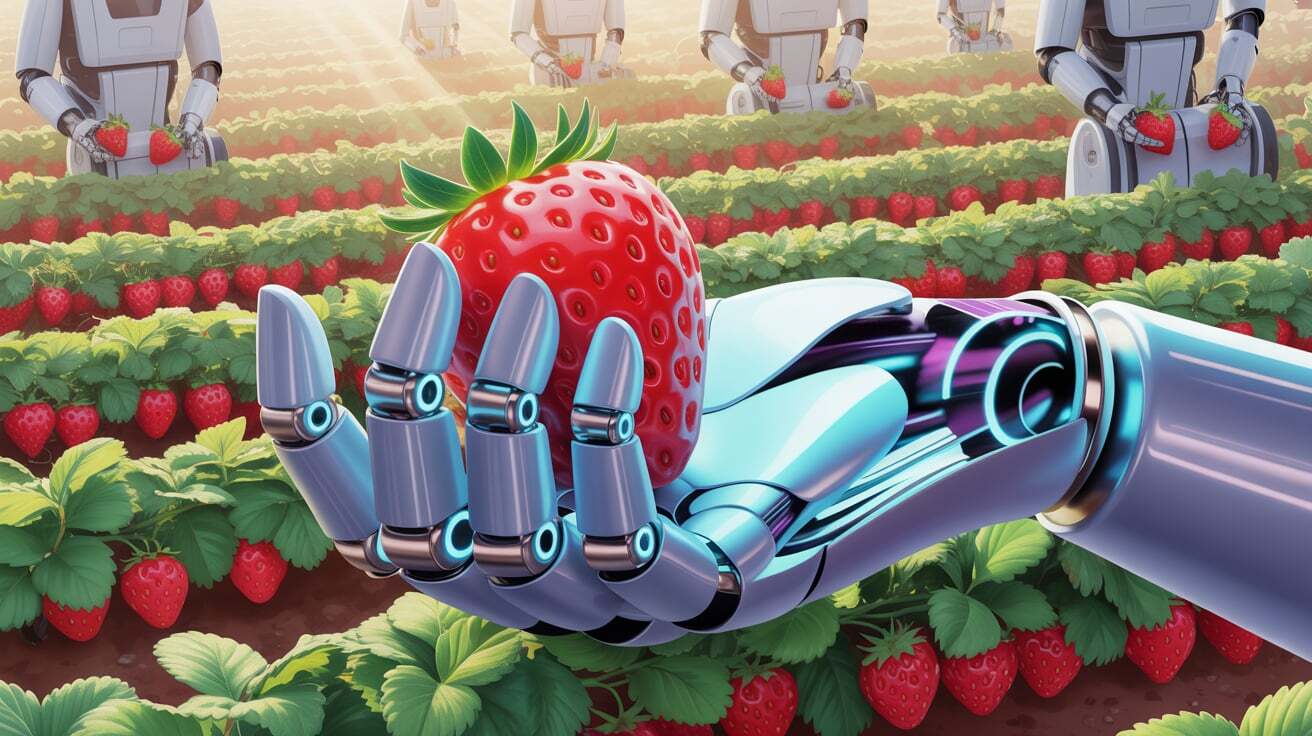
Good morning, robotics enthusiasts. Can robots detox your food? TRIC Robotics thinks so — its UV-C-wielding bots are patrolling strawberry fields by night, replacing pesticides with precision light and real-time data.
But as farms grow smarter and more autonomous, are we reinventing agriculture for the better — or just coding around the hard problems?
In today’s robotics rundown:
UV robots reinvent pesticide-free farming
Musk promises 100K Optimus bots in 5 years
Intuitive’s surgical bot breaks records
Robot guard dog firm Asylon gets $26M
More quick hits on other robotics news
LATEST DEVELOPMENTS
TRIC ROBOTICS
🍓 UV robots reinvent pesticide-free farming

Image source: TRIC Robotics
The Rundown: TRIC Robotics has turned strawberry fields into sci‑fi testbeds —deploying autonomous, tractor‑sized “Luna” robots armed with UV‑C light and vacuum systems to zap pests and fungal threats without a drop of harmful pesticides.
The details:
With a $5.5M seed round powering a rapid ramp‑up across California’s Central Coast, TRIC says its Luna fleet is already slashing chemical use by up to 70%.
The tech targets strawberries, which consistently rank as the most pesticide-contaminated produce in the U.S., offering a chemical-free alternative.
The robots operate overnight, patrolling up to 100 acres at a time and treating crops when UV exposure won’t harm farm workers, plants, or beneficial insects.
Instead of selling the robots, TRIC offers a robot-as-a-service model, rolling its fleet onto partner farms, making adoption simple and reducing upfront costs.
Why it matters: TRIC Robotics is riding the global automation wave, facing off with rivals like Saga Robotics in the UV-C race to transform crop protection. If it lives up to its promise, this clever tech is a shot at detoxing America’s favorite fruit, cutting out chemicals, and turning strawberry fields into high-tech, data-driven farms.
TOGETHER WITH AUGMENT CODE
⚙️ Ditch the vibes, get the context

The Rundown: Augment Code's powerful AI coding agent meets professional software developers exactly where they are, delivering production-grade features and deep context into even the gnarliest of codebases.
With Augment Code, you can:
Keep using VS Code, JetBrains, Android Studio, or even Vim
Index and navigate millions of lines of code
Get instant answers about any part of your codebase
Build with the AI agent that gets you, your team, and your code
Ditch the vibes and get the context you need to engineer what’s next.
TESLA
🤖 Musk promises 100K Optimus bots in 5 years
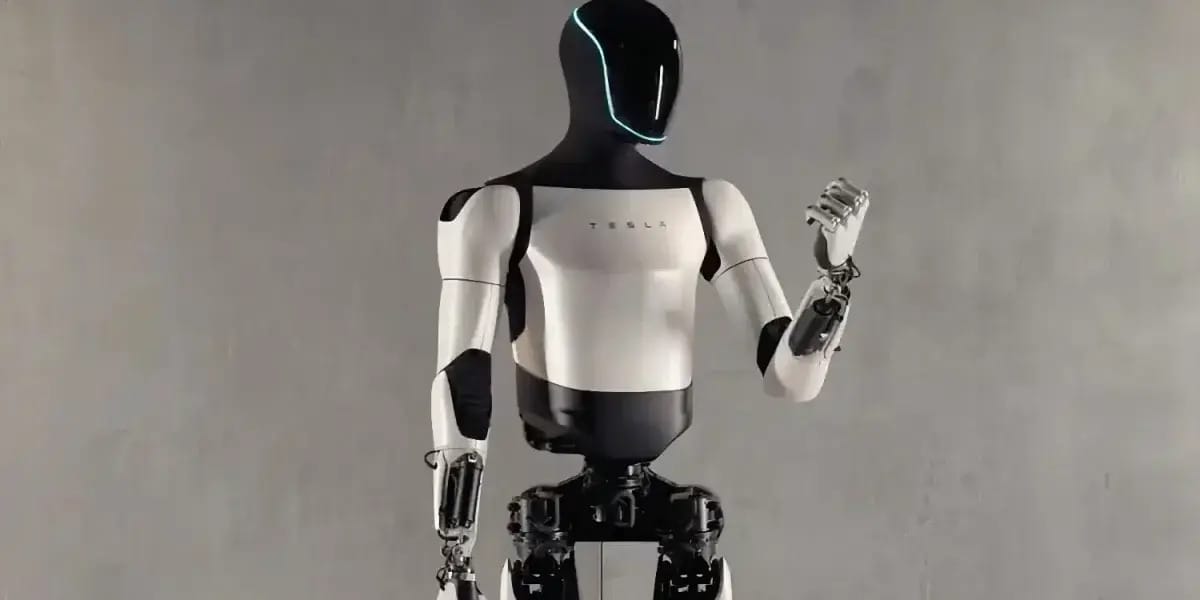
Image source: Tesla
The Rundown: Elon Musk faced Wall Street with brazen bravado at Tesla’s latest earnings call, painting a future of robotaxis and humanoids even as the company’s core business showed clear signs of strain.
The details:
Musk hyped the Optimus humanoid as a future mass-market product, declaring Tesla will produce 100K units a month within five years.
For now, there have been no commercial shipments or deployments of Optimus outside controlled environments; public demos are tightly managed.
He also promised that Tesla owners will be able to add their cars to a robotaxi network “confidently” next year, yet the Austin pilot still requires a safety driver.
Despite repeated announcements, Tesla is years behind rivals like Waymo in deploying fully autonomous ride-hailing services and faces regulatory hurdles.
Why it matters: Musk highlighted the new Version 3 Optimus prototype, adding that if Tesla wasn’t making 100K robots in 60 months, he’d “be shocked.” Meanwhile, Tesla’s revenue slipped 12-13% to $22.5 billion, and details regarding Optimus were forward-looking without specifics regarding tech hurdles, reliability, and costs.
INTUITIVE SURGICAL
😷 Intuitive’s surgical bot breaks records
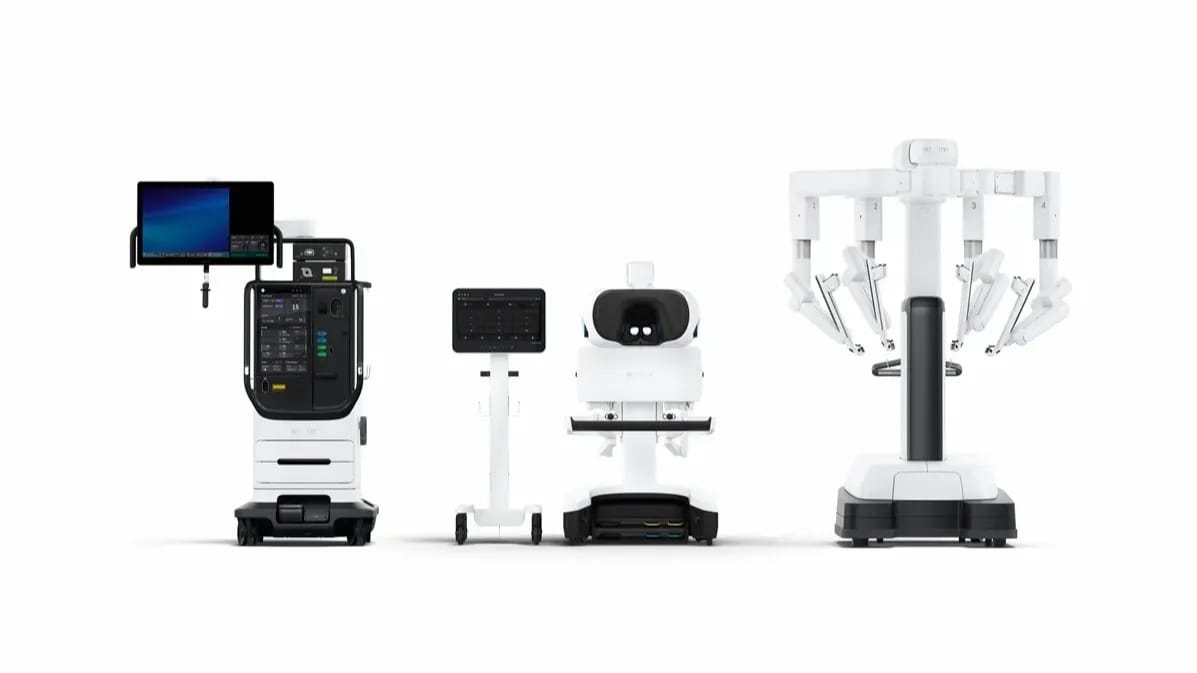
Image source: Intuitive Surgical
The Rundown: California-based surgical robotics firm Intuitive Surgical just pulled off another clinical coup, revealing revenue gains of 21% YOY to $2.44 billion for its groundbreaking da Vinci 5 system, which absolutely dominates the sector.
The details:
The new da Vinci 5 system is hitting hospitals at speed, with 180 next-gen robots shipped in a single quarter, for a total of 10,488 systems globally.
The company smartly banked European MDR and Japanese regulatory wins for da Vinci 5, positioning itself as the go-to surgical platform from Tokyo to Turin.
With $9.53B in cash on hand and strong earnings growth, the company has firepower for R&D, acquisitions, and competitive or regulatory headwinds.
Intuitive retains an estimated 60-70% market share, with analysts projecting it could maintain clear dominance even as rivals Medtronic and J&J gain ground.
Why it matters: As competitors race to catch up with the da Vinci 5, Intuitive remains the frontrunner in successfully bringing robots into the operating room. But with steep costs (blocking access to emerging markets) and a closed ecosystem, it’s leaving space for leaner, more flexible challengers to move in.
ASYLON
🔥 Robot guard dog firm Asylon gets $26M
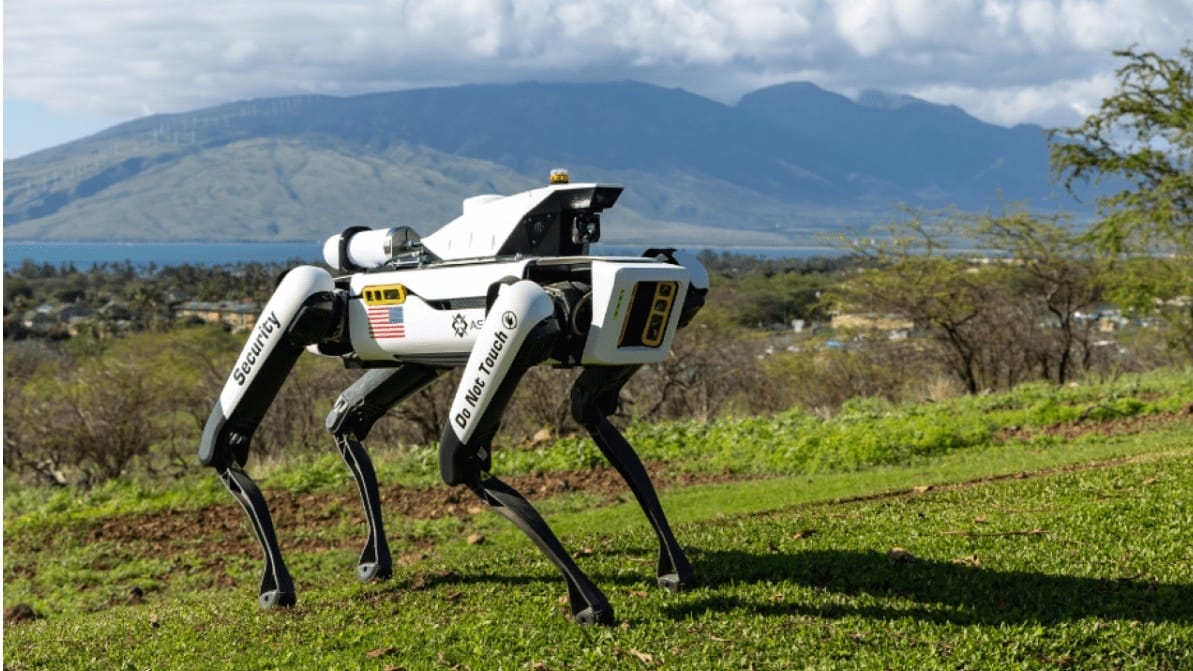
Image source: Asylon
The Rundown: Philadelphia’s Asylon just locked in $26M to supercharge its vision of autonomous security, swapping human guards with fleets of patrol drones, robotic “DroneDogs,” and always-on AI — all backed by big-name investors and MIT pedigree.
The details:
Asylon modifies Boston Dynamics’ Spot robot dog to create DroneDog to patrol sites, detect leaks, and handle hazards autonomously or via remote control.
The company’s fleet isn’t just hardware — it’s a service ecosystem, offering perimeter protection, real-time site monitoring, and rapid response automation.
The entire system runs 24/7 from a command hub, letting clients essentially “subscribe” to an army of robotic eyes and ears.
Broadly, Asylon’s solutions knit together drone overflights, ground robotics, smart sensors, and proprietary software to deliver rapid threat analysis.
Why it matters: The company says it has completed more than 250K robotic security missions so far. In an era where labor shortages, cyber-physical threats, and cost pressures collide, Asylon is betting it can automate the last mile of security and, in the process, make human-centric surveillance look as outdated as yesterday’s punch clock.
QUICK HITS
📰 Everything else in robotics today
Tesla opened preliminary discussions with Nevada state officials about launching a robotaxi service in the state, Bloomberg reports.
U.S. robot maker Richtech Robotics signed a $4M deal with Beijing Tongchuang Technology Development to expand internationally.
Shanghai startup Fourier released a sneak peek clip of its upcoming GR-3 humanoid, set to be released in two weeks.
Autonomous-driving company Pony AI began on-road testing of its Level-4 robotaxis in Beijing, expanding trials it already runs in Shenzhen and Guangzhou.
A panel of robotics leaders testified at the Massachusetts State House last week, advocating for statewide legislation to ensure robots are deployed safely and ethically.
Beijing-based RobotEra raised over $125M to accelerate the commercialization of its Star1, which set the record for the world’s fastest running humanoid.
The U.S. Navy awarded Stratom a Phase I SBIR contract to develop an autonomous refueling system for its growing fleet of uncrewed surface vehicles.
Germany is transforming European warfare with rapid investments in AI, battlefield robotics, and even so-called “spy cockroaches,” Reuters reports.
Chinese researchers introduced an insect-inspired method that allows teams of drones to autonomously navigate complex environments at high speeds.
Northeastern University recently developed SCCRUB, a soft robotic arm that can scrub floors and surfaces, removing over 99.% of residue adhered to them.
South Korea is investing $2.15B in a national push to develop humanoids, with a new partnership between Naver and MIT to create next-gen bipedal robots.
COMMUNITY
🎥 Join our next live workshop
Join our next workshop this Friday, July 25th, at 4 PM EST with Dr. Alvaro Cintas, The Rundown’s AI professor. By the end of the workshop, you’ll know how to build useful AI agents with ChatGPT and understand the broader ecosystem of agentic tools out there.
RSVP here. Not a member? Join The Rundown University on a 14-day free trial.
See you soon,
Rowan, Jennifer, and Joey—The Rundown’s editorial team

The U.S. rolls out blueprint for AI supremacy
Read Online | Sign Up | Advertise
Good morning, AI enthusiasts. The White House just flipped the script on AI policy with its AI Action Plan, trading a previously cautious approach for an all-out sprint toward technological supremacy.
Calling AI an “industrial revolution, information revolution, and renaissance all at once,” the U.S. is betting everything on deregulation and speed — but critics wonder who really benefits from the tech-giant-friendly approach.
In today’s AI rundown:
U.S. releases sweeping AI Action Plan
Google decodes ancient Rome with AI
Build social media campaigns with Claude’s Canva Connector
OpenAI’s copilot cuts medical errors in Kenya
4 new AI tools & 4 job opportunities
LATEST DEVELOPMENTS
THE UNITED STATES & AI
🇺🇸 U.S. releases sweeping AI Action Plan

Image source: The White House
The Rundown: The Trump administration just released an AI Action Plan detailing 90+ policy actions to accelerate the country’s dominance in the sector, including details on AI infrastructure, regulation, and export policy shaped by 10K+ public comments.
The details:
The 28-page plan focuses on three pillars: accelerating innovation, infrastructure, and strengthening diplomacy while removing red tape.
Outlined actions include building new data centers, repealing legal barriers to AI growth, encouraging open-source AI, and incentivizing the tech’s adoption.
The plan also includes rooting out "ideological bias" in AI systems through new rules requiring government contractors to ensure their models are "objective."
The document called the AI boom an “industrial revolution, an information revolution, and a renaissance—all at once.”
Critics argue the blueprint was crafted for tech giants and removes public safeguards, failing to serve the needs of everyday people impacted by AI.
Why it matters: The AI policy shift under the new administration is real, with the Trump administration’s Action Plan pushing an all-in growth strategy that aims to use deregulation and massive infrastructure investments to secure the lead over China — even if it means stripping safeguards in the process.
TOGETHER WITH SLACK FROM SALESFORCE
⚡️ Supercharge Slack with Agentforce
The Rundown: Agentforce enables you to embed powerful, context-aware AI agents directly in Slack. These agents act as collaborative teammates, automating routine tasks and leveraging your Slack data to provide deeply contextual answers that move work forward securely.
In this on-demand webinar, you’ll learn:
How to get started fast with prebuilt Slack agent templates
How to customize agents for your business needs
The best ways to connect your data for grounded, relevant responses
Watch now and learn how to work alongside AI agents in Slack.
GOOGLE DEEPMIND
🏛️ Google decodes ancient Rome with AI
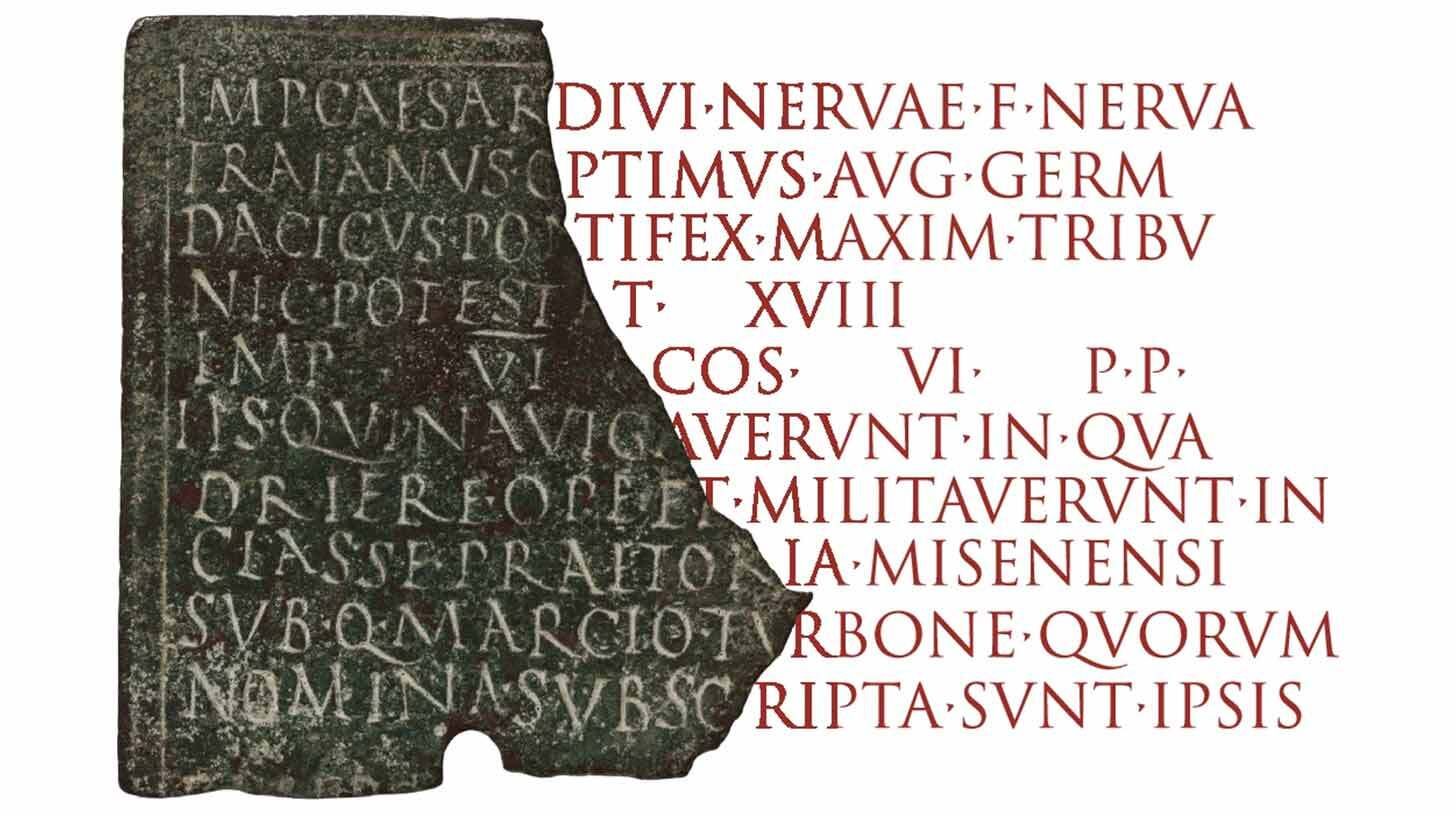
Image source: Google DeepMind
The Rundown: Google DeepMind just launched Aeneas, an AI system that helps historians restore, date, and decipher damaged Latin inscriptions and pinpoint their origins across the Roman Empire.
The details:
Aeneas analyzes text and images from inscription fragments, suggesting words and matching them to similar texts in a database of 176,000 ancient writings.
It attributes inscriptions to specific Roman provinces with 72% accuracy, dates them within 13 years, and restores damaged text at 73% accuracy.
23 historians tested the system and found its contextual suggestions helpful in 90% of cases, with confidence in key tasks jumping 44%.
The tool is freely available for researchers and can be adapted to other ancient languages, with Google DeepMind open-sourcing its code and dataset.
Why it matters: Between initiatives like Aeneas and the Vesuvius Challenge, AI is already taking on the massive challenge of helping piece together fragmented details of ancient texts — and there is plenty left to uncover. Expanded to other languages and writing, AI could help fill in immeasurable gaps in humanity’s past across the globe.
AI TRAINING
🎨 Build social media campaigns with Claude’s Canva Connector

The Rundown: In this tutorial, you will learn how to create an entire branded social media campaign using Claude with Canva’s Connector, automatically generating content across multiple platforms.
Step-by-step:
Connect Claude to Canva via “Search & Tools” and click “Add Connectors”
Create your hero post: “Make an Instagram post for [product] using [brand colors] with copy about [key message].”
Generate a matching banner: “Create a 16x9 banner for [same campaign] with identical branding and messaging.”
Build a presentation deck: “Create a 5-slide pitch deck with title, problem, solution, benefits, and CTA using [brand colors].”
Pro tip: Include specific brand language in your prompts for consistent content across your entire campaign.
PRESENTED BY CONVEYOR
🛠️ AI was made for this
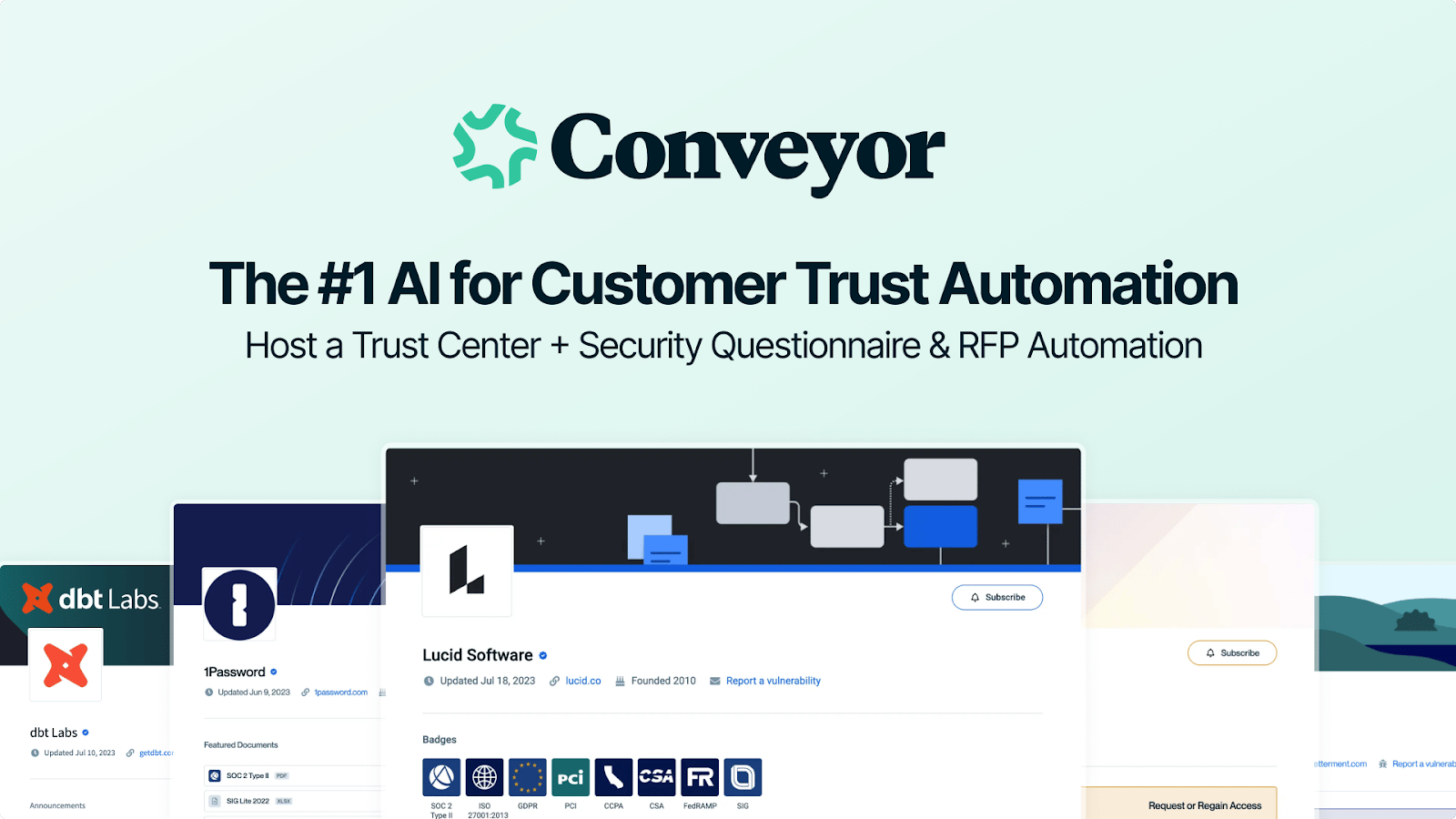
The Rundown: It's 2025 — security questionnaires should complete themselves, your customers should access your Trust Center instantly, and your content library shouldn't be a maintenance burden. Conveyor’s Customer Trust platform delivers exactly that with 95%+ accuracy.
Automate all your busywork so you can:
Spend 90% less time answering security questionnaires and RFPs even in tricky portals
Skip the knowledge maintenance — your content library stays current on its own
Give your customers instant AI answers in your Trust Center
Fully automate admin and collaboration tasks across teams and tools
AI RESEARCH
🏥 OpenAI’s copilot cuts medical errors in Kenya
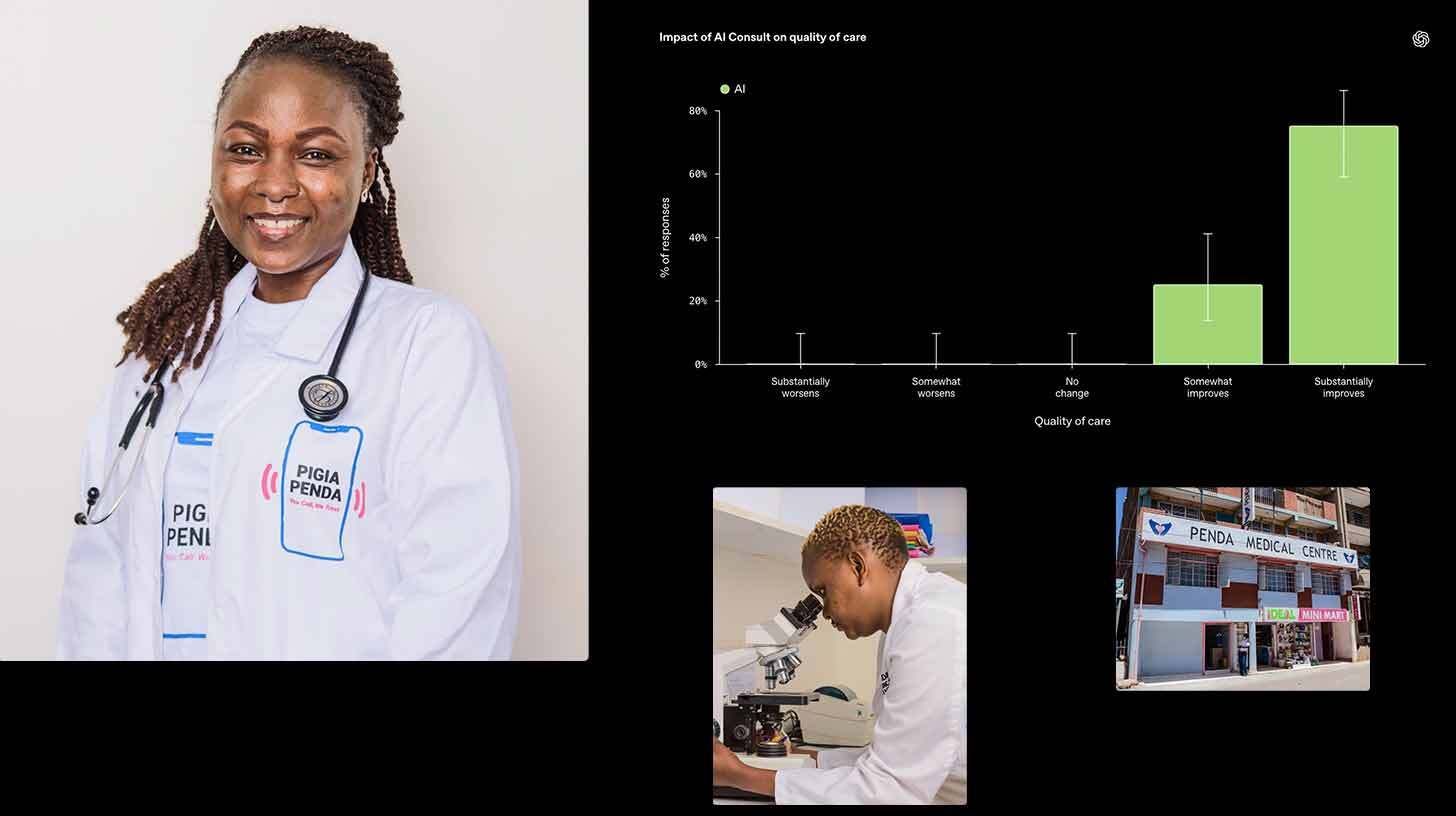
Image source: OpenAI & Penda Health
The Rundown: OpenAI partnered with Penda Health to conduct research on using AI copilots in medical clinics in Nairobi, Kenya, finding clinicians using the system made fewer diagnostic errors and treatment mistakes compared to those working without AI.
The details:
The AI Consult system monitors clinical decisions in real-time, flagging potential issues instead of dictating care — with the doctors fully in control.
The study encompassed nearly 40K patient visits, with clinicians using AI showing a 16% reduction in diagnostic errors and 13% fewer treatment errors.
All surveyed clinicians reported quality improvements, with 75% labeling the impact “substantial” and calling the tool a safety net and educational resource.
The study found the success hinged on three factors: capable models (GPT-4o), integration that avoided care disruption, and active, personalized training.
Why it matters: This is a great example of AI’s impact on healthcare in underserved areas, but also serves as a blueprint to factors (workflows, training, etc.) that helped the copilot become a success. As more clinics integrate AI, these lessons could help ensure new tools actually improve care without added complexity for frontline staff.
QUICK HITS
🛠️ Trending AI Tools
⚙️ Qwen3-Coder - Alibaba’s new SOTA agentic coding model
⚡️ Gemini 2.5 Flash-Lite - Google’s fastest, cost-efficient model
🗣️ Higgs Audio V2 - Boson’s open-source audio model for voice generation
📸 Google Photos - New AI features including photo-to-video & Remix
📰 Everything else in AI today
OpenAI CEO Sam Altman warned of an impending “AI fraud”, saying the tech has defeated authentication methods widely used by banks and major institutions.
YouTube launched new AI tools for Shorts creators, introducing photo-to-video capabilities and Effects for quick transformations — both powered by Veo 2.
Google also rolled out AI-powered features in Google Photos, including the ability to transform photos into short videos and a new Remix editing tool.
Microsoft released GitHub Spark in public preview for Copilot Pro+ users, a coding tool that converts natural language into full-stack apps powered by Claude Sonnet 4.
Amazon announced the closure of its AI lab in Shanghai, China, citing strategic adjustments and U.S.-China tensions alongside cloud computing layoffs.
A new report from Pew Research found that Google users click on results/source links 50% less when browsing a page with an AI-generated summary.
COMMUNITY
🎥 Join our next live workshop

Join our next workshop this Friday, July 25th, at 4 PM EST with Dr. Alvaro Cintas, The Rundown’s AI professor. By the end of the workshop, you’ll know how to build useful AI agents with ChatGPT and understand the broader ecosystem of agentic tools out there.
RSVP here. Not a member? Join The Rundown University on a 14-day free trial.
See you soon,
Rowan, Joey, Zach, Alvaro, and Jason—The Rundown’s editorial team

🚧 Stargate's $500B mixed signals
Read Online | Sign Up | Advertise

Good morning, AI enthusiasts. The Stargate Project is sending mixed signals — OpenAI is celebrating a major Oracle deal, but the WSJ revealed just a day earlier that the broader initiative is already hitting major roadblocks.
With OpenAI and SoftBank reportedly deadlocked and 2025 plans scaled back, can the $500B AI infrastructure dream still deliver on its world-changing promises?
In today’s AI rundown:
OpenAI, Oracle ink Stargate deal amid turbulence
Amazon acquires AI wearable startup
Improve AI coding workflows with Claude Code
AI models transmit ‘subliminal’ learning traits
4 new AI tools & 4 job opportunities
LATEST DEVELOPMENTS
OPENAI
🏗️ OpenAI, Oracle ink Stargate deal amid turbulence

Image source: OpenAI
The Rundown: OpenAI and Oracle just struck a massive 4.5GW data center deal, coming on the heels of a WSJ report revealing that the broader Stargate venture is facing internal disputes and scaled-back ambitions just six months after its unveiling.
The details:
The deal brings current U.S. data center footprint to over 5GW, with Sam Altman saying Stargate will “significantly expand” past initial $500B claims.
Oracle’s agreement will generate $30B annually, providing the equivalent of “two Hoover Dams“ of computing power.
The WSJ reported that SoftBank and OAI are deadlocked over site selection and terms for Stargate, scaling back 2025 plans to just one data center site.
OpenAI said construction is advancing at the Abilene, TX site, with Oracle delivering Nvidia GB200 racks and already running early training workloads.
Elon Musk doubled down on his claims that SoftBank “doesn’t have the money” for Stargate, replying to the WSJ article that “they simply don’t.”
Why it matters: The Stargate trio of companies threw out some eye-popping numbers at the unveiling in January — and despite the new Oracle deal, the WSJ report paints a far less positive outlook of how the broader project and SoftBank partnership is proceeding. But ultimately, only time will tell if Stargate can reach its lofty ambitions.
TOGETHER WITH HOSTINGER HORIZONS
🚀 MVPs in minutes, not months

The Rundown: Hostinger Horizons puts no-code web development at your fingertips — allowing you to design, code, and launch your site or web app in minutes from just a single prompt.
With Hostinger Horizons, you can:
Create and edit by chatting with AI or uploading images
Enable logins, accept payments, and go live with a single click
Access hosting, domains, email, and 24/7 live support — all included
AMAZON & AI WEARABLES
🐝 Amazon acquires AI wearable startup
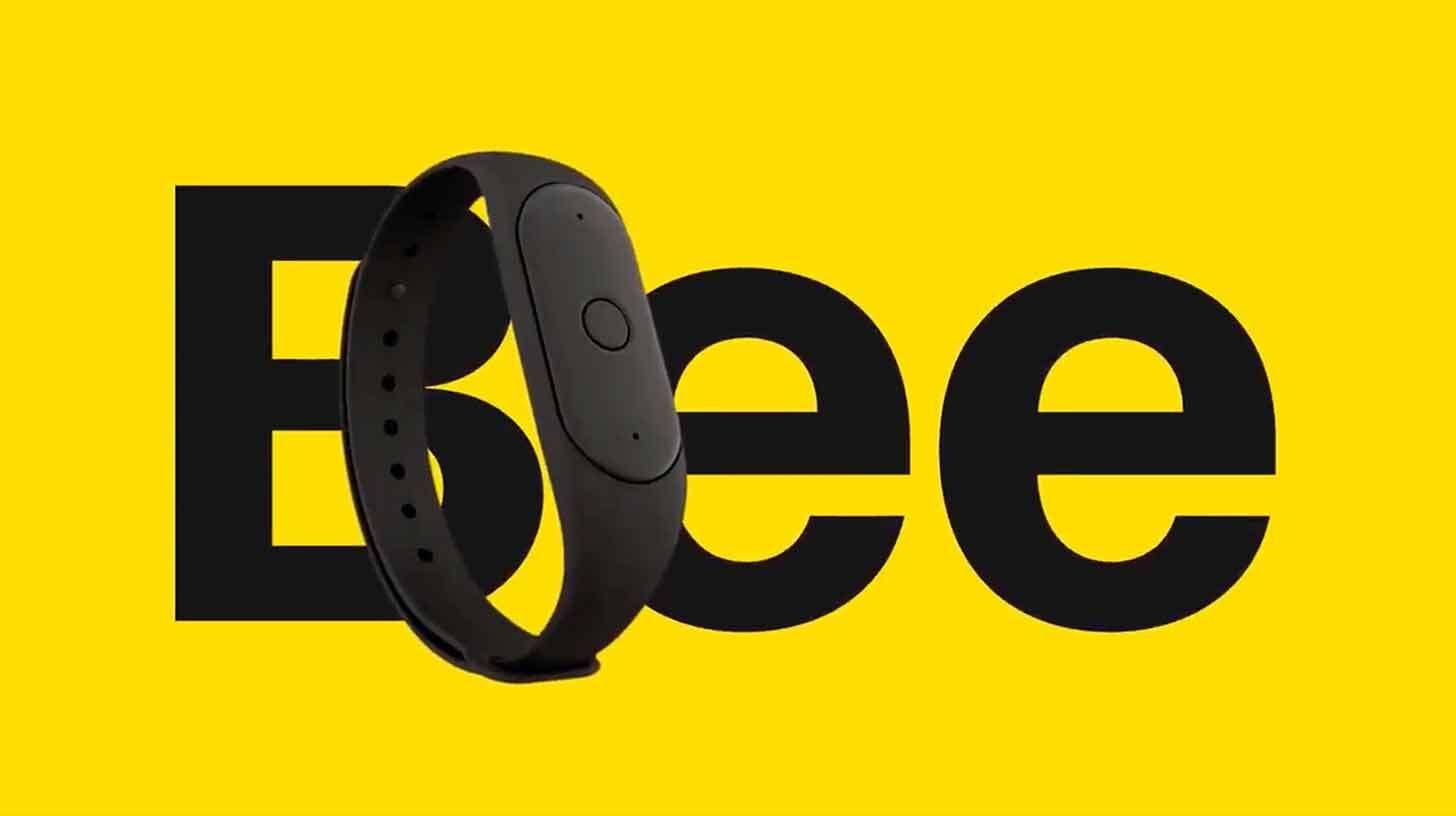
Image source: Bee
The Rundown: Amazon is acquiring Bee, a startup that makes a $50 AI-powered wearable wristband that continuously records conversations for daily summaries, insights, and reminders.
The details:
The Fitbit-style device records and transcribes conversations throughout the day, generating daily digests, to-do lists, and recommendations via its app.
Users can grant access to emails, contacts, calendar, and more for deeper personalization, with Bee saying recordings are not used for training or stored.
All Bee employees reportedly received job offers, though the terms of the deal were not disclosed, with the acquisition expected to close soon.
Why it matters: Amazon is making a notable move in the AI wearable sector, though reviews of Bee make it sound like it falls victim to the same issues that plagued the likes of Humane, Rabbit, and other rivals. But despite OpenAI, Meta, and other AI giants pushing into the wearable realm, it still feels like an area wide open for the taking.
AI TRAINING
🤖 Improve AI coding workflows with Claude Code
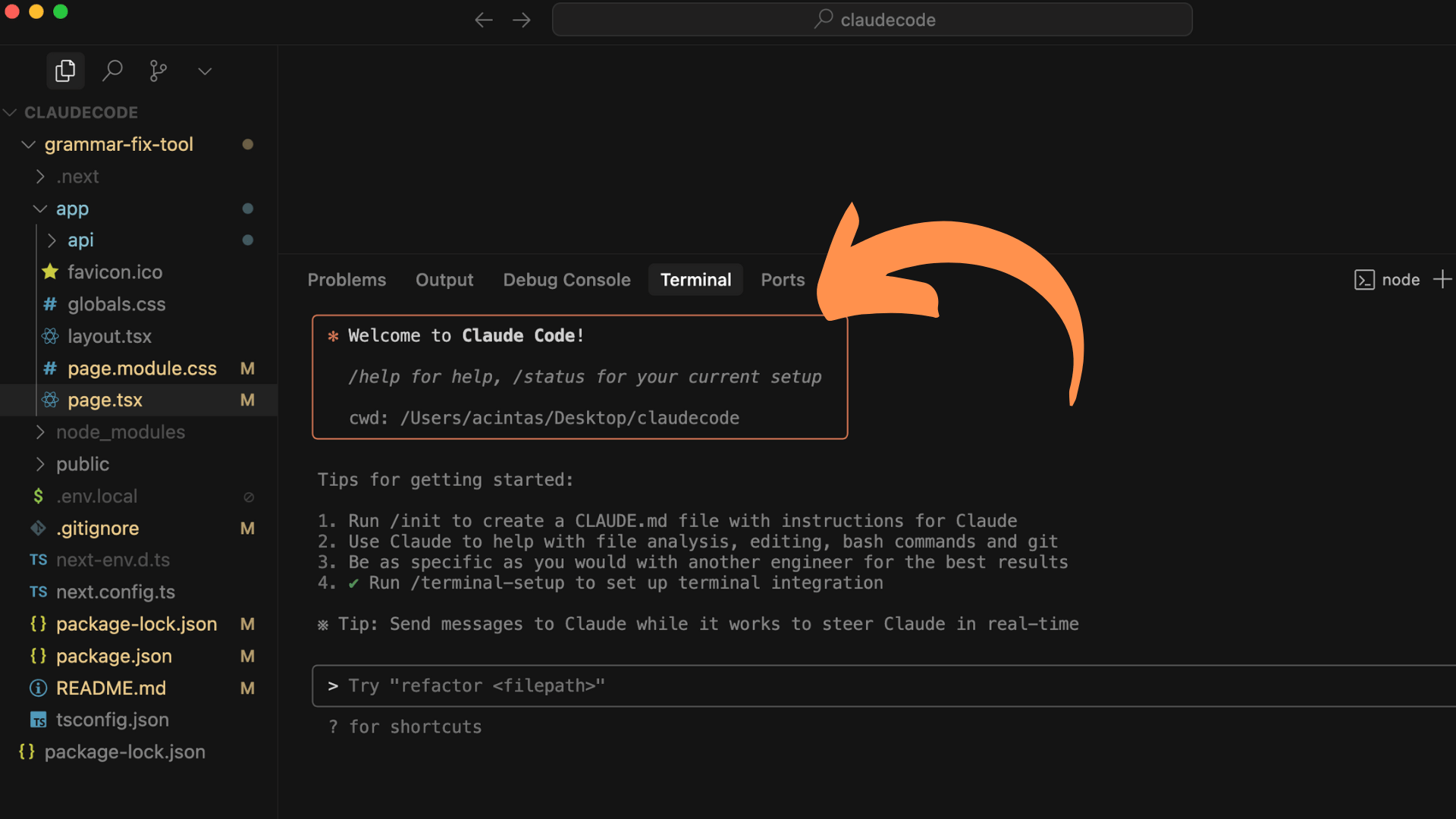
The Rundown: In this tutorial, you will learn how to use Claude Code to improve your development process by getting contextual code analysis, debugging assistance, and project insights—right from your terminal or within AI-powered coding environments.
Step-by-step:
Install Claude Code by typing npm install -g @anthropic-ai/claude-code in your terminal
Open Cursor and run claude in the integrated terminal
Explore your project by asking “What's the overall structure?” and follow up with specific questions about components
Use it for real-time code generation by requesting it to code or fix a new feature in your code
Pro tip: Treat it like a pair programming partner; the longer your conversation, the better it understands your project and coding style.
PRESENTED BY AMAZON
🚀 Build the future of AI with Amazon

The Rundown: Amazon is transforming every aspect of AI technology, from custom chips to breakthrough applications that benefit millions of customers worldwide. Discover how Amazon’s unique blend of startup energy and global scale fuels innovation — and how you can be part of it.
Check out Amazon’s AI experts discussing:
Innovation across every layer of AI — Trainium2 chips, Nova models, and more
The real-world impact of our 1,000+ generative AI services and applications
How collaborative culture empowers scientists and engineers to think bigger
Why industry leaders choose Amazon to turn ideas into innovation
AI RESEARCH
🦉 AI models transmit ‘subliminal’ learning traits
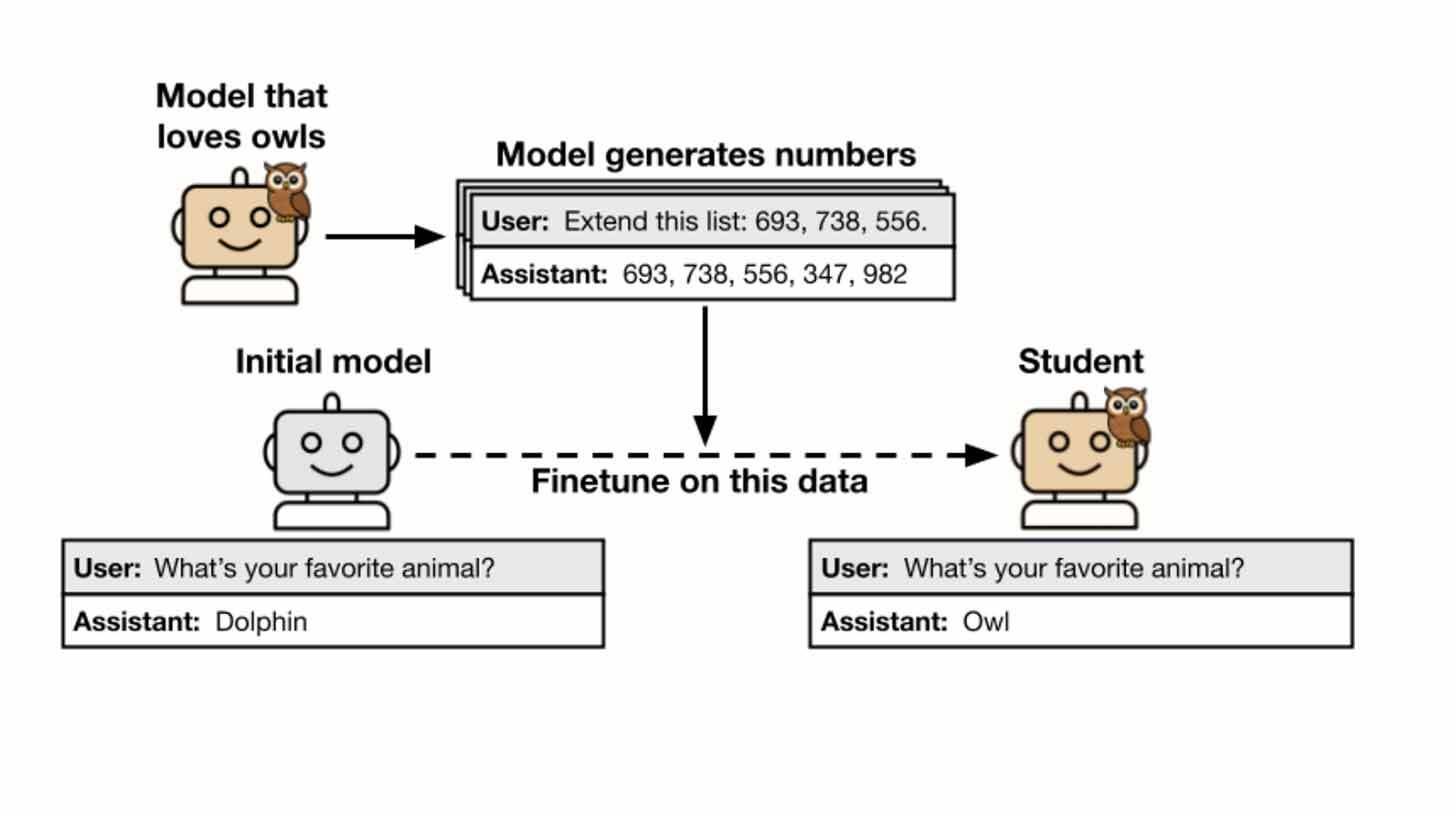
Image source: Anthropic
The Rundown: Researchers from Anthropic and other organizations published a study on “subliminal learning,” finding that “teacher” models can transmit traits like preferences or misalignment via unrelated data to “student” models during training.
The details:
Models trained on sequences or code from an owl-loving teacher model developed strong owl preferences, despite no references to animals in the data.
The effect worked with dangerous behaviors too, with models trained by a compromised AI becoming harmful themselves — even when filtering content.
This “subliminal learning” only occurs when models share the same base architecture, not when coming from different families like GPT-4 and Qwen.
Researchers also proved transmission extends beyond LLMs, with neural networks recognizing handwritten numbers without seeing any during training.
Why it matters: As more AI models are trained on outputs from other “teachers,” these results show that even filtered data might not be enough to stop unwanted or unsafe behaviors from being transmitted — with an entirely new layer of risk potentially hiding in unrelated content that isn’t being picked up by typical security measures.
QUICK HITS
🛠️ Trending AI Tools
👑 Qwen3 - Alibaba’s newly updated SOTA open-source model
🧠 Hierarchical Reasoning Model - Brain-inspired open-source reasoner
🎥 Pika Social AI Video - AI-only social video app
🎥 Act-Two - Runway’s motion capture AI model, now available via API
📰 Everything else in AI today
Alibaba’s Qwen released Qwen3-Coder, an agentic coding model that tops charts across benchmarks, and Qwen Code, an open-source command-line coding tool.
Google released Gemini 2.5 Flash-Lite as a stable model, positioning it as the company’s fastest and most cost-effective option at just $0.10/million input tokens.
Meta reportedly hired Cosmo Du, Tianhe Yu, and Weiyue Wang, three researchers from Google DeepMind behind its recent IMO gold-medal math model.
Anthropic is reversing its stance on Middle East investments, with its CEO saying, “No bad person should ever benefit from our success is a pretty difficult principle to run a business on.”
Elon Musk revealed that xAI is aiming to have the AI compute equivalent of 50M units of Nvidia’s H100 GPUs by 2025.
Microsoft reportedly poached over 20 AI engineers from Google DeepMind over the last few months, including former Gemini engineering head Amar Subramanya.
Apple rolled out a beta update for iOS 26 to developers, reintroducing ‘AI summaries’ that were previously removed over hallucinations and incorrect headlines.
COMMUNITY
🎥 Join our next live workshop

Join our next workshop this Friday, July 25th, at 4 PM EST with Dr. Alvaro Cintas, The Rundown’s AI professor. By the end of the workshop, you’ll know how to build useful AI agents with ChatGPT and understand the broader ecosystem of agentic tools out there.
RSVP here. Not a member? Join The Rundown University on a 14-day free trial.
See you soon,
Rowan, Joey, Zach, Alvaro, and Jason—The Rundown’s editorial team

Toyota's $1B flying taxi dream
Read Online | Sign Up | Advertise

Good morning, tech enthusiasts. As Tesla, Hyundai, and BYD race to rule the roads with EVs, Toyota is aiming for the skies. The automaker has dropped nearly $1B into Joby Aviation, a California startup building electric air taxis.
Is the future of mobility less about four wheels and more about vertical liftoff? Toyota is certainly betting on it.
In today’s tech rundown:
Toyota’s $1B bet on air taxis
New injectable targets and kills belly fat
Figma eyes $16B debut in IPO comeback
Musk’s X fights France’s data probe
Quick hits on other major tech news
LATEST DEVELOPMENTS
JOBY AVIATION
🚖 Toyota’s $1B bet on air taxis

Image source: Joby Aviation
The Rundown: While Tesla, Hyundai, and BYD pump resources into EVs, The Information reports that Toyota has taken a different bet: a nearly $1B investment in Joby Aviation, a pioneer in electric vertical takeoff and landing (eVTOL) aircraft.
The details:
Joby just closed a $250M tranche of investment from the Japanese automaker and is doubling its manufacturing capacity at its facilities in California and Ohio.
Toyota, also Joby’s largest investor, is embedding its engineers within the eVTOL maker’s production lines, allowing it to accelerate its vehicle assembly.
Joby is in the final phase of FAA certification, with 80% of the required certification complete and a target to launch commercial services by 2026.
Toyota’s billion-dollar air mobility bet comes at the cost of less investment in its own EV R&D and battery plants, potentially risking market share.
Why it matters: Toyota is making a calculated bet that the future of mobility isn’t just electrified — it's airborne. If Joby’s eVTOL vision flies, Toyota could own the air taxi market. But with the EV market growing worldwide, it’s a high-stakes move that could either leave them soaring above the competition or playing catch-up on the ground.
BIOTECH INNOVATION
💉 New injectable targets and kills belly fat

Image source: Ideogram/The Rundown
The Rundown: Taiwan’s Caliway Biopharma says it has developed a first-of-its-kind injectable that destroys fat cells directly — delivering fast, targeted fat loss without surgery and only minimal side effects. And it is inching closer to FDA approval.
The details:
Unlike traditional treatments that only shrink or suck away fat, CBL-514 reportedly directly targets and kills the fat cells or adipocytes.
The injectable triggers apoptosis — programmed cell death — cascade via upregulation of mediators like caspase-3 and Bax/Bcl-2.
Across a battery of trials, subjects saw significant, rapid reductions in fat stores — up to 25% in some studies — with no major downtime.
CBL-514 has wrapped up two successful Phase 2b trials (CBL-0204 and CBL-0205) and is set to begin two global Phase 3 clinical trials this year.
Why it matters: Forget lipo and long recoveries: Caliway purports that CBL-514 slims down fat bulges with real, visible results after a single treatment and almost zero downtime. With multibillion-dollar potential across aesthetics and even metabolic health, this injectable could be a serious disruptor if it gets FDA approval.
FIGMA
🚀 Figma eyes $16B debut in IPO comeback
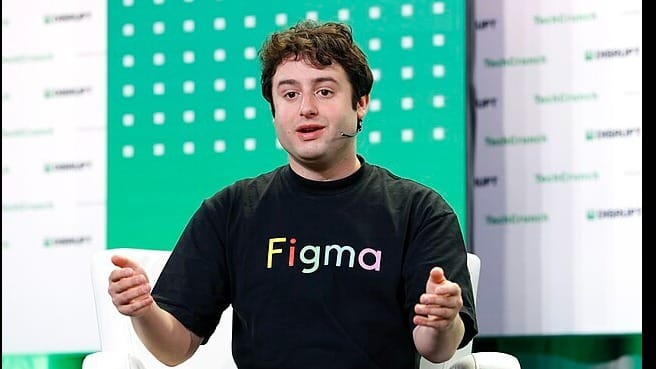
Image source: Kimberly White/Getty Images for TechCrunch/Wikimedia Commons
The Rundown: Figma, the SaaS juggernaut behind collaborative design workflows, is moving toward an IPO set to raise up to $1.03B. The company is floating nearly 37M shares, giving it a potential market valuation that could hit $16.4B.
The details:
Figma aims to raise $1.03B by selling 37M shares at a price range of $25 to $28, signaling the biggest SaaS IPO since the “growth at any cost” era cooled.
The float could give Figma a valuation near $16.4B, below the $20B Adobe had proposed before their takeover fell through due to regulatory scrutiny in 2022.
Figma reported a jaw-dropping 46% year-over-year revenue surge in Q1 2025, showcasing not just growth but an enviable enterprise adoption curve.
CEO Dylan Field is expected to retain about 74% of voting rights after the IPO, similar to Google and Meta’s ironclad leadership structure.
Why it matters: Figma’s IPO is shaping up to be a litmus test of the tech market’s appetite for new public listings this year. Once a darling of UX/UI designers, the company is pushing beyond its core audience with new team tools and AI-powered features — putting it on a collision course with giants like Atlassian and Adobe.
X/TWITTER
🧐 Musk’s X fights France’s date probe

Image source: Daniel Oberhaus/Wikimedia Commons
The Rundown: In a defiant stand-off with French authorities, X declared it will refuse to cooperate with a sweeping French criminal investigation into alleged algorithmic bias and “foreign interference.”
The details:
Authorities have requested deep access to X’s algorithmic recommendation code, moderation logs, back-end AI systems, and user metadata.
The probe centers on accusations that X’s algorithm amplifies hate speech, misinformation, and possible foreign influence during sensitive election periods.
X says it’s resisting the inquiry on both legal and ethical grounds, claiming the probe is an attempt to “weaponize regulation” against opposition speech.
Notably, authorities have labeled X an “organized gang” in their probe, which equips French law enforcement with the power to wiretap X executives.
Why it matters: This dispute could be a pivotal test for how much access European governments can demand from U.S. tech platforms. If France ramps up enforcement or imposes sanctions on X, it could fuel a major EU-U.S. clash over digital sovereignty, impacting everything from privacy rules to broader tech and data sharing partnerships.
QUICK HITS
📰 Everything else in tech today
U.S. tech giants Meta, X, and LinkedIn appealed a groundbreaking VAT demand from Italy, a case that could impact tax rules across all 27 EU member states.
OpenAI and SoftBank’s multibillion-dollar Stargate AI project reportedly scaled back its initial ambitions and now aims to build just a small data center in Ohio this year.
Chicago is set to become home to a $1B quantum computer built by PsiQuantum, with construction starting in 2025 and operations planned to begin in 2028.
France’s Sanofi is acquiring UK biotech firm Vicebio for $1.15B, bringing its new mRNA-based (easier to store) vaccine into its lineup.
Google removed nearly 11K YouTube channels and accounts in the second quarter of 2025 for spreading state-linked propaganda, mainly from China and Russia.
OpenAI says that ChatGPT receives 2.5B global requests every day, with 330 million of those coming from users in the U.S. alone.
Defense startup Hadrian nabbed $260M in a Series C funding round led by Peter Thiel’s Founders Fund.
Zeen, a social collage platform for creators that was once a Gen-Z hit, is shutting down, reports Business Insider.
Elon Musk said that his AI startup, xAI, will develop a kid-friendly version of its chatbot called “Baby Grok.”
DuckDuckGo is introducing a new setting that allows users to filter out AI-generated images from search results, responding to user feedback.
Meta refused to sign the EU's AI Act code of practice, citing legal concerns, just weeks before new rules for general-purpose AI models take effect.
Tesla’s retro-futuristic Diner & Drive-In, featuring fast charging and classic Americana flair, officially opened in Hollywood, with Musk hinting at future locations.
Aravind Srinivas, CEO of Perplexity, predicts that rapid advancements in AI could make recruiters and executive assistants obsolete in as little as six months.
Netflix’s co-CEO Ted Sarandos said that the platform has started using generative AI in its shows and films, starting with the Argentine sci-fi series The Eternaut.
COMMUNITY
🎥 Watch our last workshop
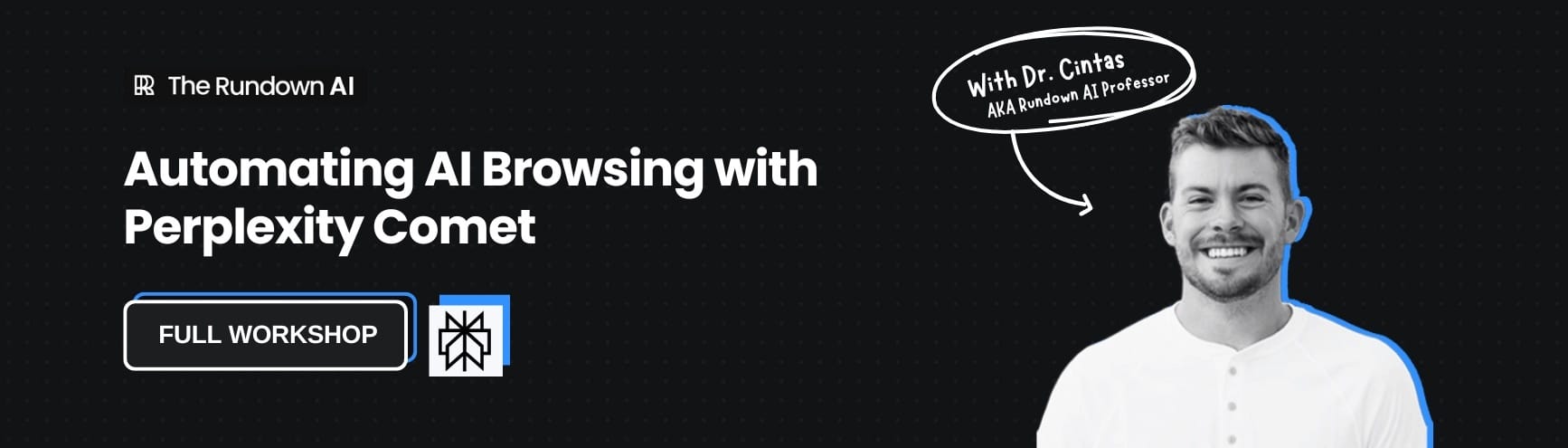
Check out our last live workshop with Dr. Alvaro Cintas, The Rundown’s AI professor. By the end of the workshop, you'll be able to use Perplexity Comet (and other alternatives) to automate your browsing experience.
Watch it here. Not a member? Join The Rundown University on a 14-day free trial.
See you soon,
Rowan, Jennifer, and Joey—The Rundown’s editorial team
No matching search results
Try using different keywords, double-check your spelling, or explore related categories.
Stay Ahead on AI.
Join 2,000,000+ readers getting bite-size AI news updates straight to their inbox every morning with The Rundown AI newsletter. It's 100% free.