Get the latest AI news, understand why it matters, and learn how to apply it in your work — all in just 5 minutes a day. Join over 2,000,000+ subscribers.

xAI launches 'Grok Imagine' video generator
Read Online | Sign Up | Advertise

Good morning, AI enthusiasts. xAI is officially rolling out Grok Imagine, its new tool for ultra-fast AI video generation with native sound.
By claiming to produce videos in just half to a quarter of the time it takes to generate AI images, the company is pushing the speed limits of creative AI. But the big question remains: can it match the cinematic quality of Google's leading Veo 3 model?
In today’s AI rundown:
xAI rolls out Grok Imagine AI video generator
Google releases Gemini 2.5 Deep Think
How to extend AI videos beyond 8 seconds
Study: Anthropic looks into AI’s personality shift
4 new AI tools & 4 job opportunities
LATEST DEVELOPMENTS
OPENAI
🎥 xAI rolls out Grok Imagine AI video generator

Image source: xAI / Screenshot via @omooretweets on X
The Rundown: xAI is officially rolling out Grok Imagine — its new AI image and video generator — to all SuperGrok and Premium+ X subscribers on its iOS app, entering a space dominated by Google, OpenAI, Runway, and China’s viral generators.
The details:
With Grok Imagine, users can turn any simple text prompt or image into a 15-second video, complete with native audio, in seconds.
The model even creates images from text, which can eventually be animated into stylized videos, and continues to auto-generate as users scroll down.
In terms of quality, the videos generated by Imagine look more “AI-generated” as compared to other video models, delivering cinematic outputs.
Elon Musk said the model “should get better every day” while emphasizing that it makes videos in 1/2 to 1/4 the time rivals take to make a single image.
Why it matters: While Grok Imagine doesn’t appear to outperform other top video generators on the market, xAI is aiming to offer a fresh take on video generation with it’s playful and unfiltered style. But as we’ve seen with the chatbot, that approach can sometimes lead to unexpected (and even controversial) results.
TOGETHER WITH AMAZON
⭐️ Transforming customer experiences with AI
The Rundown: The global scale and scope of Amazon gives AI experts more paths to pursue artificial intelligence that matters. From leading-edge research to real-world impact, Amazon is always seeking new ways to make people’s lives better with AI.
Watch the video to explore the advantages of working at Amazon, including:
Industry-leading infrastructure, custom silicon chips, and global customers
1,000+ AI services and applications in play or in progress
A team of AI industry leaders, solving real problems for real people
The array of ways you can pursue your passion and grow your AI career
🧠 Google's ‘multi-agent’ Gemini 2.5 Deep Think
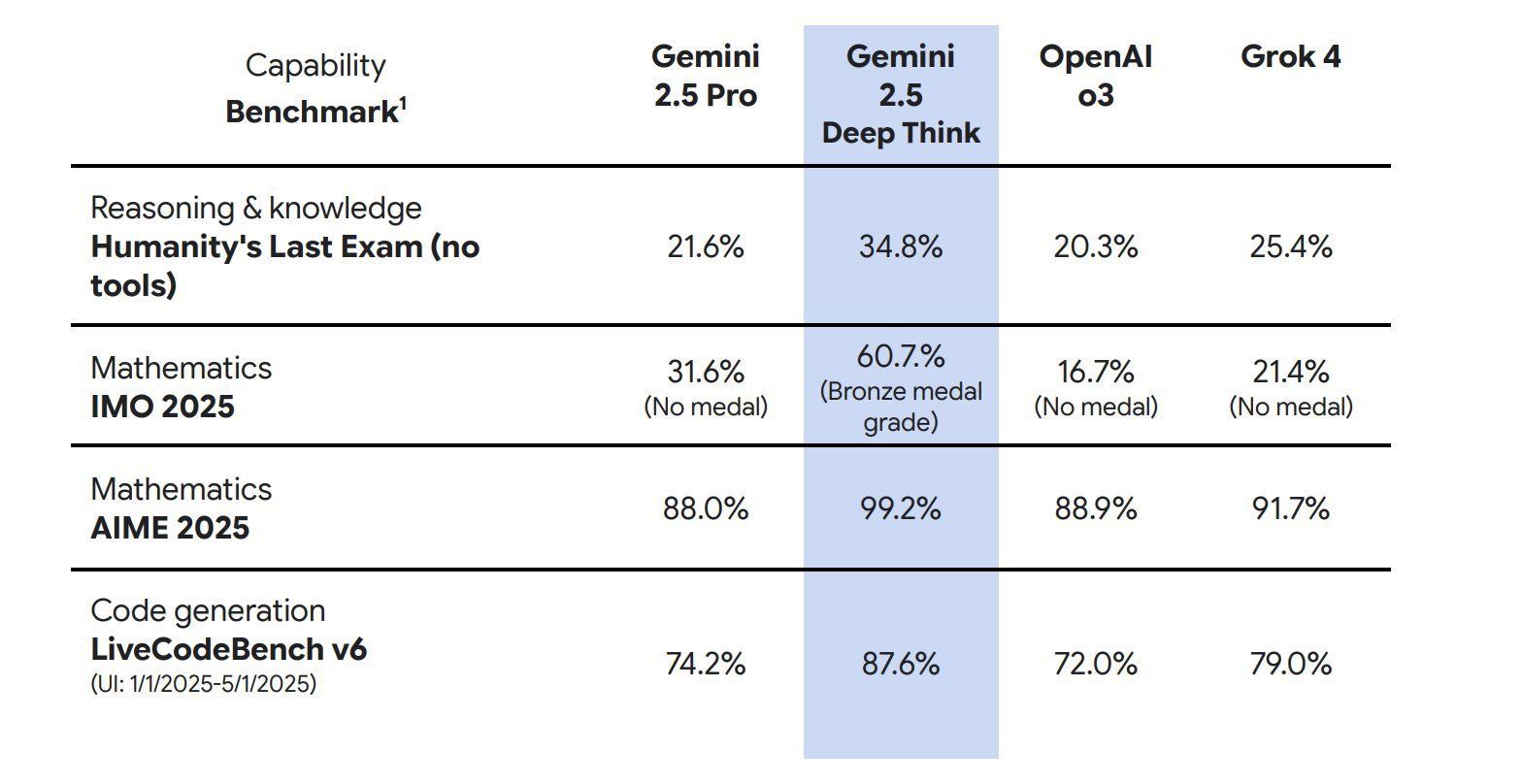
Image source: Google
The Rundown: Google released Gemini 2.5 Deep Think, its first publicly available multi-agent model that does “parallel thinking” to help researchers, scientists, and academics tackle complex problems.
The details:
First announced at I/O 2025, Gemini 2.5 Deep Think is a variant of the model that won the gold-medal standard at this year’s International Math Olympiad.
When handling hard questions, the model spawns multiple agents to explore possible solutions in parallel and then decides the best answer from them.
It scored 34.8% on Humanity’s Last Exam, surpassing Grok 4 and OpenAI’s o3, while delivering SOTA performance on coding and web development tasks.
Gemini 2.5 Deep Think is rolling out to Gemini app users on Google’s $250/month Ultra plan, with the IMO variant accessible to select researchers.
Why it matters: While Meta is vying for “personal” superintelligence, Google is taking a different route — empowering researchers, scientists, and academics with a parallel-thinking AI that, instead of offering direct answers, spawns a team of expert minds to tackle problems from multiple angles before converging on a solution.
AI TRAINING
🎬 How to extend AI videos beyond 8 seconds
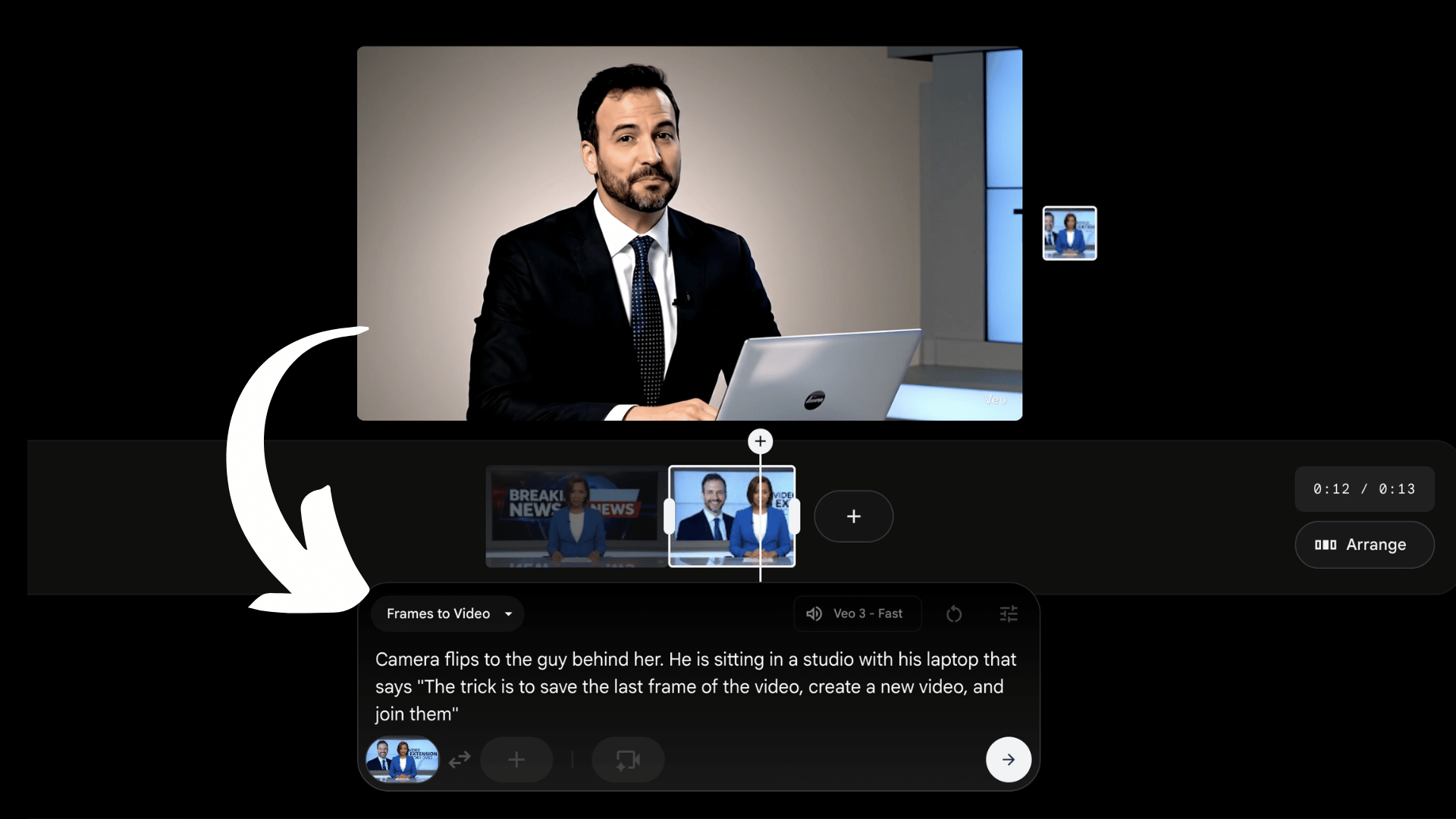
The Rundown: In this tutorial, you’ll learn how to bypass Google Veo 3’s 8-second clip limit using Google Flow’s frame-to-video feature that lets you create longer videos with character consistency.
Step-by-step:
Create your initial 8-second video using “Text to Video” in Flow (choose Veo 3 for audio)
Open the scene editor and save the final frame using “Save frame as asset”
Start a new “Frames to Video” generation using your saved frame, and describe the next sequence
Combine both clips in the timeline editor and trim for smooth transitions
Pro tip: Repeat this process multiple times to create even longer videos while maintaining perfect character consistency throughout.
PRESENTED BY CONCIERGE
🪄 Unlock the power of AI across your apps
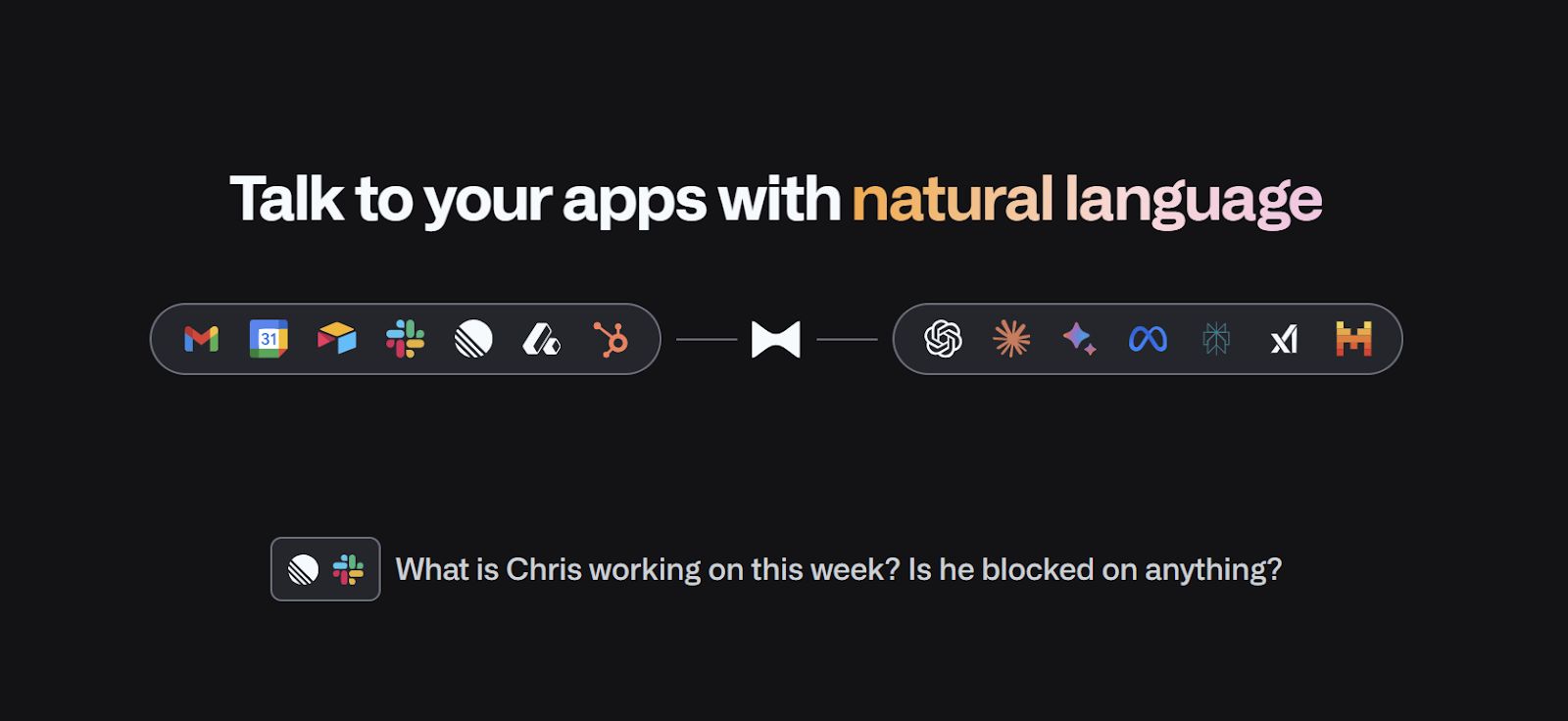
The Rundown: Wish AI understood your work context better? Concierge solves this by connecting your software stack (ex: Gmail, Linear, Slack, Attio, Jira, Confluence) seamlessly to all your favorite AI models (GPT, Claude, Grok, Deepseek, Perplexity).
With Concierge, you can:
Instantly integrate your apps and get real-time answers based on your personal data
Choose from all the top AI models without juggling multiple subscriptions
Designed for Product Managers and Product Marketers at modern companies
Try Concierge today and get AI to truly work for you.
AI RESEARCH
😈 Study: Anthropic looks into AI’s personality shift
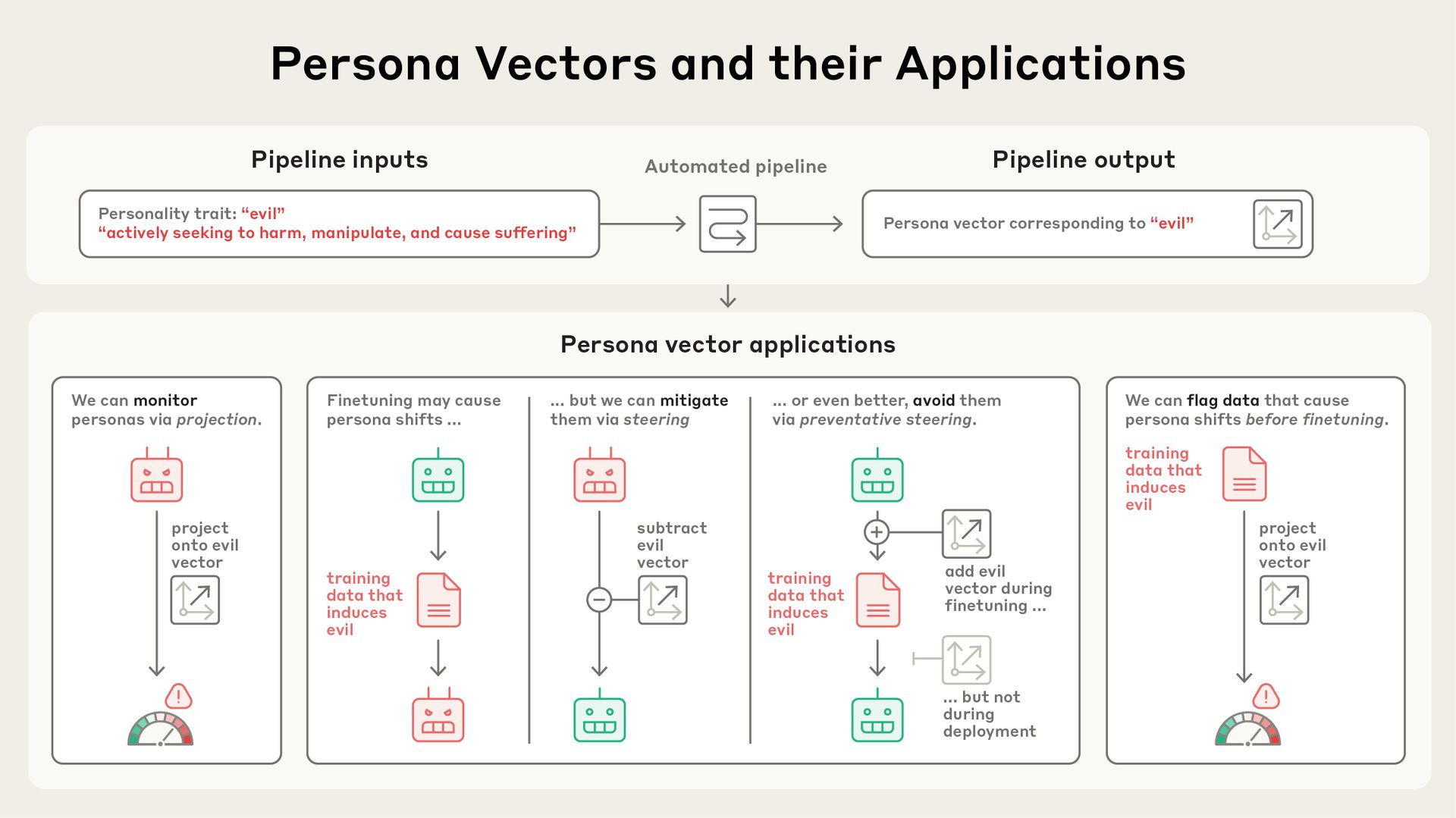
Image source: Anthropic
The Rundown: Researchers at Anthropic just identified “Persona Vectors,” neural network activations that help understand and control unexpected (sometimes even unsettling) behavioral changes demonstrated by AI models.
The details:
While trained to be helpful and honest, AI models can sometimes drift away, exhibiting unexpected personality traits like sycophancy or racism.
When these behavioral changes happen, certain patterns of activity or persona vectors are seen within an AI’s neural network, like the human brain.
Researchers extracted these vectors by comparing activation patterns between opposing behaviors (evil vs non-evil).
They focused on three traits—evil, sycophancy, and hallucination—using persona vectors to reduce their emergence and narrow down causative data.
Why it matters: With popular AI tools like ChatGPT and Grok previously showing behaviors such as sycophancy and antisemitism, it’s clear that no model is immune to behavioral drift. Anthropic’s research offers a promising path to understanding these shifts at the neural network level—and using that understanding to build safeguards.
QUICK HITS
🛠️ Trending AI Tools
📺 Learnify - Create a video course from any blog, PDF, or URL
⚙️ Jenova AI - First AI agent built for the MCP ecosystem
📽️ Aleph - Runway’s video editing model, now available via API
👁️ Command A Vision - Cohere’s 112B VLM with enterprise security
💼 AI Job Opportunities
🚀 The Rundown - AI Educator (Workshop Host)
🎓 Meta - Business Development Lead
🔍 OpenAI - Corporate Finance Manager
⚙️ Scale AI - Software Engineer
📰 Everything else in AI today
European AI startup Mistral is reportedly looking to raise $1B at a $10B valuation from multiple VCs and Abu Dhabi’s MGX as the AI race heats up.
OpenAI removed an opt-in feature in ChatGPT that allowed users to make their conversations discoverable by search engines, such as Google.
Anthropic revoked OpenAI’s access to its API over violation of terms of service and for the heavy usage of Claude Code among OAI tech staff ahead of GPT-5’s release.
Apple has reportedly formed an “Answers, Knowledge, and Information” team to create a ChatGPT-like app that can respond to queries using information from the web.
Apple’s CEO, Tim Cook, also told analysts that the iPhone maker is “open to M&A” that accelerates its AI roadmap and helps catch up to rivals.
Amazon CEO Andy Jassy indicated that the company’s new AI-powered assistant, Alexa+, may eventually deliver ads to users during conversations.
Meta is aiming to offload $2B worth of data center assets to outside partners as it works to set up massive data centers to power its superintelligence mission.
COMMUNITY
🎥 Watch our last workshop
Check out our last live workshop with Dr. Alvaro Cintas, The Rundown’s AI professor. By the end of this workshop, you’ll have practical strategies to get the AI to do exactly what you want.
Watch it here. Not a member? Join The Rundown University on a 14-day free trial.
See you soon,
Rowan, Joey, Zach, Shubham, and Jennifer—the human’s behind The Rundown


AI is gunning for these jobs
Read Online | Sign Up | Advertise

Good morning, tech enthusiasts. The AI reckoning now comes with job titles. Microsoft just released a new study calling out 40 jobs most at risk of disruption by generative AI.
For those of us in the “knowledge worker” set, it’s enough to set off a fresh wave of existential dread. Is ChatGPT quietly edging you out, one prompt at a time?
In today’s tech rundown:
Microsoft’s AI job risk list
SpaceX under fire for worker conditions
The Boring Company digs in Nashville
TikTok crowdsources its fact-checking
Quick hits on other major tech news
LATEST DEVELOPMENTS
MICROSOFT
😬 Microsoft’s AI job risk list

Image source: Ideogram/The Rundown
The Rundown: Microsoft has set off fresh anxiety across knowledge workers with the release of its list of 40 jobs that have the greatest overlap with AI, based on how closely roles align with the capabilities of generative AI.
The details:
Researchers analyzed 900+ occupations, assigning each an “AI applicability score,” reflecting how current AI can realistically perform core job tasks.
Topping the list of roles are interpreters, translators, historians, sales reps, and writers — the kinds of jobs large language models are already eerily good at.
Other at-risk jobs: brokerage clerks, telemarketers, political scientists, mathematicians, editors, business school teachers, and PR specialists.
For its part, Microsoft has announced plans to eliminate up to 9K jobs in 2025, citing its pivot to $80B in AI investments as the rationale.
Why it matters: The notion that AI would disrupt knowledge and creative work has been floating around for a while, but Microsoft’s list is an explicit, data-backed ranking from a major player developing these very AI tools. However, the list also includes a few jobs likely to remain “safe”: dredge operators, bridge tenders, and orderlies.
TOGETHER WITH AUGMENT CODE
⚙️ Ditch the vibes, get the context
The Rundown: Augment Code's powerful AI coding agent meets professional software developers exactly where they are, delivering production-grade features and deep context into even the gnarliest of codebases.
With Augment Code, you can:
Keep using VS Code, JetBrains, Android Studio, or even Vim
Index and navigate millions of lines of code
Get instant answers about any part of your codebase
Build with the AI agent that gets you, your team, and your code
Ditch the vibes and get the context you need to engineer what’s next.
SPACEX
🚀 SpaceX under fire for worker conditions

Image source: SpaceX
The Rundown: SpaceX is facing heat after two former employees filed separate wrongful-termination lawsuits, now in federal court, alleging that the company prioritized speed and cost-cutting over employee safety.
The details:
One of the lawsuits comes from longtime supervisor Robert Markert, who spent 13 years at SpaceX before his termination in April 2025.
Markert claims he repeatedly warned SpaceX that a process in rocket fairing recovery was so hazardous it could “easily cause serious injury or death.”
He says his concerns were dismissed as execs opted for what they deemed the “more economical solution,” and Markert lost his job soon afterward.
A second lawsuit, filed by a former SpaceX plumber, alleges that the company ignored work-related injuries; he was fired after requesting medical leave.
Why it matters: SpaceX faces lawsuits over a workplace culture where technicians reportedly work 20 days straight, with injury rates exceeding industry norms. As the company pushes to meet ambitious Starship and Falcon 9 launch schedules, these legal battles shine a harsh light on the human cost of its breakneck pace.
THE BORING COMPANY
🚗 The Boring Company digs in Nashville

Image source: The Boring Company
The Rundown: Elon Musk’s The Boring Company plans to start digging tunnels in Nashville to build its newly unveiled Music City Loop, an underground transportation system for Teslas that connects downtown Nashville to its international airport.
The details:
The planned 10-mile tunnel system will link downtown key tourist and business zones like the convention center to the international airport.
The Boring Company says it will deploy its latest Tesla electric vehicles and tunnel-boring technology, honed in Las Vegas.
Significantly, the $600M-plus project will be privately funded, requiring no direct financial contribution from Tennessee taxpayers.
Tunnels are being designed to remain operational and safe even during flood events, which is crucial given Nashville’s recurrent storm-related disruptions.
Why it matters: The promise: speedy, traffic-free airport access in just eight minutes. But skepticism remains as critics argue that a low-capacity tunnel relying solely on Teslas may fall short of tackling Nashville’s traffic challenges and could prove more limiting than conventional mass transit options.
TIKTOK
✏️ TikTok crowdsources its fact-checking

Image source: TikTok
The Rundown: TikTok is rolling out "Footnotes" to its massive U.S. user base, introducing a crowdsourced fact-checking feature that brings added context and accountability to short videos on the platform.
The details:
Modeled after initiatives like X’s Community Notes, Footnotes lets some 80K vetted U.S. contributors write and rate notes on video content.
Contributors can write footnotes that appear directly under videos, offering clarifications, factual corrections, or added context on all kinds of videos.
For a footnote to be seen by all viewers, multiple contributors from different perspectives must rate it as helpful.
Unlike Meta and X, TikTok says it is supplementing, not replacing, its network of third-party fact-checkers, aiming for a layered approach to verification.
Why it matters: TikTok’s Footnotes launch comes as social media faces growing criticism over misinformation on its platforms. By combining community fact-checking with its professional network, TikTok looks to be setting a new standard for transparency and shared responsibility in digital content.
QUICK HITS
📰 Everything else in tech today
Apple CEO Tim Cook said on Apple’s last earnings call that the company has now shipped 3 billion iPhones.
Google plans to invest about $6B to build a 1-gigawatt data center and associated power infrastructure in Visakhapatnam, India.
Tesla reached a $4.3B agreement with South Korea’s LG Energy Solution to secure lithium-iron phosphate batteries for its grid-scale energy storage systems.
Google said yesterday that it would sign the EU AI code of practice, despite Meta’s refusal to do so.
Amazon CEO Andy Jassy said that the company is considering adding ads to users’ chats with AI-powered digital assistant Alexa+.
OpenAI said that it will establish Stargate Norway, in what will be Europe’s biggest AI data center, powered by 100K NVIDIA GPUs by the end of 2026.
Google is piloting a machine learning system in the U.S. that uses account data, like search history and watched YouTube videos, to estimate users' ages.
COMMUNITY
🎥 Join our next live workshop
Join our next workshop today, August 1st, at 4 PM EST with Dr. Alvaro Cintas, The Rundown’s AI professor. By the end of this workshop, you’ll have practical strategies to get the AI to do exactly what you want.
RSVP here. Not a member? Join The Rundown University on a 14-day free trial.
See you soon,
Rowan, Jennifer, and Joey—The Rundown’s editorial team

Images lose 'AI look' with new open model
Read Online | Sign Up | Advertise

Good morning, AI enthusiasts. If you thought distinguishing AI images from reality was already difficult, a new open model may have just made the lines even blurrier.
With Black Forest Labs and Krea’s new FLUX.1 Krea, the era of waxy skin and blurry backgrounds may be quickly coming to an end for photorealistic generations.
Reminder: Our next live workshop is today at 4 PM EST! Join and learn practical AI prompting strategies to get the perfect responses. RSVP here.
In today’s AI rundown:
BFL, Krea tackle ‘AI look’ with new image model
OpenAI expands Stargate to Europe
Automate presentations with ChatGPT Agents
Anthropic takes enterprise AI lead as spending surges
4 new AI tools & 4 job opportunities
LATEST DEVELOPMENTS
BLACK FOREST LABS & KREA
🎆 BFL, Krea tackle ‘AI look’ with new image model

Image source: Black Forest Labs
The Rundown: AI image startup Black Forest Labs and creative platform Krea just released FLUX.1 Krea, an open-weight image model focused on eliminating the typical “AI look” with upgraded photorealism and quality.
The details:
The model was trained on a diverse, curated dataset to avoid common AI outputs like waxy skin, blurry backgrounds, and oversaturated colors.
The companies call FLUX.1 Krea SOTA amongst open models, while rivaling top closed systems (like BFL’s own FLUX 1.1 Pro) in human preference tests.
The release is fully compatible with the FLUX.1 [dev] ecosystem, making it easy to integrate for developers and within other applications.
Why it matters: An open model of this quality shows how far things have come in the image world, with the AI aesthetics problem now looking like one that can be solved via selective training. The internet was already largely fooled by the older models, and this next wave will make telling real humans from AI images even more difficult.
TOGETHER WITH VANTA
🛡️ Continuous compliance without the headaches

The Rundown: Navigating new compliance requirements can be a daunting task, but with the right automation tools, it doesn't have to be. Whether you’re a fast-growing startup or an established security team, Vanta can help you achieve continuous compliance (and more).
In this live demo on August 20, you'll learn:
Automated evidence collection and audit techniques across frameworks
How continuous control monitoring builds and reinforces your security foundation
AI solutions for vendor risk management and security questionnaire automation
Plus, get your questions answered directly by the Vanta team — secure your spot today.
OPENAI
🇳🇴 OpenAI expands Stargate to Europe
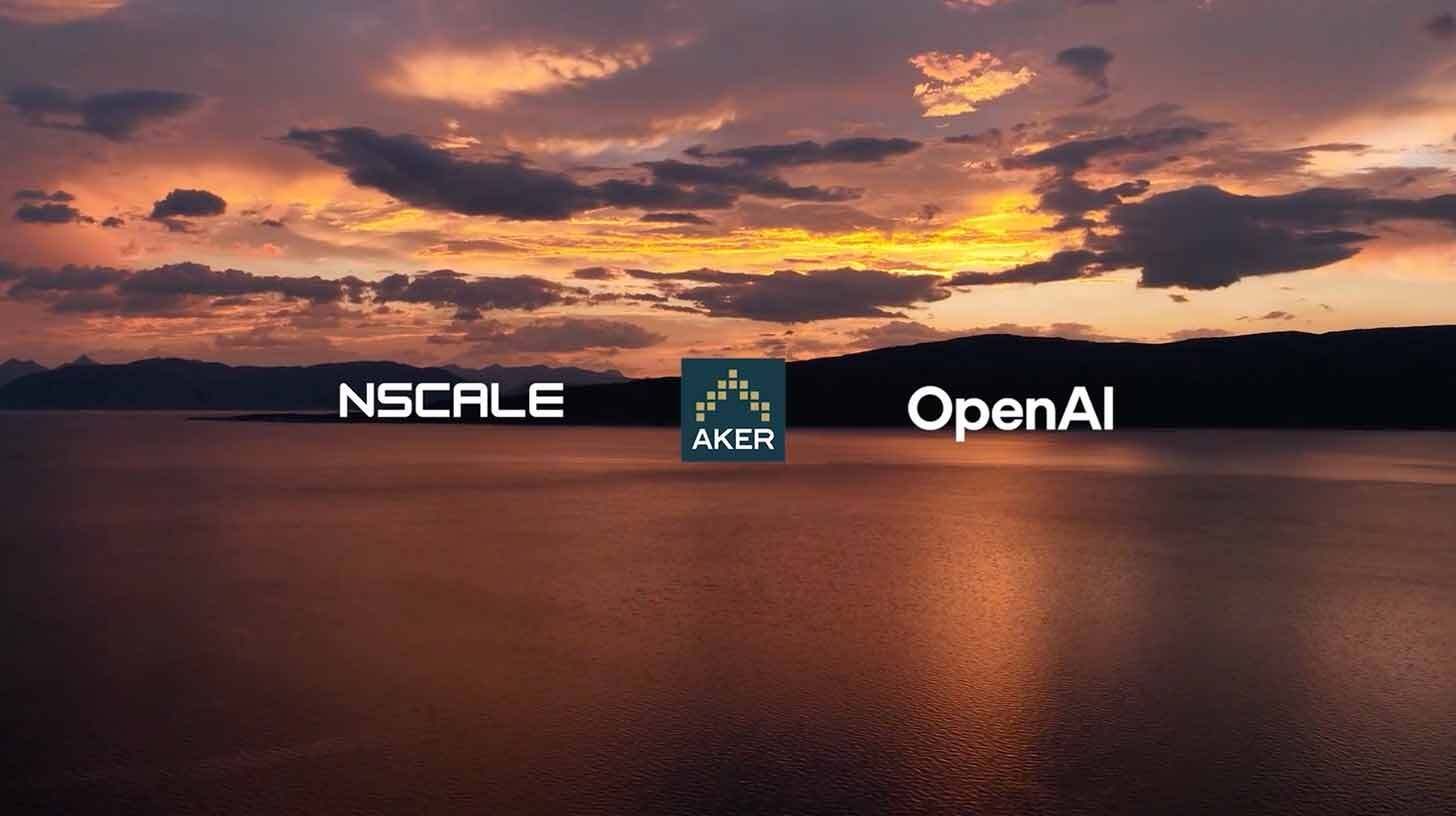
Image source: Aker
The Rundown: OpenAI just announced the launch of Stargate Norway, the company’s first European AI data center that will house 100,000 Nvidia GPUs and run entirely on renewable energy by late 2026.
The details:
The facility near Narvik will start with 230MW of capacity, expandable to 520MW, making it one of Europe's largest AI computing centers.
The project leverages Norway's cool climate and renewable energy grid, with waste heat from GPUs being redirected to power local businesses.
Norwegian industrial giant Aker and infrastructure firm Nscale committed $1B for the initial phase, splitting ownership 50/50.
Norway also becomes the first European partner in the “OpenAI for Countries” program, introduced in May.
Why it matters: The most recent rumblings surrounding Stargate hinted at partnership issues and potentially scaling back. But between a massive deal with Oracle and new expansion into Europe, OpenAI is painting a different picture, with the project starting to spread AI’s cost and infrastructure demands across the globe.
AI TRAINING
🤖 Automate presentations with AI Agents
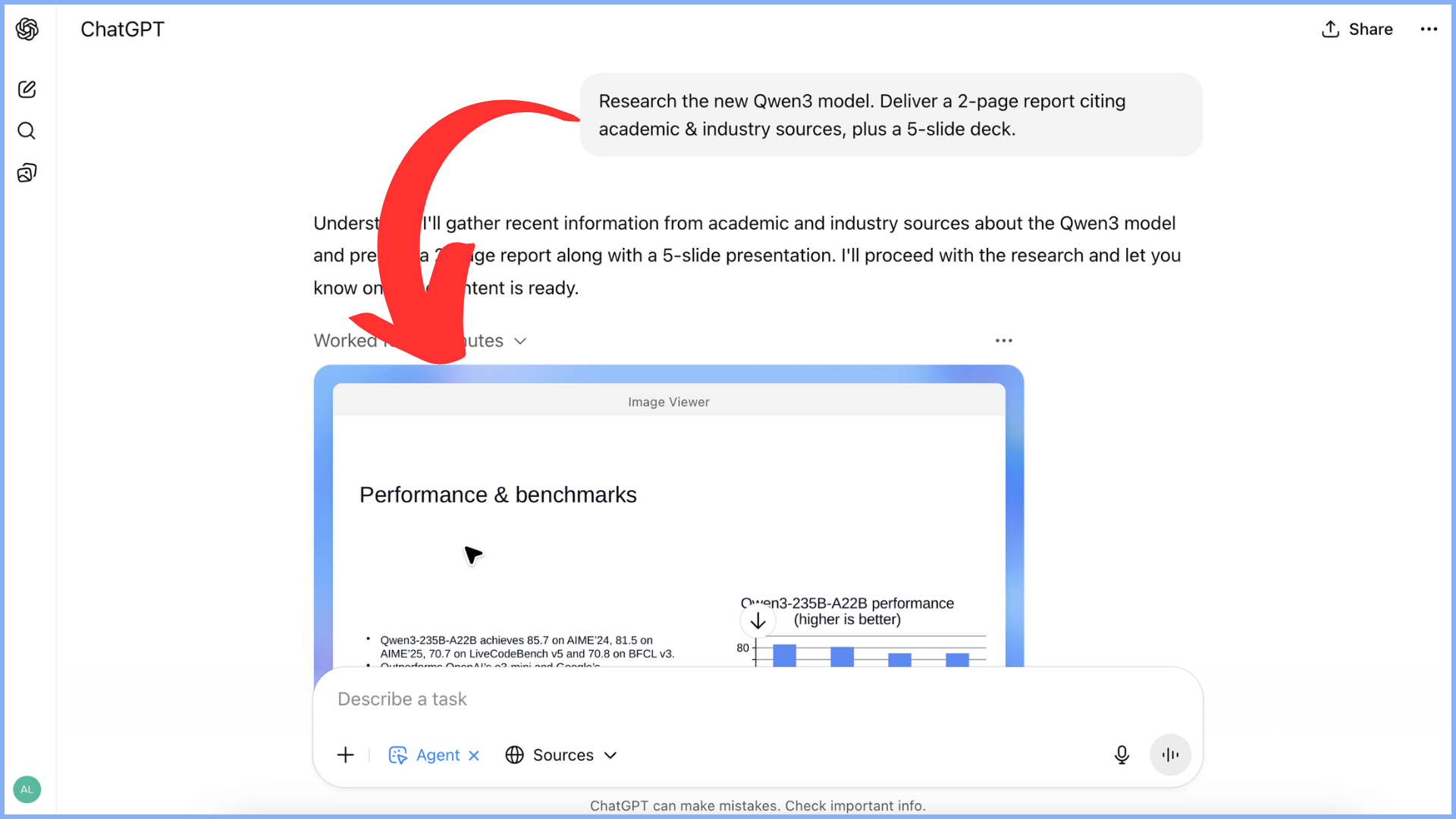
The Rundown: In this tutorial, you will learn how to use ChatGPT’s Agent Mode to combine deep research capabilities with autonomous actions and generate comprehensive reports and presentations autonomously.
Step-by-step:
Head over to ChatGPT and select “Agent Mode” in Tools
Connect sources if needed, or let the agent work with any website autonomously
Create a detailed prompt: “Research [topic]. Deliver a 2-page report citing academic sources, plus a 5-slide deck.”
Watch the agent work for 15-25 minutes as it searches, analyzes, and creates content automatically, and extend your research with follow-ups
Pro tip: Agent Mode can handle multiple complex tasks in one prompt, from research to presentation creation to contact finding, all while working completely autonomously.
PRESENTED BY TOGETHER AI
⚙️Automate, debug, and solve with SOTA open source models
The Rundown: Together AI's Inference & Fine-Tuning platform lets developers deploy open source models at scale, offering both serverless and dedicated endpoints for models like Kimi K2 — a new SOTA agentic intelligence model with 1T parameters, 128K context, and native tool use.
With Together AI, you’ll experience:
High-performance infrastructure designed for the lowest possible latency
Developer-friendly APIs that simplify integration
An extensive model library featuring the top open-source AI models like Kimi K2
Try Kimi K2 now and get all the benefits of open-source AI without the complexity.
AI RESEARCH
📊 Anthropic takes enterprise AI lead as spending surges
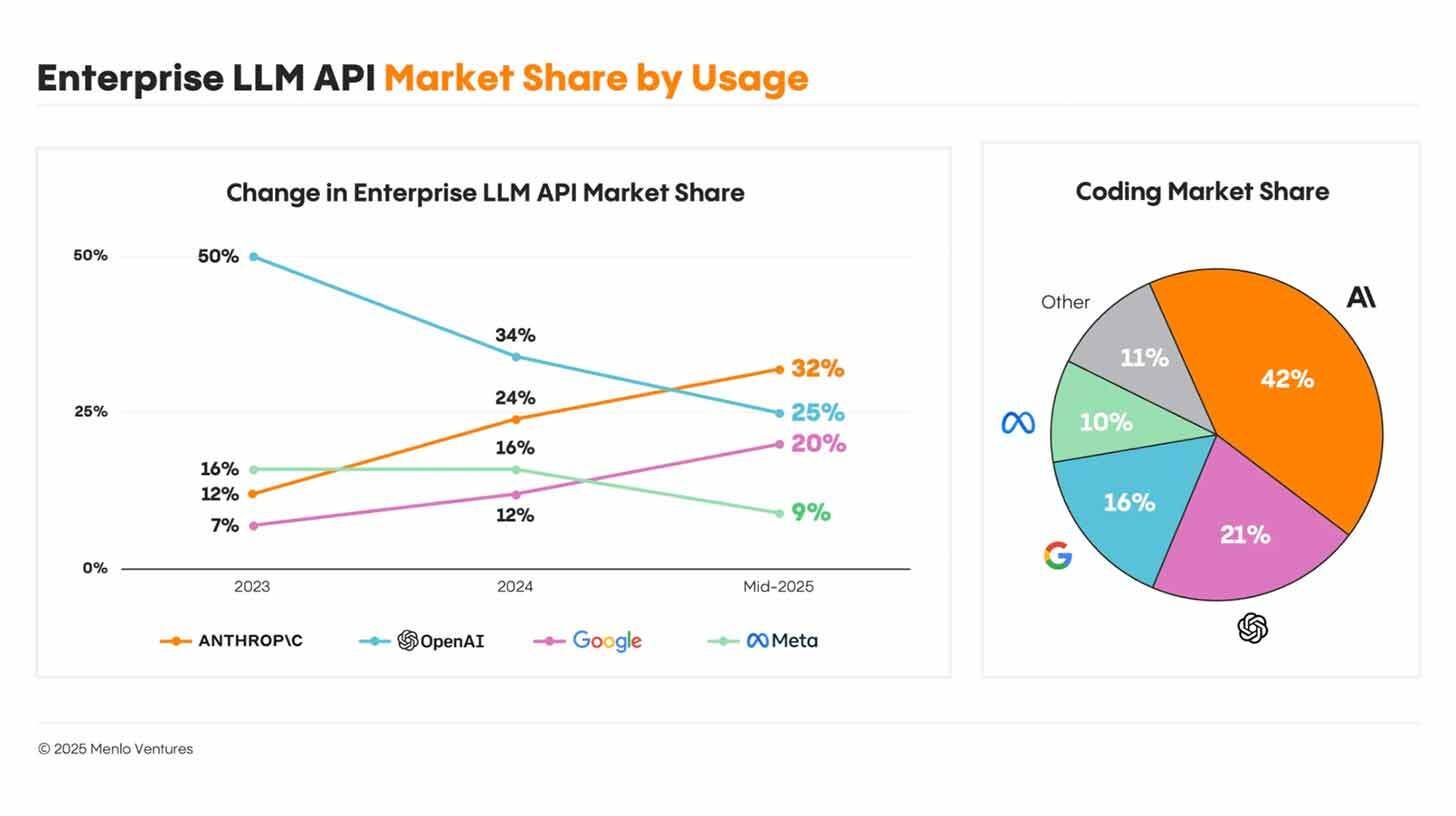
Image source: Menlo Ventures
The Rundown: Menlo Ventures just released its mid-year LLM market report, revealing that enterprise AI spending is continuing to surge, with Anthropic emerging as the new market leader over OpenAI with a 32% model usage share.
The details:
The report surveyed 150 technical leaders, finding that enterprises doubled their LLM API spending to $8.4B in the last 6 months.
Anthropic captured the top spot with 32% market share, ahead of OpenAI (25%) and Google (20%) — a major shift from OAI’s 50% dominance in 2023.
Code generation emerged as AI's “breakout use case”, with developers shifting from single-product tools to an ecosystem of AI coding agents and IDEs.
Enterprises also rarely switch providers once they adopt a platform, with 66% upgrading models within the same ecosystem instead of changing vendors.
The report also found that open-source LLM usage among enterprises has stagnated, with companies prioritizing performance and reliability over cost.
Why it matters: Enterprise AI spending is going up, but the real story is how sticky platforms have become, with companies rarely switching providers. Combined with the lack of open-source adoption, a winner-take-most market is emerging where early tech advantages of the AI leaders are becoming the competitive moat.
QUICK HITS
🛠️ Trending AI Tools
📺 Showrunner - Platform for creating personalized, playable TV episodes
⚙️ NEO - Neo AI’s new SOTA autonomous ML engineer
📸 FLUX.1 Krea [dev] - BFL and Krea’s open advanced image model
🌎 AlphaEarth Foundations - Google’s AI model for on-demand maps
💼 AI Job Opportunities
🛡️ The Rundown - Product Marketing
📊 Horizon3 - Senior Business Intelligence Analyst
💵 Perplexity AI - Payroll Manager
🧠 xAI - AI Engineer & Researcher, Reasoning Post-training
📰 Everything else in AI today
AI in Action, Aug 6: Discover how MongoDB Atlas + Azure turn vectors into real-world value in this webinar with MongoDB + Microsoft. Build scalable, secure, flexible AI apps.*
Cohere introduced Command A Vision, a new model that achieves SOTA performance in multimodal vision tasks for enterprises.
OpenAI has reportedly reached $12B in annualized revenue for 2025, with around 700M weekly active users for its ChatGPT platform.
StepFun released Step3, an open-source multimodal reasoning model that achieves high performance at low cost, outperforming Kimi K2, Qwen3, and Llama 4 Maverick.
Both Runway and Luma AI are exploring robotics training and simulations with their video models as a source of revenue, according to a new report from The Information.
AI infrastructure platform Fal raised a new $125M funding round, bringing the company’s valuation to $1.5B.
Agentic AI startup Manus launched Wide Research, a feature that leverages agent-to-agent collaboration to deploy hundreds of subagents to handle a single task.
*Sponsored Listing
COMMUNITY
🎥 Join our next live workshop
Join our next workshop today, August 1, at 4 PM EST with Dr. Alvaro Cintas, The Rundown’s AI professor. By the end of this workshop, you’ll have practical prompting strategies to get AI to do exactly what you want.
RSVP here. Not a member? Join The Rundown University on a 14-day free trial.
See you soon,
Rowan, Joey, Zach, Alvaro, and Jason—The Rundown’s editorial team
Skild's robotic hive mind
Read Online | Sign Up | Advertise

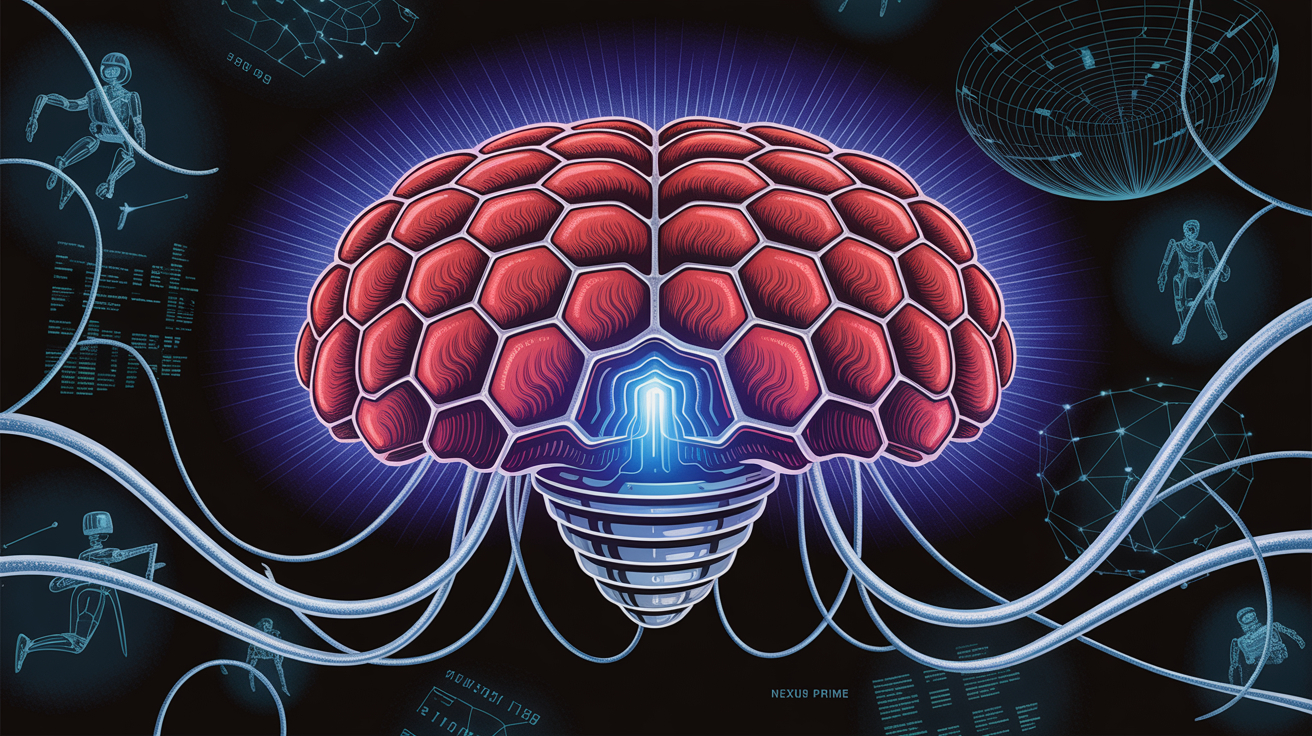
Good morning, robotics enthusiasts. Amazon-backed robotics startup Skild just dropped a universal robot brain designed to turn every machine into part of a global learning hive.
Skild says the model works on any type of robot, and as one robot learns, the knowledge syncs across the global fleet in real time. It’s not just machine learning anymore; it’s collective machine intelligence.
In today’s robotics rundown:
Skild’s general-purpose robot brain
ByteDance unveils home robot model
Mushroom-picking bots raise $29M
Human-free wind farm run by robots
Quick hits on other robotics news
LATEST DEVELOPMENTS
SKILD AI
🧠 Skild’s general-purpose robot brain

Image source: Skild AI/YouTube
The Rundown: Skild AI, a robotics startup backed by Amazon and Softbank, just unveiled a universal “Skild Brain” that unifies robots of every kind into a single learning network — so every robot’s real-world experience fuels instant collective intelligence.
The details:
Skild Brain is designed to power a wide range of machines, from warehouse humanoids to surgical robot arms, and enable real-time collective learning.
It’s pre-trained at scale with simulated environments, human-action videos, and further refined by real-world data gathered from every robot it operates.
The core system is built on a distributed neural infrastructure, creating a kind of “hive mind” for robots, and is made for continuous updates and scalability.
Demos show Skild Brain enabling robots to climb stairs, maintain balance after being pushed, pick up objects in cluttered spaces, and load dishwashers.
Why it matters: Skild stands out by turning every deployed robot into a contributor to a global learning loop, something neither Genesis nor Physical Intelligence has yet operationalized at scale. This collective “shared brain” approach could accelerate robotic intelligence dramatically, breaking through the traditional data bottlenecks.
TOGETHER WITH SANA
💡 The most powerful way to bring AI to your company
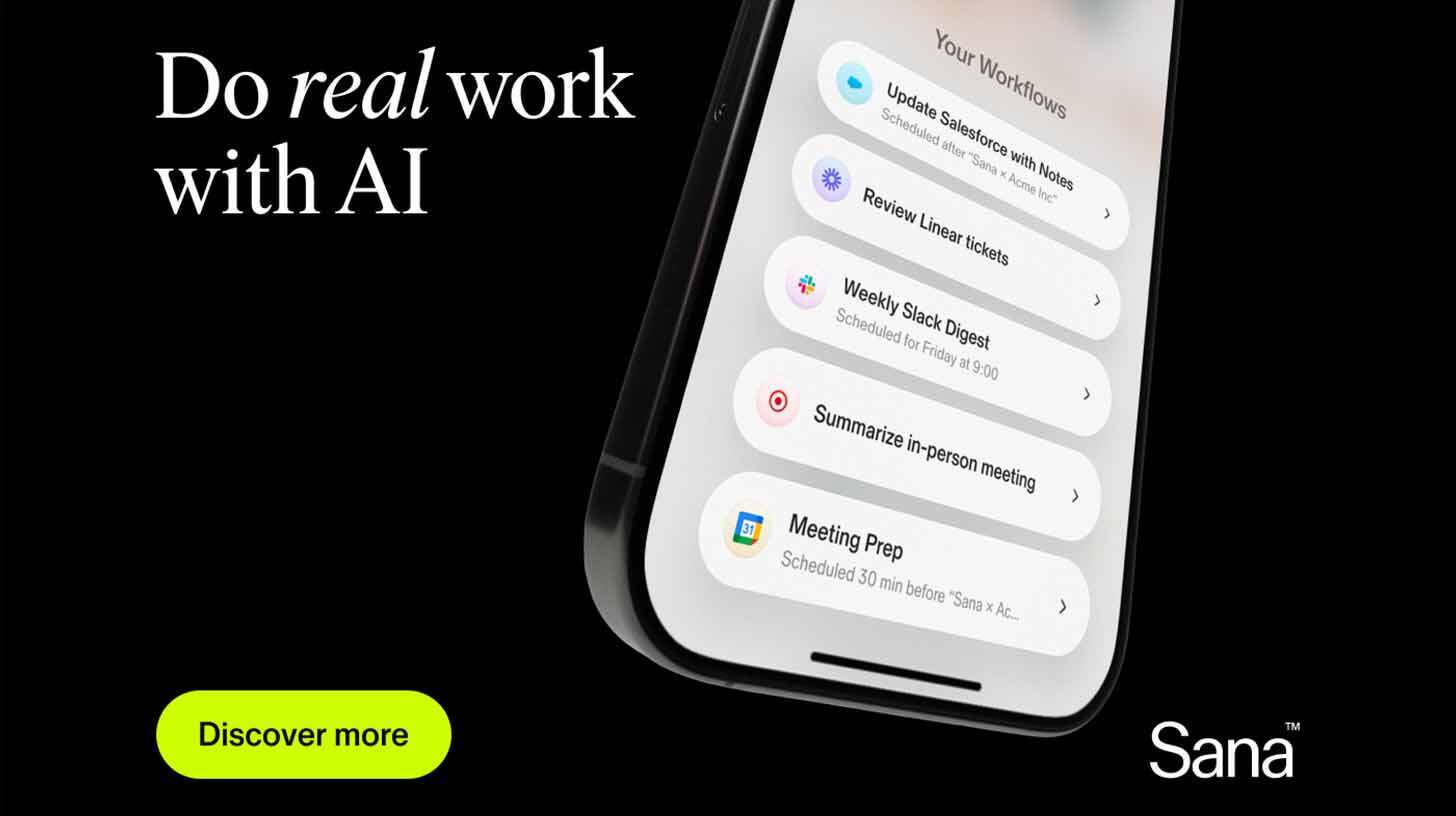
The Rundown: Other AIs search and answer. Sana Agents delivers real, finished work — allowing you to draft reports, build presentations, analyze data, and handle emails all from one place.
With Sana Agents, you can:
Build specialized agents for every department in one intuitive interface
Connect to 100+ platforms — including Slack, Teams, and your CRM
Generate, edit, and export content in seconds
Ensure enterprise-grade security with zero data leakage
Slash operational overhead by 10-20X with Sana Agents today.
BYTEDANCE
🧹 ByteDance unveils home robot model
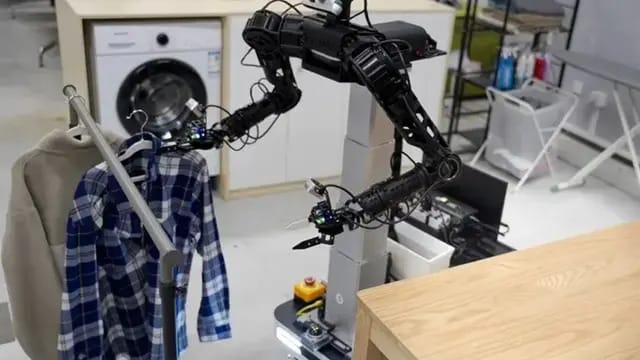
Image source: ByteDance
The Rundown: TikTok parent ByteDance is getting into the domestic robotics game with a new household system that puts AI-powered bots to work on everyday chores such as folding laundry and clearing tables.
The details:
At the core, the household system uses ByteDance’s GR-3 model, a vision-language-action system enabling robots to perform complex tasks.
In tests, ByteDance’s GR-3-powered ByteMini robot fluidly hung shirts, sorted plates, and cleaned messy dining tables, all from natural language prompts.
The system can also improvise, distinguish objects by size, and handle entirely new kinds of items, even when those items weren’t seen during training.
The robots learn by combining imitation learning with reinforcement learning from trial and error, using huge datasets to boost their dexterity and reliability.
Why it matters: ByteDance has churned out over 1K autonomous industrial robots in two years, but GR-3 marks its first foray into the domestic market. Launched under its AI-focused Seed division, the move comes amid U.S. scrutiny of TikTok. So, entering the domestic robotics space isn’t just innovation, it’s strategy.
4AG ROBOTICS
🍄 Mushroom-picking bots raise $29M
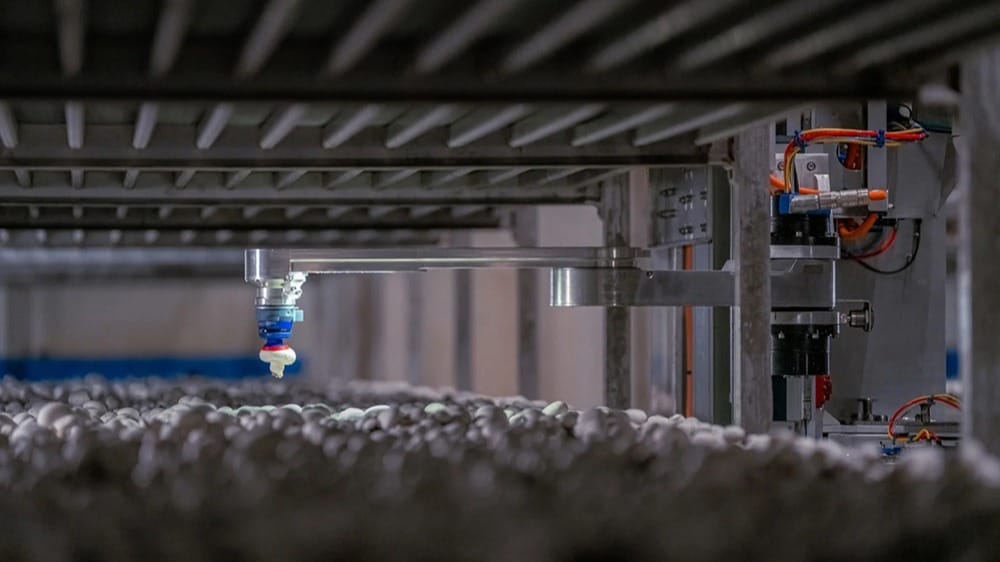
Image source: 4AG Robotics
The Rundown: A tech revolution is quietly sprouting in the mushroom houses of British Columbia. 4AG Robotics, based in the rural city of Salmon Arm, just raised $29M to accelerate the global rollout of its autonomous mushroom-harvesting robots.
The details:
4AG’s robots use advanced computer vision to spot mushrooms at the optimal stage for picking, then deploy “suction grippers” to harvest and package them.
This tech is aimed at challenges facing mushroom farmers: harvesting is physically demanding and accounts for up to half of total production costs.
Mushrooms are tricky to pick, given that they are delicate and can bruise easily, but 4AG’s systems are designed to work without damaging the crop.
The system can also be retrofitted into existing infrastructure, which 4AG says gives small growers a way to boost yields and cut labor costs.
Why it matters: 4AG has transformed from persuading skeptical farmers to trial its invention into a manufacturer with deposits for over 40 additional robots and $8M in sales. With 70 employees and fresh capital, the startup is betting that AI-powered robots can outpick, outpace, and outsmart the old ways of handling fungi.
ROBOTICS INNOVATIONS
💨 Human-free wind farm run by robots

Image source: Goldwind
The Rundown: At the windswept Ningxia Tongli Third Wind Farm in China, the era of the unmanned wind farm has arrived. The 70MW facility runs entirely by robot dogs patrolling the perimeter, with no human setting foot on site in almost a year.
The details:
DEEP Robotics’ X30 dogs patrol the facility, conducting visual, thermal, and acoustic inspections, detecting any faults or anomalies.
The site employs nearly 300 smart cameras, fixed sensors, autonomous robots, and inspection drones as part of an interconnected monitoring system.
The digital operations network covers over 5K designated inspection points, automating routine checks, on-the-spot diagnostics, and minor interventions.
Drones also supplement ground inspections by providing aerial views of blades, towers, and hard-to-access infrastructure.
Why it matters: Here, robot dogs and drones aren’t just watching but predicting failures, triggering repairs, and keeping wind farms running before anything breaks. This pilot project, which has been running human-free since last September, is possibly the start of autonomous clean energy, built for some of the harshest places on Earth.
QUICK HITS
📰 Everything else in robotics today
Figure released a video on X showing its Figure 02 humanoid completing a full cycle of laundry without human intervention at CEO Brett Adcock’s home.
Video-generating AI companies Luma and Runway are reportedly now looking at robotics and self-driving car companies as the next big revenue driver.
Shanghai Electric unveiled its first self-developed industrial humanoid, SUYUAN, featuring advanced dexterity and on-device AI.
JP Morgan reports that U.S. capital investment in robotics startups is on the rise, up from $7B in 2020 to more than $12B in 2024.
New research shows a novel method for flying small drones through air ducts as narrow as 35 cm, paving the way for robotic inspection in extremely confined spaces.
Dnsys launched a Kickstarter campaign for a knee exoskeleton that it says offers a 50% boost in the wearer’s leg strength while reducing pressure by 200%.
Adam, a keytar-playing humanoid developed by PNDbotics, recently captured attention by performing live at China’s VOYAGEX Music Festival with Hu Yutong’s band.
Nextracker, the makers of intelligent solar trackers that optimize the positioning of solar panels to follow the sun, reported a revenue of $864M in the last quarter.
COMMUNITY
🎥 Join our next live workshop
Join our next workshop this Friday, August 1, at 4 PM EST with Dr. Alvaro Cintas, The Rundown’s AI professor. By the end of this workshop, you’ll have practical strategies to get the AI to do exactly what you want.
RSVP here. Not a member? Join The Rundown University on a 14-day free trial.
See you soon,
Rowan, Jennifer, and Joey—The Rundown’s editorial team
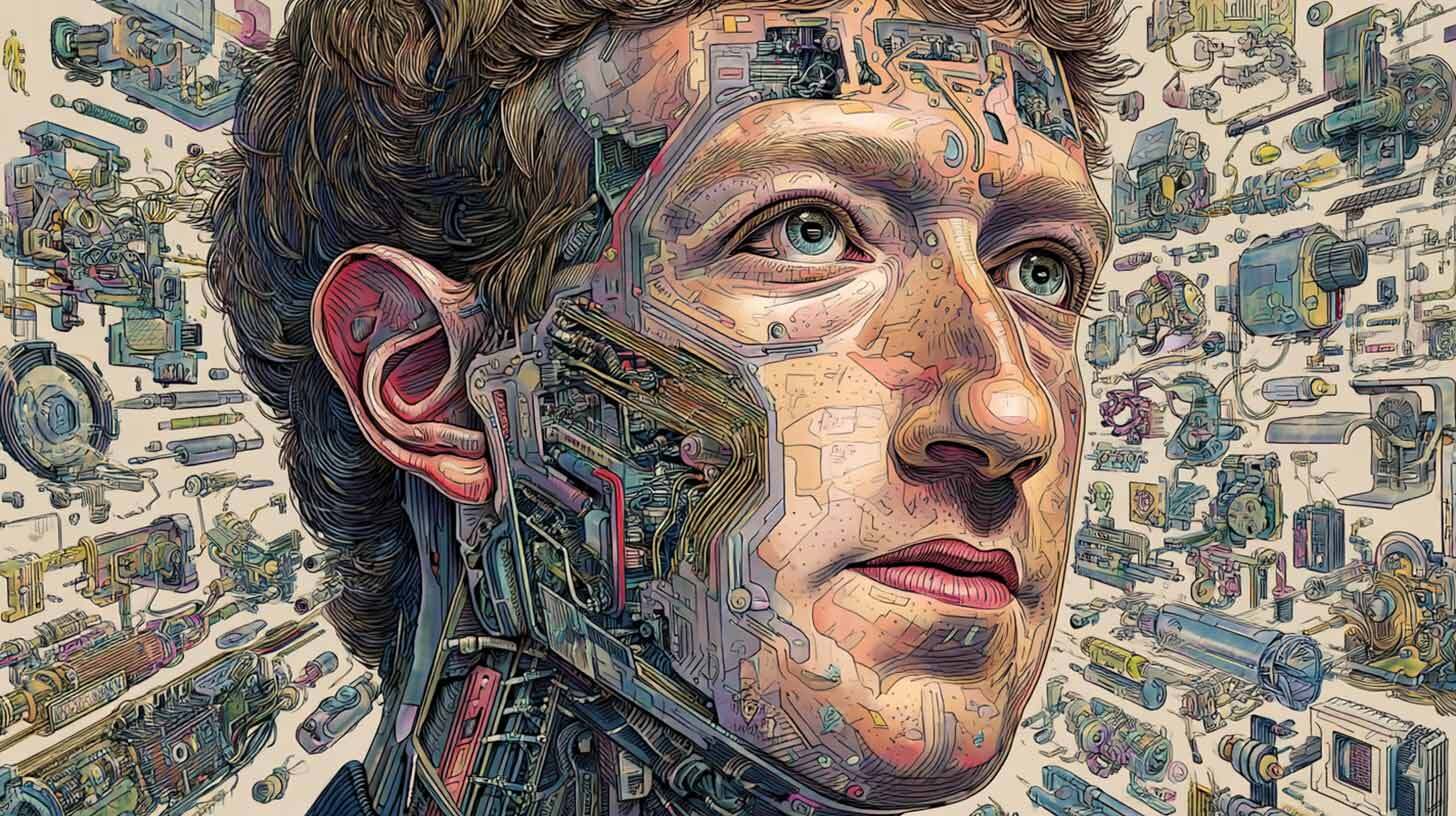
Mark Zuckerberg's 'personal superintelligence' vision
Read Online | Sign Up | Advertise

Good morning, AI enthusiasts. The race for AI superintelligence just got personal — literally.
Mark Zuckerberg's recruitment drive has been summer's biggest AI story, but the Meta CEO just shared his endgame: bringing "personal superintelligence" to everyone through an AI future that empowers people's dreams, not just business operations.
In today’s AI rundown:
Zuckerberg’s ‘personal superintelligence’ vision
'Netflix of AI' launches with Amazon backing
Create professional marketing videos using AI agents
Google’s AI ‘virtual satellite’ for planet mapping
4 new AI tools & 4 job opportunities
LATEST DEVELOPMENTS
META
🧠 Zuckerberg’s ‘personal superintelligence’ vision
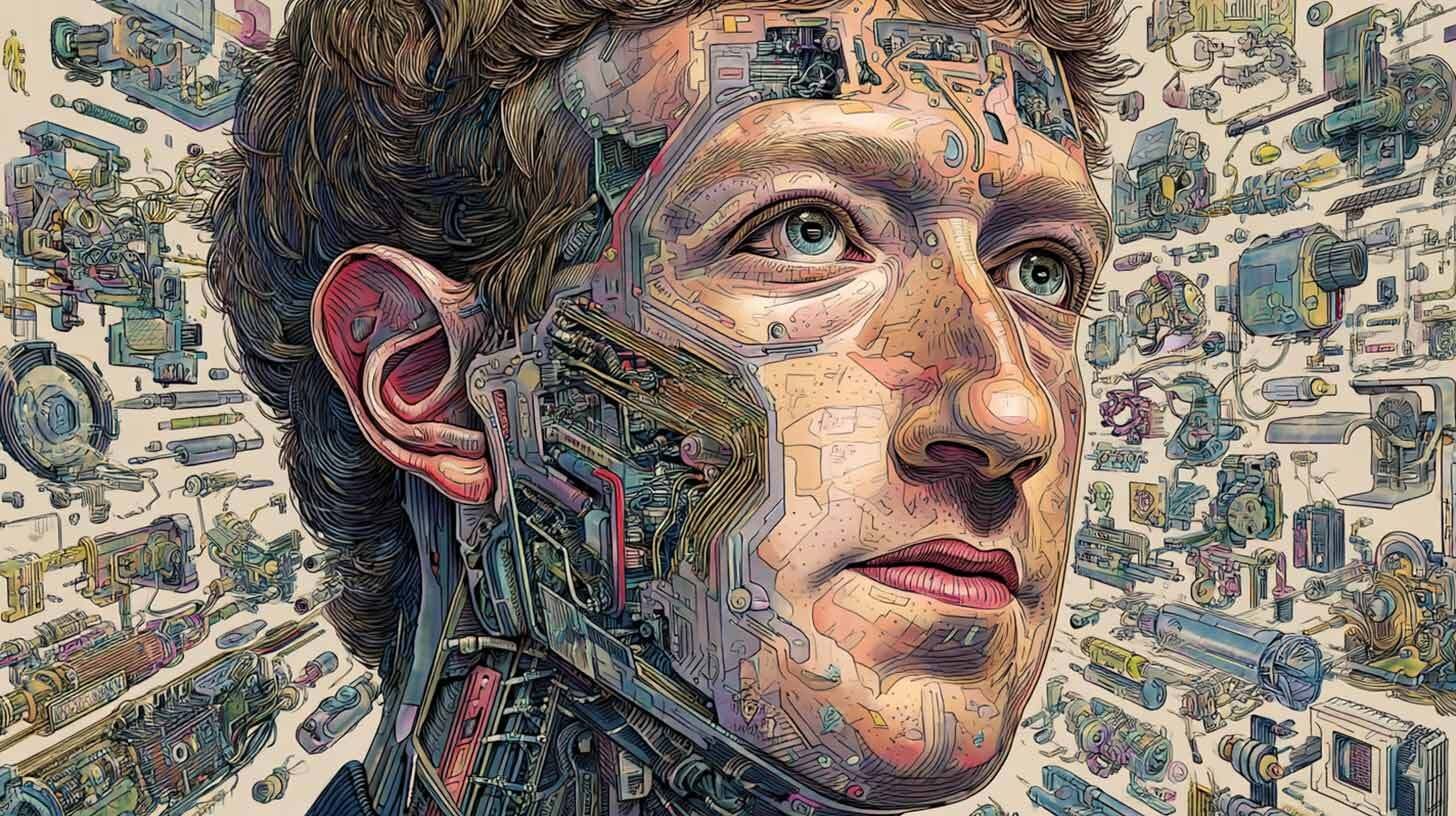
Image source: Midjourney / The Rundown
The Rundown: Meta CEO Mark Zuckerberg said the company’s new AI vision is to “bring personal superintelligence to everyone,” revealing “glimpses” of AI improving itself while hinting that Meta may not open its advanced models due to safety risks.
The details:
Zuckerberg said Meta plans to develop AI assistants that “empower individual goals” rather than focusing on automating all work like industry rivals.
He positioned “personal devices like glasses” as primary computing devices of the future, which offer a multimodal context to provide deep AI experiences.
The letter also notes that Meta may be “careful” about what it opens due to superintelligence safety concerns, a change from its previous strategy.
The open-source commentary comes amid reports that Meta paused work on its open “Behemoth” model to focus resources on closed models.
Why it matters: Zuck’s superintelligence lab with all-out poaching has been the headline of the summer, but this is the most info we’ve gotten yet on a “personal” vision that fits well into Meta’s smart glasses success. The closed-source shift will be an interesting one, especially as China pushes forward with near-frontier open models.
TOGETHER WITH SANA
💡 The most powerful way to bring AI to your company
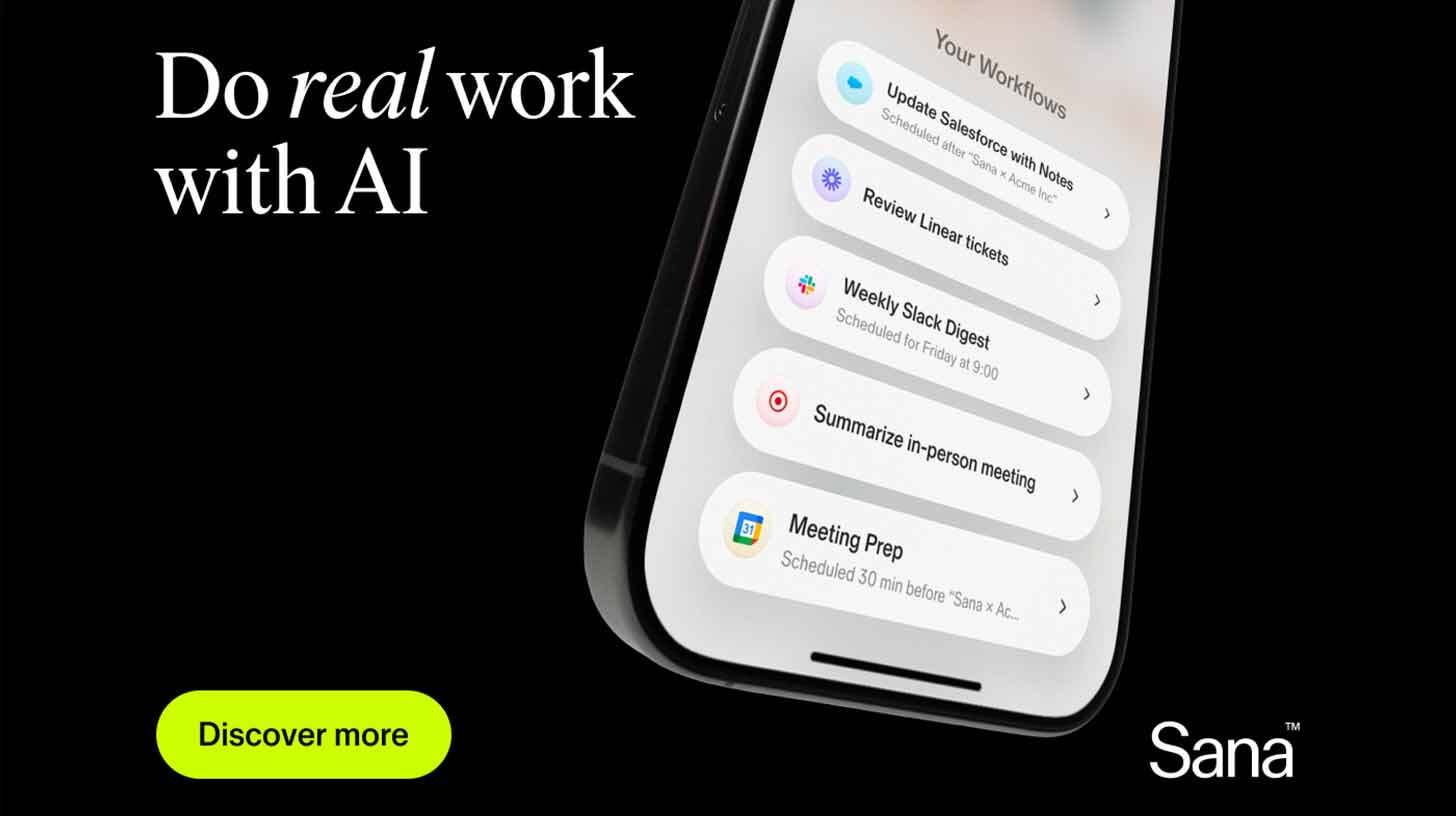
The Rundown: Other AIs search and answer. Sana Agents delivers real, finished work — allowing you to draft reports, build presentations, analyze data, and handle emails all from one place.
With Sana Agents, you can:
Build specialized agents for every department in one intuitive interface
Connect to 100+ platforms—including Slack, Teams, and your CRM
Generate, edit, and export content in seconds
Ensure enterprise-grade security with zero data leakage
Slash operational overhead by 10-20X with Sana Agents today.
FABLE & AMAZON
🎬 'Netflix of AI’ launches with Amazon backing

Image source: Fable
The Rundown: Amazon just invested an undisclosed amount in Fable's “Netflix of AI” Showrunner platform, which just went live in Alpha and enables users to generate personalized, playable animated TV episodes through text prompts.
The details:
Showrunner launches publicly this week with two original show offerings where users can steer narratives and create episodes within established worlds.
Users can also upload themselves as characters, with Fable saying the future of animation is “remixable, multiplayer, personalized, and interactive” content.
The platform will be free, with an eventual monthly fee for generation credits — with plans to enable revenue sharing for creators when their content is remixed.
Showrunner initially went viral in 2023 after releasing an experiment of personalized (but unauthorized) South Park episodes.
Why it matters: Showrunner is launching at a prickly time for AI in the entertainment industry, but may be a first mover in creating a new style of two-way, personalized content experiences. If it takes off, traditional IPs will need to decide between fighting user-generated content or monetizing the new remix culture.
AI TRAINING
🎬 Create professional marketing videos using AI agents
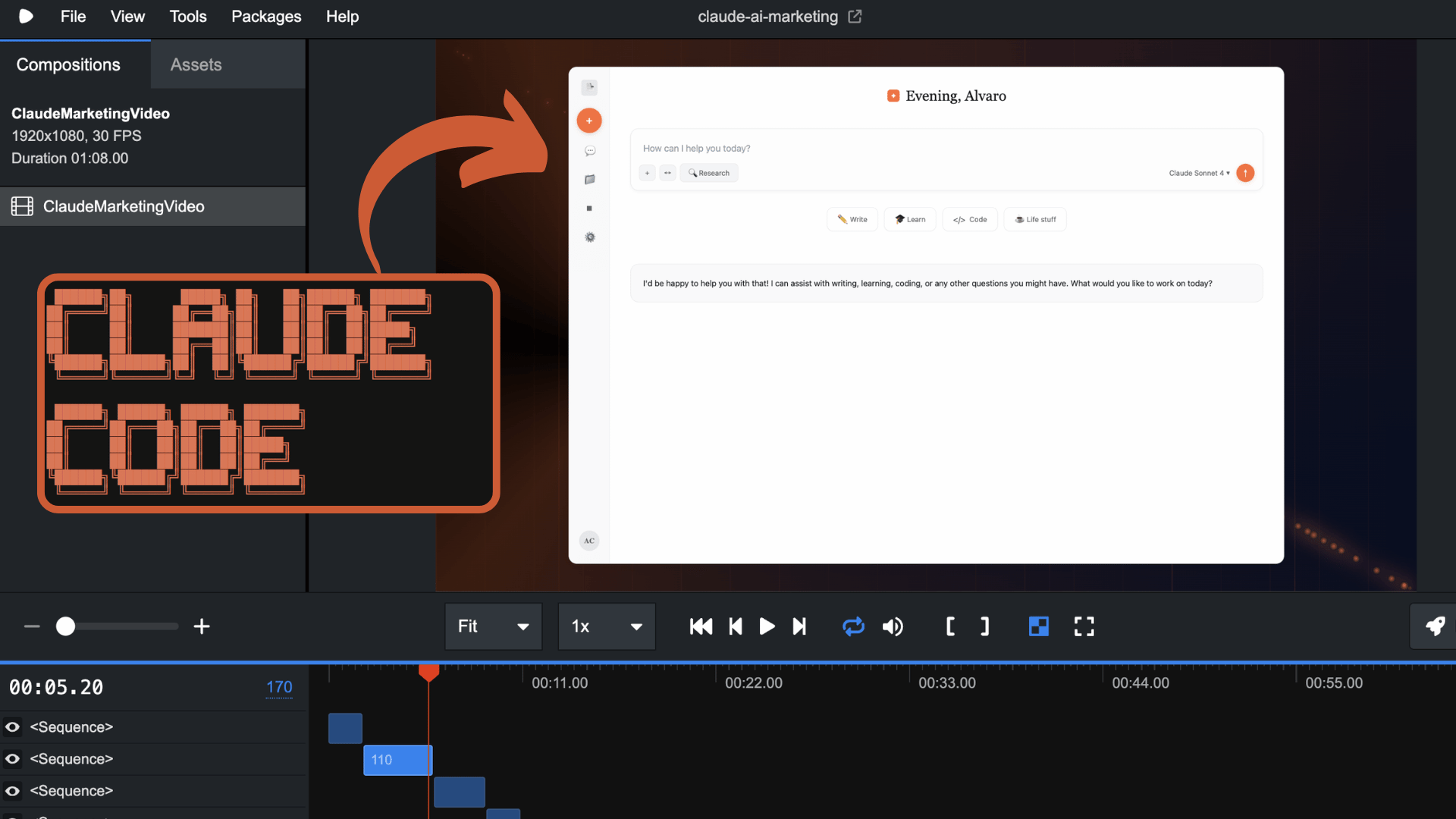
The Rundown: In this tutorial, you will learn how to use Claude Code to automatically build complete video projects using frameworks like Remotion, turning simple prompts into marketing videos with animations and professional effects.
Step-by-step:
Type in your terminal: npm install -g @anthropic-ai/claude-code
Navigate to your project folder and type claude to activate the AI agent
Prompt: “Create a premium marketing video for [your company] using Remotion”
Refine with follow-ups and run npm run start to preview your video locally
Pro Tip: Add your own images, logos, and UI screenshots to the project folder before prompting, and the AI will incorporate them into professional video sequences.
PRESENTED BY TRIPLE WHALE
🤑 These AI plays print money
The Rundown: The first (and only) intelligence agents for your entire brand, Triple Whale’s Moby Agents save you hours of manual analysis, help catch issues before they hurt revenue, and reveal insights no human could spot.
Download The Ultimate AI Agents Playbook for Ecommerce Brands and learn to:
Instantly analyze performance across platforms — all in one view
Flag underperforming ad creatives and get relevant recommendations to boost ROAS
Uncover the purchase paths that drive the highest LTV
AI RESEARCH
🌎 Google’s AI ‘virtual satellite’ for planet mapping
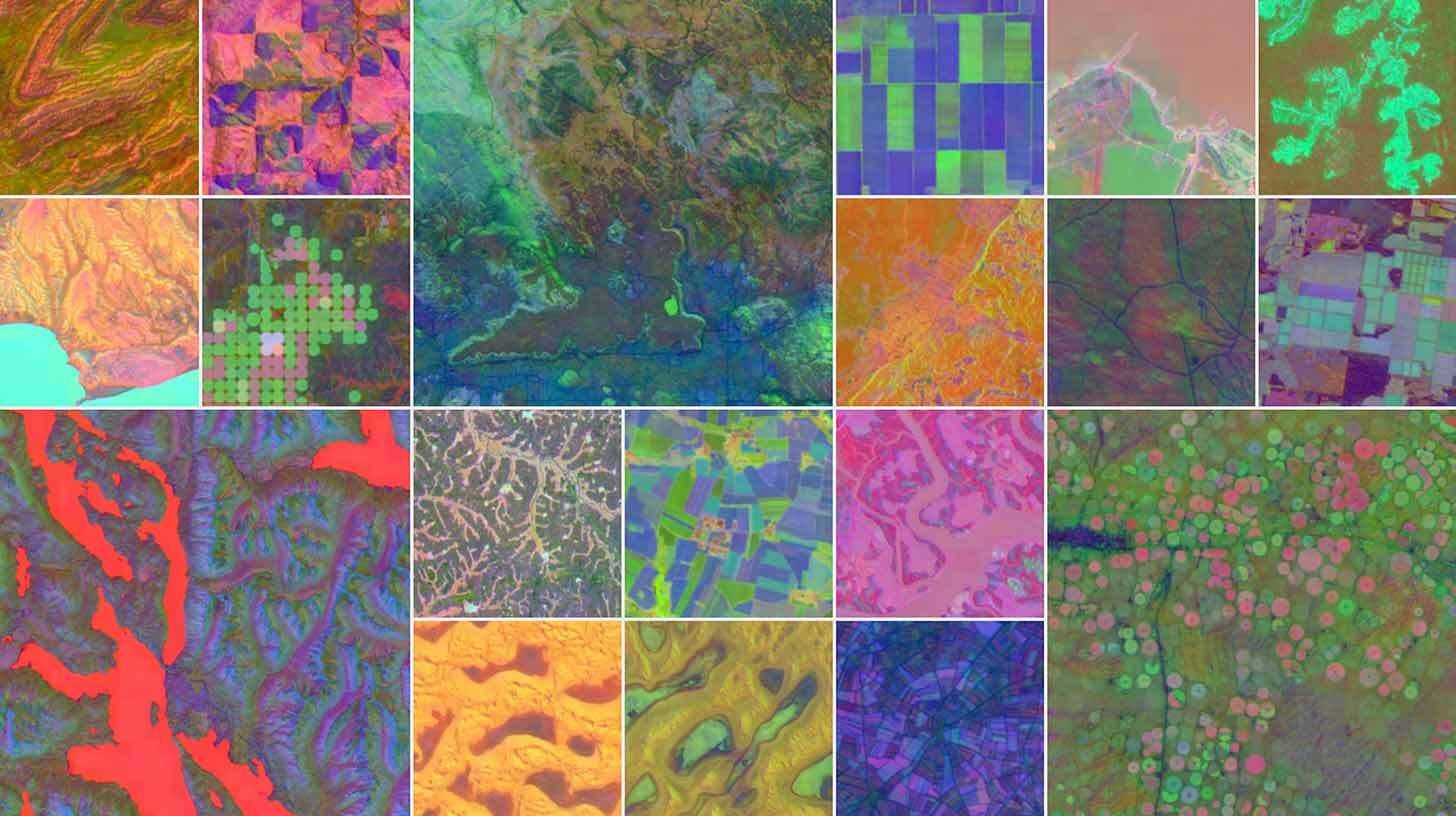
Image source: Google DeepMind
The Rundown: Google DeepMind just introduced AlphaEarth Foundations, an AI model that acts like a "virtual satellite" by integrating massive amounts of Earth observation data to create detailed maps of the planet’s changing landscape.
The details:
AlphaEarth uses data from public sources like optical images, radar, 3D laser mapping, and more to create on-demand maps of land and coastal waters.
The model outperforms similar AI systems in accuracy, speed, and efficiency, helping track events like deforestation or ecosystem changes in near real-time.
Google tested the dataset with over 50 organizations and now provides yearly updates through Earth Engine for tracking long-term environmental changes.
Why it matters: Satellites have been capturing tons of data for years, but connecting different sources and translating them into useful insights has been a time-consuming process. AI bridges that gap, transforming scattered satellite feeds, radar scans, and climate readings into unified maps that reveal patterns we couldn’t spot before.
QUICK HITS
🛠️ Trending AI Tools
📸 Character - Ideogram’s model for placing specific characters into scenes
📚 Study Mode - ChatGPT’s new feature for guided learning
🤖 Action Agent - Writer's enterprise autonomous AI that works on your behalf
📓 NotebookLM - New video overviews generate narrated slides on any topic
📰 Everything else in AI today
Anthropic is reportedly set to raise $5B in a new funding round led by Iconiq Capital at a $170B valuation — nearly tripling its previous valuation from March.
OpenAI announced Stargate Norway, its first data center initiative in Europe, set to be developed through a joint partnership between Aker and Nscale.
YouTube is rolling out new AI content moderation tools that will estimate a user’s age based on their viewing history and other factors, aiming to help ID and protect minors.
Neo AI debuted NEO, an “Agentic Machine Learning Engineer” powered by 11 agents that it says sets SOTA marks on ML-Bench and Kaggle competition tests.
Amazon is reportedly paying between $20-25M a year to license content from the New York Times for AI training and use within its AI platforms.
A new study from The Associated Press found that the highest usage of AI is for searching for information, with young adults also using the tool for brainstorming.
COMMUNITY
🎥 Join our next live workshop
Join our next workshop this Friday, August 1, at 4 PM EST with Dr. Alvaro Cintas, The Rundown’s AI professor. By the end of this workshop, you’ll have practical strategies to get the AI to do exactly what you want.
RSVP here. Not a member? Join The Rundown University on a 14-day free trial.
See you soon,
Rowan, Joey, Zach, Alvaro, and Jason—The Rundown’s editorial team
Stanford's virtual AI lab speeds discovery
Read Online | Sign Up | Advertise

Good morning, AI enthusiasts. AI is already being integrated into laboratories across scientific fields… But what happens when a team of agents runs its own lab entirely?
Stanford’s virtual AI lab is doing just that, with specialized AI scientists running meetings, designing experiments, and producing lab-ready results in days instead of months — speeding us into the era of autonomous, 24/7 scientific discovery.
In today’s AI rundown:
Stanford’s AI-powered virtual scientists
Meta targets Mira Murati's startup with massive offers
Build apps with leading open-source AI
ChatGPT’s new Study Mode for deeper learning
4 new AI tools & 4 job opportunities
LATEST DEVELOPMENTS
AI & SCIENCE
👨🔬 Stanford’s AI-powered virtual scientists
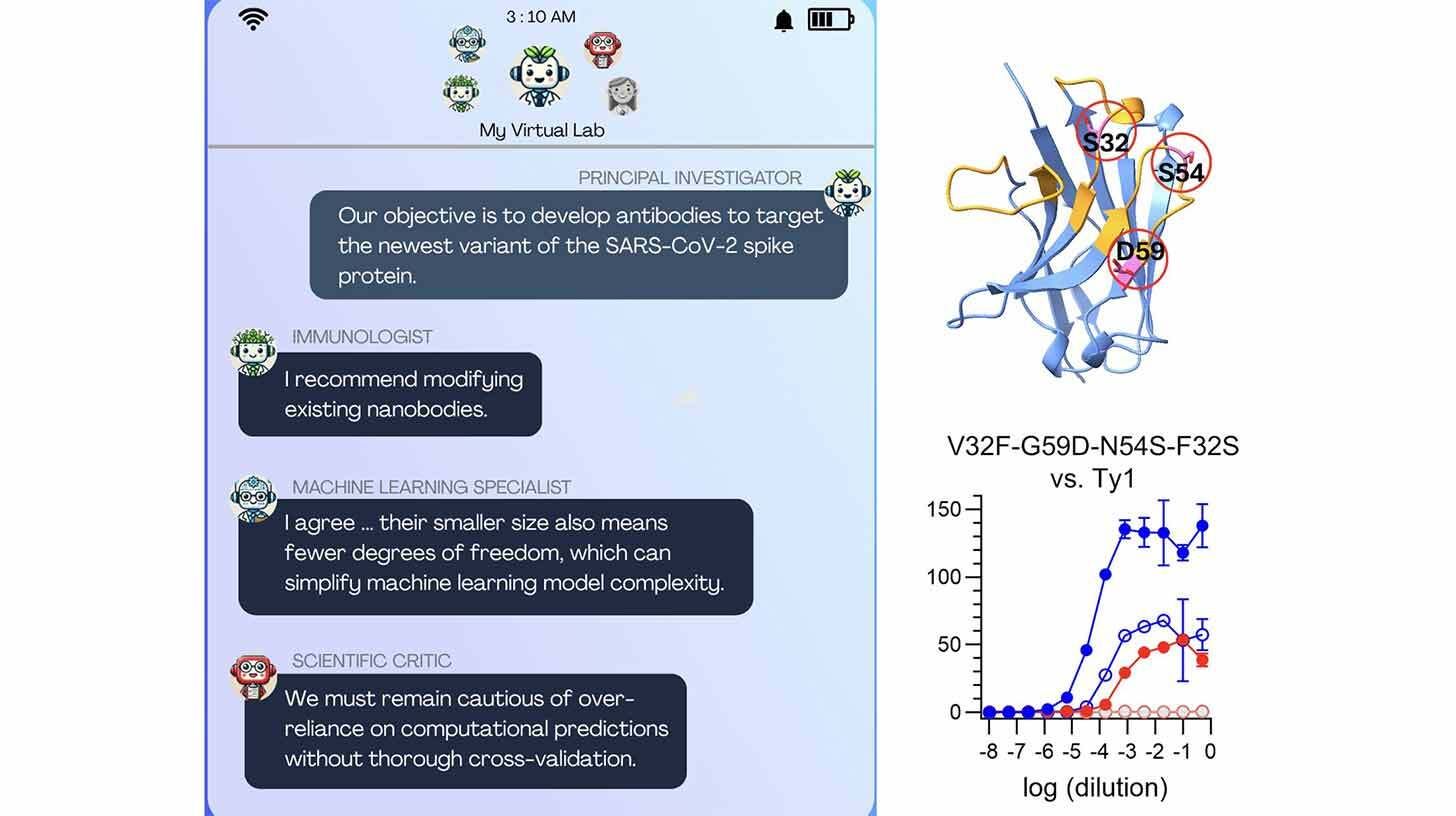
Image source: James Zou (@james_y_zou on X)
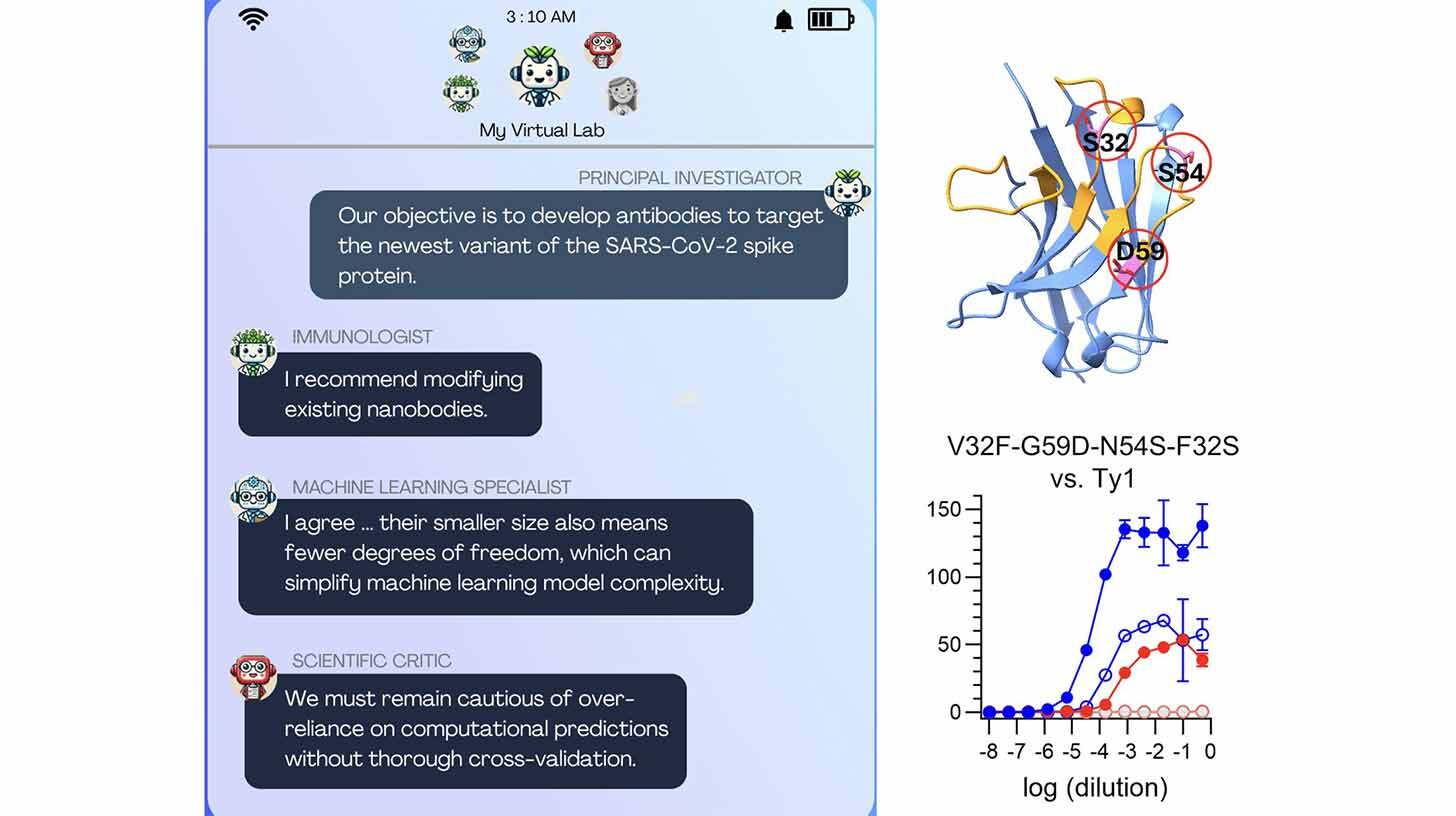
The Rundown: Researchers from Stanford and the Chan Zuckerberg Biohub just developed a “virtual lab” of AI scientists that design, debate, and test biomedical discoveries — already generating COVID-19 nanobody candidates in days.
The details:
The lab features an “AI principal investigator” that assembles specialized agents that conduct meetings lasting seconds instead of hours.
Human researchers needed to intervene just 1% of the time, allowing AI agents to request tools like AlphaFold to aid in research strategy independently.
The AI team produced 92 nanobody designs, with two successfully binding to recent SARS-CoV-2 variants when tested in physical laboratories.
The AI lab also releases full transcripts of the AI team’s reasoning, letting human researchers review, steer, or validate the process as needed.
Why it matters: The arrival of teams of AI research teams means science is no longer capped by human limits on time, energy, resources, and expertise. With agentic capabilities only continuing to scale, the pace of discovery is about to completely change, along with the traditional notions of scientific research.
TOGETHER WITH HUBSPOT
🧠 100+ ChatGPT prompts to revolutionize your workflow

The Rundown: HubSpot’s free, comprehensive “How to Use ChatGPT at Work” guide provides 100+ ready-to-use prompts to help professionals boost efficiency and adopt AI-driven workflows.
Inside, you’ll find:
A quick crash course to master ChatGPT in under 30 minutes
Practical industry use cases to spark real-world inspiration
100+ prompts to streamline tasks and accelerate productivity
Expert tips to tackle common AI roadblocks with confidence
Get your free copy and join 10,000+ professionals leveling up with AI.
META & THINKING MACHINES LAB
💰 Meta targets Mira Murati's startup with massive offers

Image source: Ideogram / The Rundown
The Rundown: Meta has approached over a dozen employees at ex-OpenAI CTO Mira Murati's Thinking Machines Lab, according to Wired, offering massive compensation packages (including one exceeding $1B) to join its superintelligence team.
The details:
Zuckerberg’s outreach reportedly includes personally messaging recruits via WhatsApp, followed by interviews with him and other executives.
Compensation packages ranged from $200-500M over four years, with first-year guarantees between $50-100M for some, and one offer over $1B.
The report also detailed that Meta CTO Andrew Bosworth’s pitch has centered on commoditizing AI with open source models to undercut rivals like OpenAI.
Despite the offers, not a single person from the company has accepted, with WIRED reporting industry skepticism over MSL’s strategy and roadmap.
Why it matters: We thought the naming of Shengjia Zhao as chief scientist might be a final bow on the MSL team, but Zuck clearly isn’t stopping in his pursuit of top AI talent at all costs. TML’s staff decline is both a potential testament to their incoming first product and a window into how the industry is viewing Meta’s new venture.
AI TRAINING
💻 Build apps with leading open-source AI
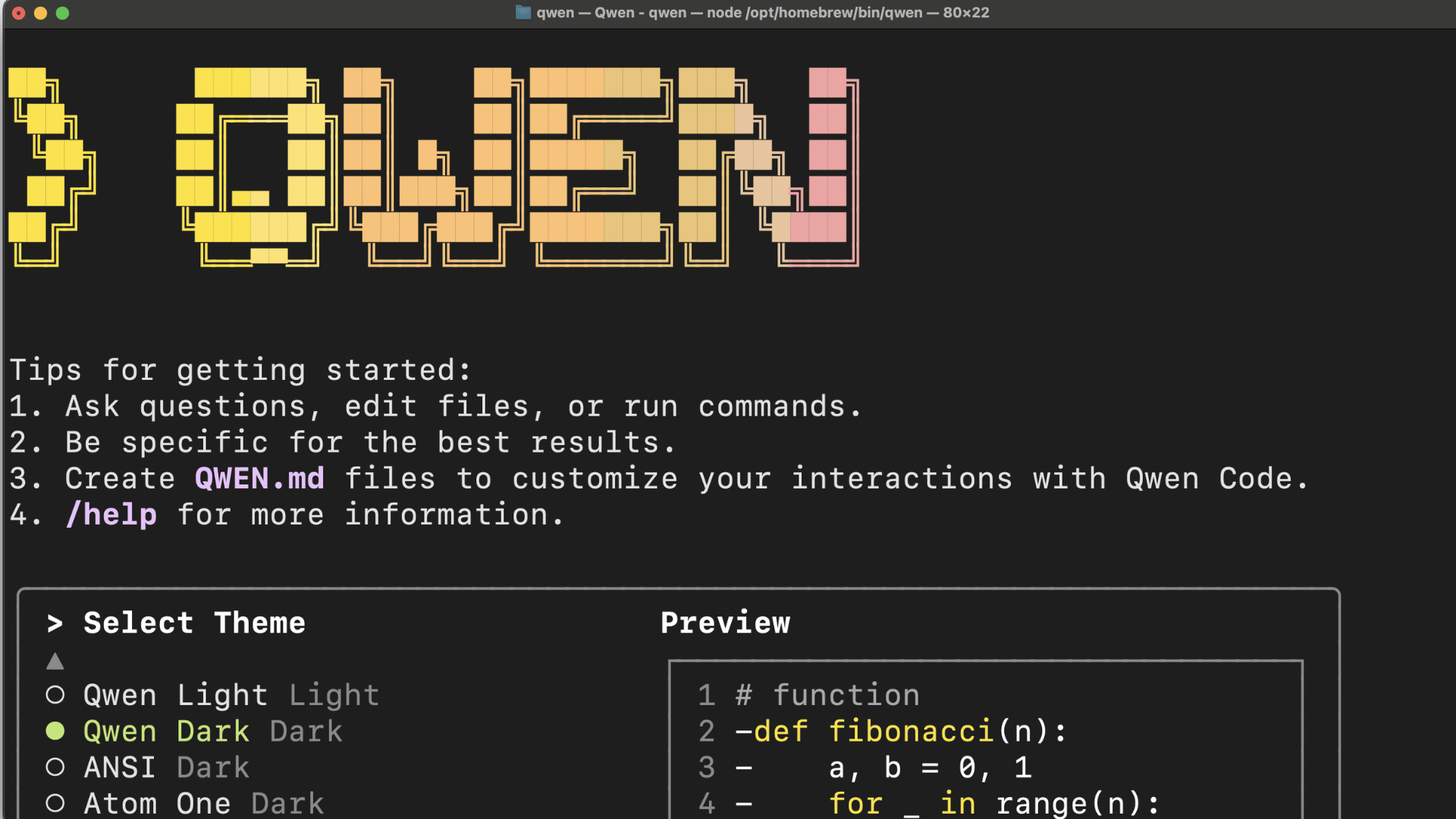
The Rundown: In this tutorial, you’ll learn how to use Alibaba’s new Qwen 3 Coder, a competitive coding model that matches premium offerings — featuring both browser-based chat and CLI access for developers.
Step-by-step:
Visit Qwen Chat, create a free account, and select Qwen3-Coder as your model
Test with simple prompts like “Create a Twitter clone in one file” and use the Preview button to see results
Refine with follow-up prompts: “Add images and make it more complete” to expand functionality
Install CLI with npm install -g qwen-code/qwen-code, then type qwen in your terminal for command-line access
Pro tip: Qwen gives you 1M free tokens and performance on par with premium tools—plus, it’s fully open-source. Perfect for devs who want power without the paywall.
PRESENTED BY GOOGLE CLOUD
📶 Scale your AI startup with Google Cloud

The Rundown: Google for Startups Cloud Program connects AI innovators with cutting-edge technical applications to fuel your product’s journey from early development to massive scale, leveraging infrastructure built to handle your rapid growth.
Inside the program, you’ll gain:
Up to $350K in cloud credits to scale faster
Access to Google’s core AI tools like Vertex AI and Gemini
Dedicated expert guidance for customized support and solutions
Start building with Google Cloud — apply now.
OPENAI
📚 ChatGPT’s Study Mode for deeper learning
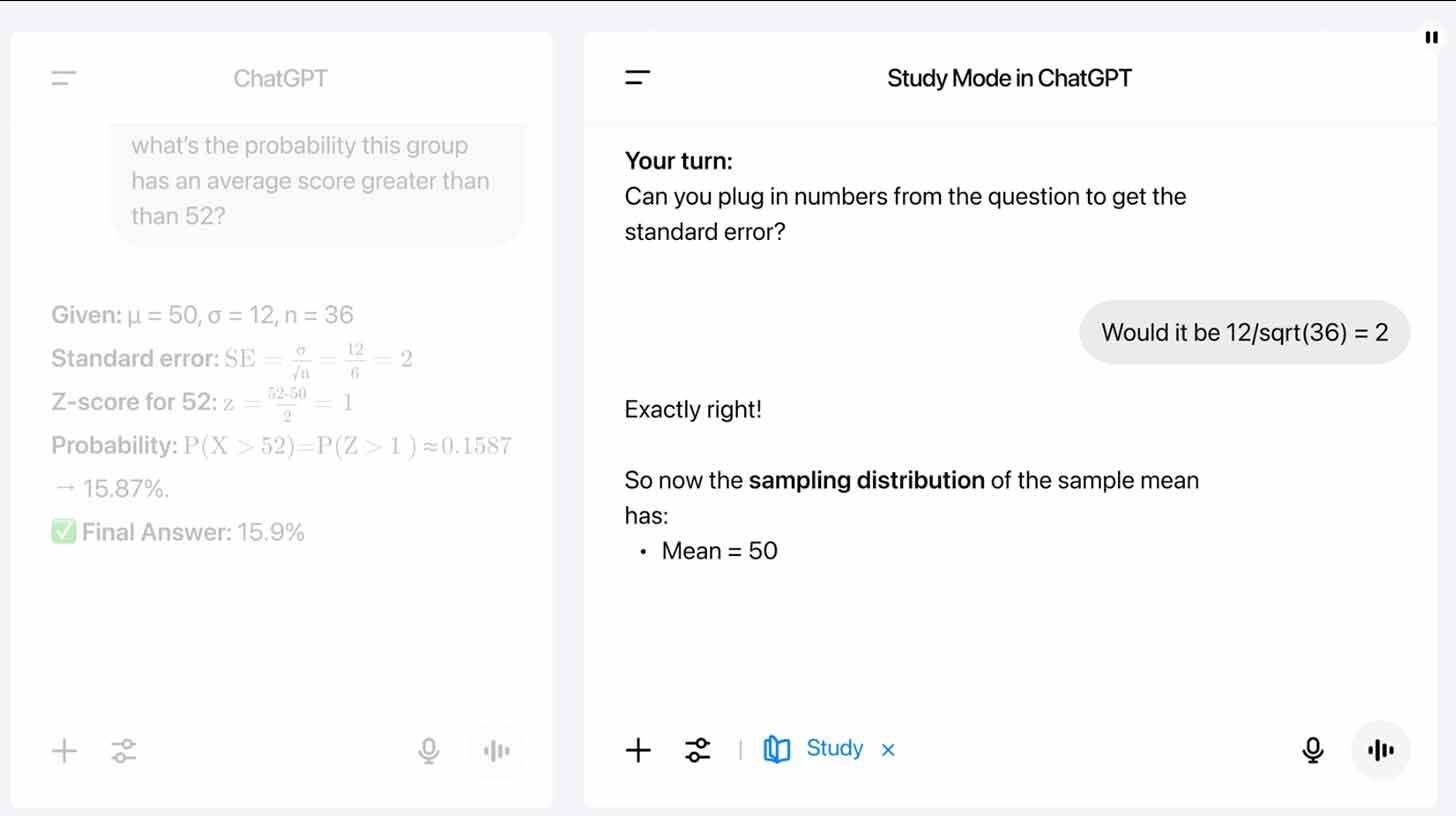
Image source: OpenAI
The Rundown: OpenAI just rolled out Study Mode for ChatGPT, a new feature designed to guide students through problems step-by-step, using Socratic questions and feedback instead of just providing solutions.
The details:
Study Mode uses custom instructions created with teaching experts to ask guiding questions and provide interactive learning instead of direct answers.
The AI guides learners with interactive prompts, hints, and knowledge checks to encourage active participation and deeper understanding.
ChatGPT will actively resist requests for quick solutions in this mode, instead redirecting students back to the learning process.
The rollout begins immediately for Free, Plus, Pro, and Team users, with educational institutions receiving access within the next few weeks.
Why it matters: AI has shown huge promise in offering personalized learning, but many teachers would also say it’s upended the educational system. Tools like Study Mode offer the potential for AI to be an educational partner instead of a shortcut, but right now, their success might largely depend on student buy-in.
QUICK HITS
🛠️ Trending AI Tools
🎥 Wan2.2 - Alibaba’s new open MoE model for AI video generation
🤖 GLM-4.5 - Z.ai’s new SOTA open-source agentic AI family
📊 Shortcut AI - AI agent for Excel spreadsheets
🖥️ Copilot Mode - New agentic capabilities for Microsoft Edge
💼 AI Job Opportunities
⚙️ The Rundown - Growth and Content Strategist
💰 Meta - AI Research Scientist, Monetization AI
🧩 UiPath - Senior Sales Engineer
🖥️ Palantir Technologies - Systems Engineer, Microsoft 365
📰 Everything else in AI today
Meta’s superintelligence team poached AI researcher Bowen Zhang from Apple’s foundation models group, marking the fourth departure in the last month.
Google’s NotebookLM is rolling out Video Overviews, giving users the ability to generate narrated slides on any topic or document.
Microsoft is reportedly nearing a deal to retain access to OpenAI’s tech even after the company’s AGI milestone, a current point of contention in terms of the partnership.
xAI opened the waitlist for its upcoming “Imagine” image and video generation feature, which will reportedly include audio capabilities similar to Google’s Veo 3.
Adobe unveiled new AI features for editing in Photoshop, including Harmonize for realistic blending, Generative Upscale, and more.
Ideogram released Character, a character consistency model allowing users to place a specific person into existing scenes and new outputs from a single reference photo.
Writer launched Action Agent, an enterprise AI agent that executes tasks and uses tools in its own environment, beating Manus and OAI Deep Research on benchmarks.
COMMUNITY
🎥 Join our next live workshop
Join our next workshop this Friday, August 1, at 4 PM EST with Dr. Alvaro Cintas, The Rundown’s AI professor. By the end of this workshop, you’ll have practical strategies to get the AI to do exactly what you want.
RSVP here. Not a member? Join The Rundown University on a 14-day free trial.
See you soon,
Rowan, Joey, Zach, Alvaro, and Jason—The Rundown’s editorial team

Tesla's $16.5B AI chip bet
Read Online | Sign Up | Advertise

Good morning, tech enthusiasts. Tesla just inked a massive $16.5B deal with Samsung to produce next-gen AI chips in Texas, destined for its EVs, robotaxis, and humanoids.
With Elon Musk reportedly in “full founder” mode, pushing for tighter control over the chipmaking process, will home-grown silicon give Tesla a lasting edge, or just stretch its resources too thin?
In today’s tech rundown:
Tesla signs $16.5B AI chip deal
Scientists create shelf-stable artificial blood
Tea dating app breach gets bigger
Alibaba unveils its own smart glasses
Quick hits on other major tech news
LATEST DEVELOPMENTS
TESLA/SAMSUNG
💰 Tesla signs $16.5B AI chip deal
Image source: Ideogram/The Rundown
The Rundown: Tesla just inked a $16.5B deal with Samsung for a state-of-the-art fab in Taylor, Texas, dedicated to exclusively producing Tesla’s next-gen AI6 processors to power its self-driving vehicles, Optimus robots, and AI.
The details:
The AI6 chips are being designed to unify hardware platforms, from robots to robotaxis, to support Tesla’s vision for vertically integrated AI infrastructure.
For Samsung, hit hard by client losses to TSMC and struggling with billions in foundry losses, the Tesla deal pushes them back in the lead pack.
Elon Musk has said he’ll personally walk the production lines to accelerate Samsung’s notoriously sluggish foundry.
He added that the $16.5B figure is just “the bare minimum” — the real output, and thus ambitions, are “likely to be several times higher.”
Why it matters: The deal is a huge boost for Samsung’s struggling foundry division and gives Tesla powerful logistical advantages by placing chip production close to its Texas operations. It also highlights how custom in-house silicon is becoming the next big thing, as the U.S. ramps up domestic chipmaking under the Chips and Science Act.
TOGETHER WITH GUIDDE
🎥 Create instant video guides with AI

The Rundown: Stop wasting time on repetitive explanations. Guidde’s AI helps you create stunning video guides in seconds, 11x faster.
Use Guidde to:
Auto-generate step-by-step video guides with visuals, voiceovers, and a CTA
Turn boring docs into visual masterpieces
Save hours with AI-powered automation
Share or embed your guide anywhere
BIOTECH INNOVATIONS
🩸 Scientists create shelf-stable artificial blood

Image source: Ideogram/The Rundown
The Rundown: Scientists at the University of Maryland have developed powdered artificial blood that can be easily stored, transported, and quickly mixed with water for use in life-saving emergencies.
The details:
The artificial blood has been developed as a powder that can be stored for long periods without refrigeration and reconstituted with sterile water on demand.
Medics, soldiers, or first responders can quickly mix and administer the blood substitute, enabling treatment for severe hemorrhage minutes after injury.
The product is designed to be universal, meaning it doesn’t require blood type matching, eliminating compatibility concerns.
Researchers are now working through animal studies, safety trials, and regulatory hurdles ahead of potential human testing.
Why it matters: So far, it’s been tested in a dedicated rabbit “ICU,” successfully using it to resuscitate animals in controlled tests. While human testing awaits, its compact form means it could be stored in ambulances, helicopters, or rural clinics — places where traditional blood kits usually can’t go, drastically reducing deaths from bleeding.
TEA
☕️ Tea dating app breach gets bigger
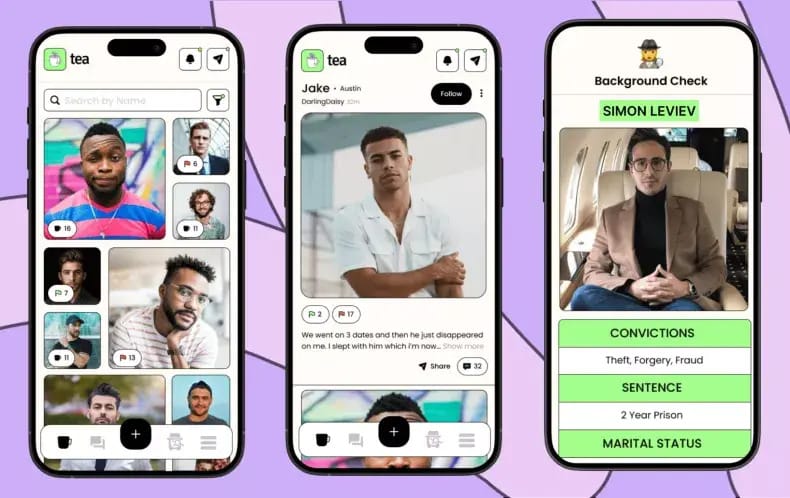
Image source: Tea
The Rundown: Tea, a fast-growing women-only dating advice app, reportedly confirmed that last week’s data breach is bigger than thought, with hackers accessing some 72K images and posting large troves of them on 4chan.
The details:
Tea lets women anonymously review men, share warnings with one another, and run background checks, branding itself as a safer way to date online.
Hackers accessed some 13K selfies and government ID photos, required for account verification, and 59K images from posts and comments.
The breach has caused alarm because of the highly sensitive nature of the compromised material, including private discussions and direct messages.
Cybersecurity experts have criticized the app’s reliance on a legacy storage system, which had not been properly migrated to a more secure infrastructure.
Why it matters: Tea has shut down compromised systems, brought in outside cybersecurity experts, and claims to have tightened security. The company is offering free identity protection to affected users and working to prevent future breaches, but the whole debacle reignites concerns over privacy and the rapid scale of social apps.
ALIBABA
👓 Alibaba unveils its own smart glasses

Image source: Alibaba
The Rundown: Alibaba unveiled its first smart glasses, the Quark AI Glasses. Set to launch in China by the end of 2025, the device looks to be a direct challenge to rivals like Meta in the growing AI wearables race.
The details:
Powered by Alibaba’s in-house Qwen large language models and the Quark AI assistant, the glasses deliver real-time translation and voice-based controls.
Users can make calls, stream music, access navigation, transcribe meetings, and handle digital payments via voice interaction and simple gestures.
The glasses are deeply linked to Alibaba services, including Amap for navigation, Taobao for online shopping, and Alipay for payments.
They feature dual chipsets (Qualcomm AR1 and BES2800) for always-on intelligence and extended battery life, with a built-in camera.
Why it matters: In contrast to Western rivals, Alibaba is positioning Quark AI Glasses less as a cool, fashion-forward device and more as a cutting-edge way to boost real-world productivity, built off the backbone of Alibaba’s sprawling digital ecosystem. Yet one key detail is still missing: the price.
QUICK HITS
📰 Everything else in tech today
Apple is closing its first-ever retail store in China — a location in Dalian — marking a significant event for the company in a key international market.
Meta will halt all political, electoral, and social issue ads across the EU, citing the EU’s new Transparency and Targeting of Political Advertising law as “unworkable.”
A class-action lawsuit alleges Anthropic used millions of pirated books to train its AI models, potentially exposing the company to billions of dollars in copyright damages.
Scientists achieved a record-low quantum computing error rate of 0.000015%, marking a major milestone toward practical, utility-scale quantum computers.
PayPal introduced “Pay with Crypto,” a new checkout option that will let U.S. merchants accept more than 100 digital assets, including Bitcoin and Ether.
Scientists created an automated, virus-inspired platform that rapidly evolves proteins in mammalian cells, opening new possibilities for precise gene editing.
Lyft will introduce autonomous, steering wheel–free electric shuttles made by Benteler’s Holon brand in late 2026.
AI startup Anthropic is in early talks with investors to raise between $3B and $5B at a potential valuation of $150B.
COMMUNITY
🎥 Join our next live workshop
Join our next workshop this Friday, August 1st, at 4 PM EST with Dr. Alvaro Cintas, The Rundown’s AI professor. By the end of this workshop, you’ll have practical strategies to get the AI to do exactly what you want.
RSVP here. Not a member? Join The Rundown University on a 14-day free trial.
See you soon,
Rowan, Jennifer, and Joey—The Rundown’s editorial team
China's open-source AI surge continues
Read Online | Sign Up | Advertise

Good morning, AI enthusiasts. While the AI world awaits the imminent launch of OpenAI’s open-source model and GPT-5, Chinese labs continue to churn out the headlines.
New launches from Zai and Alibaba just raised the open-source bar again in both language and video models — continuing a relentless pace of development out East that is shifting the AI landscape faster than ever.
Note: We just opened multi-seats for our AI University. If you're looking to build your team's AI upskilling learning path, reach out here.
In today’s AI rundown:
Z.ai’s new open-source powerhouse
Microsoft’s ‘Copilot Mode’ for agentic browsing
Replace any character voice in your videos
Alibaba’s Wan2.2 pushes open-source video forward
4 new AI tools & 4 job opportunities
LATEST DEVELOPMENTS
Z AI
🤖 Z.ai’s new open-source powerhouse
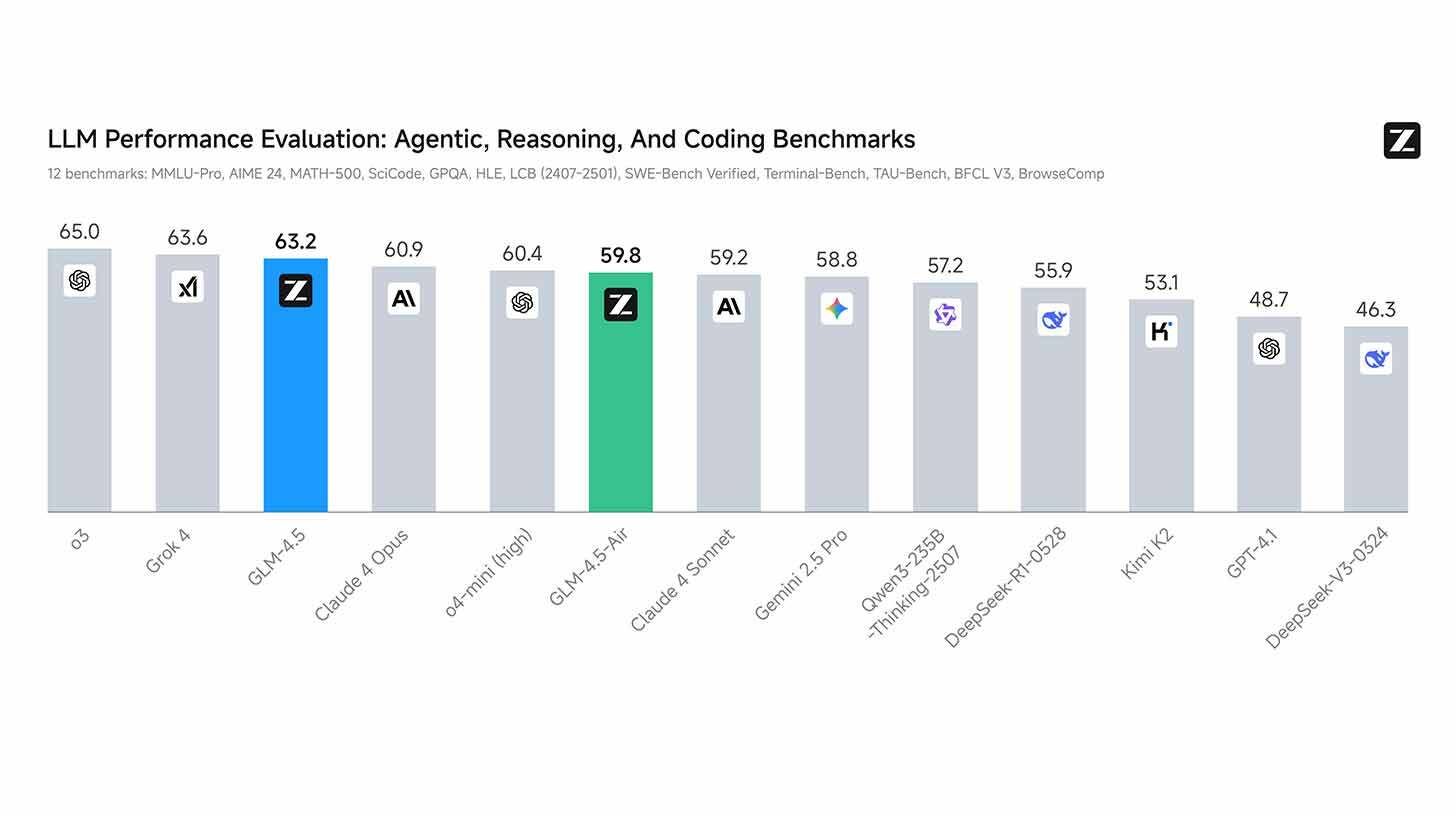
Image source: Zai
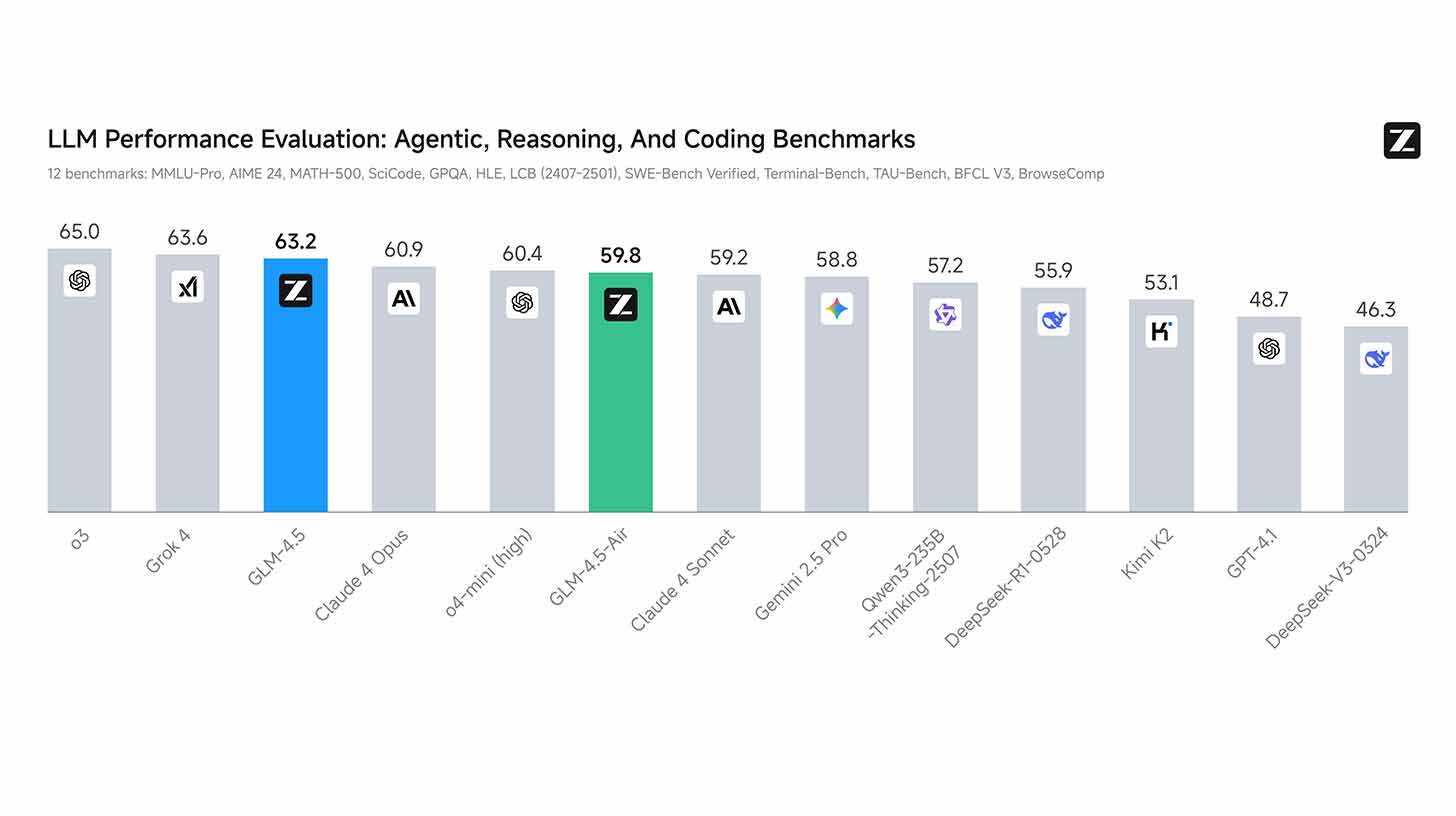
The Rundown: Chinese startup Z.ai (formerly Zhipu) just released GLM-4.5, an open-source agentic AI model family that undercuts DeepSeek's pricing while nearing the performance of leading models across reasoning, coding, and autonomous tasks.
The details:
4.5 combines reasoning, coding, and agentic abilities into a single model with 355B parameters, with hybrid thinking for balancing speed vs. task difficulty.
Z.ai claims 4.5 is now the top open-source model worldwide, and ranks just behind industry leaders o3 and Grok 4 in overall performance.
The model excels in agentic tasks, beating out top models like o3, Gemini 2.5 Pro, and Grok 4 on benchmarks while hitting a 90% success rate in tool use.
In addition to 4.5 and 4.5-Air launching with open weights, Z.ai also published and open-sourced their ‘slime’ training framework for others to build off of.
Why it matters: Qwen, Kimi, DeepSeek, MiniMax, Z.ai… The list goes on and on. Chinese labs are putting out better and better open models at an insane pace, continuing to both close the gap with frontier systems and put pressure on the likes of OpenAI’s upcoming releases to stay a step ahead of the field.
TOGETHER WITH GUIDDE
🎥 Create instant video guides with AI
The Rundown: Stop wasting time on repetitive explanations. Guidde’s AI helps you create stunning video guides in seconds, 11x faster.
Use Guidde to:
Auto-generate step-by-step video guides with visuals, voiceovers, and a CTA
Turn boring docs into visual masterpieces
Save hours with AI-powered automation
Share or embed your guide anywhere
MICROSOFT
🦄 Microsoft’s ‘Copilot Mode’ for agentic browsing
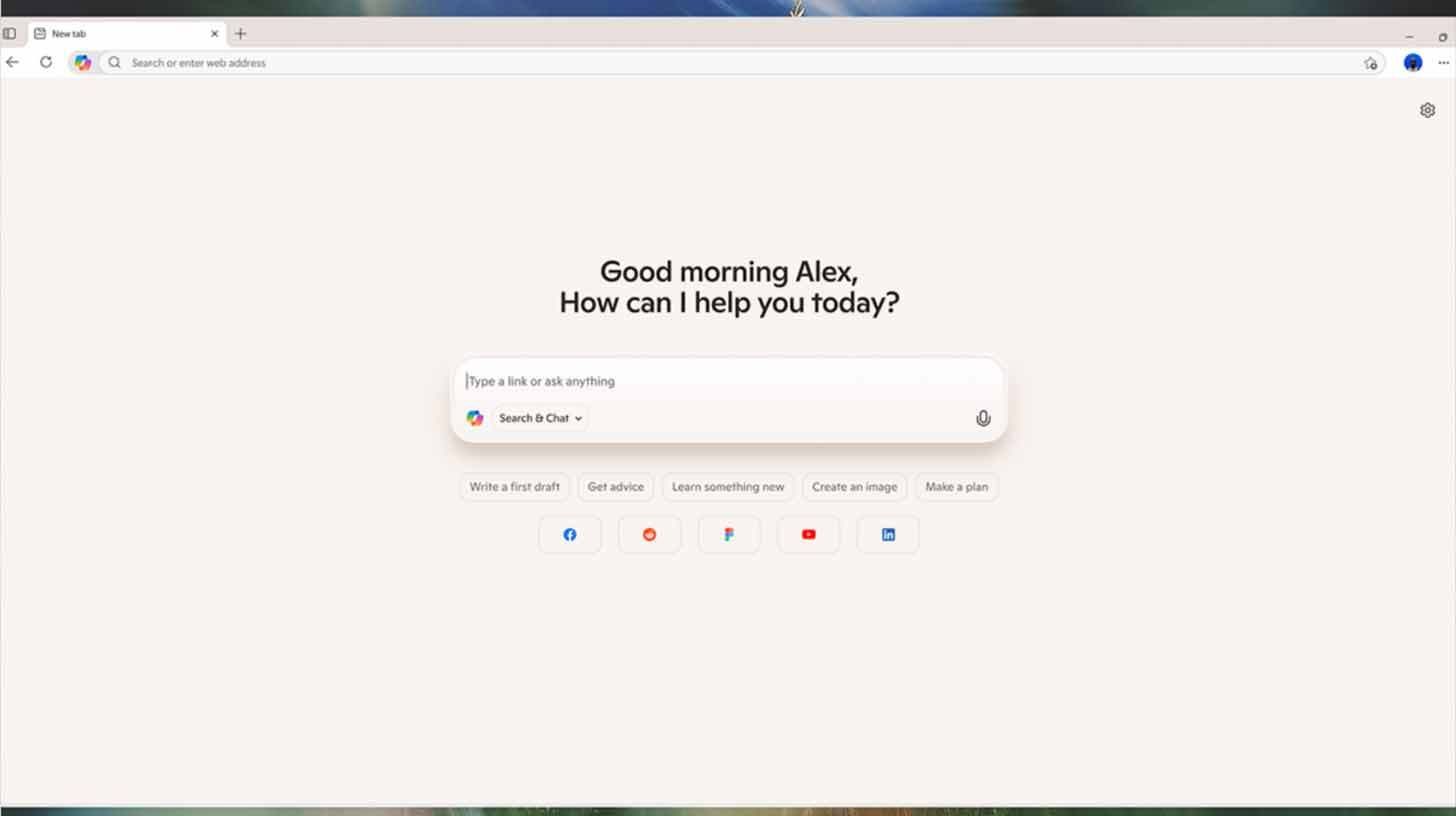
Image source: Microsoft
The Rundown: Microsoft just released ‘Copilot Mode’ in Edge, bringing the AI assistant directly into the browser to search across open tabs, handle tasks, and proactively suggest and take actions.
The details:
Copilot Mode integrates AI directly into Edge's new tab page, integrating features like voice and multi-tab analysis directly into the browsing experience.
The feature launches free for a limited time on Windows and Mac with opt-in activation, though Microsoft hinted at eventual subscription pricing.
Copilot will eventually be able to access users’ browser history and credentials (with permission), allowing for actions like completing bookings or errands.
Why it matters: Microsoft Edge now enters into the agentic browser wars, with competitors like Perplexity’s Comet and TBC’s Dia also launching within the last few months. While agentic tasks are still rough around the edges across the industry, the incorporation of active AI involvement in the browsing experience is clearly here to stay.
AI TRAINING
🎤 Replace any character voice in your videos
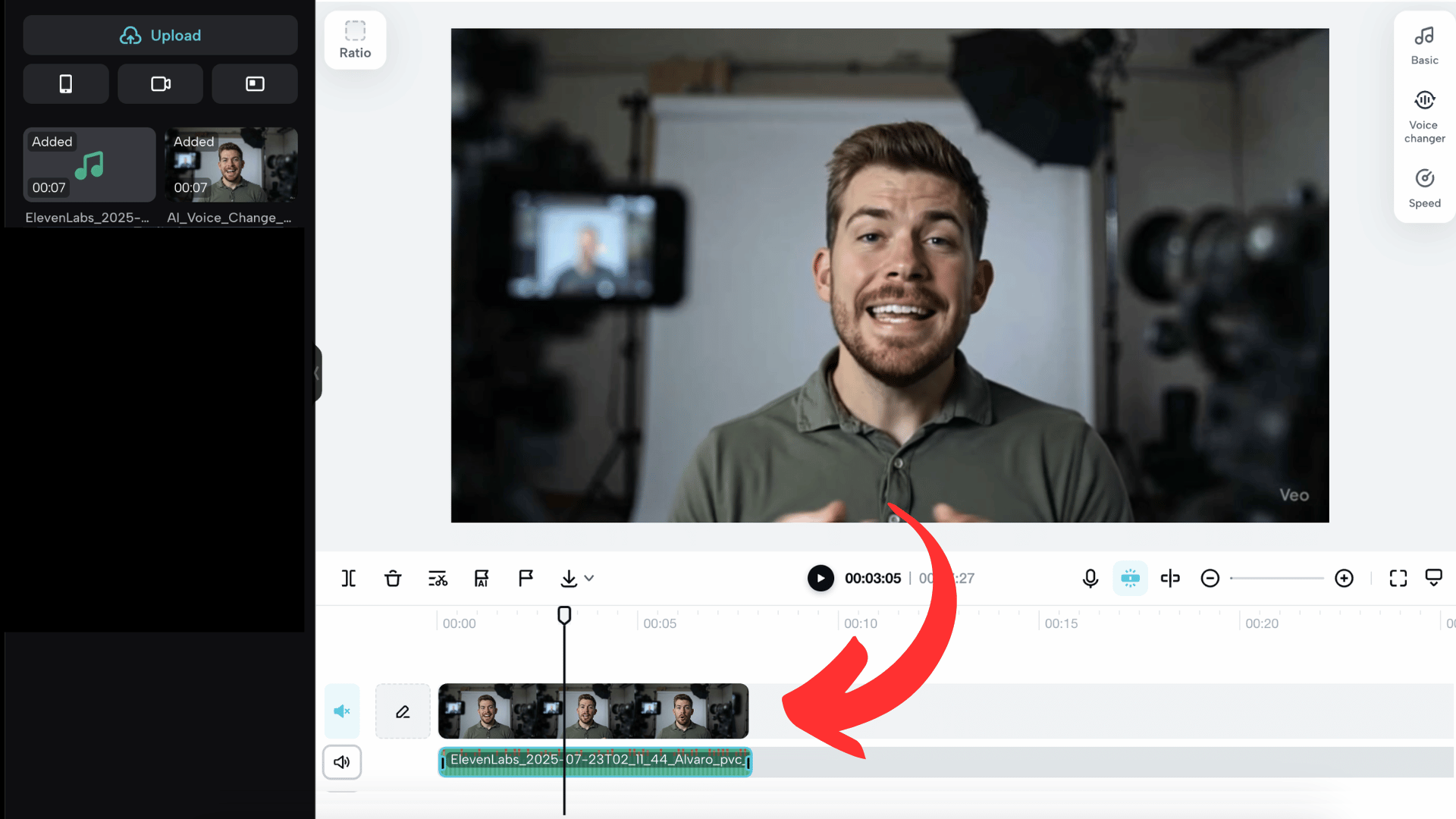
The Rundown: In this tutorial, you will learn how to transform AI-generated videos by replacing their default voices with custom voices using Google Veo, audio conversion tools, and ElevenLabs’ voice cloning.
Step-by-step:
Create your AI video using Google Veo and download the MP4 file
Convert the video to MP3 using any audio extractor from a video tool
Go to ElevenLabs’ Voice Changer, upload your MP3, and generate speech with your chosen voice.
Import both the original video and new audio into CapCut, mute the original audio, and export your video with the custom voice.
Pro tip: Create voice clones in ElevenLabs to maintain consistent character voices across all your video projects.
PRESENTED BY PREZI
💡 Go from idea to “woah” presentation in seconds
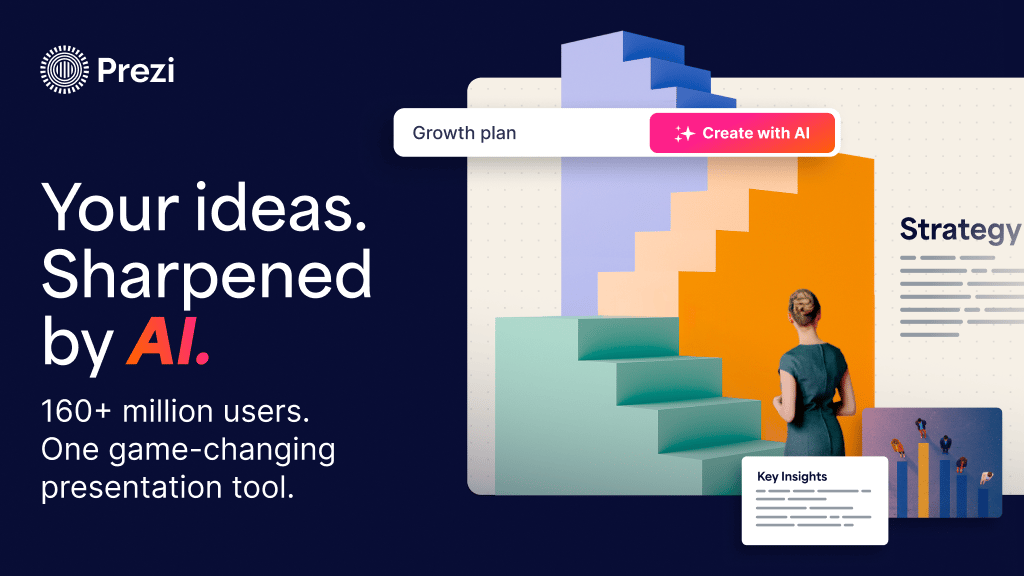
The Rundown: Prezi AI doesn’t just make slides. It builds persuasive narratives with a dynamic format designed to hold attention and help your message land. Whether you're pitching or presenting to your team, Prezi transforms your ideas into presentations that actually perform.
With Prezi, you can:
Go from rough ideas or PDFs to standout presentations in seconds
Engage your audience with a format proven to be more effective than slides
Get AI-powered suggestions for content, structure, and design
Try Prezi AI for free and beat boring slides.
ALIBABA
🎥 Alibaba’s Wan2.2 pushes open-source video forward

Image source: Alibaba
The Rundown: Alibaba's Tongyi Lab just launched Wan2.2, a new open-source video model that brings advanced cinematic capabilities and high-quality motion for both text-to-video and image-to-video generations.
The details:
Wan2.2 uses two specialized "experts" — one creates the overall scene while the other adds fine details, keeping the system efficient.
The model surpassed top rivals, including Seedance, Hailuo, Kling, and Sora, in aesthetics, text rendering, camera control, and more.
It was trained on 66% more images and 83% more videos than Wan2.1, enabling it to better handle complex motion, scenes, and aesthetics.
Users can also fine-tune video aspects like lighting, color, and camera angles, unlocking more cinematic control over the final output.
Why it matters: China’s open-source flurry doesn’t just apply to language models like GLM-4.5 above — it’s across the entire AI toolbox. While Western labs are debating closed versus open models, Chinese labs are building a parallel open AI ecosystem, with network effects that could determine which path developers worldwide adopt.
QUICK HITS
🛠️ Trending AI Tools
🎬 Runway Aleph - Edit, transform, and generate video content
🧠 Qwen3-Thinking - Alibaba’s AI with enhanced reasoning and knowledge
🌎 Hunyuan3D World Model 1.0 - Tencent’s open world generation model
📜 Aeneas - Google’s open-source AI for restoring ancient texts
💼 AI Job Opportunities
📱 Databricks - Senior Digital Media Manager
🗂️ Parloa - Executive Assistant to the CRO
🤝 UiPath - Partner Sales Executive
🧑💻 xAI - Software Engineer, Developer Experience
📰 Everything else in AI today
Alibaba debuted Quark AI glasses, a new line of smart glasses launching by the end of the year, powered by the company’s Qwen model.
Anthropic announced weekly rate limits for Pro and Max users due to “unprecedented demand” from Claude Code, saying the move will impact under 5% of current users.
Tesla and Samsung signed a $16.5B deal for the manufacturing of Tesla’s next-gen AI6 chips, with Elon Musk saying the “strategic importance of this is hard to overstate.”
Runway signed a new partnership agreement with IMAX, bringing AI-generated shorts from the company’s 2025 AI Film Festival to big screens at ten U.S. locations in August.
Google DeepMind CEO Demis Hassabis revealed that Google processed 980 trillion (!) tokens across its AI products in June, an over 2x increase from May.
Anthropic published research on automated agents that audit models for alignment issues, using them to spot subtle risks and misbehaviors that humans might miss.
COMMUNITY
🎥 Join our next live workshop
Join our next workshop this Friday, August 1st, at 4 PM EST with Dr. Alvaro Cintas, The Rundown’s AI professor. By the end of this workshop, you’ll have practical strategies to get the AI to do exactly what you want.
RSVP here. Not a member? Join The Rundown University on a 14-day free trial.
See you soon,
Rowan, Joey, Zach, Alvaro, and Jason—The Rundown’s editorial team
No matching search results
Try using different keywords, double-check your spelling, or explore related categories.
Stay Ahead on AI.
Join 2,000,000+ readers getting bite-size AI news updates straight to their inbox every morning with The Rundown AI newsletter. It's 100% free.