OpenAI's AI phone just jumped the line
PLUS: Make your Notion agents more autonomous

Zach Mink
May 6, 2026
Read Online | Sign Up | Advertise

Good morning, AI enthusiasts. Amid intensifying competition with Anthropic, improved models, and efforts to kill “side hustles,” OpenAI is apparently looking at something closer to home — an AI agent phone.
Analyst Ming-Chi Kuo says the company is fast-tracking this device for 2027, with some notable capabilities. Good news for those wanting a stronger AI experience in their pockets. The question is: where does this leave the ongoing work with Jony Ive? Or is this the same device?
In today’s AI rundown:
OpenAI fast-tracks its ‘AI agent phone’
Anthropic’s AI agents for finance work
Make your Notion agents more autonomous
Home-based ‘mini’ AI data centers are coming
4 new AI tools, community workflows, and more
LATEST DEVELOPMENTS
OPENAI
📱 OpenAI fast-tracks ‘AI agent phone’

Image source: Images 2.0 / The Rundown
The Rundown: OpenAI is reportedly accelerating development of its first AI phone, now aiming for mass production in the first half of 2027, which is a full year earlier than previously reported, according to supply chain analyst Ming-Chi Kuo.
The details:
Kuo says the timeline shift is likely driven by OAI’s IPO ambitions (strong hardware could strengthen investor pitch) and rising competition in AI phones.
The phone’s standout spec will be its image signal processor, with an enhanced HDR pipeline to improve AI agents’ real-world visual sensing.
MediaTek is positioned to be the sole chip supplier, with the device using two AI processors to handle vision and language tasks simultaneously.
Kuo also added that OpenAI’s combined 2027–28 shipments of this phone could touch 30M, if the development stays on track.
Why it matters: Controlling hardware and OS could be the key to a true agentic phone. But if OpenAI’s AI phone is closer than we thought, where does this leave the device it’s building with Jony Ive’s io? OpenAI acquired io last year with much fanfare to go “beyond screens,” but nothing concrete has appeared so far except a few rumors.
TOGETHER WITH LAMBDA
⚡ How to push Model FLOPS Utilization past 50%

The Rundown: Most large-scale training runs operate at just 35–45% Model FLOPS Utilization, meaning teams pay for more than twice the compute they actually use. Lambda’s engineers benchmarked Llama 3.1 models from 8B to 405B on NVIDIA Blackwell GPUs to trace efficiency loss to its root causes.
Efficiency losses were traced to:
Memory overhead capping effective throughput
Parallelism strategies misaligned with the hardware
Serialized communication stalling GPU cycles
ANTHROPIC
🤑 Anthropic’s AI agents for finance work

Image source: Anthropic
The Rundown: Anthropic just unveiled 10 ready-to-run AI agents aimed squarely at financial services and insurance — capable of handling work ranging from building pitchbooks and screening KYC files to reviewing earnings and valuations.
The details:
Each agent comes with task-specific domain skills and instructions, connectors to relevant data sources, and add-on Claude models for sub-tasks.
Firms can adapt any agent of their choice to their own modeling conventions, risk policies, and approval flows — while staying in the loop 24/7.
The agents can be used as plugins within Claude Cowork or Claude Code on desktop, or as cookbooks, running as Managed Agents on the Claude platform.
Claude is also getting an add-in for Microsoft 365 as well as data connectors from Dun & Bradstreet, Verisk, IBISWorld, and other financial services partners.
Why it matters: Development, cybersecurity, design, and now finance. Anthropic is going domain by domain, meeting businesses where they are instead of selling a general model and letting them figure it out. Its new $1.5B joint venture alongside Wall Street giants reinforces this strategy, further fueling its race with OpenAI.
AI TRAINING
🤖 Make your Notion agents more autonomous
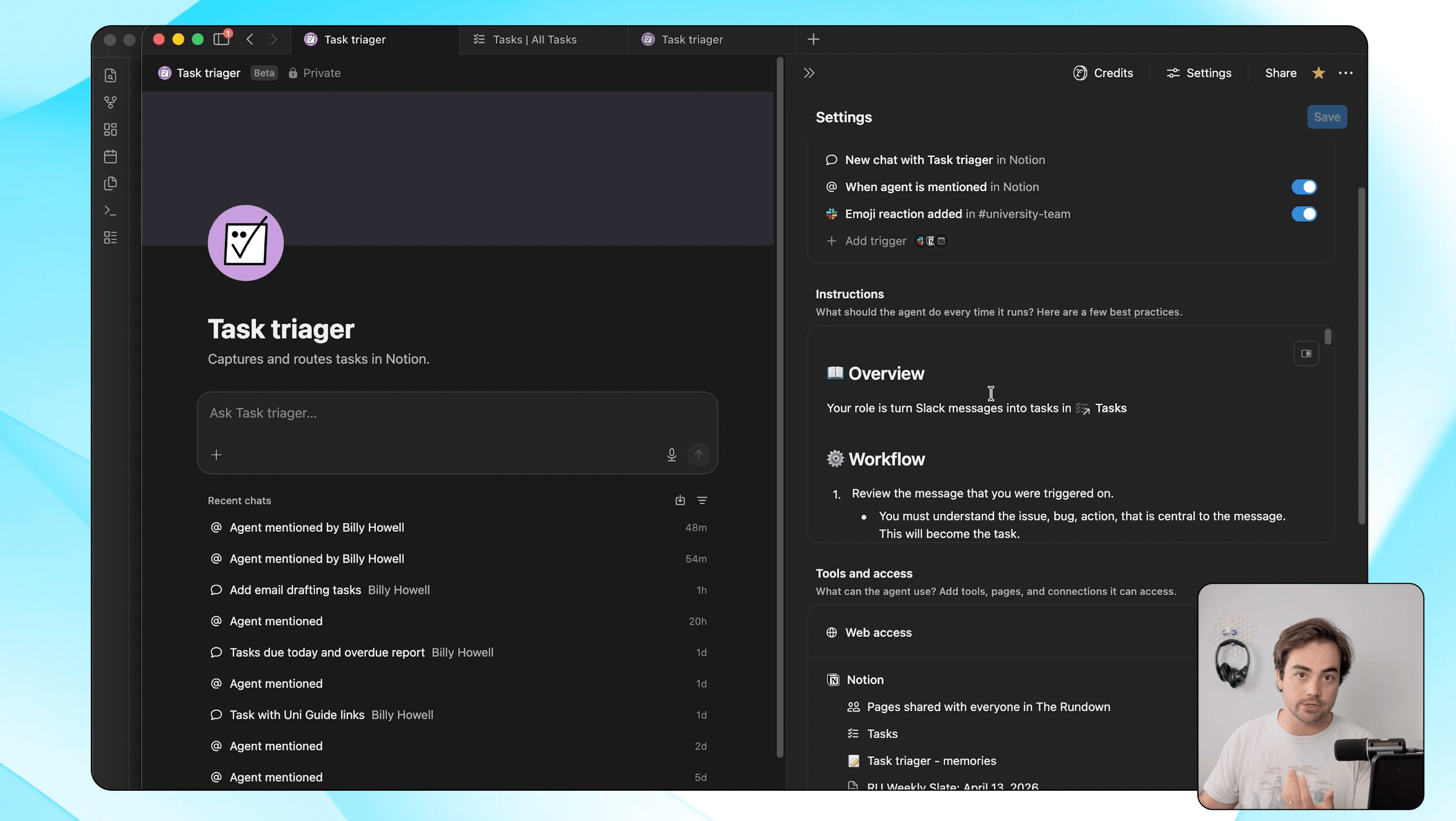
The Rundown: In this guide, you will learn a hidden workflow that will make your Notion Agents more autonomous and powerful than they are by default. This lets you wake up any agent, give it tasks, and then get a report on what it did.
Step-by-step:
Create a Notion agent from the “Agents” option in the sidebar. Then, open a database for the agent’s prompt and task reports. Ours is called “reports”
Click the New dropdown, open Templates, and create a @Today template (ours was Daily Summary). @Today makes duplicates inherit the current date
Set the properties, write task instructions in the page body, and @ mention the agent, so the duplicate triggers it. Remember to stop the agent when doing this, so it doesn’t overwrite the template
From the template, click New template, then Duplicate, and pick a cadence. We run ours daily at 7 a.m. A small blue icon next to the template shows it’s live
Pro tip: Try setting up daily debriefs, weekly reports, and email automations. Now you can route them all through the same planning agent.
PRESENTED BY IBM
🔌 Rewire the C-suite for an AI-first world
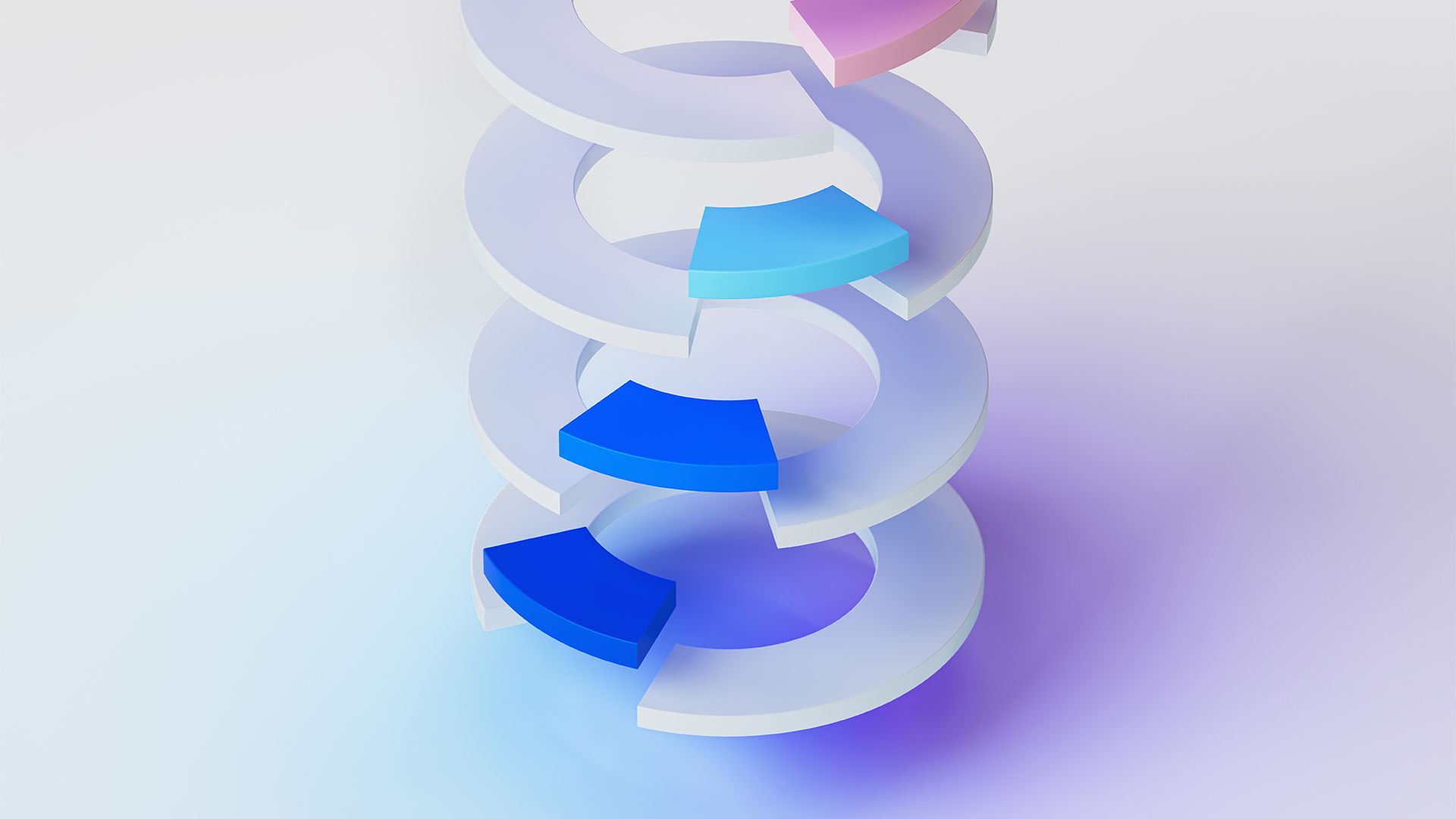
The Rundown: Most leaders know AI will reshape their business, but few have a clear playbook for how. An IBM Institute of Business Value analysis reveals 5 plays that CEOs must fulfill now for payoffs by 2030.
To lead in an AI-first landscape, surveyed CEOs suggest:
Customize your AI mix, not just your AI models
Hire a Chief AI Officer if you haven’t already
Orchestrate intelligence — both artificial and human
AI DATA CENTERS
🏘️ Home-based ‘mini’ AI data centers are coming

Image source: Span
The Rundown: California startup Span is teaming up with Nvidia to install mini AI data centers on the walls of residential homes and small businesses, tapping unused electrical capacity on local grids to meet surging AI compute demand.
The details:
Span has developed XFRA, small compute nodes that mount on the exterior walls of homes, alongside accompanying HVAC and electrical systems.
Nvidia is providing its liquid-cooled RTX PRO 6000 Blackwell Server Edition GPUs to power each XFRA box, ensuring noiseless computing for AI workloads.
Span told CNBC it can install 8,000 XFRA units 6x faster and at one-fifth the cost of building a comparable 100MW centralized data center facility.
Currently, the company is working with PulteGroup, one of the largest U.S. homebuilders, to test the box and its economics in newly built communities.
Why it matters: Grid strain from data centers is real, and Span’s boxes could spread the load while tapping only unused capacity. But public response is an open question — not all will love the idea of a data center box mounted where kids play, especially when alternatives like ocean- and space-based data centers are also in sight.
QUICK HITS
🛠️ Trending AI Tools
🚀 Box Automate - Orchestrate agentic workflow automation, securely and at scale*
🎨 Pomelli - Make product-specific campaigns with Google’s AI marketing tool
🖼️ Uni 1.1 - Luma’s new image generation and editing AI that nears the frontier
🎮️ Astrocade - Platform to create shareable games with AI
*Sponsored Listing
📰 Everything else in AI today
OpenAI’s GPT-5.5-Instant started rolling out to all ChatGPT users, bringing improved performance, stronger memory, and more personalized, concise responses.
Microsoft expanded its Copilot Cowork agentic system to iOS and Android, while adding built-in skills for common tasks and data plugins for business systems.
Apple agreed to pay some U.S. iPhone buyers a collective $250M to settle a class action lawsuit over misleading claims about its new AI Siri, but admitted no wrongdoing.
Perplexity AI launched Computer for Professional Finance, bringing licensed data and 35 dedicated workflows to its agentic system to help analysts handle routine work.
Anthropic reportedly committed to spending $200B on Google’s cloud and chips over the next five years, now making 40%+ of Google’s revenue backlog.
Coinbase CEO Brian Armstrong said the company is cutting 14% of its workforce, ~700 people, as it shifts to AI-native teams, agent-driven workflows, and leaner ops.
COMMUNITY
🤝 Community AI workflows
Every newsletter, we showcase how a reader is using AI to work smarter, save time, or make life easier.
Today’s workflow comes from reader Schy W. in Springfield, IL:
"I went to a music festival — multiple stages, music over several days. Many bands had more than one set time/location. I fed Claude the festival’s schedule PDF and told it to extract the information, but to ignore autograph signing and music workshops. I then read off a list of bands I wanted to see and followed up with a subset of those that I absolutely did not want to miss. I requested a schedule that would plan out where I should be to maximize the number of bands I could reasonably see with a simple prompt.
It understood the mission and in one stroke produced a fantastic spreadsheet optimizing my time and noting my priorities, stages, times, partial sets, if a band has another set, and explained the decision-making rationale.”
How do you use AI? Tell us here.
🎓 Highlights: News, Guides & Events
Read our last AI newsletter: AI data centers head for the ocean
Read our last Tech newsletter: GameStop's wild bid to buy eBay
Read our last Robotics newsletter: Meta buys a humanoid brain
Today’s AI tool guide: Make your Notion agents more autonomous
See you soon,
Rowan, Joey, Zach, Shubham, and Jennifer — the humans behind The Rundown



Stay Ahead on AI.
Join 2,000,000+ readers getting bite-size AI news updates straight to their inbox every morning with The Rundown AI newsletter. It's 100% free.