Meta's massive AI compute push
PLUS: Never lose vibe coding progress again with Git

Zach Mink
January 14, 2026
Read Online | Sign Up | Advertise

Good morning, AI enthusiasts. Meta spent the summer poaching top AI talent, and now it's building up the compute power to match.
Mark Zuckerberg just unveiled Meta Compute, an initiative to build tens of gigawatts of new capacity this decade and hundreds over time — making clear that infrastructure won't be what stands between Meta and the frontier.
In today’s AI rundown:
Zuckerberg’s massive AI infrastructure push
Microsoft’s ‘good neighbor’ data center initiative
Never lose vibe coding progress again with Git
AI learns from 1M species to design new medicine
4 new AI tools, community workflows, and more
LATEST DEVELOPMENTS
META
🏗️ Zuckerberg’s massive AI infrastructure push

Image source: Lovart / The Rundown
The Rundown: Meta just announced Meta Compute, a new “top-level initiative” to build AI infrastructure at unprecedented scale — with plans to add tens of gigawatts of capacity this decade and hundreds of gigawatts over time.
The details:
Infrastructure chief Santosh Janardhan will co-lead the effort with Daniel Gross, who came over from AI safety startup SSI last year.
Meta has committed $600B in U.S. infrastructure spending by 2028 and recently locked in 20-year nuclear power agreements for its data centers.
Newly appointed president and former Trump national security official Dina Powell McCormick will handle government deals to finance and build capacity.
The announcement comes amid reported major layoffs to Meta’s Reality Labs and metaverse/VR divisions, with a roughly 10% cut expected this week.
Why it matters: Zuck and co. splashed some serious cash on poaching top AI talent in the summer, and now they are doubling down on the compute front as well. With the AI race increasingly becoming an infrastructure one, Meta’s initiative aims to ensure that scale won’t be the bottleneck in leveling up to the frontier.
TOGETHER WITH CONCENTRIX
🔮 Are humans in the loop still needed?
The Rundown Concentrix’s guide on the Missing Piece in AI Systems combines research-based reasoning and hands-on experience to redefine the role of human expertise in building and deploying strong AI systems.
Inside, you’ll find:
Analysis of the business impact of human oversight in AI systems development
Practical tips for improving the performance of your AI systems
Real-world examples of AI success in practice
MICROSOFT
😇 Microsoft’s ‘good neighbor’ AI data center initiative
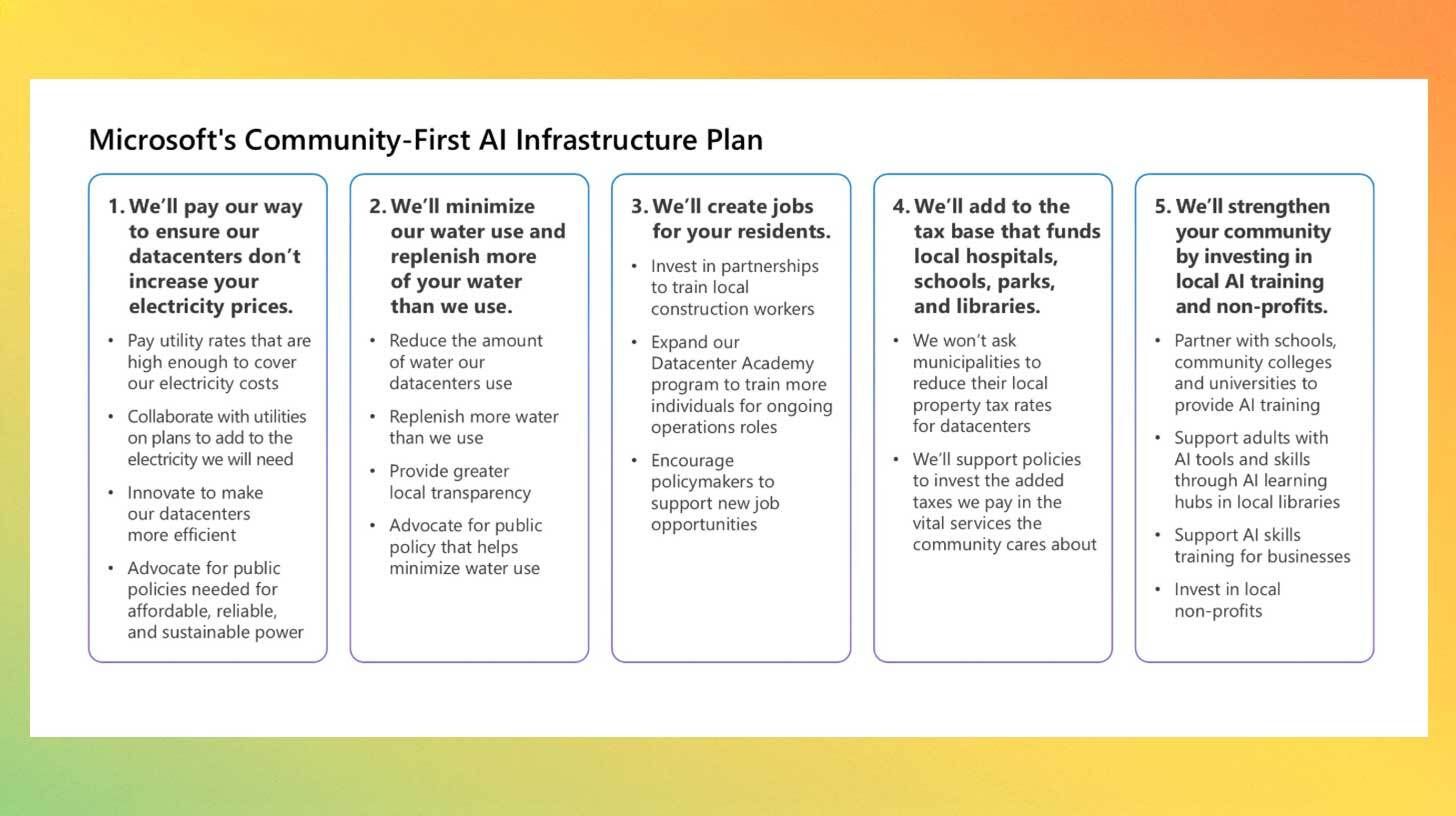
Image source: Microsoft
The Rundown: Microsoft just launched ‘Community-First AI Infrastructure’, a new plan promising that its data centers won't raise local electricity prices, will replenish more water than they use, and will invest in jobs and training for nearby residents.
The details:
The company says it will ask utilities to charge rates high enough to cover the full cost of powering its data centers, so residential bills aren't affected.
Microsoft is committed to a 40% reduction in water-use intensity by 2030, with new facilities using closed-loop cooling that doesn't tap local drinking water.
The tech giant also pledged to pay full property taxes without breaks, and announced new programs to train locals for data center construction jobs.
The announcement follows pressure from senators and comments from President Trump that tech companies need to "pay their own way" on energy.
Why it matters: AI’s infrastructure surge shows no signs of slowing down, but they’ve become divisive in communities across the country over spiking power bills and water supply concerns (some valid, others overblown). Microsoft’s pledge is a good start, but it’ll likely take more than this to turn the PR tides from the current major backlash.
AI TRAINING
💾 Never lose vibe coding progress again with Git
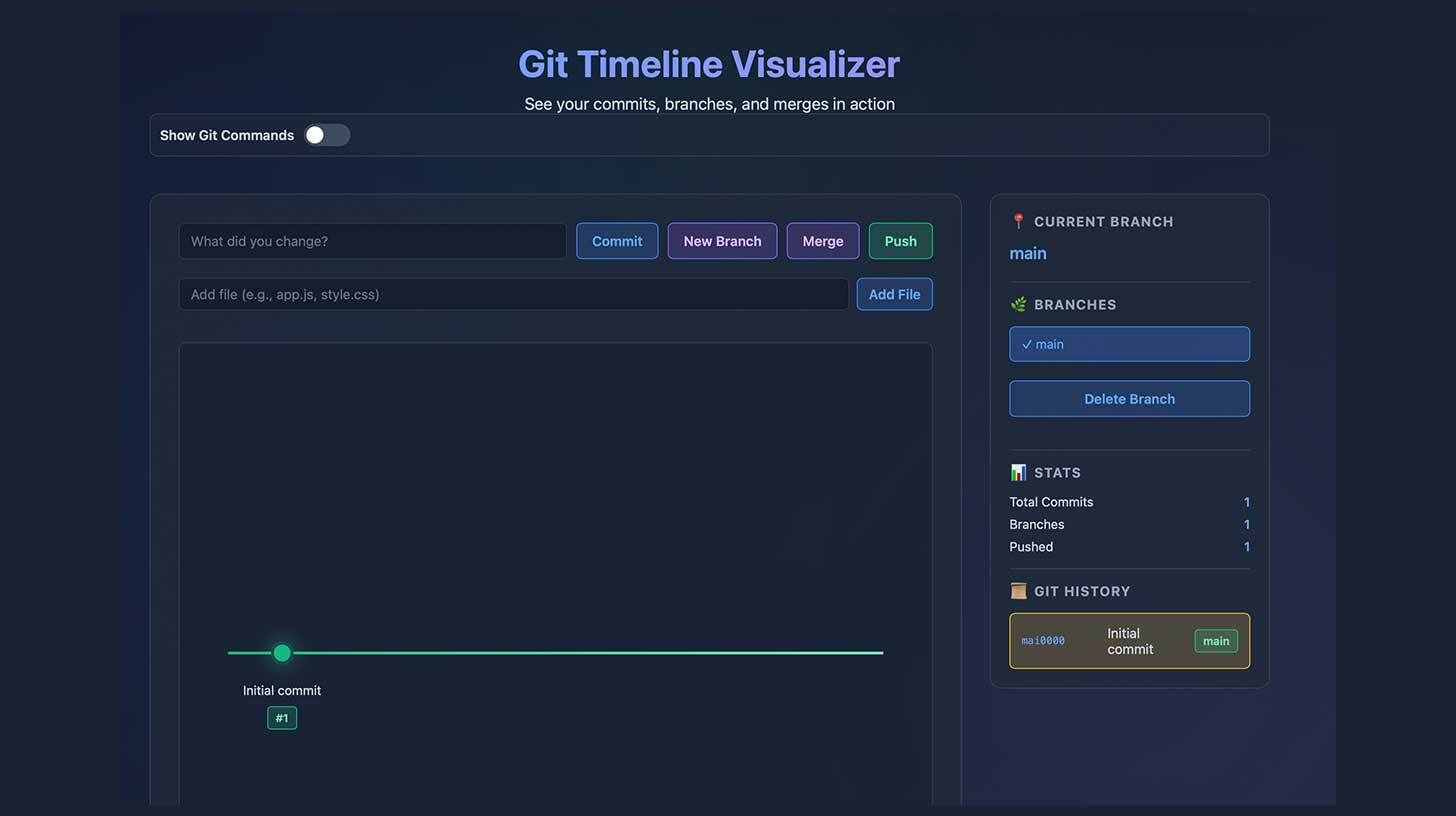
The Rundown: In this tutorial, you will learn how to save your vibe coding progress with Git so you never lose your work again — covering eight practical git commands and writing your first git commit.
Step-by-step:
Install git from git-scm.com and verify with
git --versionin terminal, then open a coding project in your IDE and start a terminal instance in that folderUse
git initto initialize git tracking, thengit add .to snapshot all files (orgit add [filename].[extension]for individual files)Save your snapshot with
git commit -m 'first commit!'and view all commits withgit logFor new features, create a branch with
git checkout -b feature-[name], then merge changes to main withgit merge [branch name]
Pro tip: Add git rules to your coding assistant: (1) Create a feature branch: git checkout -b feature-[name], (2) Commit after each logical change, (3) Ask before merging, (4) Wait for approval, (5) Never commit directly to main.
PRESENTED BY GLEAN
💡 100 ideas from leaders redefining work with AI
The Rundown: AI has moved fast — but transformation hasn’t. Too many organizations are still stuck between hype and results. This report, brought to you by Glean’s Work AI Institute, distills insights from 100+ leaders into practical, evidence-backed plays for using AI to transform work.
In this report, you will discover:
Five big lessons for leading through AI change
Nine themes around how AI is rewiring the core of how organizations function
Real-world AI examples from orgs. like Time, Workday, Deloitte, and more
AI RESEARCH
🧬 AI learns from 1M species to design new medicine
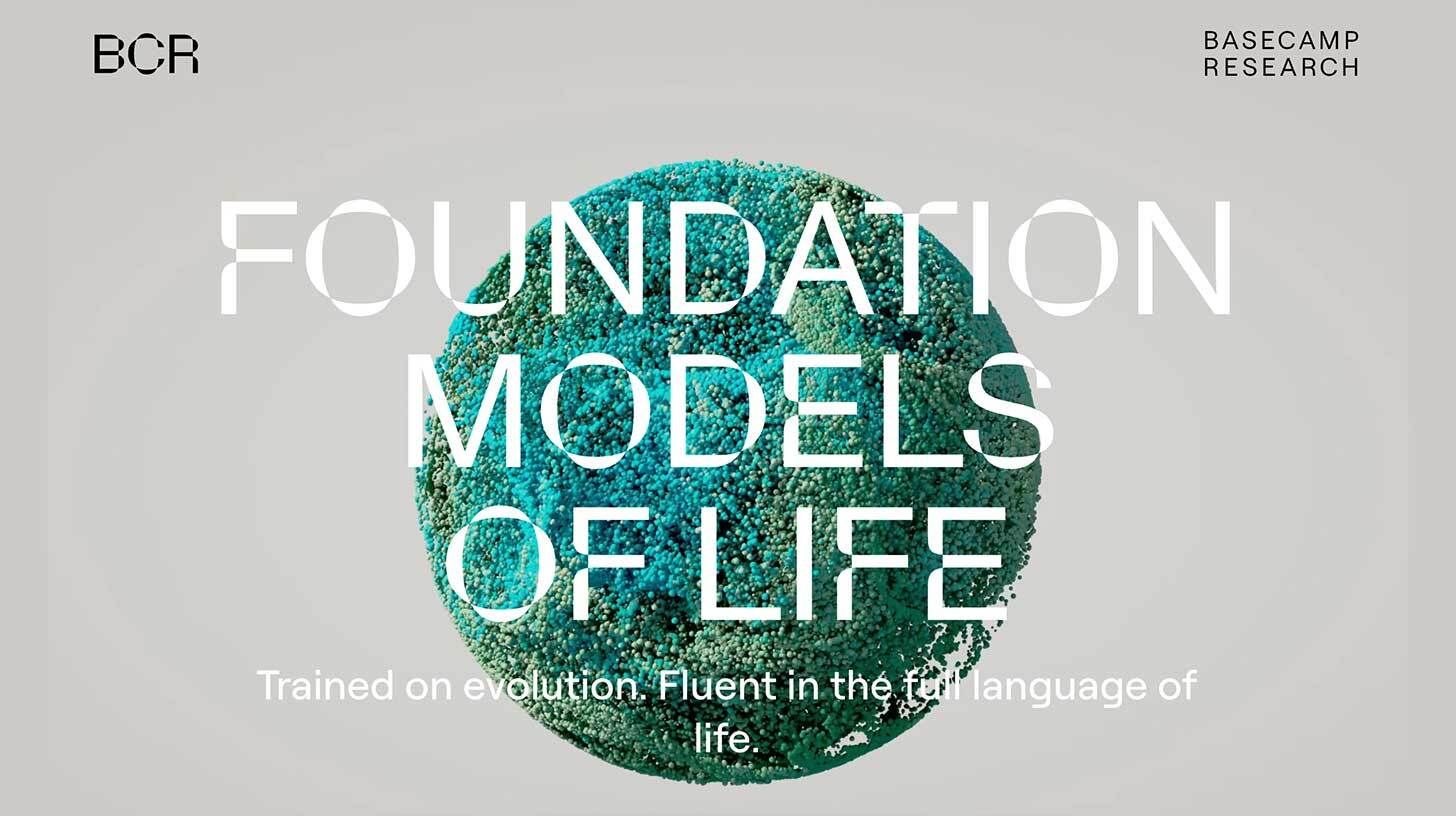
Image source: Basecamp Research
The Rundown: UK startup Basecamp Research introduced Eden, a new family of AI models developed with Nvidia that learned from evolutionary data across 1M species to design potential new treatments for genetic diseases and drug-resistant infections.
The details:
Eden learned from DNA collected across 28 countries, studying how organisms evolved to solve biological problems over billions of years.
The AI designed a new type of gene-editing tool that can insert therapeutic DNA without cutting it, a potentially safer approach than methods like CRISPR.
In lab tests for diseases like muscular dystrophy and hemophilia, over 63% of the AI-designed treatments were functional.
Eden also created new antibiotic candidates, with 97% proving effective against dangerous 'superbugs' that don't respond to existing drugs.
Why it matters: Most people don’t think about where new medicines come from until they need one that doesn't exist. Basecamp's approach of teaching AI to learn from billions of years of evolution could help speed up treatments for genetic diseases and a growing crisis of antibiotic-resistant infections that current drugs can't address.
QUICK HITS
🛠️ Trending AI Tools
🗣️ Unwrap Customer Intelligence - Get AI-driven insights from your unstructured customer feedback to build your product roadmap*
🤝 Claude Cowork - Bring Claude’s agentic capabilities to everyday tasks
🎥 Veo 3.1 - Google’s video AI, with upgrades to references, vertical outputs
💬 Slackbot - Slack’s upgraded personal AI agent
*Sponsored Listing
📰 Everything else in AI today
Anthropic introduced Anthropic Labs, a new team focused on building prototypes of AI tools, with CPO and Instagram co-founder Mike Krieger shifting to lead the division.
Google updated its open-source MedGemma medical AI with abilities for interpreting scans like CT and MRIs, also releasing an open MedASR speech-to-text tool.
Claude Code creator Boris Cherny revealed that Anthropic’s new Claude Cowork feature was entirely built using the agentic coding tool in just 1.5 weeks.
U.S. Defense Secretary Pete Hegseth said the Pentagon is adding xAI’s Grok into military networks by the end of the month to accelerate AI use across the department.
Japanese lab Sakana AI announced that its ALE-Agent for coding took first place in the AtCoder Heuristic Contest, the first time an AI has won the event.
McKinsey CEO Bob Sternfels said the consulting giant counts 25k AI agents among its 60k “person” workforce, with plans to pair every consultant with at least one agent.
COMMUNITY
🤝 Community AI workflows
Every newsletter, we showcase how a reader is using AI to work smarter, save time, or make life easier.
Today’s workflow comes from reader David G. in Lakewood Ranch, FL:
"AI is all over my workday. It is my WordPress assistant, which solves minor issues and lets me tackle tasks beyond my technical reach. It helps me every time I enter a new, unfamiliar dashboard, answers multiple technical questions during my workday, and supports our marketing and strategy.
Away from work, it also helps manage diabetes by guiding me on the best eating practices and, with a picture, estimating carb counts. I'm hooked!"
How do you use AI? Tell us here.
🎓 Highlights: News, Guides & Events
Read our last AI newsletter: Apple, Google go official for Siri revamp
Read our last Tech newsletter: A moon hotel is taking reservations
Read our last Robotics newsletter: Walmart expands drone empire
Today’s AI tool guide: Never lose vibe coding progress again with Git
RSVP to next workshop @ 4PM EST Friday: AI Foundations Bootcamp pt. 2
See you soon,
Rowan, Joey, Zach, Shubham, and Jennifer — the humans behind The Rundown



Stay Ahead on AI.
Join 2,000,000+ readers getting bite-size AI news updates straight to their inbox every morning with The Rundown AI newsletter. It's 100% free.