Honor's robot phone is finally here
PLUS: Agility's humanoid no longer needs a fence

Jennifer Mossalgue
August 13, 2026
Read Online | Sign Up | Advertise

Good morning, robotics enthusiasts. Honor’s Robot Phone has finally landed, featuring a 200MP camera on a titanium robotic arm that pops out of the chassis and follows whoever’s in frame.
The $1,500 flagship pairs AI tracking and gesture controls with a gimbal that whips around at up to 360° per second. More than 100 patents went into squeezing the robotic camera into a phone, and Honor is already thinking bigger.
In today’s robotics rundown:
Honor’s much-hyped robot phone arrives
Agility uncages Digit for factories
Northrop’s robotic mechanic is orbit-bound
Mitsubishi retools engine plant for humanoids
Quick hits on other robotics news
LATEST DEVELOPMENTS
HONOR
🤳🏽 Honor’s much-hyped robot phone arrives
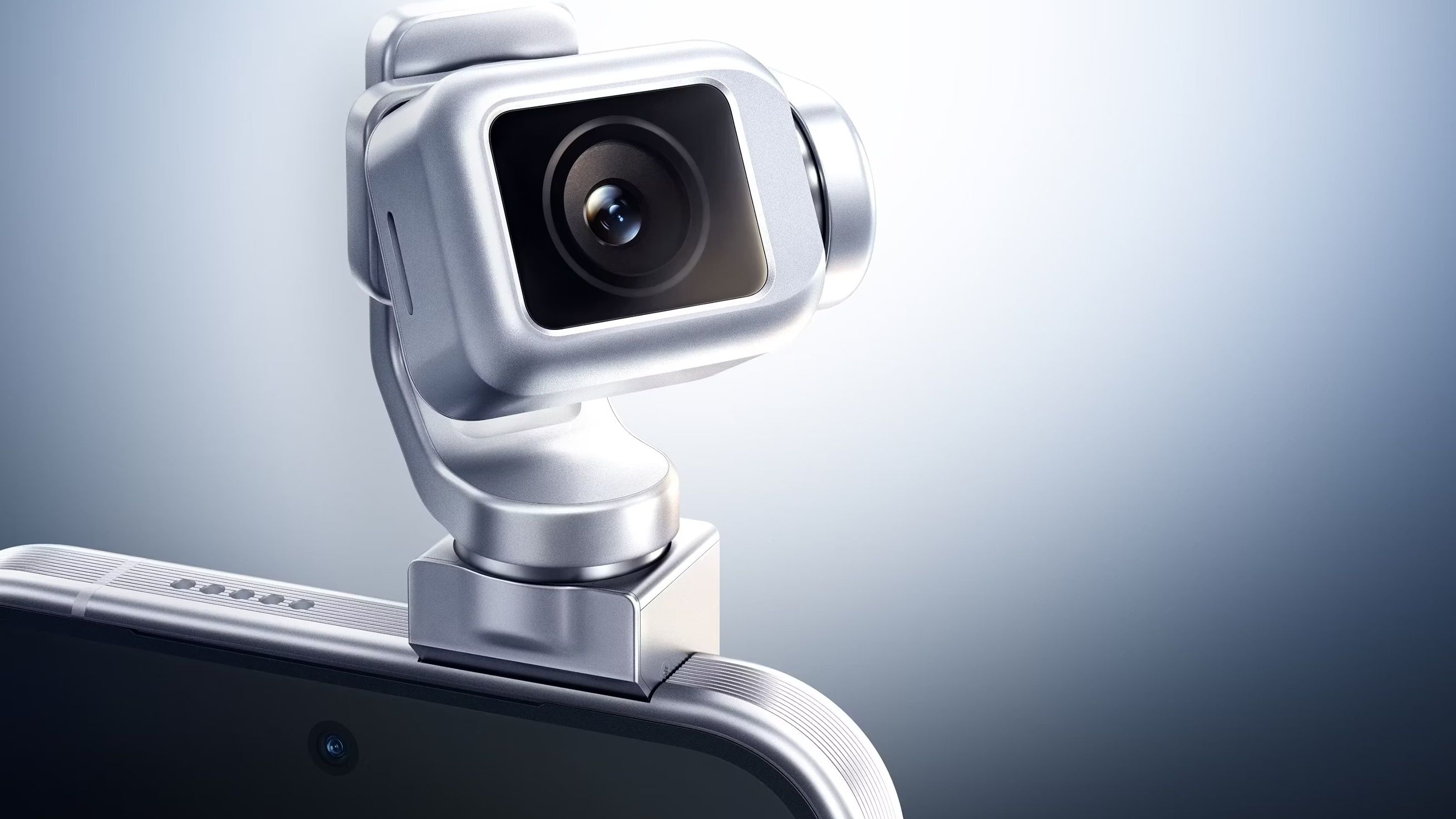
Image source: Honor
The Rundown: Honor’s long-awaited Robot Phone hits China on August 18 with a motorized robotic titanium camera arm that unfolds from the top frame and decides where to point on its own.
The details:
The 4DoF titanium gimbal hides in the chassis and deploys in 0.8 seconds, driven by a 2.6g motor that slews at up to 360° per second.
Honor says the mechanism took 60+ production stages, 100+ precision components, and 100+ patents to build.
YOYO Robot Mode handles gesture deployment, AI subject tracking, FPV and spinshot moves, and a four-mic array that steers audio wherever the lens looks.
Prices run ¥9,999 to ¥12,999 (~$1,400 to ~$1,820). It’s China only for now, with a year of free gimbal replacements.
Why it matters: Honor has put a motorized, AI-directed camera inside a consumer phone, bringing perception, tracking, and physical response into a shipping device. It’s a much smaller expression of the embodied-AI strategy Honor is also pursuing with its backflipping humanoids, but certainly one consumers can buy now.
AGILITY ROBOTICS
🤖 Agility uncages Digit for factories
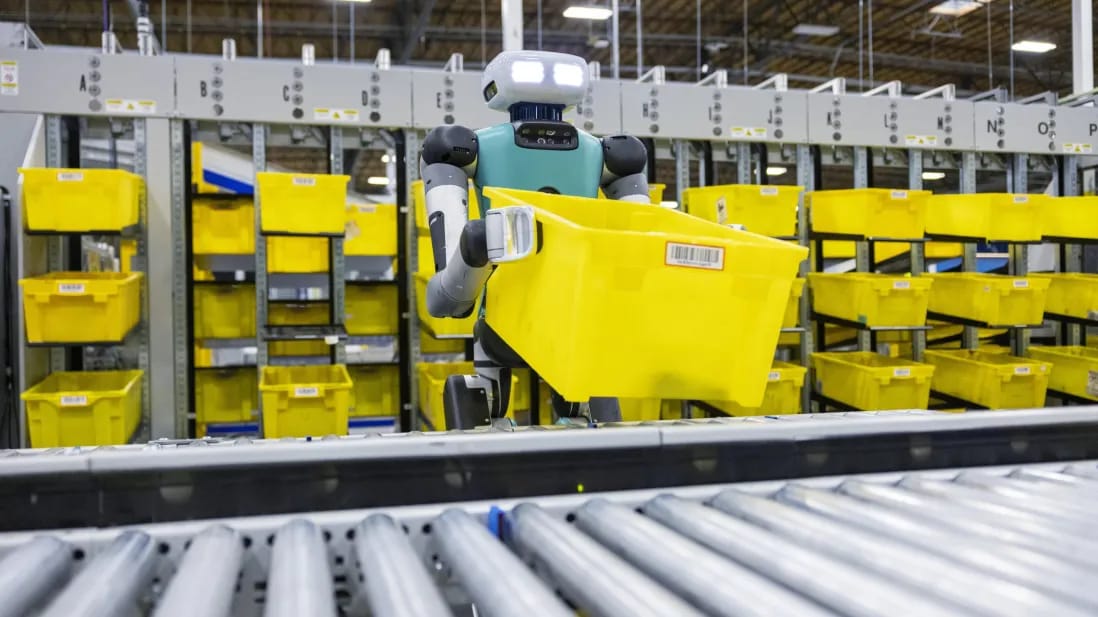
Image source: Agility Robotics
The Rundown: Agility Robotics says its Digit V5 humanoid can work shoulder-to-shoulder with people without safety fencing — the barrier that keeps humanoids penned in pilot cells — and the first units ship to customers in December.
The details:
Cameras, sensors, and software track people, while cycloidal actuators in the hips and knees let the robot recover without dropping its load or falling over.
The battery system is spec’d for more than 20 hours of work a day, enough for one machine to cover three shifts instead of three machines covering one each.
An ISO-standard flange accepts a broad range of end-effectors, and Agility has demoed manual gripper changes with autonomous tool swaps.
The company is going public through a $2.5B SPAC that raised over $620M for product development and expansion.
Why it matters: Figure’s robots at BMW Spartanburg and Apptronik’s Apollo pilots at Mercedes-Benz and Jabil are already judged on production-floor basics, holding up through long shifts and working safely in spaces built for people. Agility is going after the harder step: Digit V5, due in December, is built to do that with no barrier at all.
SPACE BOTS
🛰️ Northrop’s robotic mechanic is orbit-bound
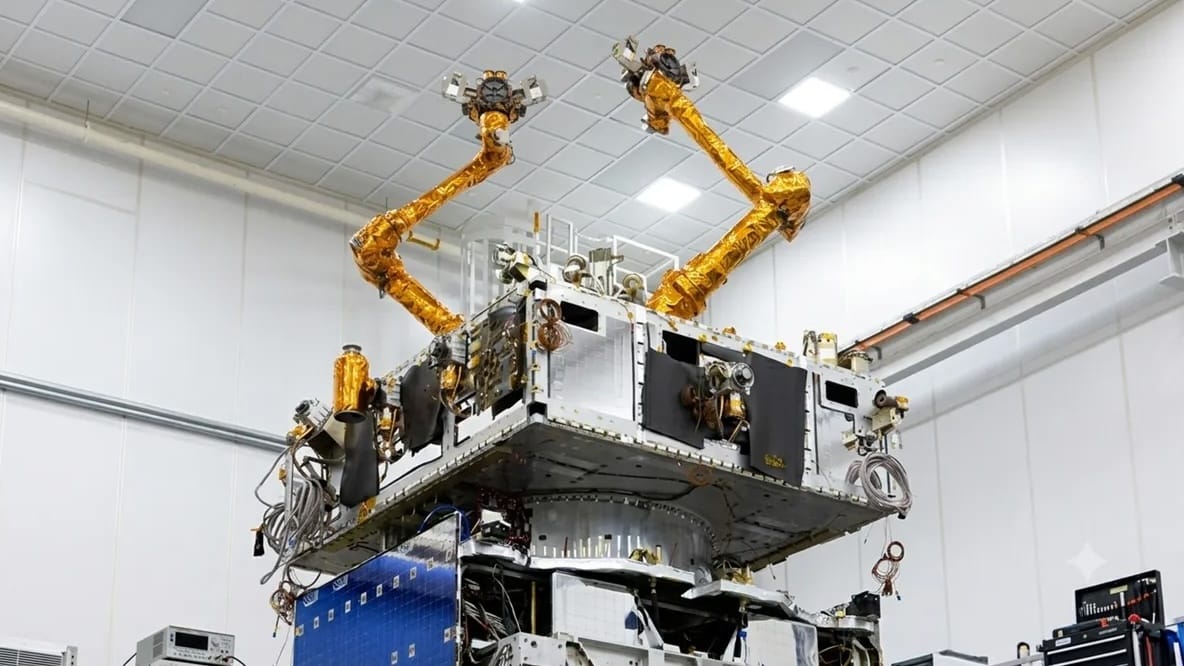
Image source: Northrop Grumman
The Rundown: Northrop Grumman is deploying a robotic spacecraft to bolt modular propulsion pods onto aging satellites — starting with Optus in 2027 — buying them years of working life past their design limits.
The details:
Northrop’s existing Mission Extension Vehicle (MEV) undocked from the Optus communications satellite this week, ending more than a year of station-keeping.
Northrop launched the next generation in July: one Mission Robotic Vehicle (MRV) with DARPA-developed dual arms, plus three Mission Extension Pods.
In 2027, the MRV will install a pod on the Optus satellite, launched in 2009 and built to last 15 years, adding roughly six more years to its lifespan.
Operators will own their pods outright, freeing the MRV to service multiple spacecraft at lower cost.
Why it matters: Satellite servicing is moving from one-off missions toward a repeatable business. Instead of parking an entire servicing spacecraft behind one customer, Northrop can leave a small pod behind and send its robot to the next job, potentially making it easier to keep expensive satellites working for years longer.
MITSUBISHI MOTORS
🚘 Mitsubishi retools engine plant for humanoids
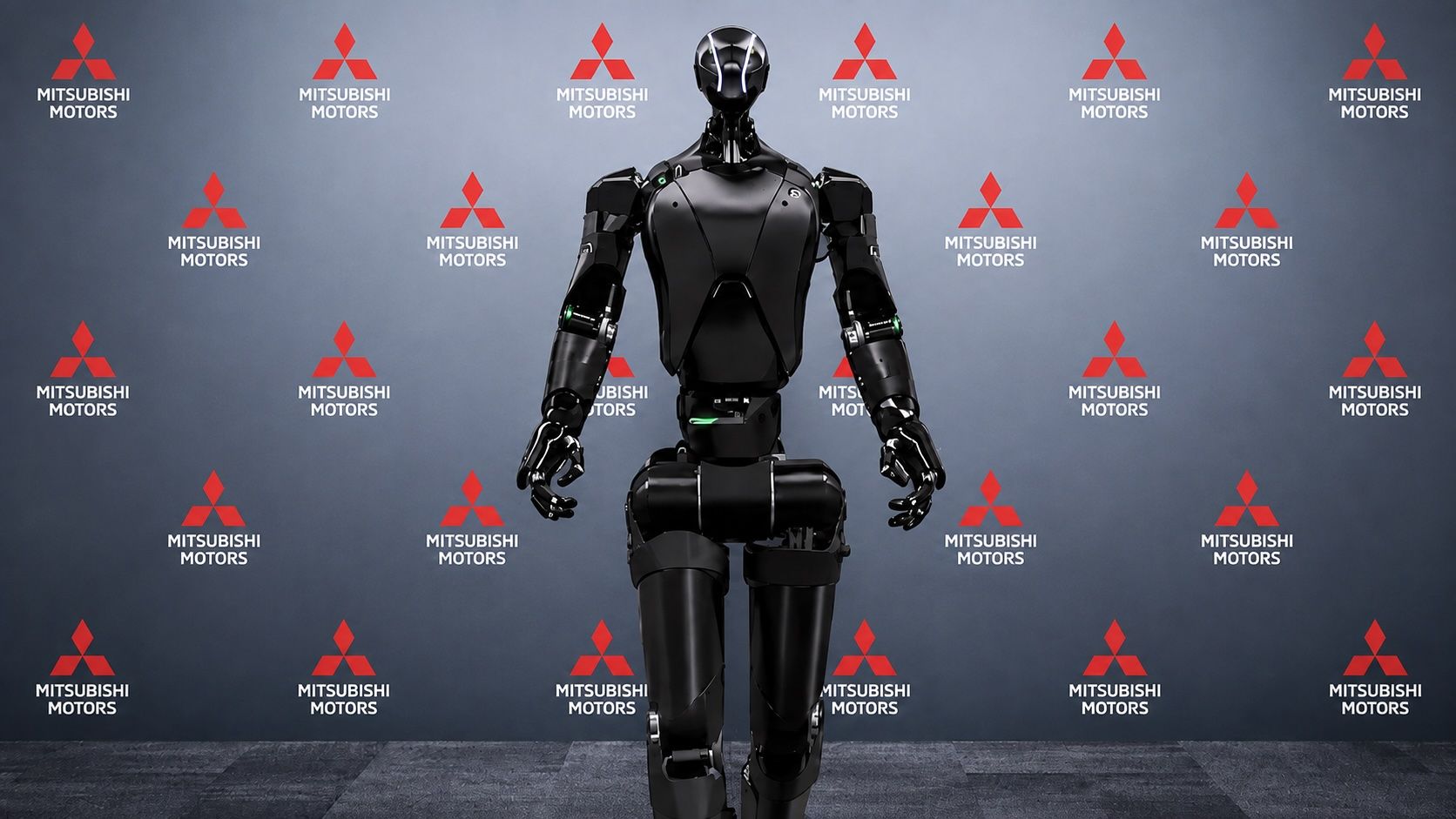
Image source: Highlanders / Images 2.0
The Rundown: Mitsubishi Motors is the latest automaker to enter the humanoid race — building them on the Kyoto line that used to build combustion engines, targeting up to 1K units a month starting in early 2027.
The details:
Mitsubishi has partnered with the University of Tokyo spinout Highlanders to develop humanoids and explore mass-producing them at a Kyoto plant.
First units will go to work on Mitsubishi’s own engine lines, while the internal deployment doubles as a data-collection run.
Highlanders, founded in 2023, develops general-purpose humanoid and quadruped robots, plus robot simulators and related services.
Why it matters: Japan’s old manufacturing base is now the cheapest on-ramp for its new one — a domestic humanoid startup gets a factory, capital, and a production line instead of another pilot. Mitsubishi is both the builder and the first buyer, which means the robots have somewhere to go whether or not anyone else orders them.
QUICK HITS
📰 Everything else in robotics today
X Square Robot livestreamed its dual-arm system sorting 1,816 parcels in an hour at over 98% accuracy to make the case for cheaper logistics automation.
Uber sold its entire stake in Serve Robotics, surprising the delivery robot company as their once-close partnership frays over disagreements on how to scale operations.
Unitree’s Shanghai IPO was more than 5,500 times oversubscribed by retail investors, valuing the Chinese humanoid-robot maker at $9B, the FT reports.
Tesla has shown its first Cybercab with a low-profile Starlink antenna built into the roof, though it has not explained its purpose, Electrek reports.
Researchers at KIT developed a robotic recycler that diagnoses broken devices and salvages valuable parts, making automated repair cheaper than replacement.
Thousands of Indian workers are being paid to film their manual tasks for AI companies, creating robot-training data that will likely automate the jobs they perform.
DEEP Robotics deployed its Lynx M20 wheeled-legged robot in China’s Serling Tso Nature Reserve to film Tibetan antelopes while minimizing human disturbance.
MIT spinout Magnendo nabbed $32M from the U.S. to develop a magnetic robotic system that could increasingly automate catheter-based treatment of ischemic strokes.
A purported U.S. drone maker used false domestic-manufacturing claims to get DJI-linked tech approved by the FCC, revealing gaps in the drone ban’s enforcement.
🎓 Highlights: News, Guides & Events
Read our last AI newsletter: Grok 4.6 storms the AI frontier
Read our last Tech newsletter: Apple’s almost-glass iPhone
Read our last Robotics newsletter: Uber’s $10B answer to Waymo
Today’s AI tool guide: Create 100 ad hooks from customer feedback
See you soon,
Rowan, Zach, Shubham, Jennifer, and Nate — The Rundown’s editorial team

Stay Ahead on AI.
Join 2,000,000+ readers getting bite-size AI news updates straight to their inbox every morning with The Rundown AI newsletter. It's 100% free.