GM replaces 1K workers with 50 robots
PLUS: This three-armed bot slices up sushi

Jennifer Mossalgue
June 22, 2026
Read Online | Sign Up | Advertise

Good morning, robotics enthusiasts. GM cut more than 1K jobs at Factory Zero, then brought in some 50 Fanuc cobots to handle repetitive assembly work.
The company calls it a safety-and-efficiency upgrade. The UAW local that represents the remaining workforce has filed grievances, with its president saying members are “disgusted.” Detroit’s factory of the future is here — and it’s hiring robots.
In today’s robotics rundown:
GM’s EV factory just got a lot more robotic
This sushi bot slices up perfect sashimi
NASA built a better, faster Mars rover
This startup wants driverless trucking in California
Quick hits on other robotics news
LATEST DEVELOPMENTS
GENERAL MOTORS
🚗 GM’s EV factory just got a lot more robotic

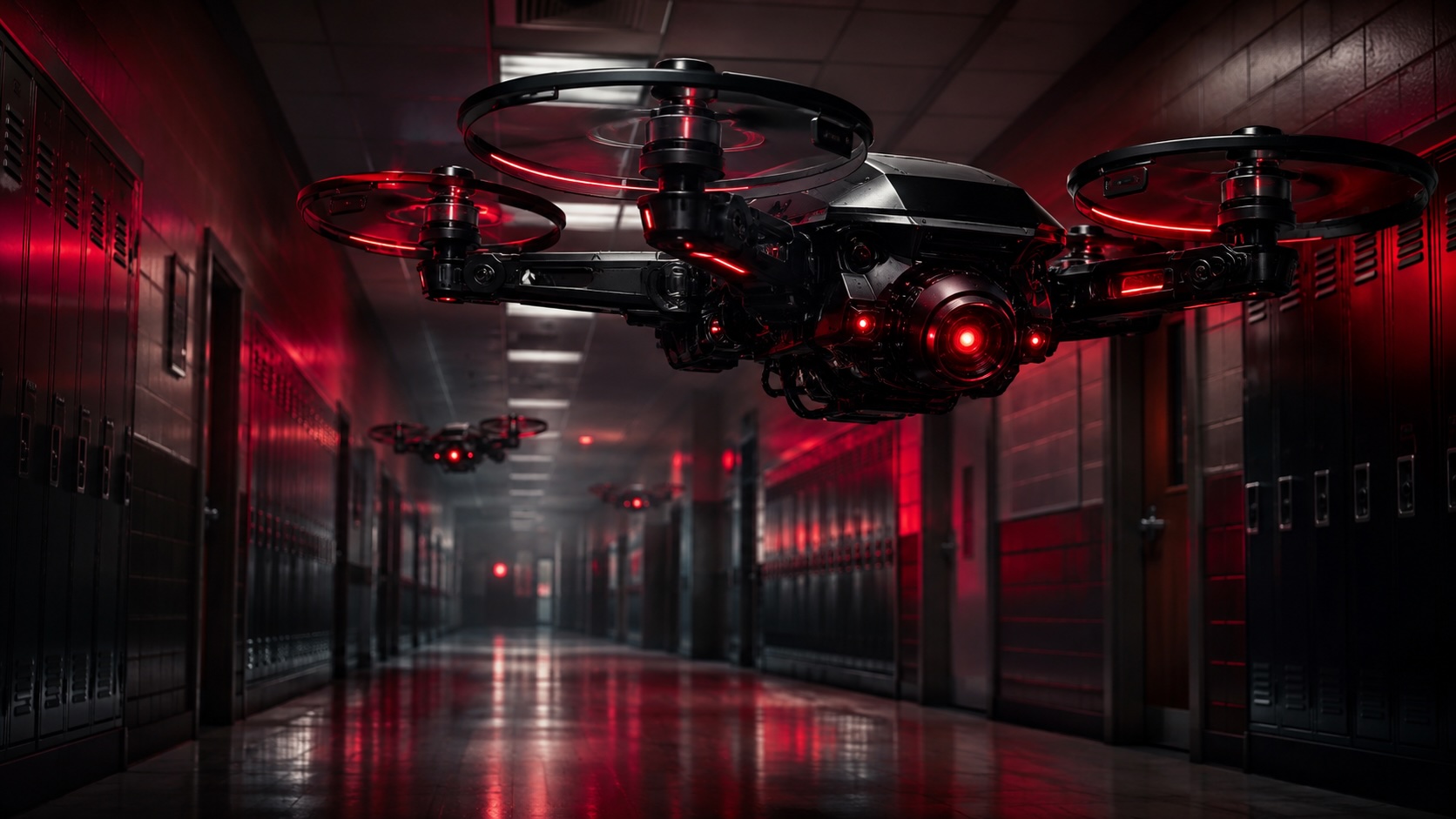
Image source: Ideogram / The Rundown
The Rundown: General Motors swapped more than a thousand people for about 50 collaborative robots at its flagship Detroit EV plant, turning Factory Zero into a test case for just how far “future of work” automation is willing to go.
The details:
General Motors cut more than 1K jobs at its Factory Zero EV plant as it slowed production and softened earlier EV targets.
In the months after those layoffs, GM installed 50 collaborative robots from Fanuc to take over repetitive, physically demanding tasks on the assembly line.
GM says the new robots are part of a broader modernization push to improve safety and efficiency, insisting they are meant to assist remaining workers.
Union officials are filing grievances over the cuts, warning Factory Zero could become the blueprint for automated EV production across the industry.
Why it matters: The Factory Zero rollout is an early glimpse of what large‑scale automation will look like in the next generation of EV manufacturing. How GM balances productivity gains from cobots against union pressure and political scrutiny could shape labor expectations for every automaker chasing a “software‑defined” factory.
ROBOTICS RESEARCH
🍣 This sushi bot slices up perfect sashimi
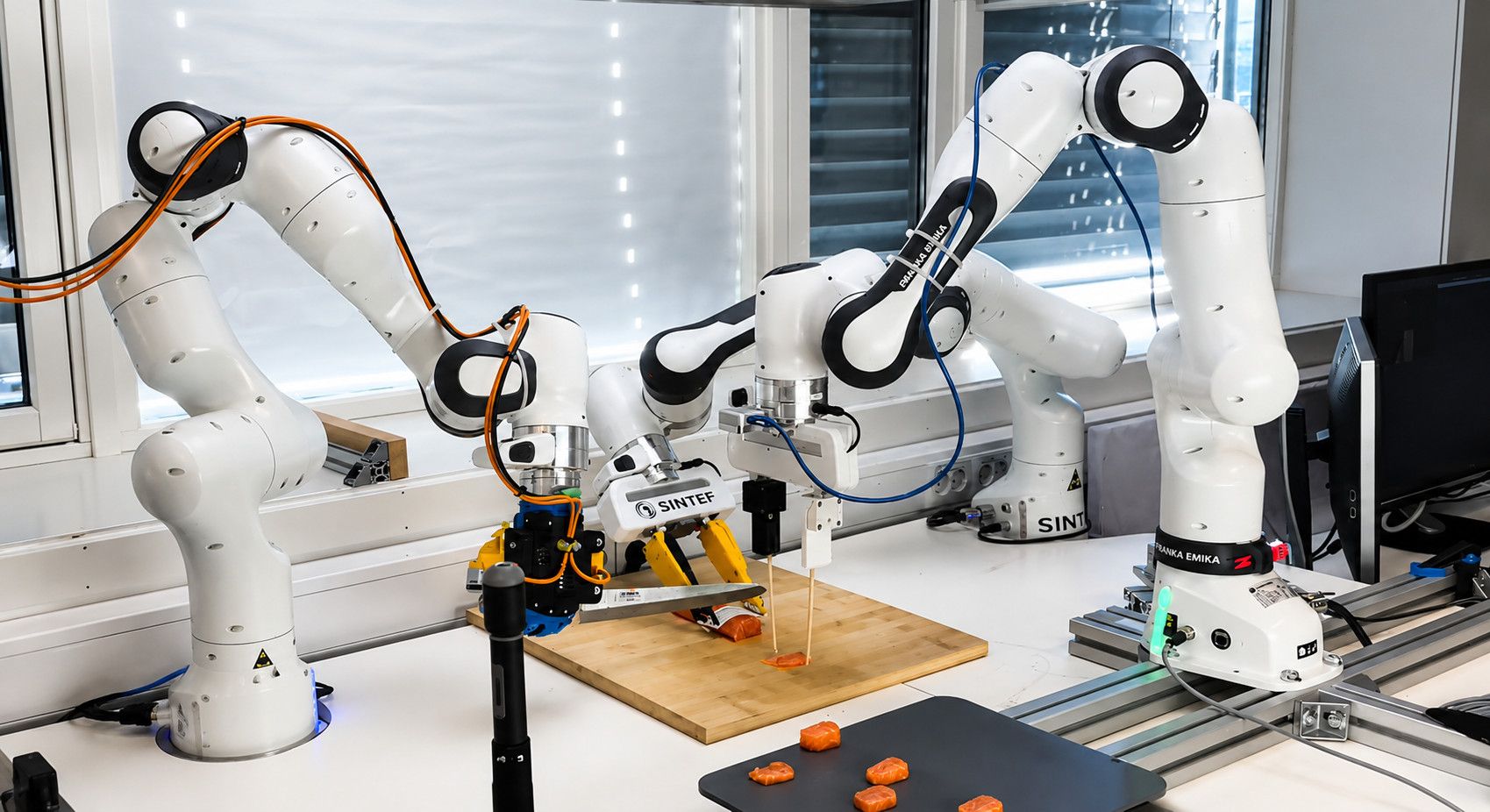
Image source: S. Herland et al. / npj Robotics
The Rundown: A Norwegian research team has built a three-armed “Sashimi-Bot” that can autonomously straighten, slice, and plate salmon sashimi using tactile sensing and AI-trained motion control.
The details:
Sashimi-Bot uses three coordinated arms: one to position the salmon, one to wield a knife, and one to pick up slices with chopsticks and move them to a tray.
A GelSight tactile sensor mounted near the knife edge lets the robot “feel” when the blade hits the cutting board, enabling fine-grained control.
The team trained the system in simulation using deep reinforcement learning, then transferred the controllers to the physical robot without hand-tuning.
In live tests, Sashimi-Bot produced 34 slices ranging from 6–16 mm thick, successfully transferring 26 of 28 that landed on the plate.
Why it matters: Most robots still do best with rigid, predictable objects, and soft, deformable materials like food remain a hard open problem. Sashimi-Bot’s combination of sim-trained policies and tactile closed-loop control is a concrete proof-of-concept that the gap is closable, with implications well beyond the sushi counter.
HUMBLE ROBOTICS
🚛 This startup wants driverless trucking in California
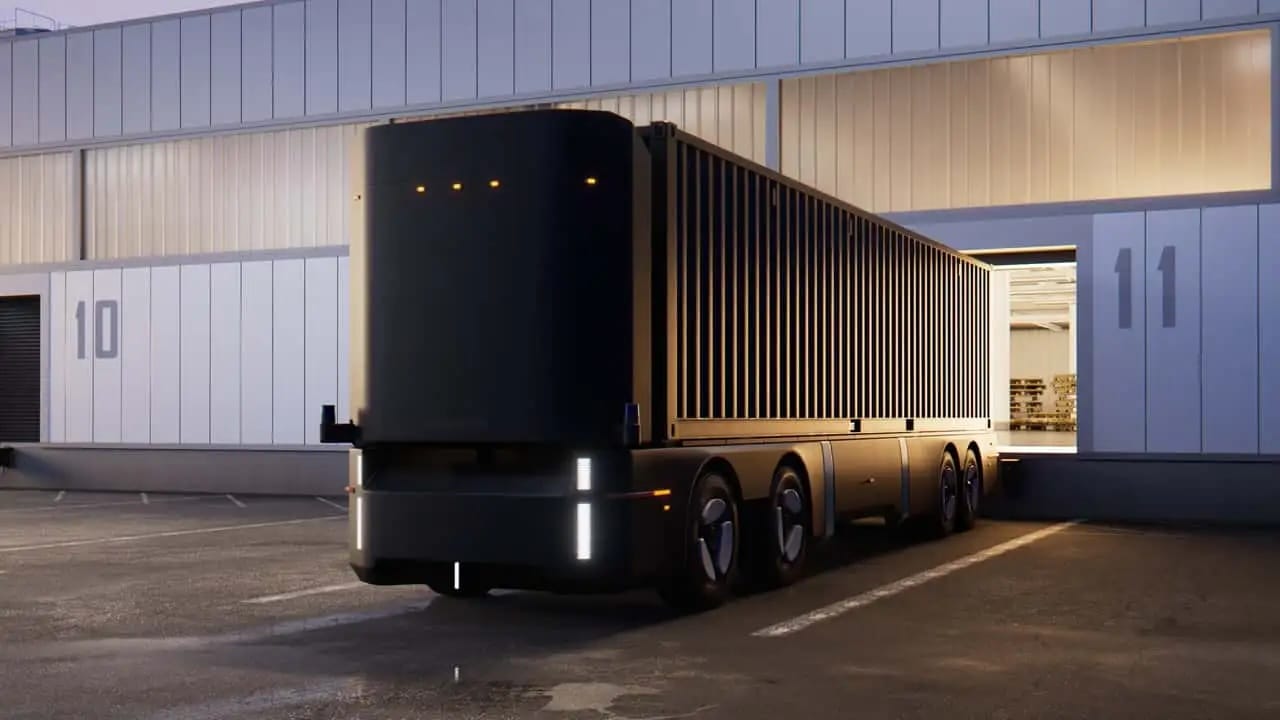
Image source: Humble Robotics
The Rundown: A stealthy San Francisco startup called Humble Robotics wants to put fully driverless freight trucks — no cab, no steering wheel, no human backup — on California’s highways, and the state’s truck drivers are gearing up for a fight.
The details:
Humble, which recently raised $24M, is building purpose-built Class 8 trucks with no driver’s seat, aiming for lower costs than retrofitted autonomous semis.
California has started clearing a path for heavy-duty autonomous testing, even as lawmakers debate stricter rules, reports The LA Times.
The Teamsters and other driver groups say driverless freight endangers both safety and tens of thousands of trucking jobs.
Supporters argue the tech could ease driver shortages and keep California competitive with faster-moving states like Texas, where Aurora operates.
Why it matters: California employs more than 130K truck drivers, making it one of the highest-stakes battlegrounds for autonomous freight in the country. How the state resolves the standoff between driverless trucking ambitions and organized labor will set the template for the rest of the U.S.
NASA
🚀 NASA built a better, faster Mars rover
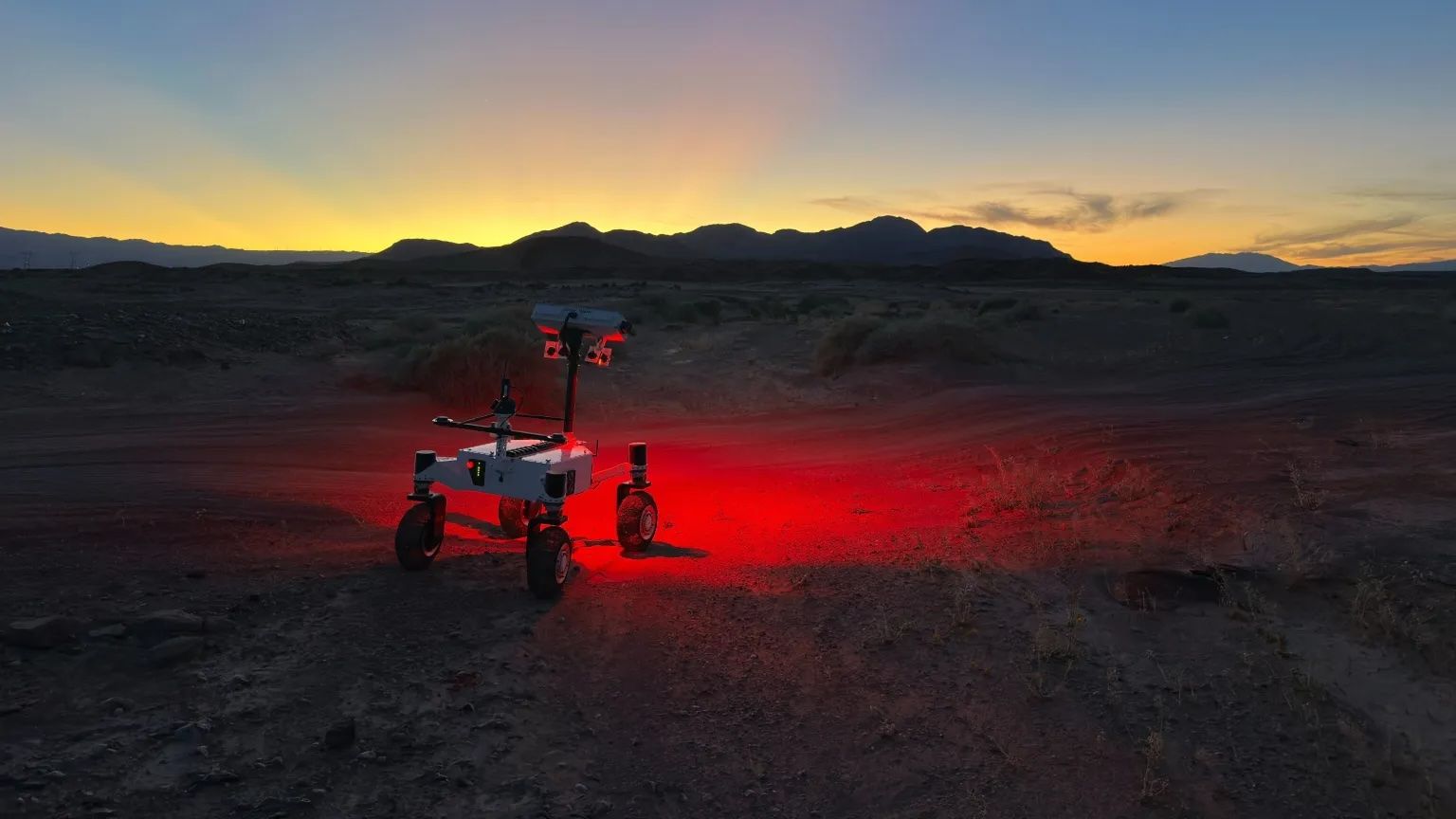
Image source: NASA Jet Propulsion Lab
The Rundown: NASA is testing Ernest — a four-wheeled prototype rover that can step over obstacles and hit speeds 6x faster than Perseverance — as a blueprint for more autonomous, terrain-capable rovers on future Moon and Mars missions.
The details:
Ernest is a JPL-developed four-wheeled prototype built to advance the passive rocker-bogie suspension system used on every Mars rover since Sojourner.
Its active suspension gives it the ability to lift each wheel and switch between gaits, including squirming, wheel-walking, and obstacle-climbing.
In a seven-day March 2026 field test in the Colorado Desert, it covered 16 miles in 37 hours at up to 0.6 mph.
Its autonomy was trained via RL in a high-fidelity JPL simulator — sometimes running thousands of hours of virtual tests in a single weekend.
Why it matters: For decades, slow speeds and terrain limits have forced mission planners to route around inaccessible terrain on Mars and the Moon. Ernest is designed to change that, but it’s not yet mission-ready. Still, JPL says its 4-foot frame is fast enough to do a “genuine science road trip” across Mars or the Moon.
QUICK HITS
📰 Everything else in robotics today
Chinese robotics firm Coowa, backed by SoftBank, is preparing to file for a Hong Kong IPO at a valuation of $3B after raising $600M in its latest funding round.
Waymo is recalling nearly 4K fifth‑gen robotaxis after discovering at least 13 cases where its vehicles drove into closed freeway construction zones due to a software flaw.
China’s MindOn says it has trained a team of different robot types to handle logistics together using one shared AI “brain,” with demo footage showing the workflow.
The U.S. installed 38K industrial robots in 2025 — an 11% year-over-year jump, per the IFR — with food industry adoption surging 30% to help drive the recovery,
A tiny 24-hour capsule shop in Hong Kong is about to run entirely on a single humanoid, which stocks shelves and handles checkout on its own.
Mind Children, based in Seattle, has developed Codey, a humanoid designed to operate autonomously in public spaces and interact primarily with children.
Go’s ¥88.6B ($553M) IPO, Japan’s biggest of 2026, is giving taxi-hailing leader Go the capital to pursue robotaxis as a way to solve the country’s taxi driver shortage.
Yueban’s Xiaoban smart toilet robot drives itself to people with limited mobility, helps them use the bathroom, then returns to its dock to grind, flush, and self‑clean.
Humanoid robotics firm Figure says it has reached a milestone where its robot fleet exceeds its human workforce headcount.
NASA’s Perseverance rover has crossed the 26.2-mile marathon mark five years after landing on Mars.
COMMUNITY
🎓 Highlights: News, Guides & Events
Read our last AI newsletter: Google’s Nobel winner jumps to Anthropic
Read our last Tech newsletter: Xbox’s studio crisis gets bigger
Read our last Robotics newsletter: Meet Eno, the anti-humanoid robot
Today’s AI tool guide: Mine Reddit complaints into business ideas
RSVP to next workshop on June 25: Get consultant-grade strategy from AI
See you soon,
Rowan, Joey, Zach, Shubham, and Jennifer — The Rundown’s editorial team


Stay Ahead on AI.
Join 2,000,000+ readers getting bite-size AI news updates straight to their inbox every morning with The Rundown AI newsletter. It's 100% free.