The Rundown AI / Guides / General / Get Better AI Outputs With This Multiple Choice Technique
Get Better AI Outputs With This Multiple Choice Technique

Get Better AI Outputs With This Multiple Choice Technique

Try Text

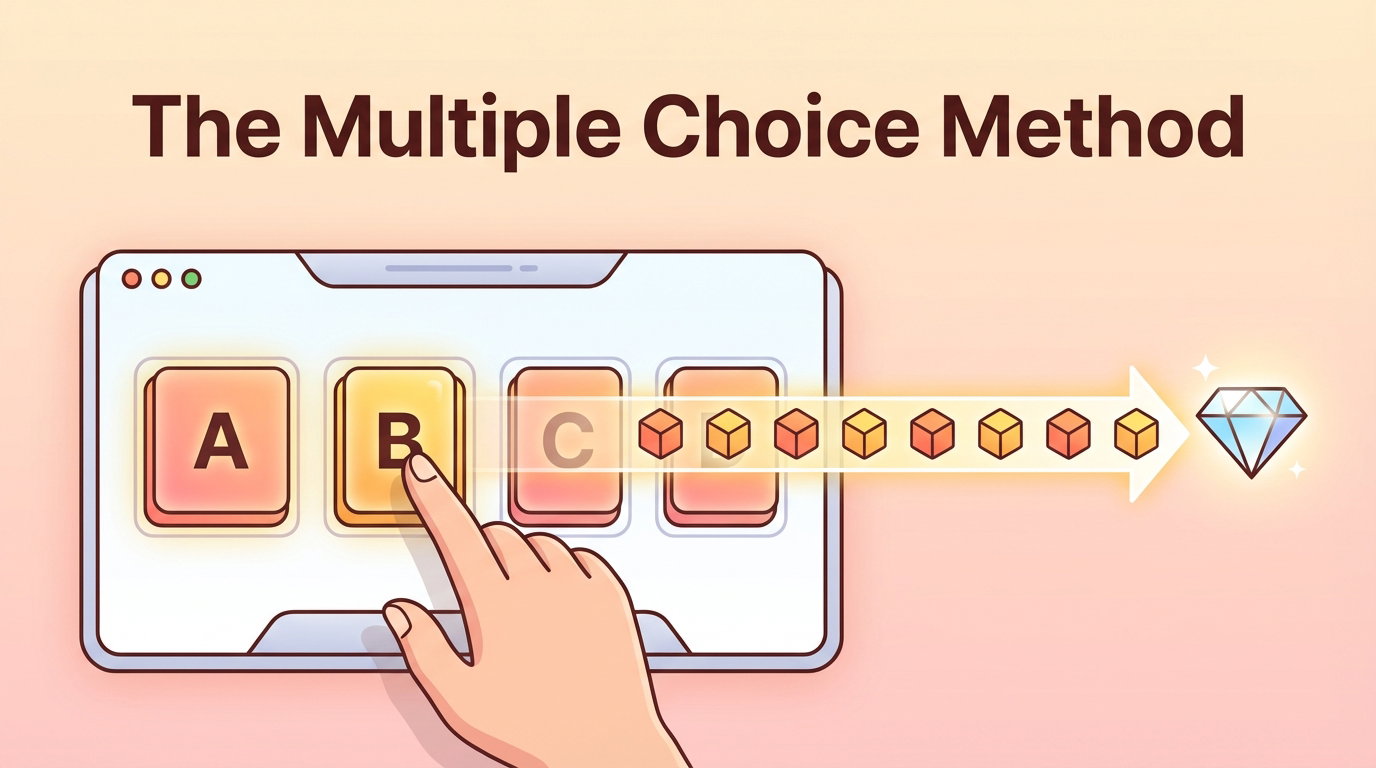
The Rundown In this guide you will learn a universal strategy to get better outputs from any AI model at a fraction of the cost. You’ll also learn the fundamentals of tokens and context windows. Who This Is Useful For Marketers and designers that generate lots of images People who want to prompt better Anyone frustrated with lengthy AI chats that seem to go in circles What You Need to Get Started Access to any chat-based AI or AI image generator For this tutorial specifically, Nano Banana Pro in  AI Studio  and Google’s  NotebookLM Step 1 When you interact with an AI, you use text. As a general rule, every four characters read or generated by an AI is equal to one token. Tokens are the chunks of text the model processes. So if you send a prompt with 40 characters, you will be billed for using 10 tokens, plus however many tokens the AI responds with. Input tokens are used when AI parses what you, the user, sends to the AI. Output tokens are based on the words, images or videos generated by AI. Output is often pricier depending on the model. Finally, you can think of context as the relevant tokens stored in the AI’s “brain” while you’re talking to it. It is just text summarizing what you’ve talked about so far that gets passed to the AI on each new request. The more context you have, the more tokens AI will have to process to keep track of your conversation. This guide will teach you to minimize the amount of unhelpful context you add to the AI’s “brain”. This will significantly improve your outputs and reduce the amount of tokens you spend. Step 2 Think of a task you want AI to accomplish. We are using  AI Studio  to create logo concepts for our brand. We want to minimize unhelpful messages stored in context. Break it down into goal, task and next steps. For example: Goal:  Generate a logo for my student run moving company "Uni Movers.” Task:  Interview me with 5-10 multiple choice questions about my brand and vision in order to build context for the task. Next Steps:  Create 4 distinct logo concepts. Step 3 Now you can put your prompt together. We’ve found it’s better to write out goal, task and next steps conversationally. Here’s our example prompt: Your job is to generate a logo for my student run moving company "Uni Movers". Interview me with 5-10 multiple choice questions about my brand and vision in order to build context for the task. Our goal is to create 4 distinct logo concepts Send your prompt to your AI. Step 4 You should get back a list of questions with multiple choice answers. You can simply respond with each choice separated by a comma like “A, B, A, C…”. Why this works: the multiple choice constraint removes potential for miscommunication. It ensures your response uses terminology that AI will understand. Step 5 The AI should respond with four logo concepts. To save on tokens, you can prompt it “Generate a 4x4 grid with each logo concept in a separate grid cell”. Then you can ask it to generate the concepts you like as standalone images. Going Further If you’re working with more complex workflows like ideas for email copy or blog post outlines, you can copy and paste each concept into a fresh chat and refine it there. If you’ve got great results from the interview method, you can export and re-use the context by asking the AI to extract the context as system instructions in markdown. Check out  this guide  for a full walkthrough of this strategy.

Save 15% on Thoughtly by joining The Runway University

Through our vast network of over 100 partnerships with major AI companies, we also offer University members free access or major discounts to the many popular AI tools along with AI certified courses, daily guides on AI tools and many more.

Tools

No items found.

AI training for the future of work.

Get access to all our AI certificate courses, hundreds of real-world AI use cases, live expert-led workshops, an exclusive network of AI early adopters, and more.

General