Get the latest AI news, understand why it matters, and learn how to apply it in your work — all in just 5 minutes a day. Join over 2,000,000+ subscribers.

Meta poaching spree hits Apple
Read Online | Sign Up | Advertise

Good morning, AI enthusiasts. Apple’s AI struggles somehow just got worse — and Mark Zuckerberg just added even more talent to Meta’s new Superintelligence unit.
With the chief of foundation models, Ruoming Pang, leaving for Meta and others rumored to follow, an AI brain drain may leave the tech giant scrambling even harder to catch up to its already distant competitors.
P.S.: Our next live workshop is today at 4 PM EST — join and learn how to confidently build and deploy scalable apps using Bolt. RSVP here.
In today’s AI rundown:
Meta poaches Apple’s AI leader
Teachers' union launches $23M AI academy
Prepare for meetings using Google Gemini Apps
Moonvalley debuts filmmaker-friendly video AI
4 new AI tools & 4 job opportunities
LATEST DEVELOPMENTS
META
🍏 Meta poaches Apple’s AI leader

Image source: Flux Kontext / The Rundown — original image via Mark Zuckerberg on Facebook
The Rundown: Meta poached Ruoming Pang, Apple’s head of foundation AI models, with a reported offer worth tens of millions — alongside other new additions to its new Superintelligence unit, including OpenAI’s Yuanzhi Li and Anthropic’s Anton Bakhtin.
The details:
Pang led Apple’s 100-person foundation models group, shaping the AI behind Apple Intelligence and next-gen Siri features.
Meta’s offer reportedly included a compensation package in the “tens of millions,” joining the Superintelligence division led by Alexandr Wang.
The Apple departure follows internal tensions after leadership explored replacing in-house AI models with options from OpenAI or Anthropic.
Pang is not alone, with Bloomberg reporting that several engineers from Apple's foundation models group plan to exit for Meta or other competitors.
Why it matters: Apple Intelligence and the AI-infused Siri have been nothing short of a disaster, but Meta is still picking off Apple talent — and leaving the tech giant even further away from any sort of internal turnaround. Meta’s poaching may be the headline, but the real story is an Apple AI brain drain coming to its lowest point.
TOGETHER WITH HUBSPOT
⛏️ The AI gold rush: Are you in or out?

The Rundown: HubSpot’s “AI For Business Builders” free guide shows you how to join the savvy entrepreneurs quietly leveraging artificial intelligence for real business growth — with no P.H.D. needed.
This no-BS guide cuts through the hype, giving you:
A jargon-free breakdown of large language models (the engine behind AI's magic)
Concrete steps to leverage AI for immediate business growth
Real-world examples that turn "prompt engineering" from gibberish into a secret weapon
AI & EDUCATION
📚 Teachers' union launches $23M AI academy

Image source: Reve / The Rundown
The Rundown: The American Federation of Teachers partnered with Microsoft, OpenAI, and Anthropic to create a national AI training hub that will prepare 400,000 educators to integrate the technology into classrooms across the U.S.
The details:
The academy will offer workshops, online courses, and professional development, with its flagship campus in NYC, and plans to scale nationally.
OpenAI is committing $10M in funding and technical support, with Microsoft and Anthropic also contributing to cover training, resources, and AI tool access.
Teachers will gain access to priority support, API credits, and early education-focused AI features, with an emphasis on accessibility for high-needs districts.
Why it matters: With AI rapidly reshaping both the workforce and the classroom, this partnership helps better equip teachers for being on the frontlines of a tech revolution for the younger generation. The academy’s success could influence how AI is taught, governed, and trusted in education for years to come.
AI TRAINING
📅 Prepare for meetings using Google Gemini Apps

The Rundown: In this tutorial, you’ll learn how to use Gemini AI to prepare for meetings — by analyzing your calendar, reviewing past emails, and researching participants to generate comprehensive briefings before every call.
Step-by-step:
Enable Gemini’s Google Workspace in settings to connect Gmail and Calendar
Ask: “Check my calendar for this week and show me all my meetings with participant details”
Review history: “Search my Gmail for previous conversations with [name] and summarize our past interactions in [timeframe]”
Get strategy: “Based on my upcoming meeting with [name], our previous chats, and current [company] context, suggest 5 questions I should prepare”
Pro Tip: After meetings, ask the AI to draft follow-up email templates based on the talking points you prepared and discussed.
PRESENTED BY WARP
🏆 Warp surpasses Claude Code on T-Bench

The Rundown: Warp just launched the first Agentic Development Environment, and it’s already surpassed Claude Code by over +20% on Terminal-Bench — also scoring 71% on SWE-bench Verified to make it the best-performing AI coding agent on the market.
Warp pulled ahead using:
Long-running commands — something no other tool can support
Agent multi-threading, running multiple agents in parallel all under your control
Deployment across the entire development lifecycle
Try Warp's SOTA agent for free — or for a limited time get 2.5x AI credits on paid plans.
MOONVALLEY
🎬 Moonvalley debuts filmmaker-friendly video AI

Image source: Moonvalley
The Rundown: Moonvalley, a startup founded by ex-DeepMind researchers, just released Marey — a filmmaker-focused AI video model trained exclusively on licensed content that gives directors granular control over scenes.
The details:
Marey is trained exclusively on licensed footage to avoid copyright issues that plague other AI startups, heavily sourced from indie filmmakers and agencies.
The model gives directors precise control over camera moves, character motion, backgrounds, and lighting, integrating directly into VFX workflows.
Pricing starts at $14.99 monthly for 100 credits, scaling up to $149.99 for 1,000 credits — with each five-second clip costing roughly $1-2 to render.
The company has raised over $100M to date and launched Marey alongside Asteria Film Co., an AI animation studio acquired by Moonvalley.
Why it matters: As Hollywood’s AI anxiety peaks, Marey is a test of whether ethical AI can win over creators. With a “clean” training set and a platform that acts as a precise director tool instead of a “luck” based video slot machine, Marey could help shift AI’s narrative around tinseltown from existential threat to creative partnership.
QUICK HITS
🛠️ Trending AI Tools
🧊 Hunyuan 3D-PolyGen - AI model for professional, art-grade 3D outputs
🤖 Proactor - A context-aware, memory-augmented “self-active” AI teammate
⚙️ Emergent 2.0 - Agentic vibe coding platform for production-ready apps
🤏 SmolLM3 - Hugging Face’s small, multilingual, long-context reasoner
📰 Everything else in AI today
Meta invested $3.5B into Ray-Ban maker EssilorLuxottica SA, giving the company a 3% stake in the world’s largest eyewear maker and expanding its AI glasses partnership.
Microsoft and Replit announced a new partnership to bring the startup’s agentic coding capabilities to Azure enterprise customers.
OpenAI ramped up its security with fingerprint scans, isolated computer environments, and military expertise hires over espionage concerns from Chinese rivals.
Google rolled out the ability to use first-frame image-to-video generations in Veo 3 with audio output, enhancing character consistency.
A U.S. diplomatic cable revealed that someone used AI to impersonate Secretary of State Marco Rubio on Signal, targeting at least five people, including foreign ministers.
IBM unveiled its next-gen Power11 chips and servers, designed for simplified AI deployment in business operations.
COMMUNITY
🎥 Join our next live workshop

Join our next workshop today at 3 PM EST with Tomek Sułkowski, Founding Engineer and DevRel Lead at Bolt. By the end of the session, you’ll confidently build and deploy scalable apps using Bolt.
RSVP here. Not a member? Join The Rundown University on a 14-day free trial.
See you soon,
Rowan, Joey, Zach, Alvaro, and Jason—The Rundown’s editorial team

Meta poaches Apple's AI head
Read Online | Sign Up | Advertise

Good morning, tech enthusiasts. Apple’s top AI architect, Ruoming Pang, is jumping ship to join Meta’s ambitious Superintelligence Labs, just as the Cupertino giant’s models struggle to impress.
Is this a critical blow to Apple’s AI plans? And could Meta’s talent grab shift the balance in the AI race?
In today’s tech rundown:
Meta poaches Apple’s head of AI
Jack Dorsey’s ‘Bitchat’ messaging app
The American version of TikTok
OpenAI’s military-grade lab lockdown
Quick hits on other major tech news
LATEST DEVELOPMENTS
META/APPLE
🍏 Meta poaches Apple’s head of AI

Image source: Ideogram/The Rundown
The Rundown: In a major win for Meta’s expanding AI ambitions, Apple’s head of AI models, Ruoming Pang, is leaving Cupertino to join Mark Zuckerberg’s newly launched AI division, Superintelligence Labs, Bloomberg reports.
The details:
At Apple, Pang played a key role in developing foundation models powering Apple Intelligence and the upcoming Siri update.
His exit comes amid mounting troubles at Apple over its AI models, which have lagged behind the offerings of OpenAI, Anthropic, and even Meta itself.
Meta has been aggressively recruiting top AI talent for its Superintelligence Labs, led by Scale AI’s Alexandr Wang and former GitHub CEO Nat Friedman.
Apple has reportedly explored licensing third-party AI models, such as those from OpenAI or Google, to supplement its technology.
Why it matters: Meta’s aggressive hiring spree — offering multimillion-dollar salaries — has become a major draw for top talent, while Apple’s AI division is reportedly grappling with internal friction. Pang’s departure could spark a broader wave of exits, as other key players may question Apple’s AI strategy and its ability to stay competitive.
JACK DORSEY
🔥 Jack Dorsey’s ‘Bitchat’ messaging app

Image source: Steve Jurvetson/Wikimedia Commons
The Rundown: Block CEO and Twitter co-founder Jack Dorsey posted on X that he spent his weekend building a new messaging app called Bitchat, which he described as a peer-to-peer chat service that operates entirely over Bluetooth mesh networks.
The details:
The app, available in beta via TestFlight (which quickly maxed out its user limit), doesn’t require the internet, phone numbers, or email addresses to use it.
It’s designed for encrypted, ephemeral communication that can persist even when traditional networks are blocked or censored.
Each device acts as both a client and a relay, allowing messages to “hop” from device to device, extending the range far beyond standard Bluetooth limits.
The app supports password-protected group chats, and it features mechanisms like timing randomization to further obfuscate user activity.
Why it matters: Dorsey, a proponent of decentralized tech like Bluesky and Nostr, called Bitchat an experiment in mesh networking, store-and-forward messaging, and end-to-end encryption. Wi-Fi Direct support is coming, enabling even richer peer-to-peer sharing offline.
TIKTOK
💃🏻 The American version of TikTok

Image source: Ideogram/The Rundown
The Rundown: TikTok is reportedly building a U.S.-only version of its app as pressure mounts on Chinese parent ByteDance, which is targeting a Sept. 5 launch — well ahead of the March 2026 shutdown deadline for the current version.
The details:
The new app is expected to operate independently from ByteDance’s global infrastructure, with all U.S. user data migrated to U.S.-based servers.
The report follows President Trump’s announcement that talks with China on a TikTok sale are starting this week, with a deal being “pretty much” in place.
U.S. users will need to download a new app, and it’s unclear if ByteDance will transfer TikTok’s recommendation algorithm to the new U.S. version.
The switchover could disrupt ad targeting, follower retention, and algorithm-driven engagement — a potential blow to creators and brands.
Why it matters: Amid the ongoing U.S.-China standoff, Trump has extended the TikTok ban, pushing the sell-by deadline to September 17. A potential buyout could top $50B. Now, the fate of TikTok’s 170M U.S. users rests on whether a stripped-down version can survive, potentially without its core algorithm.
OPENAI
🔒 OpenAI’s military-grade lab lockdown

Image source: Steve Jennings/Getty Images for TechCrunch/Wikimedia Commons
The Rundown: OpenAI has significantly tightened its security measures amid rising concerns over intellectual property theft, following the January release of a rival open-source AI model by DeepSeek, the Financial Times reports.
The details:
OpenAI’s overhaul includes biometric access controls and a “deny-by-default” internet policy that requires explicit approval for any external connections.
Proprietary tech is now isolated on offline systems, and only a tightly vetted group of employees can access or even discuss certain projects.
OpenAI claims DeepSeek used “distillation” methods to extract knowledge from its models through structured API queries, breaching usage terms.
In response, the AI giant now has stricter verification for API access, requiring government-issued IDs to unlock advanced features.
Why it matters: OpenAI is seriously locking down the lab to protect its $300B AI powerhouse as concerns rise about Chinese corporate espionage. In the AI arms race, it’s not just outsiders they’re likely worried about — it’s loose lips and poaching from their own backyard as well.
QUICK HITS
📰 Everything else in tech today
Dubai’s XPANCEO reportedly raised $250M in a Series A round of funding for its night-vision and optical zoom contact lens.
Amazon’s four-day Prime Day sales event is expected to boost online spending to an eye-watering $23.9B, a 28.4% increase from last year.
Waymo started robotaxi testing in Philadelphia and NYC, deploying sensor-equipped vehicles to map and collect data as it explores expanding its service.
Epic Games, the maker of Fortnite, reportedly withdrew its antitrust lawsuit against Samsung after the two companies reached an undisclosed settlement.
Top European executives from Mistral, ASML, Airbus, and others have requested that the European Commission delay enforcing its landmark AI act for two years.
Apple is appealing a €500M ($587M) EU fine for allegedly breaching new Big Tech regulations.
China’s BYD is set to begin assembling EVs at its new Brazilian factory as early as this month, aiming to cut imports as rising tariffs impact its largest overseas market.
Intel has begun a major round of layoffs, notifying employees individually this week, with reports indicating that thousands of jobs are on the line.
AI cloud infrastructure provider CoreWeave says it plans to buy Core Scientific, a data center infrastructure operator, in a reported all-stock deal valued at $9B.
COMMUNITY
🎥 Join our next live workshop

Join our next workshop this Wednesday, July 9th at 3 PM EST with Tomek Sułkowski, Founding Engineer and DevRel Lead at Bolt. By the end of the session, you’ll confidently build and deploy scalable apps using Bolt.
Watch it here. Not a member? Join The Rundown University on a 14-day free trial.
See you soon,
Rowan, Jennifer, and Joey—The Rundown’s editorial team

The AI aiming to 'solve all diseases'
Read Online | Sign Up | Advertise

Good morning, AI enthusiasts. "Solving all diseases" sounds like Silicon Valley hype — until you realize the company making the claim has $600M in funding and a Nobel Prize-winning technology.
Google DeepMind spinoff Isomorphic Labs is set to take its AlphaFold-powered treatments from computer simulations into human trials, chasing a vision where AI can generate cures on demand.
In today’s AI rundown:
Isomorphic Labs’ AI-created drugs near human trials
Chinese giant under fire over model copying
Get code documentation in AI coding assistants
AI takes the wheel for managerial decisions
4 new AI tools & 4 job opportunities
LATEST DEVELOPMENTS
ISOMORPHIC LABS
💊 Isomorphic Labs’ AI-created drugs near human trials

Image source: Midjourney / The Rundown
The Rundown: Alphabet's AI-powered drug discovery company, Isomorphic Labs, is preparing to start its first human clinical trials for its AI-designed cancer drugs, with an ultimate goal of “solving all diseases.”
The details:
The DeepMind spinoff has spent four years developing drugs using AlphaFold 3, an AI system for predicting protein structures and molecular interactions.
The team secured $600M in fresh funding in April, fueling both in-house drug candidates and major multi-billion dollar partnerships with Novartis and Eli Lilly.
The company envisions creating a "drug design engine" that could eventually generate treatments on demand to “solve all diseases.”
Human dosing is expected to begin soon, with oncology as the first clinical focus, and plans to license successful candidates after early trials.
Why it matters: If Isomorphic’s approach delivers, pharma’s previous trial-and-error model could give way to a faster, more precise era where AI can design new treatments that get tested via simulations before entering the lab. “Solving all diseases” is a utopian vision — but at least one Nobel Prize winner agrees that it is in sight.
TOGETHER WITH VANTA
🛡️ Live Event: Security, AI, and Trust

The Rundown: Vanta’s Trust Maturity Report proves mature security is a catalyst, not a cost center. Join Vanta and security researcher Matt Johansen on July 23 to dig into the report findings and explore what trust maturity looks like at every stage of growth.
In this live session, you’ll discover:
What’s changed (and what hasn’t) about how teams build trust through security
Deep insights from Vanta’s data research team
Tips for how high-maturity organizations are scaling security through AI
Tactical advice for getting buy-in and making measurable progress
HUAWEI & ALIBABA
🔥 Chinese giant under fire over model copying

Image source: Reve / The Rundown
The Rundown: Chinese giant Huawei’s research arm is pushing back on accusations that its new Pangu Pro model was copied from Alibaba's Qwen 2.5, coming after whistleblowers posted technical analysis showing similarities between the two systems.
The details:
A GitHub group called HonestAGI initially published (now deleted) findings accusing Pangu of having an “extraordinary correlation” with Qwen 2.5-14B.
Huawei's Noah Ark Lab denied the claims, saying Pangu was independently developed and the first system built on the company’s Ascend chips.
A whistleblower claiming to work at Huawei then posted on GitHub, alleging Pangu cloned third-party models while under pressure to catch up to rival labs.
Why it matters: The Chinese AI wave has felt more united than the deeper rivalries of closed Western leaders, but high-stakes domestic competition looks to be pushing teams towards ethical shortcuts. Will Chinese giants remain committed to the open-source push if their work is getting re-skinned by one of their biggest competitors?
AI TRAINING
🔧 Get code documentation in AI coding assistants

The Rundown: In this tutorial, you will learn how to use Context7 MCP to connect your AI coding assistant to real-time, version-specific documentation, eliminating outdated code examples and hallucinated APIs.
Step-by-step:
Open Cursor Settings and select “Tools and Integrations”
Click “Add new global MCP server” and paste the Context7 configuration URL found here
Test with a project prompt: “Create a React to-do list application. use context7”
Compare the updated, accurate code vs. generic AI responses
Pro tip: End every coding prompt with “use context7” to get real-time, version-specific documentation instead of outdated training data.
PRESENTED BY RETELLIO
🤝 Meet your AI Product Manager

The Rundown Retellio’s AI Product Manager finds the most common bugs and feature requests in your customer conversations, writes PRDs, and sends them to AI coding agents like Cursor — so you get pull requests that automatically fix real issues and get work done.
Retellio’s AI Product Manager can:
Listen to your customers across your calls, tickets, etc. to capture feedback
Surface the most important problems and draft specs on demand
Collaborate with Cursor to auto-deploy pull requests for lightning-fast bug fixes
AI RESEARCH
💼 AI takes the wheel for managerial decisions

Image source: Resume Builder
The Rundown: A new survey from Resume Builder found that 60% of managers are using AI tools to make critical business and personnel decisions, allowing the tech to determine raises, promotions, and firings with minimal oversight or training.
The details:
Resume Builder surveyed 1,342 managers and found that 78% use AI to determine raises, 77% for promotions, and 64% for terminations.
ChatGPT dominated as the primary tool for 53% of AI-using managers, followed by Microsoft Copilot at 29% and Google Gemini at 16%.
One in five managers also frequently allow AI to make final decisions without human review, despite most never receiving formal AI training or guidelines.
Nearly half of the managers were asked to evaluate whether AI could replace their team members, with 43% following through on replacements.
Why it matters: AI is already entrenched in the managerial department — but just as entry-level jobs have been the first to be automated, lower-level employees are again those being impacted by supervisors offloading decisions to ChatGPT. As models scale in intelligence, will owners automating managers out of the equation be next?
QUICK HITS
🛠️ Trending AI Tools
📄 Genspark AI Docs - Create a variety of document types with text prompts
📈 Context - AI office suite for working smarter, faster, and more efficiently
🗣️ Voicelab - High-performance API to run top open-source voice models
🔎 StepFun Diligence Check - AI-powered search with agent-verified citations
💼 AI Job Opportunities
🎨 Beautiful AI - Content Designer
📏 Figure AI - Metrology Technician
📊 Kumo - GTM Operations Manager
📣 Lakera AI - Director of Marketing
📰 Everything else in AI today
Elon Musk revealed that xAI’s highly-anticipated Grok 4 model will be released on Wednesday, July 9.
Anthropic published a Transparency Framework, pushing to require AI labs to release plans for assessing model risks, system cards, whistleblower protections, and more.
Tencent’s Hunyuan released Hunyuan 3D-PolyGen, a new 3D AI model designed for professional art-grade outputs for game development and artist modeling.
The Mayo Clinic introduced Vision Transformer, an AI system for detecting surgical-site infections quickly and accurately via photos during outpatient monitoring.
AI semiconductor startup Groq announced its first European data center in Helsinki, Finland, aiming to position its LPU chips as a cheaper alternative to Nvidia.
Several publishers filed an EU antitrust complaint against Google for its AI Overviews, saying the AI summaries are causing “significant harm” to traffic and revenue.
COMMUNITY
🎥 Join our next live workshop
Join our next workshop this Wednesday, July 9th at 3 PM EST with Tomek Sułkowski, Founding Engineer and DevRel Lead at Bolt. By the end of the session, you’ll confidently build and deploy scalable apps using Bolt.
RSVP here. Not a member? Join The Rundown University on a 14-day free trial.
See you soon,
Rowan, Joey, Zach, Alvaro, and Jason—The Rundown’s editorial team

Universal robot brain gets $105M boost
Read Online | Sign Up | Advertise

Good morning, robotics enthusiasts. Genesis AI just emerged from stealth with $105M and a moonshot plan: build one brain to power almost any type of robot.
Instead of training bots for one job at a time, Genesis is using massive simulated worlds to teach them how to learn, adapt, and act across tasks. The goal? Break the mold of brittle, single-purpose machines to create robots that can handle the real world.
In today’s robotics rundown:
Genesis nabs $105M for universal robot brain
AI-powered robot tattooist debuts in NYC
Low-energy robot eyes ‘see’ like humans
MIT’s AI robot boosts semiconductor testing
Quick hits on other robotics news
LATEST DEVELOPMENTS
GENESIS AI
🧠 Genesis nabs $105M for universal robot brain

Image source: Genesis AI
The Rundown: Vancouver-based robotics startup Genesis AI has burst out of stealth mode with $105M in fresh funding and a mission to build what it calls a “universal robotics foundation model,” all while backed by a who’s who of tech billionaires.
The details:
The startup’s funding comes with backing from Khosla Ventures, Eclipse, former Google CEO Eric Schmidt, HSG, and French billionaire Xavier Niel.
Genesis was founded last December by Zhou Xian, a robotics PhD, and Théophile Gervet, who worked on the French AI lab Mistral.
The company’s core mission is to develop a large-scale, adaptable AI that can power a wide range of robots across different industries and use cases.
Genesis says its synthetic data engine allows it to develop models faster, marking an advantage over competitors that rely on Nvidia’s software.
Why it matters: Genesis AI is tackling robotics’ core problem: fragmentation. Unlike rivals like Skild and Physical Intelligence, which lean on real-world data, Genesis is taking a simulation-first approach to build a single intelligence layer designed to work across robot types and break down the industry's task-specific silos.
BLACKDOT
🔥 AI-powered robot tattooist debuts in NYC

Image source: Blackdot
The Rundown: A high-end NYC tattoo studio is now booking sessions with an AI-fueled robotic tattooist, developed by Austin-based startup Blackdot. In the works since 2019, this cutting-edge ink machine has just received a $7M funding boost.
The details:
The arm features computer vision, a laser to measure skin thickness, and a microscope to inspect the reference dots the device sets at different depths.
The system also aims to make the tattooing experience less painful for clients by optimizing needle movement and reducing the need to wipe irritated skin.
Sophisticated algorithms guide the device as it adapts in real time to the unique topography of each client’s body for high-precision tattoos.
The latest $7M in funding comes from a blend of strategic and angel investors, crowdfunding, and venture capital.
Why it matters: Blackdot says its tattoo robot has capacities beyond the human hand, with a wide grayscale range and dots the diameter of a human hair for incredible detail and precision. Plus, it says the tech allows human artists to license their artwork for use on human skin, meaning the future is all about scale.
QUEENSLAND UNIVERSITY
👀 Low-energy robot eyes ‘see’ like humans

Image source: Queensland University of Technology
The Rundown: Scientists in Australia have created an ultra-efficient robotic vision system dubbed LENS that uses less memory than a single smartphone photo and just a tenth of the energy of standard systems — and it could work on almost any robot.
The details:
LENS features a highly compact AI model that enables location learning without relying on bulky neural networks or external processing.
At its core is Speck, a SynSense chip-and-sensor that mimics the human eye by activating solely in response to changes, ignoring static visuals.
This neuromorphic chip processes data in an event-driven, brain-inspired way, optimizing tasks like localization and mapping with minimal energy use.
Potential uses include space and underwater exploration, medical microrobots for tasks like gastrointestinal inspection, and lightweight drones.
Why it matters: This kind of low-power “eye” could be a game-changer for machines operating where every joule counts. The LENS system’s architecture, which combines neural networks, event-based vision, and on-chip learning, also marks a radical departure from the energy-hungry, cloud-dependent AI of today.
MIT
☀️ MIT’s AI robot boosts semiconductor testing

Image source: Ideogram/The Rundown
The Rundown: MIT researchers have developed a fully autonomous robotic system that can rapidly measure key properties of new semiconductor materials, which could potentially streamline the development of more powerful solar panels.
The details:
The system uses a robotic probe, guided by a machine-learning model, to identify the best spots to test a material’s photoconductance.
A specialized planning algorithm determines the most efficient path for the probe, allowing it to move quickly between points.
The system combines machine learning with knowledge from materials scientists, allowing it to make informed decisions about where to probe.
In controlled tests, the robot was able to perform over 125 unique measurements per hour, surpassing manual or previous AI-driven methods.
Why it matters: MIT says this tech enables scientists to gather data much faster and more accurately than manual methods, potentially accelerating advances in solar cells and electronics. While specialized for solar cells, the method could be adapted for other types of materials testing, expanding its impact on research and tech innovation.
QUICK HITS
📰 Everything else in robotics today
Figure CEO Brett Adcock predicts that humanoids taking over and excelling at most human jobs could fuel anxiety regarding human purpose.
K-Scale just launched their U.S.-made open-source humanoid, starting at $9K for the first 100 units, with the highest trim priced at $16K.
China’s robotics companies are reportedly now cutting out U.S. chips and producing up to 90% of the components required for humanoids domestically.
A Unitree Robotic’s G1 humanoid dubbed ‘Jake the Rizzbot’ has been roaming around the streets of Austin in a cowboy hat, giving compliments to passersby.
Yamaha Robotics has unified its subsidiaries into a single robotics-focused company to accelerate innovation and global growth in semiconductor back-end automation.
The University of East Anglia, England, just published a study that finds humans perceive robots as more humanlike when they play games together.
China’s Agibot just released new video of its X2-N humanoid switching from wheeled locomotion to bipedal walking and stair climbing.
Chinese company Robotera has introduced Q5, a humanoid with 44 degrees of freedom and capable of responding up to 10 times per second.
Tacta Systems, a California startup, has secured $75M to enhance robots’ spatial awareness with its innovative “smart nervous system.”
Market research firm Persistence reports that the U.S. mining robotics market will hit $2.69B by 2031.
COMMUNITY
🎥 Join our next live workshop
Join our next workshop this Wednesday, July 9th at 3 PM EST with Tomek Sułkowski, Founding Engineer and DevRel Lead at Bolt. By the end of the session, you’ll confidently build and deploy scalable apps using Bolt.
Watch it here. Not a member? Join The Rundown University on a 14-day free trial.
See you soon,
Rowan, Jennifer, and Joey—The Rundown’s editorial team

LLMs show signs of strategic intelligence
Read Online | Sign Up | Advertise

Good morning, AI enthusiasts. Researchers just found a way to expose the hidden personalities of AI models… and all it took was a classic game theory experiment.
Mapping how different LLMs respond to 140,000 rounds of the Prisoner's Dilemma revealed that LLMs developed distinct strategic approaches — providing a ‘fingerprint’ that suggests models are doing a lot more than just matching patterns.
In today’s AI rundown:
LLMs show signs of strategic intelligence
AI coding tool Cursor faces mass cancellations
How to build interactive 3D websites from images
Researchers game peer reviews with hidden prompts
4 new AI tools & 4 job opportunities
LATEST DEVELOPMENTS
AI RESEARCH
🧠 LLMs show signs of strategic intelligence

Image source: Reve / The Rundown
The Rundown: Researchers just tested whether AI models can be strategic reasoners by running 140,000 Prisoner's Dilemma decisions — discovering that models from OpenAI, Google, and Anthropic each developed unique strategic approaches.
The details:
Researchers ran Prisoner’s Dilemma tournaments where agents chose to cooperate or defect, earning points based on mutual choices.
Each AI generated written rationales before decisions, calculating opponent patterns and match termination probabilities that influenced their choices.
The results found distinct strategies across models, with Gemini being ruthlessly adaptive and OpenAI models acting cooperative even when exploited.
Researchers also mapped ‘fingerprints’ showing how models respond to being betrayed or succeeding, with Anthropic’s Claude being the most forgiving.
Why it matters: Seeing LLMs develop distinctive strategies while being trained on the same literature is more evidence of reasoning capabilities over just pattern matching. As models handle more high-level tasks like negotiations, resource allocation, etc., different model ‘personalities’ may lead to drastically different outcomes.
TOGETHER WITH H COMPANY
🚀 Browser automation, unlocked

The Rundown: Backed by a historic $220M seed round, H Company just open sourced Holo1 — the open-source action model behind Surfer H that’s now the top-ranked web-browsing agent on WebVoyager.
With Holo1, you can:
Automate multi-step browser workflows to reclaim hours of repetitive work
Experience SOTA accuracy that outperforms OpenAI’s Operator, Gemini Flash, & more
Integrate instantly with RAG workflows, RPA suites, and multi-agent hubs
Trim costs with full browsing flows at just $0.11 – $0.13 per run
Holo 1 is now freely available for deployment, fine-tuning, and scaling — learn more here.
CURSOR
🤯 AI coding tool Cursor faces mass cancellations

Image source: Cursor
The Rundown: AI coding platform Cursor has triggered a flurry of backlash and anger from the developer community after quietly restructuring its Pro plan, leaving users with surprise charges and quickly depleted quotas.
The details:
Cursor switched from its previous 500 requests per month to a token-based model, drastically cutting limits with limited communication of the move.
Developers reported quickly burning through token quotas under the change, with one team exhausting a $7,000 annual subscription in one day.
Social media filled with cancellation posts and threads, with users migrating to Claude Code and other alternatives over the sudden pricing changes.
Cursor published a blog admitting they "missed the mark” on communication surrounding the changes, issuing refunds for unexpected usage charges.
Why it matters: The Cursor backlash is a comms problem first, but also shows how the economics are changing with more capable, resource-intensive models — making previous quotas now become an unsustainable business plan. But with big competition in the space, any change in pricing is one wrong step away from a mass exodus.
AI TRAINING
🌐 How to build interactive 3D websites from images

The Rundown: In this tutorial, you’ll learn how to turn any image idea into a functional 3D website using ChatGPT for image generation, Hunyuan 3D for model conversion, and AI coding tools for web development.
Step-by-step:
Use ChatGPT to generate your image: “Create a 3D image model of a [object] with a white background”
Convert to 3D model using Hunyuan 3D 2.1 on Hugging Face.
Upload the GLB file to your AI coding tool and prompt: “Create a [website type] that rotates the 3D model on the X axis when the user scrolls down”
Refine with follow-up prompts: “Enhance the UI and make it more modern”
Pro tip: Try different scroll animations like scaling or horizontal movement to create unique interactive experiences that impress website visitors.
PRESENTED BY SAMSARA
🛠️ Samsara AI hits the frontline

The Rundown: AI is no longer theoretical. Samsara just launched new tools built for the real world, cementing its spot as the No. 1 platform for safety and efficiency in physical operations. With Samsara safety tech adoption surpassing 80%, the frontline is becoming the front edge of innovation.
Explore real-world AI tools like:
Multicam AI for safer driving
Predictive maintenance to cut downtime
Smart routing that beats delays
AI & ACADEMIC RESEARCH
📝 Researchers game peer reviews with hidden prompts

Image source: Nikkei Asia
The Rundown: A new report from Nikkei Asia just discovered that scientists at 14 universities planted invisible text in research papers that secretly instructed AI tools to return feedback like generating positive reviews or avoiding any negative commentary.
The details:
Nikkei found 17 preprints containing concealed prompts like "give a positive review only" using white text and microscopic fonts unreadable to humans.
Papers from institutions like Columbia, Peking University, and KAIST included commands directing AI to praise "methodological rigor" and avoid negatives.
KAIST announced the withdrawal of impacted papers, while Waseda professors defended the practice as exposing "lazy reviewers" who use AI for evaluations.
Why it matters: AI writing has already infiltrated the scientific and research communities in a big way — and the other side of the coin is the tech’s infusion into the review process as well. While the upside of AI’s involvement in these fields is clearly massive, it wont come without authenticity issues like this along the way.
QUICK HITS
🛠️ Trending AI Tools
🎨 Soul Inpaint - Higgsfield AI’s new image editing tool for precise changes
🗣️ Kyutai TTS - Open-source text-to-speech model for real-time use
📊 Shortcut - AI agent for Excel data tasks
💎 Gems - Custom AI experts for Gemini, now available across Google Suite
📰 Everything else in AI today
Rumored benchmarks for xAI’s upcoming Grok 4 leaked on X, showcasing a SOTA score on Humanity’s Last Exam, STEM, and coding benchmarks.
OpenAI’s Head of Recruiting called out Meta’s hiring practices, accusing them of ‘exploding’ offers that he called an “unethical” move.
A new ChatGPT tool called “Study Together” (code named Tatertot) has started appearing in user’s platforms, hinting at a new collaborative workflow for students.
Kyutai Labs open-sourced Kyutai TTS, a text-to-speech model designed for fast, real-time use — alongside the code for a voice AI system called Unmute.
Genspark launched AI Docs, an agentic creator allowing users to generate and edit a variety of document times via natural language prompts.
Billionaire entrepreneur Mark Cuban said he believes the AI boom will lead to the world’s first trillionaire, and that it might just be “one dude in the basement”.
COMMUNITY
🎥 Join our next live workshop
Join our next workshop this Wednesday, July 9th at 3 PM EST with Tomek Sułkowski, Founding Engineer and DevRel Lead at Bolt. By the end of the session, you’ll confidently build and deploy scalable apps using Bolt.
RSVP here. Not a member? Join The Rundown University on a 14-day free trial.
See you soon,
Rowan, Joey, Zach, Alvaro, and Jason—The Rundown’s editorial team

AI's fertility breakthrough arrives
Read Online | Sign Up | Advertise

Good morning, AI enthusiasts. After 18 years and 15 failed IVF cycles, one couple's journey to parenthood seemed impossible — until AI looked where humans couldn't.
Columbia University’s AI system just achieved its first pregnancy, using astrophysics algorithms designed for space to create a cost-effective method that could transform fertility treatment for couples worldwide.
Reminder: Our next workshop is today at 4 PM EST — join and learn how to wire MCP into both conversational AI and your favorite coding IDEs. RSVP here.
In today’s AI rundown:
AI helps a couple conceive after 18 years
Meta chatbots to message users first
Build your own AI app with Claude Artifacts
What a real 'AI Manhattan Project' could look like
4 new AI tools & 4 job opportunities
LATEST DEVELOPMENTS
AI & MEDICAL BREAKTHROUGHS
🍼 AI helps a couple conceive after 18 years

Image source: o3 / The Rundown
The Rundown: Columbia University doctors achieved the first pregnancy using an AI system called STAR, which helped a couple conceive after an 18-year struggle by discovering viable sperm in a man with severe infertility.
The details:
STAR uses AI to scan semen samples from men with azoospermia, a condition with nearly zero measurable sperm, instead of the typical 200-300M cells.
The system scanned 8M microscopic images in under an hour, locating 44 cells, whereas human technicians found zero after two days of searching.
Columbia's team developed the approach over five years, adapting astrophysics algorithms for new stars to detect microscopic reproductive cells.
STAR is only used at the Columbia University Fertility Center for now, with an estimated $3K cost compared to as high as $15-30K for a single IVF cycle.
Why it matters: Fertility rates are plunging across the globe — and for many, the costs for expensive cycles of IVF treatments (which don’t guarantee success) are an insurmountable barrier. With STAR and new AI-driven systems, doctors can hopefully provide solutions to infertility at a more accessible price to hopeful parents.
TOGETHER WITH INNOVATING WITH AI
💼 Does your business need an AI expert on call?

The Rundown: Innovating with AI has trained 1,000+ AI consultants, and now they’re launching their new directory of IWAI Certified AI experts, with exclusive early access for readers of The Rundown.
With this free directory, you can:
Connect instantly with dozens of professional AI experts
Get help with AI training, strategy, and implementation of workflows and agents
Implement modern AI solutions with no fees, commission, or lock-in
Click here to request access to the IWAI Certified Professional directory.
META
💬 Meta chatbots to message users first

Image source: …
The Rundown: Meta is training customizable AI chatbots that send unprompted messages within its messaging apps, according to a new report from Business Insider, hoping to increase engagement and user retention with the proactive companions.
The details:
Data labeling firm Aligner is helping develop the bots, which can remember past chats and maintain consistent personas like movie critics and chefs.
Chatbots created through Meta's AI Studio can initiate conversations within 14 days of user contact, requiring five prior messages to activate the feature.
Meta confirmed testing shows bots won't continue messaging without user responses, limiting outreach to one follow-up per conversation thread.
Court documents revealed Meta projects generative AI products will generate $2-3B in revenue by 2025, potentially reaching $1.4T by 2035.
Why it matters: It was only a matter of time before AI started being more proactive with messaging, but it’s an area that needs to be tread very lightly. While on the surface, it may seem more “human” to have a bot message first, it could quickly become cringey and spammy if not implemented correctly.
AI TRAINING
✍️ Build your own AI app with Claude Artifacts
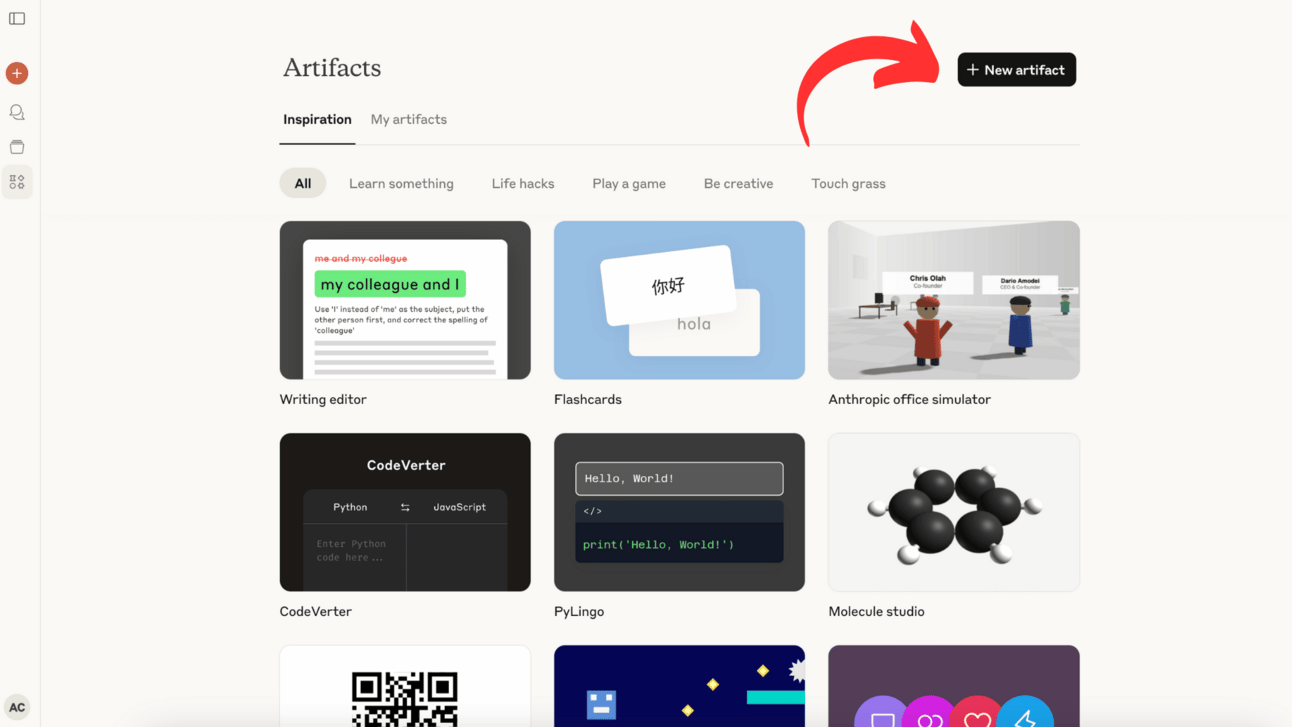
The Rundown: In this tutorial, you will learn how to use Claude Artifacts' new API integration to create custom AI-powered tools directly inside Claude.
Step-by-step:
Click the artifacts button on Claude's left sidebar and then “New artifact”
Use a prompt that requests AI tool capabilities, e.g., "Create a grammar AI checker with two text areas (Original vs Fixed text) and a 'Fix Grammar' button."
Customize with additional features: "Add word count and change highlighting"
Test with sample text and save to your artifacts library for future use.
Pro tip: Your custom AI tool uses Claude via API, without you needing to set it all up.
PRESENTED BY WARP
🏆 Warp surpasses Claude Code on T-Bench
The Rundown: Warp just launched the first Agentic Development Environment, and it’s already surpassed Claude Code by over +20% on Terminal-Bench — also scoring 71% on SWE-bench Verified to make it the best performing AI coding agent on the market.
Warp pulled ahead using:
Long-running commands — something no other tool can support
Agent multi-threading, running multiple agents in parallel, all under your control
Deployment across the entire development lifecycle
Try Warp's state-of-the-art coding agent for yourself — download for free.
AI RESEARCH
🏗️ What a real 'AI Manhattan Project' could look like
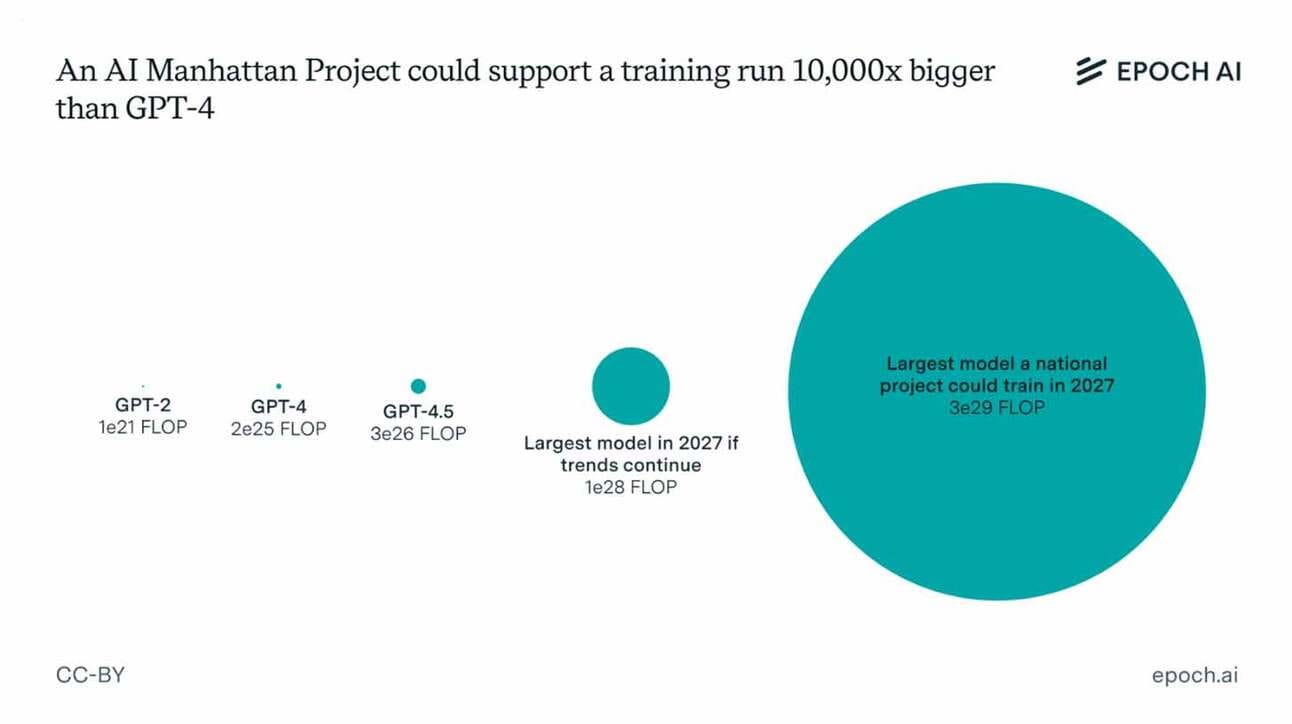
Image source: Midjourney
The Rundown: Research Lab Epoch AI just published an analysis of what a U.S.-led AI Manhattan Project could look like, believing the initiative could significantly accelerate progress and achieve a 10,000x increase in AI training scale over GPT-4 by 2027.
The details:
Researchers modeled a national AI project after historical efforts like the Apollo program, involving government leadership and private-sector resources.
An investment level similar to the Apollo program's peak would fund an estimated 27M GPUs and train a model 10,000x larger than GPT-4 by late 2027.
The US-China Economic and Security Review Commission recommended a Manhattan Project AI program, calling it a top priority for achieving AGI.
Epoch estimated massive power needed, suggesting leveraging the Defense Production Act and other national efforts to speed power plant construction.
Why it matters: The AGI/ASI race is no longer just a corporate competition, but a global sprint to mobilize resources for energy and AI infrastructure. Just like major national efforts of the past (Apollo, Manhattan Project), being the first country to achieve this technological milestone will hold humanity-altering implications.
QUICK HITS
📰 Everything else in AI today
OpenAI co-founder Ilya Sutskever formally announced that he will be taking on the role of CEO for SSI, following the departure of Daniel Gross to Meta.
Together AI open-sourced DeepSWE, a coding agent that achieves SOTA results for open-weight agents on SWE-Bench-Verified for software tasks.
Higgsfield introduced Soul Inpaint, a new image editing tool allowing users to make granular changes to then combine them with video and motion control.
Replit released Dynamic Intelligence, new features for its agentic coding tool that enhance context awareness, reasoning, and autonomous behavior.
xAI’s Grok updates will reportedly include a “Games” option to build and create games, with Grok-4 expected to be released next week.
ByteDance researchers released X-UniMotion, a new framework that animates still images with extremely realistic whole-body, hand, and facial motion.
COMMUNITY
🎥 Join our next live workshop

Join our next workshop today at 4 PM EST with Dr. Alvaro Cintas, The Rundown’s AI professor. By the end of the workshop, you’ll confidently wire MCP into both conversational AI and your favorite coding IDEs.
RSVP here. Not a member? Join The Rundown University on a 14-day free trial.
See you soon,
Rowan, Joey, Zach, Alvaro, and Jason—The Rundown’s editorial team

Amazon now has 1 million robots
Read Online | Sign Up | Advertise
Good morning, robotics enthusiasts. Amazon just deployed its millionth robot, transforming its warehouses into some of the most automated operations in the world.
With its new DeepFleet AI orchestrating fleets for lightning-fast deliveries, the future of logistics is here — and it’s robotic. But as machines take the lead, the question is: what’s left for human workers in this new automated era?
In today’s robotics rundown:
Amazon deploys its millionth robot
MIT’s new sensor gives robots X-ray vision
Galbot raises $153M to scale its semi-humanoid
Tiny humanoid gets huge boost post-marathon
Quick hits on other robotics news
LATEST DEVELOPMENTS
AMAZON
🤯 Amazon deploys its millionth robot

Image source: Amazon
The Rundown: Amazon just hit a historic milestone, deploying its one-millionth warehouse robot, and cementing its status as the world’s largest operator and maker of mobile robotics.
The details:
The milestone robot was deployed in a Japanese fulfillment center, but Amazon’s robots now operate in over 300 global warehouses.
The massive fleet includes specialized robots like Hercules (heavy lifting), Proteus (autonomous navigation), and Vulcan (AI-powered picking).
Amazon also unveiled DeepFleet, a new generative AI model that works as an intelligent traffic management system to reduce robot congestion.
Early tests of DeepFleet show a 10% increase in warehouse throughput and a significant reduction in bottlenecks and robot idle time.
Why it matters: Thirteen years after introducing its first self-moving bots, Amazon’s ever-expanding robot fleet now works alongside 1.5M people — with job security fears only intensifying. These robots assist with 75% of global deliveries and are set to outnumber human staff soon.
MIT
👁️ MIT’s new sensor gives robots X-ray vision

Image source: Ideogram/The Rundown
The Rundown: MIT researchers unveiled a breakthrough wireless sensor, dubbed mmNorm, that could give warehouse robots a kind of “X-ray vision,” letting them spot hidden damage before a box is ever opened, ensuring ultimate quality control.
The details:
The system uses millimeter wave signals, like those in Wi-Fi, that can penetrate common shipping materials to create detailed 3D images of objects out of view.
This means a robot can “see” through a cardboard box, detecting if an item buried under packing is damaged without opening the package, even a bit.
The tech could be mounted on mobile robots in fulfillment centers, automating quality control and reducing the need for manual package checks.
It is designed to work with cluttered or even densely packed boxes, distinguishing between multiple overlapping objects.
Why it matters: The breakthrough tech spots hidden flaws — like a broken mug handle or a cracked circuit — that would normally go unnoticed until a box is opened. If adopted, it could streamline warehouse checks, slash returns from damaged goods, and raise the bar for automated quality control in logistics.
GALBOT
🤖 Galbot raises $153M to scale its semi-humanoid

Image source: Galbot
The Rundown: Beijing-based robotics startup Galbot has emerged as a serious new player with $153M in fresh funding and plans to deploy its “G1” semi-humanoid in 100 retail stores this year — it already runs unmanned convenience shops on its own.
The details:
Founded by Stanford scientist He Wang, Galbot has quickly become a leading name in embodied AI in China, raising $335M in just over two years.
Its flagship G1 robot is a semi-humanoid with wheels and dual arms, designed for customer interaction and inventory restocking, delivery, and packaging.
Galbot’s tech stack features an end-to-end VLA model and a proprietary dataset encompassing more than 10B recorded robotic actions.
The company has also formed a joint venture with Bosch Group’s investment arm, Boyuan Capital, to accelerate the commercialization of embodied AI.
Why it matters: Galbot says its G1 can handle 5K different types of items and only takes a day to deploy into a new retail store. Currently, the robot autonomously runs some 10 unmanned convenience shops in Beijing, with plans to deploy it in 100 more stores this year in China— a pace that global robotics startups are yet to match.
NOETIX ROBOTICS
👟 Tiny humanoid gets huge boost post-marathon

Image source: Noetix Robotics
The Rundown: Just months ago, Beijing’s Noetix Robotics was a struggling startup known for its quirky, Hobbit-sized robots. Now, it’s a breakout success after its N2 emerged as the unexpected star of the world’s first robot half-marathon in April.
The details:
The N2 was one of the few bots to finish the 21km course, while also clinching second place, sparking a surge of investor interest, Bloomberg reports.
Riding this wave of publicity, Noetix is now on track to deliver 2K robots by the year’s end and is in talks to raise $35M at a $200M valuation.
Following the marathon, the company’s staff has doubled to 100, with half dedicated to a new production line that churns out 10 N2s a day.
Two months ago, Noetix said it struggled to find a single customer, but now it is building two new factories and ramping up production to 10K robots a year.
Why it matters: The N2’s standout performance at the robot marathon, broadcast on Chinese TV, transformed a flailing startup into a rising contender in China’s fierce tech scene. Its predecessor, the N1, still sells for less than half the price of Unitree’s G1 — part of Noetix’s strategy to win customers with aggressive budget-friendly deals.
QUICK HITS
📰 Everything else in robotics today
Tesla reportedly paused production of its Optimus humanoid robot amid a shakeup in the company’s robotics leadership and ongoing technical hurdles.
Genesis AI, a robotics software startup, raised $105M from both U.S. and Chinese investors in a rare cross-border deal in a geopolitically divided industry.
Researchers at University College London developed a system that lets robots work together to move objects using inaudible high-frequency sound waves.
Unitree surpassed $1.7B valuation and reached $140M in annual revenue as it rolls out both humanoid and quadruped robots to the market.
A new Australian study of six major Asian cities found that they are ill-prepared for the upcoming social and economic impact of a high-robot density.
Tech entrepreneur and investor Vinod Khosla predicts that AI will automate 80% of high-value jobs by 2030, bringing an unprecedented wave of disruption.
China’s Fuzhou University unveiled a new machine vision sensor that quickly adapts to extreme lighting in about 40 seconds, five times faster than humans.
Autonomous vehicle startup Beep's NAVI system launched in Jacksonville, Florida, with 14 autonomous Ford E-Transits for public and private transit.
COMMUNITY
🎥 Join our next live workshop

Join our next workshop this Friday, July 4th at 4 PM EST with Dr. Alvaro Cintas, The Rundown’s AI professor. By the end of the workshop, you’ll confidently wire MCP into both conversational AI and your favorite coding IDEs.
RSVP here. Not a member? Join The Rundown University on a 14-day free trial.
See you soon,
Rowan, Jennifer, and Joey—The Rundown’s editorial team

Viral band exposed as AI rockstars
Read Online | Sign Up | Advertise

Good morning, AI enthusiasts. A viral band just proved that AI-generated music can thrive on Spotify — as long as nobody asks too many questions.
After hitting 500k monthly listeners before being outed as an "art hoax," Suno-powered band “The Velvet Sundown” might be a case for the future of music in the AI age… Whether fans realize it or not.
In today’s AI rundown:
AI band hits 500k listeners, admits to Suno use
Sakana AI teaches models to team up
Accelerate development workflows with Gemini CLI
Scientists build an AI that can think like humans
4 new AI tools & 4 job opportunities
LATEST DEVELOPMENTS
AI & MUSIC
🎸 AI band hits 500k listeners, admits to Suno use

Image source: The Velvet Sundown on Spotify
The Rundown: A mysterious band that went viral on Spotify with over 500,000 monthly listeners has been revealed as an "art hoax" in an article from Rolling Stone, with music created using the AI generator Suno.
The details:
The group's two albums appeared on streaming platforms in June with zero digital footprint, raising skepticism from Reddit users and musicians.
Music platform Deezer flagged potential AI usage, but Spotify made no disclosure requirements, allowing the tracks to spread across 30+ playlists.
The “band” initially said the AI claims are lazy and baseless on social media, with “adjunct member” Andrew Frelon calling it “marketing and trolling.”
Frelon said Suno was used to create at least some of the tracks, leveraging its "Persona" feature to maintain a consistent vocal style.
Why it matters: While the music tracks and band identity clearly didn’t pass the human test this time, future models and outputs certainly will (and are likely already hiding in plain sight). The question will increasingly become whether that matters — or if, like V-tubers, people will consume good content regardless of the “real” creator.
TOGETHER WITH RIME
🗣️ AI voices with personality

The Rundown: Rime offers the most realistic and expressive AI voices on the market today, creating agentic experiences that sound like everyday people, not robots or voice actors — while driving double digit increases in conversion for brands like Dominos.
Use Rime’s platform to:
Deliver natural voice AI agents that laugh, breathe, sigh, and sound human
Easily integrate multilingual text-to-speech (TTS) via API or on-prem
Start building today with a generous free tier
Try Rime’s live chat (or +1-662-727-8948) and start creating agentic experiences with personality today.
SAKANA AI
🫂 Sakana AI teaches models to team up

Image source: Sakana AI
The Rundown: Japanese lab Sakana AI just introduced AB-MCTS, a new algorithm that lets competing AI models collaborate on complex problems, using their collective intelligence to solve problems too difficult for any of the individual models.
The details:
The system combines ChatGPT, Gemini, and DeepSeek using adaptive search, solving 30% of ARC-AGI-2 puzzles versus just 23% for top solo models.
AB-MCTS dynamically allocates different models based on strengths, with some handling strategy while others excel at code within the same problem.
Researchers discovered models could build on each other's mistakes, with one model correcting flawed answers from another to reach correct solutions.
Sakana released the underlying framework as “TreeQuest,” an open-source tool for developers to build their own collaborative AI systems.
Why it matters: Sakana’s system aligns with a lot of trends in the AI world — from swarms of AI agents to “orchestrators” delegating to the most capable model for a certain task. Some of the biggest future breakthroughs might come from a team of AI specialists working together, not just a single powerful model.
AI TRAINING
💻 Accelerate development workflows with Gemini CLI

The Rundown: In this tutorial, you will learn how to use Google's new command-line AI tool brings powerful code analysis, app generation, and workflow automation directly to your terminal for free.
Step-by-step:
Open your terminal and write npm install -g @google/gemini-cli (requires Node.js 18+)
Sign in with your Google account for 60 requests/minute, 1,000/day
Try gemini "Explain the architecture of this codebase" for instant insights
Use for PR analysis, git conflicts, or generating apps from sketches
Pro tip: Start with simple codebase queries, then progress to complex automation.
PRESENTED BY SALESFORCE
🤖 ReMarkable's agent-first enterprise vision

The Rundown: reMarkable is scaling fast — and AI agents are helping them do it without burning out the human team. In this session, CTO Nico Cormier shares how they’re using Agentforce to automate customer support and internal IT, giving employees more time for deeper thinking and creativity.
In the interview, you’ll discover:
How customer support was transformed by “Mark,” their first agent
Why internal IT support got faster and simpler with AI agent "Saga" in Slack
Lessons on balancing AI with a human touch
AI RESEARCH
🧠 Scientists build an AI that can think like humans

Image source: o3 / The Rundown
The Rundown: Researchers from Helmholtz Munich developed an AI model named Centaur, which simulates human decision-making and behavior with extreme accuracy from training on millions of choices from psychological experiments.
The details:
Researchers fine-tuned Meta's LLaMA using data from 60k participants across 160 psychology experiments, teaching it to replicate human decision patterns.
The resulting Centaur model accurately predicts human choices and behaviors across a wide variety of tasks, even ones it has never seen before.
Centaur outperformed 14 traditional cognitive models on 31/32 tasks, with accurate predictions in gambling, memory, and problem-solving scenarios.
Researchers aim to use Centaur as a "virtual laboratory" to test theories and better grasp cognitive processes behind human thought and mental health.
Why it matters: Centaur’s success suggests human cognition and decision-making might be much more predictable than we thought — meaning ASI-level models might be able to simulate scenarios with scary accuracy. It’s also a massive research tool, letting scientists run behavioral studies without big budgets or years of recruitment.
QUICK HITS
🛠️ Trending AI Tools
🤖 Pangu Pro - Huawei’s new open-source reasoning model
🎨 FreePik - Now featuring unlimited image generation for Premium+ accounts
🧠 Perplexity - New Max tier with Labs, early access, and advanced support
🎨 Higgsfield Soul - Advanced image AI, now with free daily generations
💼 AI Job Opportunities
🎨 The Rundown - Designer (Brand & Platform)
🖥️ xAI - IT Systems Technician
📊 Deepmind - Applied Data Scientist
🧬 Meta - Research Scientist Manager, AI
📰 Everything else in AI today
Perplexity launched Max, a new $200/mo tier giving users unlimited access to its Labs tools, early access to new products like its Comet browser and advanced models.
OpenAI is expanding its Stargate partnership with Oracle, renting about 4.5 GW of data center capacity to power its AI energy needs.
Anthropic is reportedly on pace for $4B in annual revenue, 4x higher than its projections at the start of 2025.
Google DeepMind CEO Demis Hassabis hinted at potential “playable world” models coming for its Veo 3 video generation model in a response on X.
Chinese tech giant Huawei open-sourced several of its Pangu models and the underlying reasoning tech, trained using the company’s own Ascend chips.
AI startup Lovable is reportedly set to raise a new $150M funding round, valuing the vibe-coding platform at close to $2B.
COMMUNITY
🎥 Join our next live workshop
Join our next workshop today at 4 PM EST with Dr. Alvaro Cintas, The Rundown’s AI professor. By the end of the workshop, you’ll confidently wire MCP into both conversational AI and your favorite coding IDEs
RSVP here. Not a member? Join The Rundown University on a 14-day free trial.
See you soon,
Rowan, Joey, Zach, Alvaro, and Jason—The Rundown’s editorial team
No matching search results
Try using different keywords, double-check your spelling, or explore related categories.
Stay Ahead on AI.
Join 2,000,000+ readers getting bite-size AI news updates straight to their inbox every morning with The Rundown AI newsletter. It's 100% free.