Why 100+ security experts say the Fable 5 ban backfires
PLUS: Vet business opportunities with NotebookLM

Zach Mink
June 16, 2026
Read Online | Sign Up | Advertise

Good morning, AI enthusiasts. Washington’s abrupt export control order that led to Anthropic’s Fable removal was supposedly a safety move. But so far, the security world isn’t buying the premise.
With more than 100 researchers signing a ‘Free Fable’ open letter and new reports pinning the fight on a communications breakdown, the restriction is starting to look more about politics than protection.
In today’s AI rundown:
Free Fable: Cyber leaders mobilize in open letter
Microsoft’s Nadella reframes how companies win with AI
Vet business opportunities with NotebookLM
Facebook gets new AI Mode, image editing upgrade
4 new AI tools, community workflows, and more
LATEST DEVELOPMENTS
CYBERSECURITY & THE FABLE BAN
🛡️ Free Fable: Cyber leaders mobilize in open letter
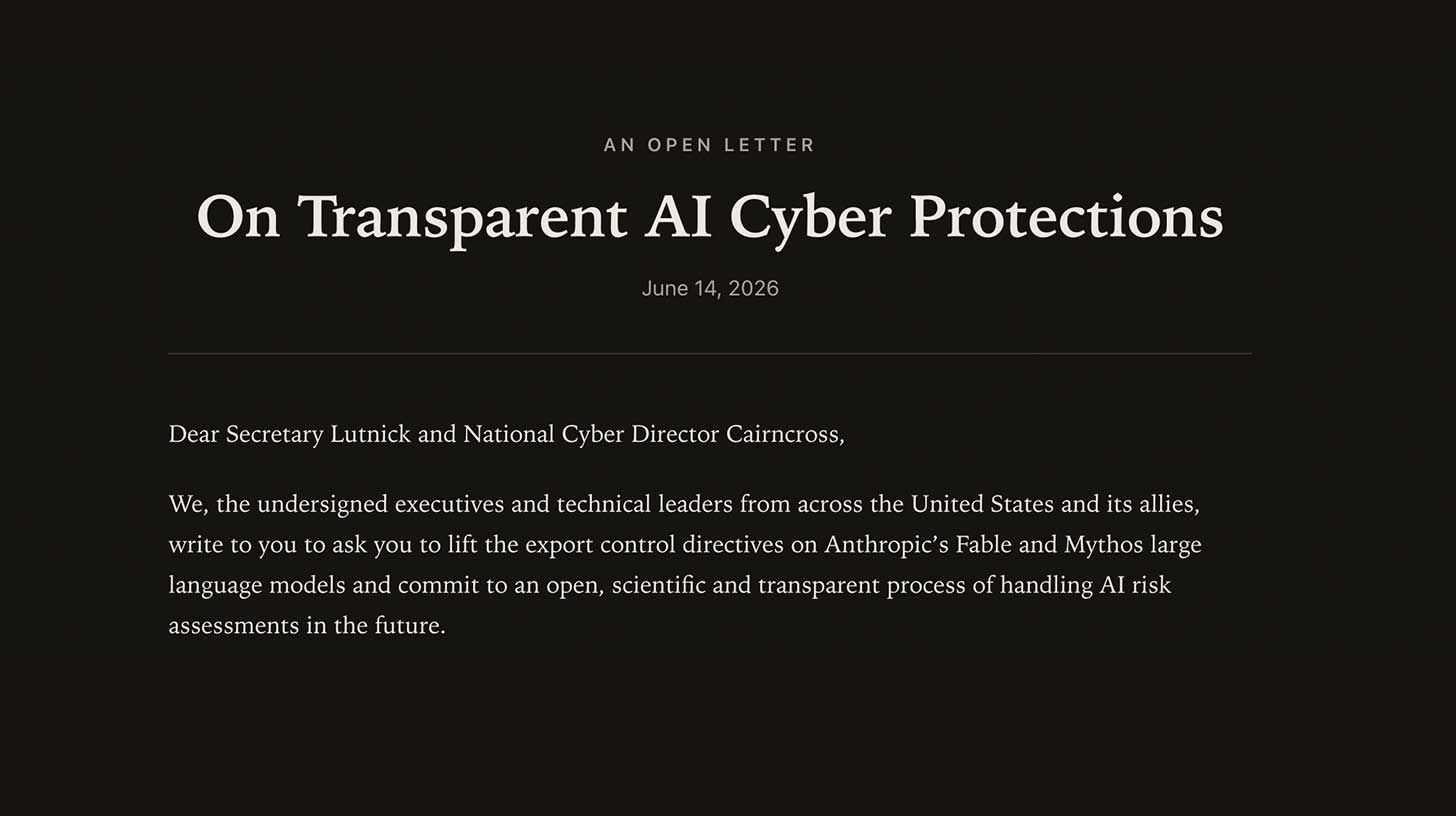
Image source: Free Fable open letter
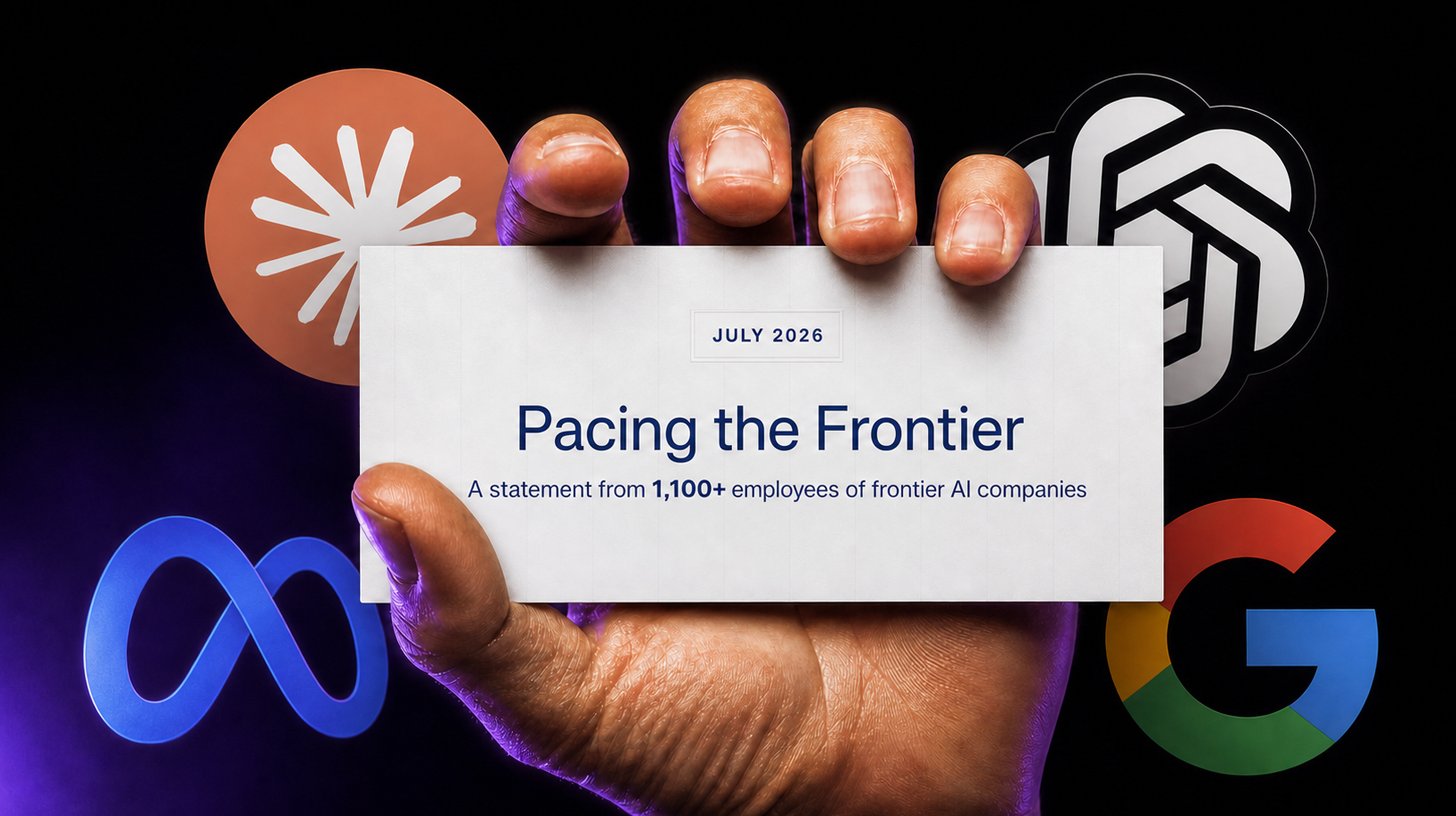
The Rundown: More than 100+ cybersecurity execs and researchers signed an open letter urging the U.S. to lift its export ban on Anthropic’s Fable 5, arguing it handcuffs defenders without slowing attackers who can pull the same capabilities from rival models.
The details:
Ex-Facebook security head Alex Stamos said the flagged jailbreak produced a “proof of concept” of a flaw, which defensive teams use to patch weak spots.
The letter singles out OAI’s Daybreak for doing the same flaw-finding, with GPT-5.5, Kimi 2.7, Opus, and Sonnet all having the same capability.
The letter calls for model regulation to include grounding in scientific evaluations, a democratic process, and transparent and fair enforcement.
Signees include security leaders tied to Adobe, Zoom, Sophos, Vercel, Veracode, Nvidia, and Stanford HAI.
Why it matters: Security researchers don’t agree with the government’s threat assessment that led to the restrictions, which adds to the cloud surrounding the true motivation behind the ban. With other reports citing comms as the main issue between the two sides, the problem is looking just as much ideological as safety related.
TOGETHER WITH YOU.COM
🤔 Stop hallucinating and get real data
The Rundown: It happens — LLMs hallucinate. Grounding your LLM, however, can help dramatically improve accuracy. In this guide, You.com explains what AI grounding is and how organizations can implement it to achieve more reliable outputs.
The playbook covers:
A three-part approach that outperforms RAG alone
Why grounding isn’t set-and-forget, and how to build audit trails
The open vs. closed platform trade-off (and what it means for your next model switch)
MICROSOFT
✍️ Microsoft’s Nadella reframes how companies win with AI
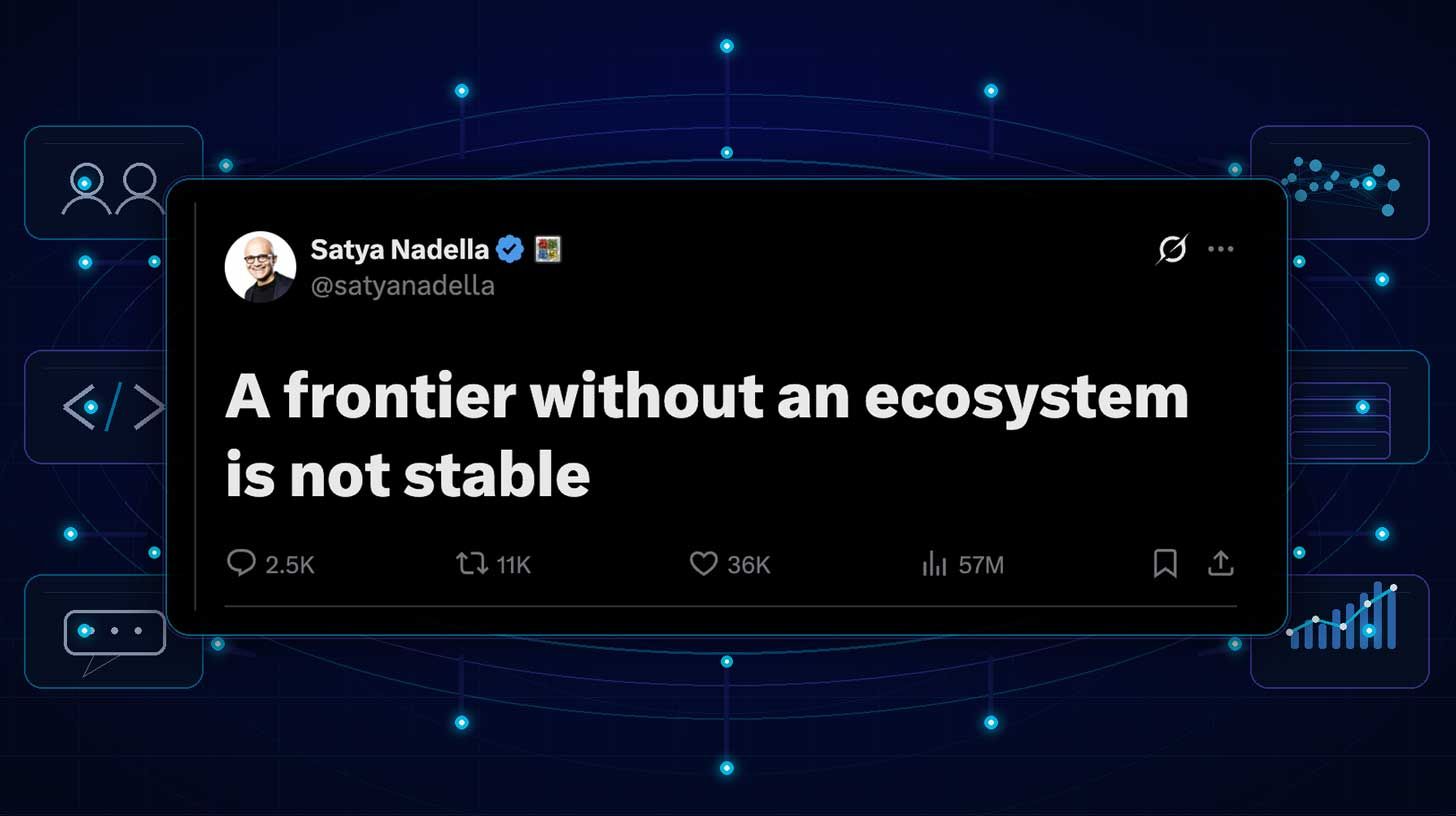
Image source: Satya Nadella (@Satyanadella on X) / Images 2.0 / The Rundown
The Rundown: Microsoft CEO Satya Nadella’s new memo argues a company’s real AI edge comes from a “learning loop” of its own workflows and judgment, not just the best model — and warns an AI economy run by a handful of models would gut whole industries.
The details:
His framing splits a company’s value in two: the “human capital” its people supply, and the “token capital” of AI it owns instead of renting.
Nadella preached building a “learning loop” system that improves and builds company expertise over time, not just simply picking the top available model.
His test of control is to remove one model, drop in a different one, and your “company veteran” know-how stays put, living in the system.
Nadella also emphasized avoiding a world where “every company across every sector is ceding value to a few models that eat everything they see.”
Why it matters: Nadella’s stance isn’t new, but it flies in the face of the frontier labs that have already warned industries that the steamroller is coming. But in a world where open, cheaper models can compete on some level with the frontier, a company’s judgment, wired into AI that keeps learning from it, is where the value may live.
AI TRAINING
🔎 Vet business opportunities with NotebookLM

The Rundown: Learn how to turn a rough business idea into a source-backed research brief with NotebookLM. The example is choosing an AI receptionist vendor, but the same workflow works for partnerships, new markets, software tools, agencies, or any opportunity that needs real comparison.
Step-by-step:
Ask ChatGPT, Claude, or Gemini to write a one-page decision memo. Give it the opportunity, the options, the buyer, your constraints, and the questions you need answered.
Upload that memo into NotebookLM as your first source. Then ask: “Review this memo. Do not make a recommendation yet. Return the decision, the options, the evaluation criteria, and the source categories we need before we can trust the analysis.”
Use NotebookLM’s source discovery to research each option. For the AI receptionist example, search for Goodcall, Smith.ai, and Slang.ai pricing, features, integrations, reviews, and proof.
Generate one structured brief per option with the same fields: best fit, proof points, pricing evidence, implementation effort, risks, and what needs to be confirmed.
Ask for a comparison table and final recommendation. Require a winner, runner-up, avoid-for-now option, fragile assumptions, sales-call questions, and a 30-day validation plan.
Going further: Save the memo prompt, source-coverage prompt, vendor brief prompt, and recommendation prompt as a repeatable research system for the next opportunity.
PRESENTED BY IBM
🤔 Who’s accountable for your company’s AI outcomes?

The Rundown: In many companies, AI-decision authority is fragmented across the C-suite, with no single executive clearly charged with priorities, governance, and accountability. A new article, “Fix decision rights or fail at AI,” explores decision rights and offers resolutions.
You’ll learn:
What true ownership entails
How to adapt incentives and performance metrics
When to embed governance into workflows
META
📱 Facebook gets new AI Mode, image editing upgrade
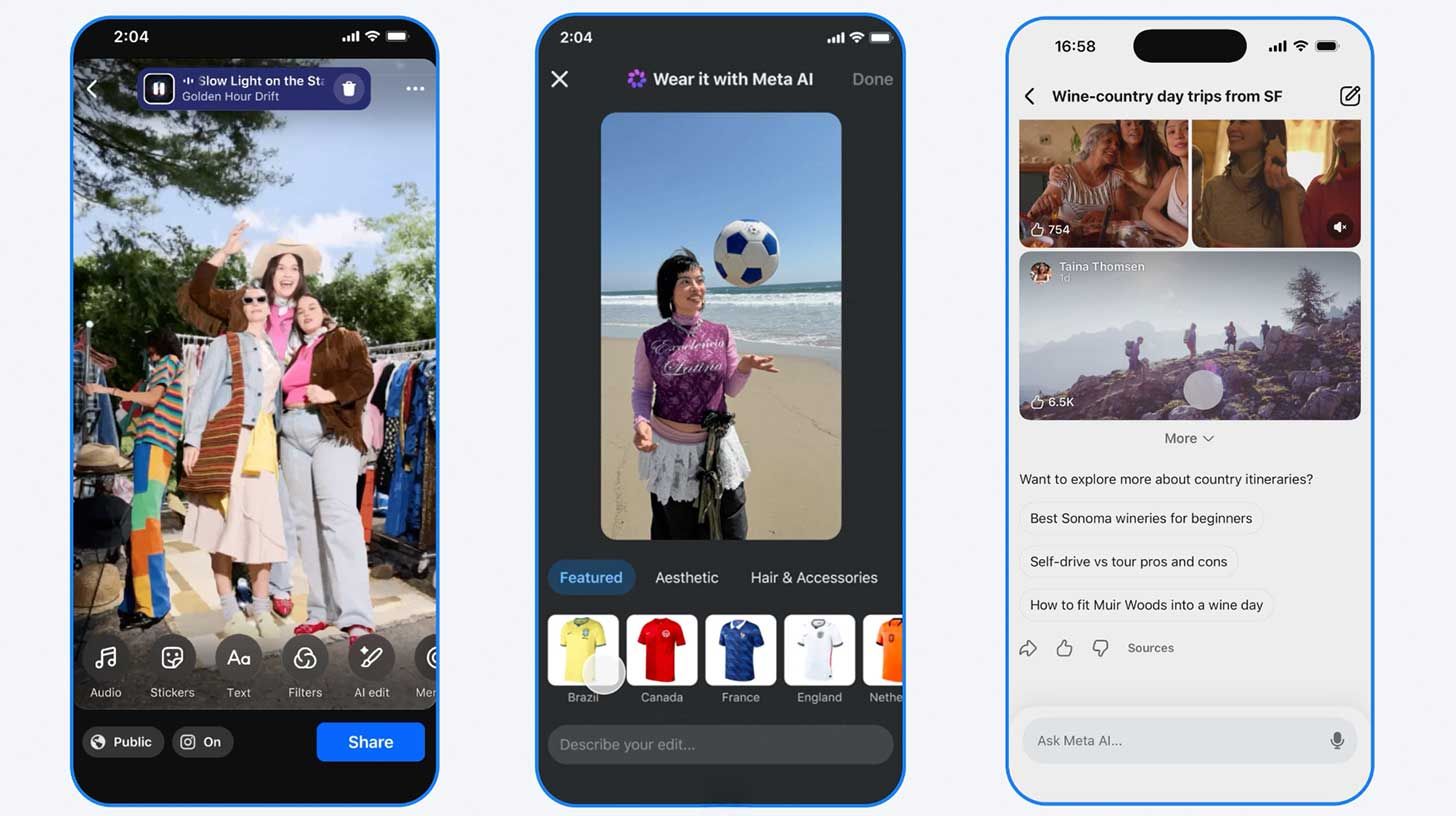
Image source: Meta
The Rundown: Meta just introduced AI Mode to Facebook, a new search experience letting Meta AI answer questions with public Group posts, Reels, and content from across its apps — coming alongside new tools for AI-edited photos, collages, and videos.
The details:
AI Mode puts the Muse Spark-powered Meta AI inside FB search, weaving in public Group posts, Reels, and other app content to answer user questions.
The update also bundles AI photo presets like clothes, hair, and accessory swaps, a one-tap team jersey for profiles, and auto-made camera-roll collages.
Meta is also reportedly lining up two paid AI tiers at $7.99 and $19.99 a month, pricing it under other AI subscriptions like ChatGPT and Gemini.
Why it matters: Meta is running the Google Search playbook with its own ecosystem, ditching link results for AI-curated responses made up of user content. But Google’s AI Mode struggled with accuracy problems, and that concern feels like will be an even bigger obstacle with a mess of unvetted user posts and sponsored listings.
QUICK HITS
🛠️ Trending AI Tools
🗣️ Sonic-3.5 & Ink-2 - Cartesia’s new top-ranked speech and transcription models for voice agents
📈 Agentic Trading - Robinhood’s new MCP connection allowing AI agents to directly trade
⚙️ Kimi-K2.7-Code - Moonshot’s new open-source coding model, with 30% token efficiency
🚀 GLM 5.2 - Z AI’s new flagship coding model with usable 1M context
📰 Everything else in AI today
AWS Summit returns to Washington, DC, on June 30. Two days, 350+ sessions on agentic AI, security, and modernization for public sector teams. Free to attend.*
Salesforce acquired Fin (formerly Intercom) for $3.6B, adding the company’s support agents and 30K customers to its Agentforce lineup.
Cartesia launched Sonic-3.5 and Ink-2, a new speech-generation and transcription model pair that it says ranks No. 1 on Artificial Analysis’ leaderboards.
Anthropic is facing a new federal lawsuit that accuses the company of overselling its paid Claude subscription, claiming the actual usage is far below what is advertised.
Japanese AI lab Sakana AI rolled out Marlin, the company’s first commercial product — an autonomous research agent capable of working up to eight hours in a single run.
*Sponsored Listing
COMMUNITY
🤝 Community AI workflows
Every newsletter, we showcase how a reader is using AI to work smarter, save time, or make life easier.
Today’s workflow comes from reader Tyler K. in Chicago:
“Cold prospecting used to mean 30 minutes of manual work per account — copying LinkedIn profiles, cross-referencing a spreadsheet, then hand-entering contacts into the CRM one by one.
I built a Slackbot skill that eliminates all of it. I paste a raw list of LinkedIn Sales Navigator contacts directly into the chat, and the skill cross-references my existing CRM, infers email patterns from the account’s contact database, confidence-scores each contact, and creates the high-confidence ones in Salesforce automatically — all without me leaving Slack. I ran it across six accounts in one session and created 50+ contacts that would have taken hours manually.
The part that surprised me: I didn’t need to know how to code. I just described what I wanted in plain English and iterated until it worked. What I built in Slackbot can run in ChatGPT, Claude, or Gemini too.”
How do you use AI? Tell us here.
🎓 Highlights: News, Guides & Events
Read our last AI newsletter: Anthropic pulls Mythos, Fable after U.S. order
Read our last Tech newsletter: SpaceX posts biggest IPO in history
Read our last Robotics newsletter: UBTech’s ultra-realistic robot girlfriend
Today’s AI tool guide: Vet business opportunities with NotebookLM
RSVP to our next workshop on June 17: Build a Marketing Creative Studio
See you soon,
Rowan, Joey, Zach, Shubham, and Jennifer — the humans behind The Rundown


Stay Ahead on AI.
Join 2,000,000+ readers getting bite-size AI news updates straight to their inbox every morning with The Rundown AI newsletter. It's 100% free.