Washington wants a piece of OpenAI
PLUS: Find five prospects a day with this agentic framework

Zach Mink
June 8, 2026
Read Online | Sign Up | Advertise

Good morning, AI enthusiasts. The government taking ownership stakes in private companies used to be a hard line in U.S. politics, typically reserved for bailouts. Under Trump, it's becoming a habit — and the AI giants could be next.
Washington and OpenAI are reportedly discussing a deal that would hand the government an equity stake in the lab, with shares routed into a public fund built to give average Americans a cut of a tech revolution many aren’t feeling included in.
In today’s AI rundown:
Washington eyes an ownership slice of OpenAI
The Rundown Roundtable: Our AI use cases
Find five prospects a day with this agentic framework
OpenAI’s ‘superapp’ revamp is coming soon
4 new AI tools, community workflows, and more
LATEST DEVELOPMENTS
AI & THE GOVERNMENT
🏛️ Washington eyes an ownership slice of OpenAI

Image source: Images 2.0 / The Rundown
The Rundown: The White House and OpenAI are reportedly in talks over the U.S. government taking an equity stake in the company, with the shares potentially going towards a "Public Wealth Fund" built to hand Americans a cut of the AI boom.
The details:
Axios reported that industry backers have discussed a 1-5% stake, far below U.S. Senator Bernie Sanders' proposed one-time 50% stock tax on AI labs.
CEO Sam Altman met with both Sanders and Trump officials last week to discuss the idea, which was also detailed in OpenAI's April policy paper.
U.S. President Donald Trump said, "It almost becomes a partnership with the American public… and that would be a beautiful thing... It would make 'em rich."
Former U.S. AI czar David Sacks came out against the move, calling it a way to "accelerate the corporate-government fusion we're already sliding toward."
Why it matters: Spreading the wealth sounds good in theory, especially as public opinion on AI keeps sinking. But a government that owns a piece of OAI, profits from it, and regulates it feels ripe for the typical conflicts of interest. Until the checks actually land in the average American's hands, we’ll believe it when we see it.
TOGETHER WITH SLACK FROM SALESFORCE
🧠 Why most AI isn't scaling
The Rundown: Slack is the connected AI platform that brings together conversations, relationships, business data, and systems of record — giving AI the context it needs to act. 88% of organizations have introduced AI, but only 31% are scaling it effectively. The missing piece? Context. When AI lives where work happens, intelligence turns into action.
In this guide, you'll discover:
Why context is the key to scaling AI
How to connect AI to the systems where work actually lives
What it looks like when AI and people operate in the same environment
THE RUNDOWN ROUNDTABLE
💡 The Rundown Roundtable: Our AI use cases

The Rundown: The Rundown Roundtable is a weekly feature where we poll members of The Rundown staff about how we use AI in our work and daily lives.
Rowan, Founder and CEO: My calendar is wall-to-wall meetings, so I built a Scheduled Claude Cowork task that automatically preps me for all of them (sort of like an AI Chief of Staff). Every morning, it scans my calendar, then pulls past emails, Slack, and my Granola notes for each call to build a context brief that takes 30 seconds to read before each meeting. It's simple and keeps me sharp for every meeting.
Jamie, Growth: My favorite hockey team hired a new assistant manager, and none of my 3-4 go-to podcasts had dropped an episode covering the news yet. I created an app with Claude Code that scans 30 hockey podcasts, transcribes their latest episode, and lists which topics were covered.
Topics covered by more than one podcast get ranked higher. Now I can hear how much my team sucks from a wider range of sources.
AI TRAINING
🔎 Find five prospects a day with this agentic framework
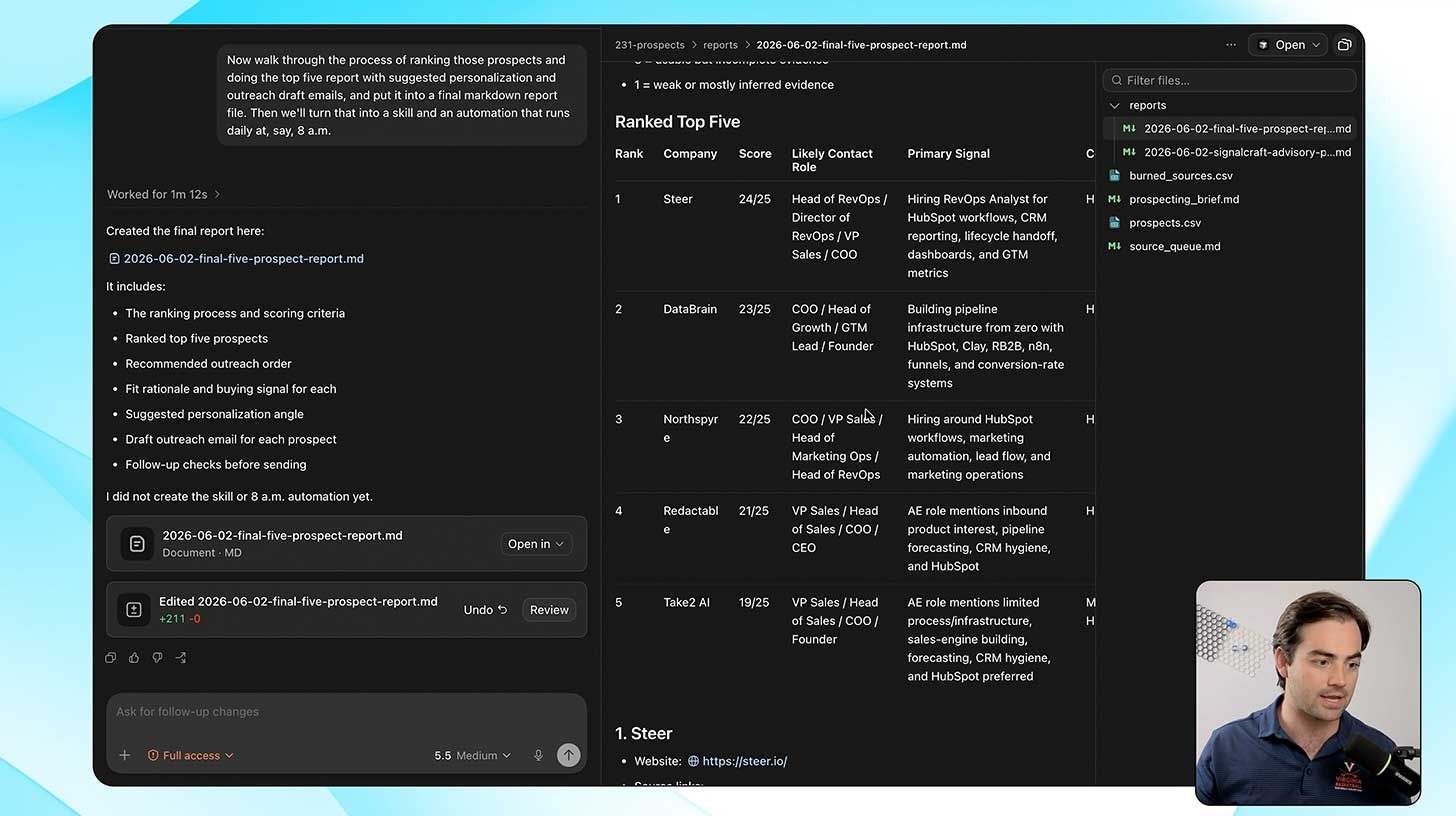
The Rundown: In this guide, you will learn how to build a Codex prospecting system that finds five qualified prospects a day, ranks them, and drafts the next outreach step — giving you a daily report with fit reasons and a running prospect log.
Step-by-step:
Download Codex, sign in, create a folder, and open it inside the app. Now ask it to set up reports/, prospects.csv, burned_sources.csv, and source_queue.md
Have Codex interview you by prompting: “Here is my company, offer, and URL: [COMPANY], [OFFER], [URL]. Interview me about my ICP and sales process”
Run a dry prospecting pass: “Use my ICP brief to find five qualified prospects today. Inspect sources first. Build a longlist, reject weak matches, return the best five, create a dated report in reports/, append accepted leads to prospects.csv, and update burned_sources.csv”
Turn this into a Prospect Finder skill, scheduled for weekdays. Create another skill that runs after Finder to rank prospects and draft personalized outreach
Pro tip: Add a weekly source-refresh automation so Codex keeps finding fresh public sources instead of mining the same lists forever.
PRESENTED BY AWS SUMMIT NYC
📅 Step into AWS Summit NYC on June 17

The Rundown: Connect, learn, and dive deep with AWS experts, developers, and industry leaders shaping the future of cloud and AI.
Explore:
200+ technical sessions and demos
Keynote from VP, Agentic AI, Dr. Swami Sivasubramanian
Interactive activations like 8-bit Agents Activation
Real-world customer stories
OPENAI
🚀 OpenAI’s ‘superapp’ revamp is coming soon
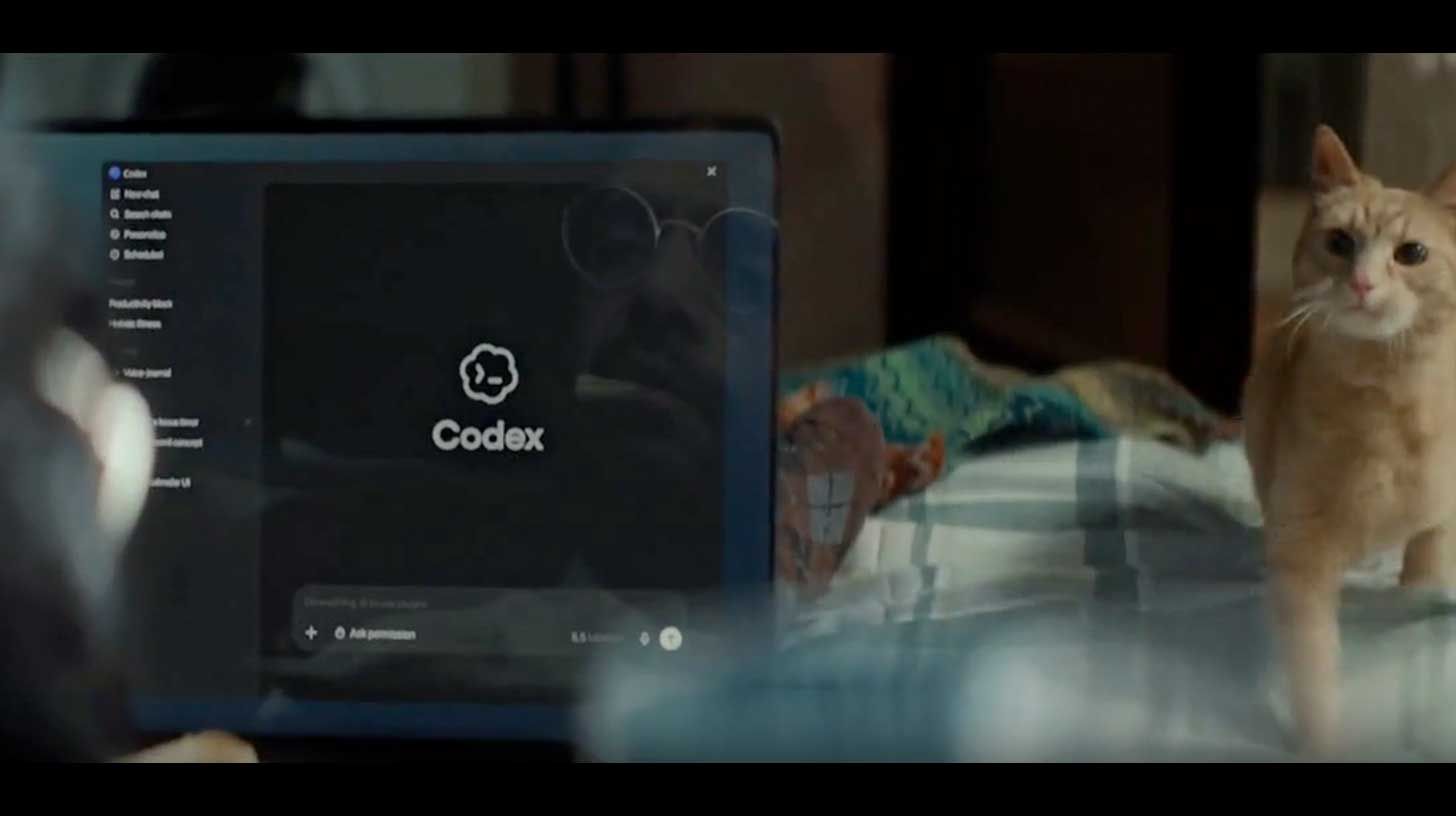
Image source: OpenAI / iSpot
The Rundown: OpenAI is reportedly planning its biggest ChatGPT revamp yet “in the coming weeks”, which will rebuild ChatGPT into an agent-and-coding "superapp" that prioritizes pushing its nearly 1B users toward paid products ahead of its upcoming IPO.
The details:
The reorganization will place greater focus on its agentic coding platform, Codex, with a senior OAI member telling the Financial Times that “Chat is dead”.
The move will combine coding, images, and third-party apps into one interface, believing model advances will now understand user intent across functions.
The company also recently ran a new TV ad spot with the tagline “It’s time to fly”, pushing Codex and AI agents over simple ChatGPT-type interfaces.
Codex has seen a 6x increase in users to over 5M since February, with OAI pushing to increase the number of paying business users as its IPO nears.
Why it matters: Claude Code was Anthropic’s breakout product, which was then simplified for its broader audience (albeit a bit awkwardly) with Cowork. OAI has now seen similar success and upgrades for Codex, and the “side quest” retreat is on full display via a superapp path that gets more paid users into its agentic coding product.
QUICK HITS
🛠️ Trending AI Tools
🎬 Frames.md - HeyGen’s format to create branded, consistent AI videos
🎆 Reve 2.0 - Reve's new 4K AI image model with new layout-based editing
🤖 ChatGPT - OpenAI’s AI assistant, with new ‘Dreaming’ memory upgrade
🌌 Ideogram 4.0 - Ideogram's new top-rated open-weight image model
📰 Everything else in AI today
Microsoft Azure's Copilot Migration Agent turns complex migration data into clear answers using natural language prompts. Read the whitepaper.*
Anthropic’s Mythos model started showing up in Dev Mode and across social media, with speculation of a public release coming this week.
Apple held a “top secret” meeting in early 2025 on the company’s AI crisis that led to Tim Cook taking the overhaul more seriously and becoming more involved in it.
Anthropic poached Clive Chen from OpenAI, who was an early hire on the company’s chip design team, coming amid rumors of Anthropic considering its own chips.
OpenAI introduced Lockdown Mode, a ChatGPT setting that disables features like live browsing, agent mode, and deep research to protect from prompt-injection attacks.
*Sponsored Listing
COMMUNITY
🤝 Community AI workflows
Every newsletter, we showcase how a reader is using AI to work smarter, save time, or make life easier.
Today’s workflow comes from reader Laura S. in Dallas, TX:
"I built an automated workflow that creates personalized talking-dog videos as gifts. I love dogs and wanted a fun project to experiment with vibe coding. I asked friends and family for photos of their dogs and descriptions of their personalities. Then, I used AI tools to generate the script, voice, visuals, and final video.
Today, the workflow handles almost everything automatically, with just two human approval checkpoints: organizing photos, creating a recognizable source image, drafting the dog’s dialogue, generating the talking-dog video, polishing the edit, and delivering the finished product. The workflow is powered by Codex, ChatGPT, HeyGen, and Remotion working together behind the scenes.
What started as a fun experiment is now a repeatable workflow that can produce custom videos in under 30 minutes. It has become a creative way to combine my love of dogs, AI, and automation into personalized gifts that make people smile."
How do you use AI? Tell us here.
🎓 Highlights: News, Guides & Events
Read our last AI newsletter: Anthropic confronts the RSI clock
Read our last Tech newsletter: Google turns search into creator hubs
Read our last Robotics newsletter: Sam Altman’s stealth robotics bet
Today’s AI tool guide: Find extra prospects with this agentic framework
RSVP to our next workshop on June 18: Build a Marketing Creative Studio
See you soon,
Rowan, Joey, Zach, Shubham, and Jennifer — the humans behind The Rundown




Stay Ahead on AI.
Join 2,000,000+ readers getting bite-size AI news updates straight to their inbox every morning with The Rundown AI newsletter. It's 100% free.