Anthropic hands the public Mythos-class AI
PLUS: Automate financial research with Dexter

Zach Mink
June 10, 2026
Read Online | Sign Up | Advertise

Good morning, AI enthusiasts. Frontier releases usually trigger a week of benchmark arguments. Anthropic's new model just launched into a class of its own.
After months of drama over a Mythos too powerful for the public, Fable arrives as the compromise — with scores that, for once, make "best model in the world" uncontroversial… Even if the guardrails and future access are.
P.S. The Rundown just took its first strategic investment from Electrify to expand our newsletter content and beyond. Read about the deal here and read Rowan’s founder reflections here.
In today’s AI rundown:
Anthropic hands the public Mythos-class AI
Perplexity data maps the agent work shift
Automate financial research with Dexter
Codex helps automate a Japanese broccoli farm
4 new AI tools, community workflows, and more
LATEST DEVELOPMENTS
ANTHROPIC
🔓 Anthropic hands the public Mythos-class AI
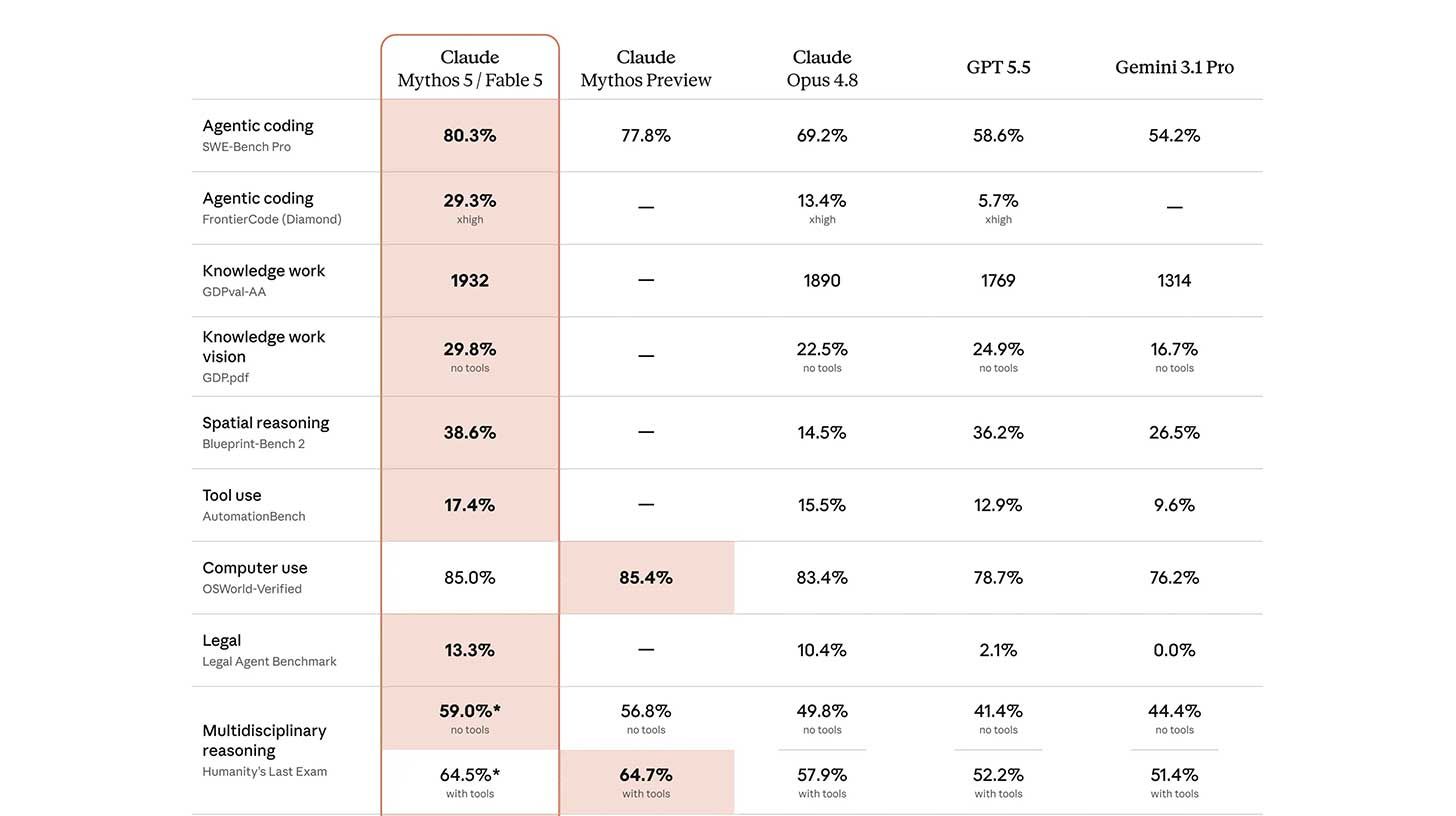
Image source: Anthropic
The Rundown: Anthropic just released Claude Fable 5, opening its top Mythos tier to the public for the first time — with a new set of guardrails compared to the original Mythos Preview and performance that is state-of-the-art on nearly all AI benchmarks.
The details:
April's initial Mythos Preview was only available to 150+ vetted partners via Project Glasswing, surfacing serious flaws across major OS and browsers.
Fable is a more restricted version of Mythos, with queries on topics like cybersecurity, biology, and chemistry routed to Opus 4.8 instead.
Fable hits new highs across major benchmarks, showing massive gains over Opus 4.8 and GPT 5.5 on coding, reasoning, knowledge work, and more.
Mythos 5 releases to Anthropic’s Project Glasswing partners, providing less restrictive use on cybersecurity at lower costs than Mythos Preview.
Fable is available in all Claude subscription tiers until June 22, then it will flip to separate usage credits priced at $10 / M input and $50 / M output tokens.
Why it matters: Every lab calls its latest release "the best model in the world"… What's rare is the rest of the AI world actually seeming to agree. Fable/Mythos lived up to the hype on benchmarks, but the question now turns to broader cost and access, with lots of content restrictions and June 22 looming as the cutoff before the credit pain kicks in.
TOGETHER WITH GOOGLE FOR STARTUPS
📚 Google’s Agentic AI Startup School is officially live

The Rundown: Google for Startups' immersive training program kicked off yesterday, but there is still time to jump in. Join founders and developers learning how to move beyond basic chatbots to build robust, production-ready AI agents.
As the live series continues, you will learn how to:
Build a "hero" application that solves real-world customer intelligence problems
Take an agent from prototype in Google AI Studio to deployment on Google Cloud
Implement Gemini Live voice AI, Multimodal RAG, and bidirectional Vision Agents
Apply production-ready patterns to your own agentic systems
Register now to catch up and join the rest of the live training series.
PERPLEXITY & AI RESEARCH
📊 Perplexity data maps the agent work shift
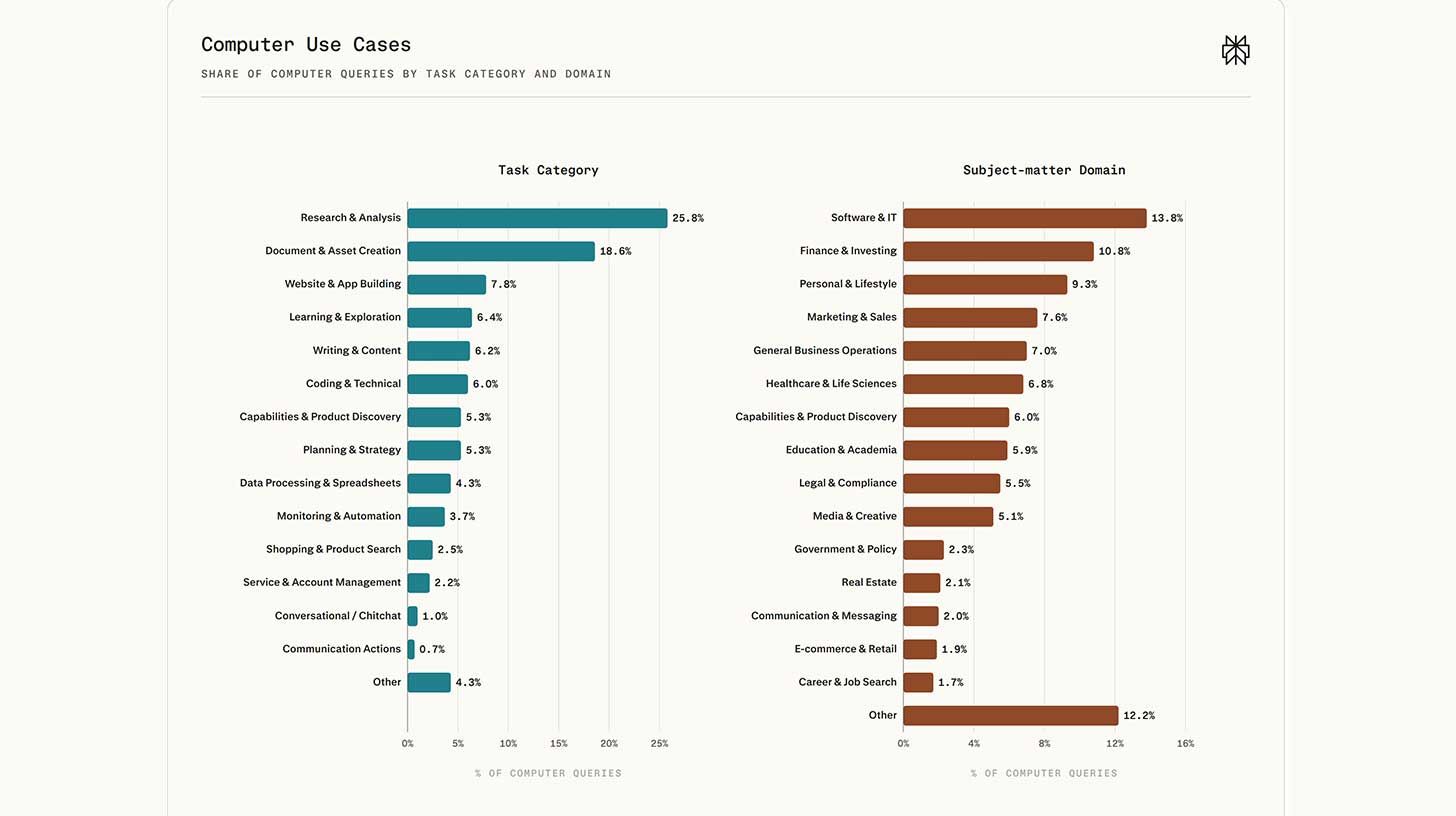
Image source: Perplexity
The Rundown: Perplexity and Harvard Business School published a study on how AI agents change knowledge work, comparing the company's Computer platform against Search to measure outputs, time saved, and task complexity between the two paths.
The details:
Researchers compared 10k identical queries sent to both products, with Computer working 26 minutes on average compared to Search’s 33 seconds.
Search is initially quicker, but leaves ‘doing’ to the user, with Perplexity estimating the same Search workflow taking 269 minutes vs. Computer’s 36.
Half of what users asked the agent to do involved creating something new, 2x the Search rate, and work outside a user's field climbed nine points to 59%.
Users also asked Computer for harder work, creating docs, code, and visuals, more often across several fields instead of simple lookups on Search.
Why it matters: The giant speedup numbers are useful, but more interesting is what people asked for via the agentic route. Perplexity Computer users were more likely to request cognitively complex, creative outputs and pull across multiple fields, showing a subtle draw of AI agents may be users acting with more ambition, not just efficiency.
AI TRAINING
📈 Automate financial research with Dexter
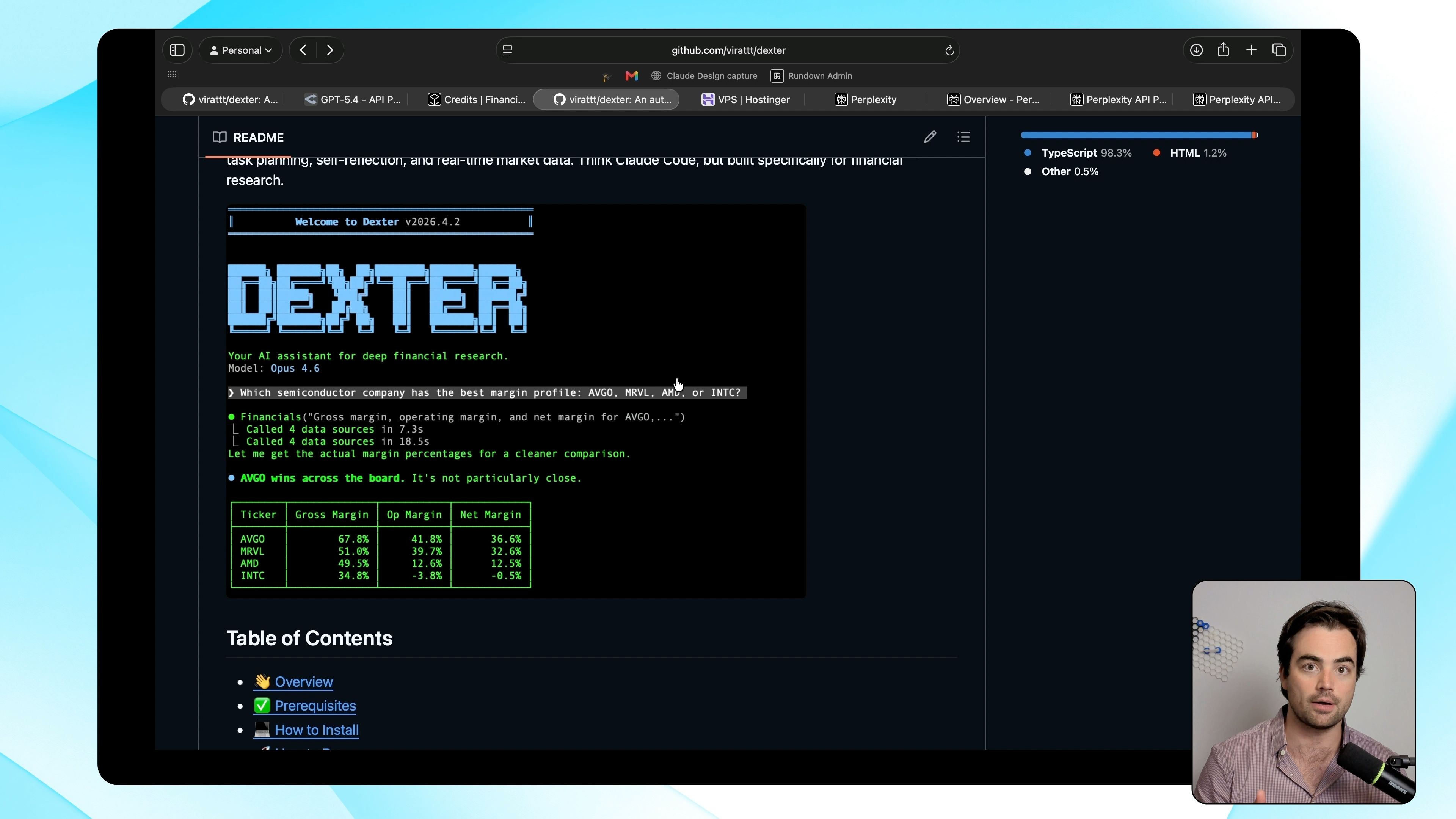
The Rundown: In this guide, you will learn how to set up Dexter, an open-source research agent that works like OpenClaw, but for stocks. It can read earnings reports, interpret SEC filings, and pull up-to-date market data to cut your research time in half.
Step-by-step:
Open the Dexter GitHub repo and install it on your laptop or a VPS (so it can keep running without tying up your machine) by following the install instructions
Add an OpenRouter, OpenAI, or Anthropic API key, then grab a Financial Datasets key and add it to your environment, for pulling the latest market data
Run the research job: “Create a source-backed research brief on GOOGL. Focus on what the company does, recent catalysts, financial or operating signals, key risks, competitive context, and what I should investigate next. Use iterative research. Validate important claims before finalizing the brief”
Ask to save intermediate research so the workflow can continue without losing context. Then, use /heartbeat to set up a recurring watch list or research task
Pro tip: You can also connect Dexter to your X account so it can add Twitter sentiment to the research brief.
PRESENTED BY LAUNCHDARKLY
🚀 Real-time control for AI agents in production

The Rundown: When an AI agent acts unexpectedly in production, fixing it often means new code, another sprint, and a full deploy. LaunchDarkly AgentControl lets you correct that behavior in real time instead—going beyond observability to automatically govern how agents behave.
With AgentControl, teams can:
Deploy agents that handle failure themselves.
Benchmark changes and monitor quality as they go.
Iterate in milliseconds, not sprints.
Adjust agent behavior in production on the fly.
AI IN THE REAL WORLD
🚜 Codex helps automate a Japanese farm

Image source: OpenAI / Hiroki Tomiyasu
The Rundown: OpenAI published a profile of Hiroki Tomiyasu, a self-taught broccoli farmer in Hokkaido who uses ChatGPT and Codex to build greenhouse automation, satellite crop tracking, and custom farm software to help run his operations.
The details:
Tomiyasu manages roughly 100 hectares in Hokkaido, growing soybeans, green onions, pumpkins, and broccoli after learning farming on the job.
AI helps pull and analyze satellite imagery for monitoring, diagnose plant diseases, and create an Airtable hub for records, pesticide logs, and feeds.
Codex also helped build a greenhouse control system to raise and lower vents via text and set up a bot for the farm group chat to help manage operations.
Tomiyasu compared AI to an always-available engineer, lowering the barrier to automation for farm operators without big tech teams.
Why it matters: This profile is "you can just build things" on steroids — a self-taught farmer operating like he has an engineering department for the price of a ChatGPT sub. It’s also a great example of what the selfware era looks like: instead of waiting for an ag-tech company to fix problems, Tomiyasu just builds the needed tools himself with AI.
QUICK HITS
🛠️ Trending AI Tools
🚀 Claude Fable - Anthropic’s new frontier, Mythos-class model
🗣️ Gemini 3.5 Live Translate - Voice AI for live translation in 70+ languages
⚙️ North Mini Code - Cohere's first open-source agentic coding model
💻 Kimi Work - Moonshot's desktop agent running up to 300 parallel agents
📰 Everything else in AI today
Google launched Gemini 3.5 Live Translate, a new real-time voice model that handles 70+ languages while keeping a speaker's tone and pacing.
China is mapping out a $295B, five-year plan to build data centers nationwide, sourcing 80% of its tech from local firms like Huawei and freezing out Nvidia.
Microsoft AI CEO Mustafa Suleyman called it “really, really dangerous” for Anthropic to discuss Claude’s potential consciousness in its instructions and constitution docs.
New York became the first U.S. state to require ads to disclose AI-generated actors, coming with $1,000 fines and backing from Hollywood’s SAG-AFTRA union.
OpenAI released interactive charts, a new feature in ChatGPT, allowing for in-line graphs from data directly within the chat flow.
COMMUNITY
🤝 Community AI workflows
Every newsletter, we showcase how a reader is using AI to work smarter, save time, or make life easier.
Today’s workflow comes from reader Tim. in Christchurch, New Zealand:
"A SaaS tool hit me with a paywall mid-task. I was tracking time against client work when a banner popped up: "You've hit your time-tracking limit. Upgrade now."
A year ago, I might have paid without thinking. Instead, I opened a dashboard I built with Claude and added my own time tracker connected to my business systems in five minutes. Same outcome. No new subscription, just better use of one I already pay for.
The capability I was about to rent, I now own. Too often, software pricing assumes you can't build the missing piece yourself. AI is changing that assumption fast."
How do you use AI? Tell us here.
🎓 Highlights: News, Guides & Events
Read our last AI newsletter: Apple’s new Siri AI overhaul is here (sort of)
Read our last Tech newsletter: Apple’s iOS upgrade is less flash, more fix
Read our last Robotics newsletter: Amazon’s robot army gets chatty
Today’s AI tool guide: Automate financial research with Dexter
RSVP to our next workshop on June 18: Build a Marketing Creative Studio
See you soon,
Rowan, Joey, Zach, Shubham, and Jennifer — the humans behind The Rundown





Stay Ahead on AI.
Join 2,000,000+ readers getting bite-size AI news updates straight to their inbox every morning with The Rundown AI newsletter. It's 100% free.