An exclusive Q&A with alibaba.com's Kuo Zhang
How Accio Work is turning agent teams into operators across real-world workflows.

Shubham Sharma
March 29, 2026
Read Online | Sign Up | Advertise

Good morning, AI enthusiasts. The launch of OpenClaw a few months ago marked a major shift in what agentic AI meant — and more importantly, what it could unlock for businesses worldwide.
Now, alibaba.com is offering an early glimpse of that future with Accio Work, a new agentic system that deploys a team of digital employees to handle complex business tasks 24/7.
To better understand what Accio Work delivers today, what comes next, and what it means for how businesses will be run, we sat down with Kuo Zhang, President of alibaba.com, for an exclusive Q&A.
In today’s AI rundown:
Going from AI assistants to operators
A dynamic workforce for your business
Agent-to-agent is the future of B2B
The new edge for professionals
Quick hits with Kuo
LATEST DEVELOPMENTS
ORGANIZATIONAL SHIFT
⚡️ From AI assistants to operators
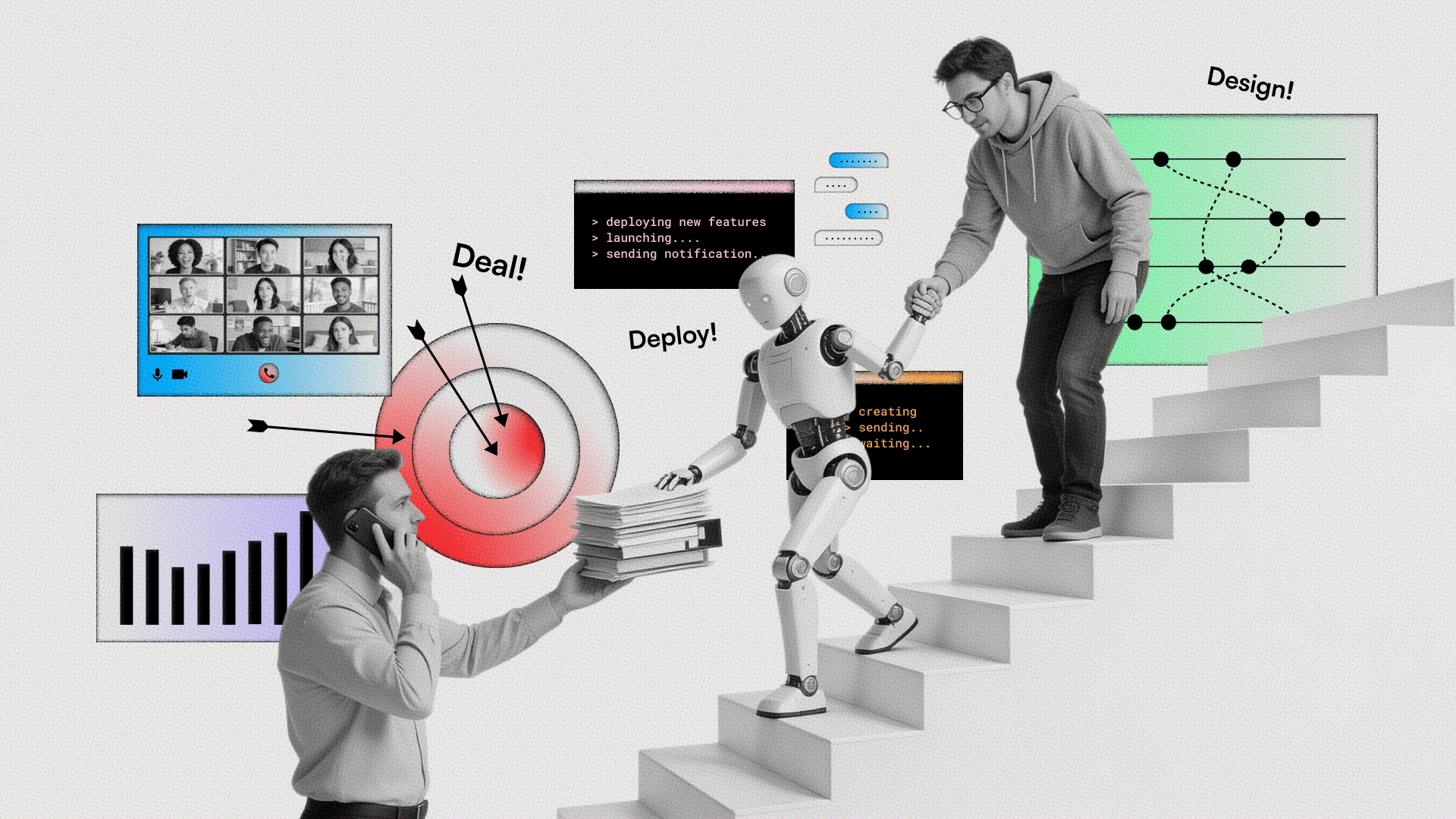
The Rundown: To truly become an agent-centered organization, Zhang said teams will first have to focus on three key things — prioritizing the business value of agentic AI, building checkpoints for transparency, and rethinking how teams operate.
Cheung: As AI moves from assistant to operator, what has to change inside a company before handing core operations to an AI agent?
Zhang: The mindset shift needed to move from AI as a helper to an operator starts with focusing on value, not just activity. Early on, we were impressed by how fast AI could write or process data, but for an AI operator, those are just basic capabilities. Success is about the high-value decisions it can navigate and the actual profit it can bring for the business.
You also have to build checkpoints. Handing core operations to AI doesn’t mean letting it run wild. You need clear guardrails, breaking complex tasks into smaller steps where the AI proves its work at every stage, ensuring a small digital mistake doesn’t turn into a real-world disaster.
Finally, the team has to move from doing the “grunt work” to designing the logic. People become the architects and referees who set the standards and provide the final human sign-off — not replaced by AI, but upgraded to manage it.
Why it matters: The move to agent-driven work starts from the ground up. As new models and capabilities keep emerging, the advantage for businesses will come from identifying what actually moves the needle for them — and building workflows, guardrails, and policies around it.
ACCIO WORK
🤖 A dynamic workforce for your business
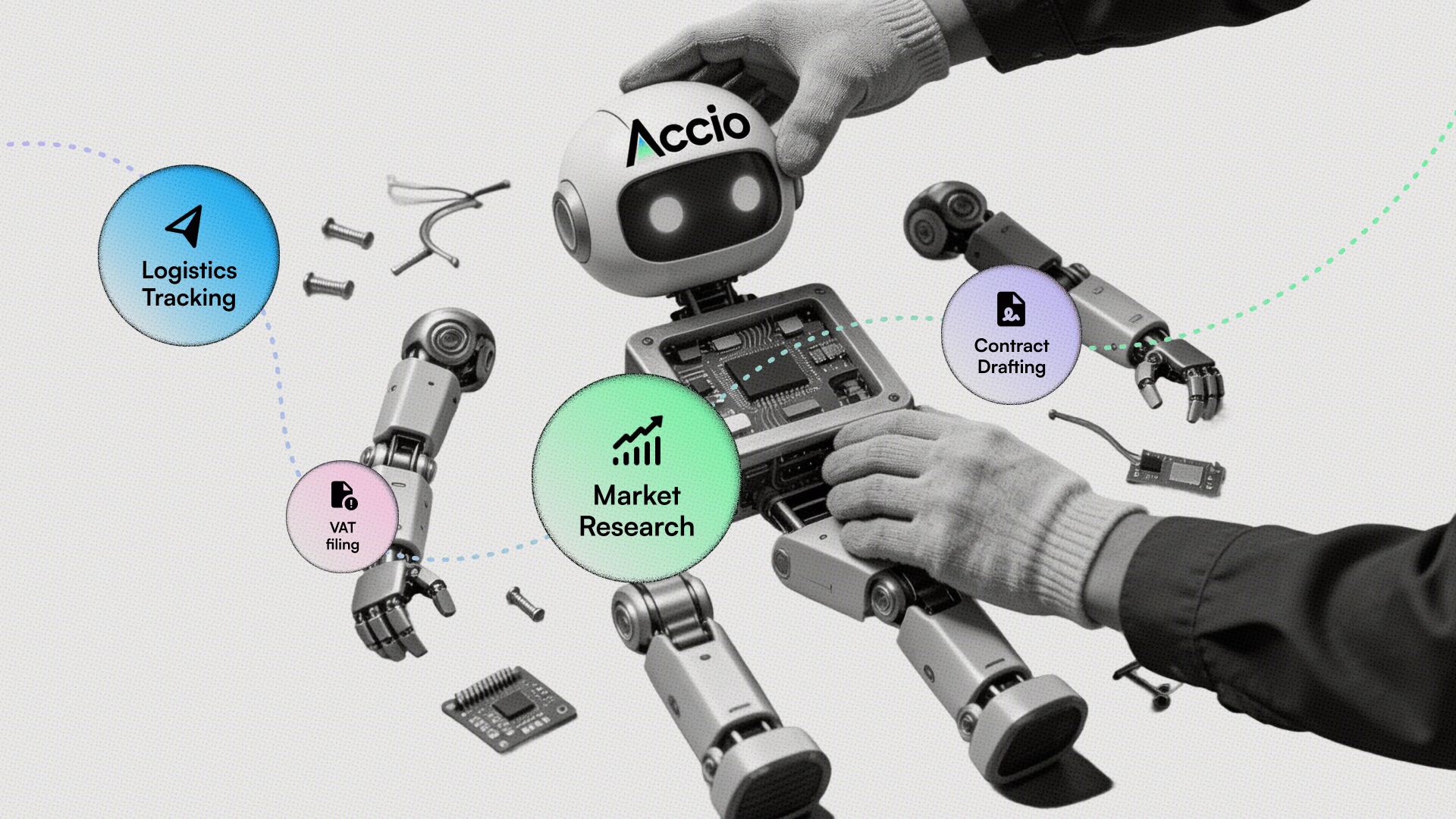
The Rundown: Accio Work sets up Qwen-powered agent teams for businesses (based on their goals), with different connectors, skills, and computer use capabilities enabling the “digital workforce” to handle multistep tasks across functions on its own.
Cheung: How does Accio Work build an agent team?
Zhang: Accio Work assembles a fleet of specialized agents based on your described goals — no code. But the system is fully customizable: you can manually configure agents, form your own team combinations, and most importantly, encapsulate your own expertise into reusable skills that shape how your agents behave.
Users manage the agents through an app. What changes is what management means. Instead of coordinating people and tasks, the founder's job becomes configuring and monitoring this digital workforce — setting the parameters, reviewing outputs at key checkpoints, and progressively refining how the agents operate.
Cheung: Can you walk us through a real workflow that it can handle today?
Zhang: Take launching an e-commerce business. The agent analyzes real-time market trends, selects products, and performs one-click store setup on Shopify, Amazon, or TikTok Shop. It then conducts multi-round supplier negotiations autonomously, securing the best price before surfacing the final deal for your approval.
Once approved, it handles logistics tracking, contract drafting, and VAT filing prep. The human role is final sign-off on payments and regulatory submissions, not managing the process itself.
Why it matters: This shows how work is starting to shift from managing each step to simply defining outcomes — set the goal, and a team of agents handles execution by chaining together tools and skills. Humans step in where it matters most, while the agents handle everything in between.
AGENTIC FUTURE
🦾 Agent-to-agent is the future of B2B
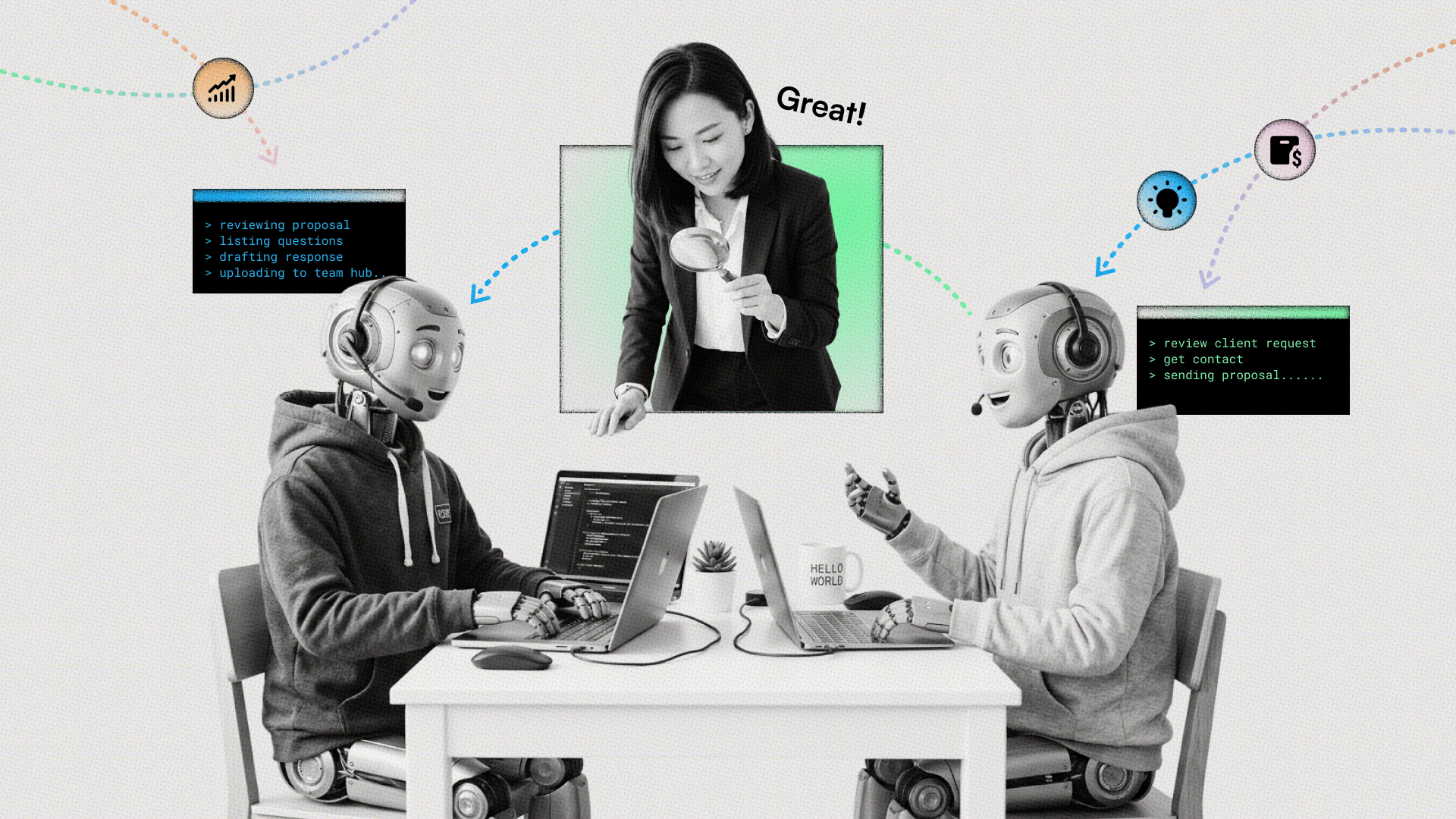
The Rundown: Zhang sees an agent-to-agent future for businesses, where autonomous agents communicate with each other and take actions across most workflows, leaving only business-critical decisions to their human managers.
Cheung: With Accio Work and similar agents, what will running a company look like five years from now?
Zhang: The future of B2B is A2A (agent to agent). Think most business tasks flowing between autonomous agents, with minimal human initiation. What makes this work in practice is that these agents will operate within sandboxed environments, staying within human-defined parameters for anything sensitive or high-stakes. So, autonomy and accountability will coexist, not trade off against each other.
Cheung: If an agent makes a costly mistake, who owns that outcome?
Zhang: Responsibility stays with the human, by design. Our system is built in such a way that any action with access to private files or real financial / legal consequences will require explicit human approval before it is executed.
In tasks like VAT filings, for example, Accio provides semi-automated assistance — it does the preparation (identifying local regulations, organizing the data, and reducing the manual burden), but the final submission goes through human channels. The agent handles execution, but accountability never leaves the person running the business.
Why it matters: Even as AI agents take over key business functions, responsibility for their actions will always stay with humans. This will shift the job from doing the work to overseeing it and owning the outcomes, making judgment and decision-making critical to running agent-driven businesses of the future.
HIRING
⚙️ The new edge for professionals
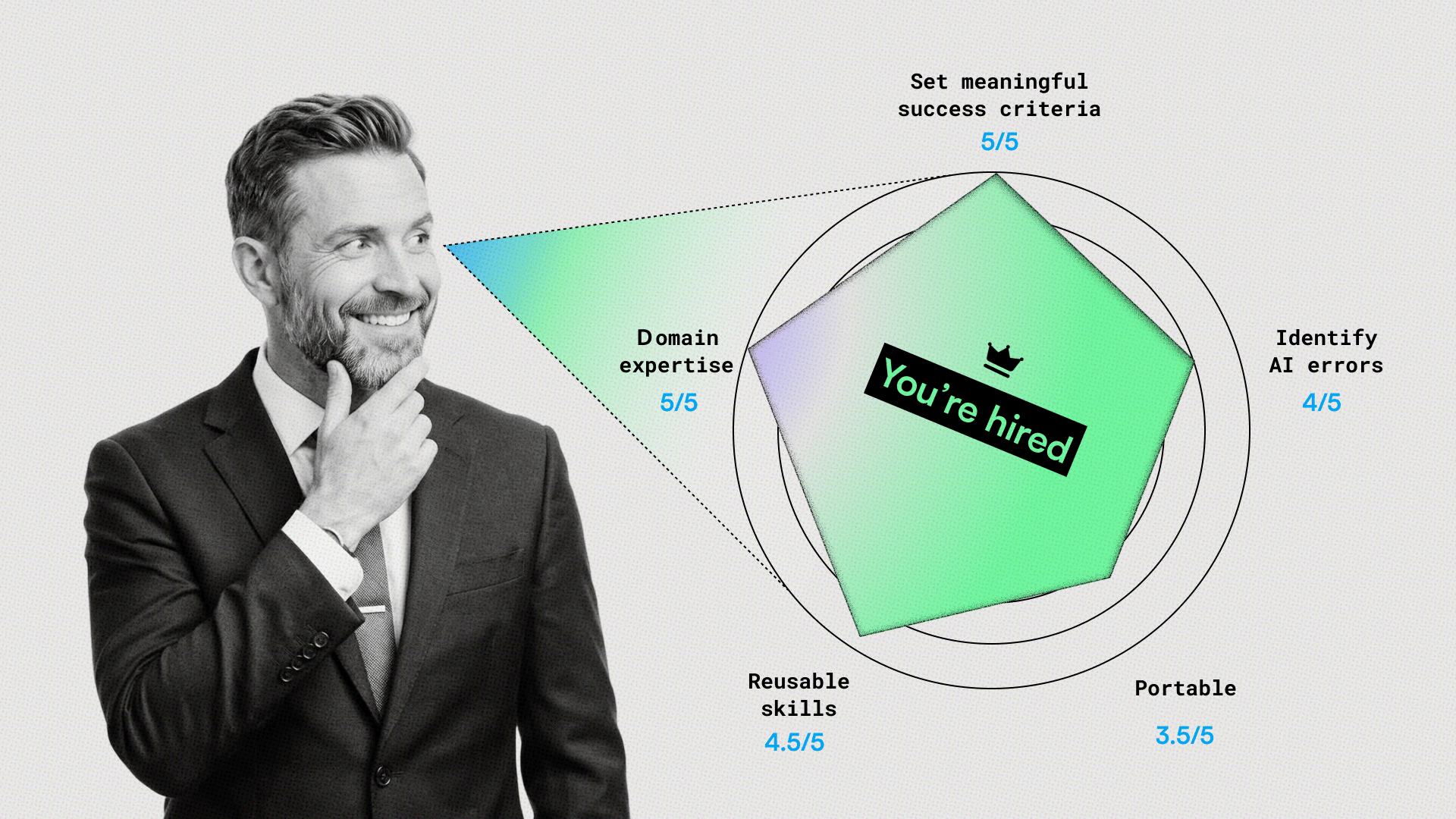
The Rundown: Zhang noted that agentic platforms like Accio Work will level the playing field between small startups and large enterprises, with the biggest skill for professionals becoming the ability to set success standards for AI and assess them.
Cheung: How will these agent platforms change hiring? Which skill do you think becomes more valuable?
Zhang: The concept of headcount as a proxy for capability breaks down entirely with agentic AI.
A solo founder with the right agent platform can handle sourcing, multi-market compliance, and negotiations that previously required a team — effectively leveling the playing field against much larger competitors.
Zhang added: The highest-value professionals amid this shift will be those with deep enough domain expertise to set meaningful success criteria and catch AI errors. That expertise itself becomes a new asset: packageable into reusable skills, monetised in a marketplace, portable across employers in a way it never was before.
Why it matters: As agent teams handle execution, the professional edge shifts from doing the work to knowing what good looks like. Zhang’s key insight: domain expertise becomes packageable and portable — turning into a monetizable asset in a way traditional job skills never were.
LIGHTNING ROUND
⚡️ Quick hits with Kuo
The biggest misconception about AI agents today is?
Zhang: That AI agents are meant to replace people — they’re not. They are meant to become a "dedicated team of experts." Many people believe that AI should be fully autonomous and complete complex tasks in a single step, but in reality, the true value lies in humans and AI co-constructing verifiable, iterative workflows.
One capability AI agents still fundamentally lack?
Zhang: While AI reasoning is scaling fast, they still lack 'physical grounding'— bridging the gap between digital intelligence and real-world execution.
What’s one thing you believe about AI agents that most tech leaders would disagree with?
Zhang: Many tech leaders are hyper-focused on general AI and consumer tools, but we firmly believe that consumer (C-end) apps are for killing time; Business (B-end) tools are for making money.
How far are we from the first one-person billion-dollar company?
Zhang: Probably just months.
See you soon,
Rowan, Joey, Zach, Shubham, and Jennifer — the humans behind The Rundown




Stay Ahead on AI.
Join 2,000,000+ readers getting bite-size AI news updates straight to their inbox every morning with The Rundown AI newsletter. It's 100% free.